
White House condemns ruling on Donald Trump’s ‘Dreamers’ program
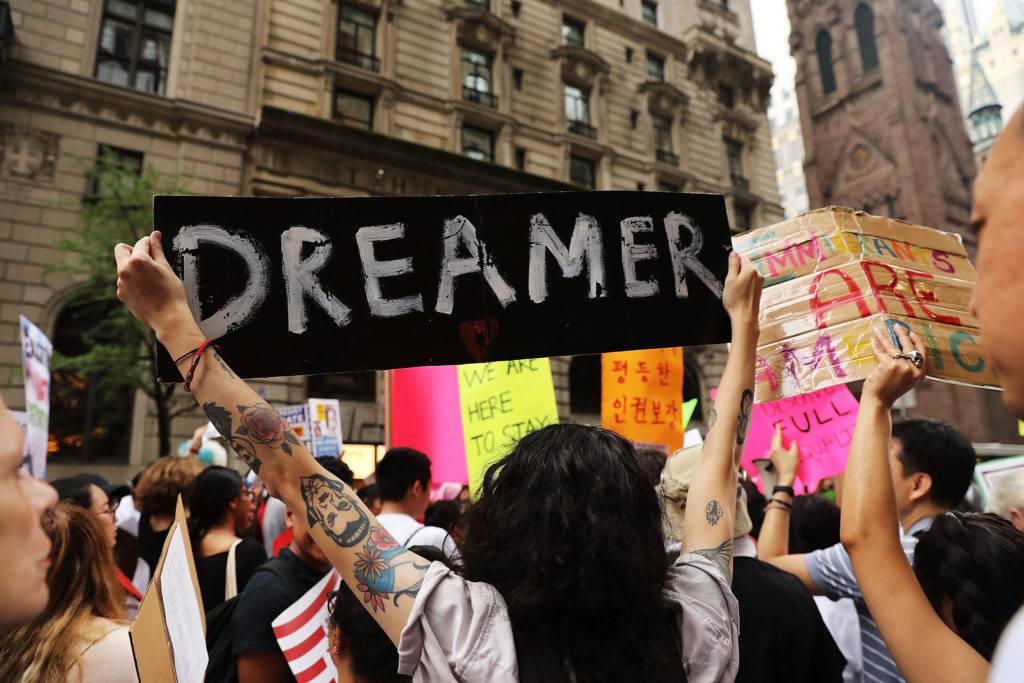
The White House on Wednesday sharply criticized a federal judge’s ruling that the Trump administration must resume a program that has shielded hundreds of thousands of young immigrants from deportation. While the government has 90 days to restate its arguments before the order takes effect, presidential press secretary Sarah Huckabee characterized the ruling as “good news” for smuggling organizations and criminal networks and “horrible news for our national security.” If Tuesday’s ruling by U.S. District Judge John D. Bates in Washington survives the three-month reprieve, it would be a new setback for the Trump team because it would require the administration to accept requests from first-time applicants for the Obama-era program. Two nationwide injunctions earlier this year applied only to renewal requests for the Deferred Action for Childhood Arrivals program. DACA recipients are commonly referred to as “Dreamers,” based on never-passed proposals in Congress called the DREAM Act that would have provided similar protections for young immigrants. Siding with Princeton University and the NAACP, Bates said the administration’s decision in September to phase out the program over six months relied on “meager legal reasoning.” He invited the Department of Homeland Security to try again, “this time providing a fuller explanation for the determination that the program lacks statutory and constitutional authority.” The judge wrote that the administration’s explanation was “particularly egregious” because it didn’t mention that many of the hundreds of thousands covered by the program had obtained jobs and pursued education based on the assumption that they would be allowed to renew. DHS didn’t immediately respond to a request for comment. The administration contends the program started in 2012 is a misuse of executive power and that it had to act because Texas and other states threatened to sue. In January, U.S. District Judge William Alsup in San Francisco ruled that the administration failed to justify ending the program; his nationwide injunction forced the administration to resume accepting renewal requests within a week. A federal judge in New York issued a similar ruling in February; a judge in Maryland sided with the administration. The Supreme Court in February denied the administration’s unusual request to leapfrog appeals courts and take on Alsup’s injunction, ensuring that DACA would stay in effect for the time being. The 9th U.S. Circuit Court of Appeals put its review of Alsup’s decision on a fast track, but legal experts don’t expect a decision until June at the earliest. From there, it is expected to go to the Supreme Court, which may not rule until the spring of 2019. The administration could appeal immediately Bates’ ruling or try again with Bates in the 90-day window he gave. Consolidating the DACA challenges into a single case is a possibility, said Stephen Yale-Loehr, a professor of immigration law practice at Cornell University. “It’s complicated now because you have these different cases,” Yale-Loehr said. Nearly 690,000 people were enrolled when the Trump administration said it was ending the program, and 8 out of 10 were from Mexico. To qualify, they needed to have arrived before they turned 16, been younger than 31 in June 2012, completed high school or served in the military, and had clean criminal records. The two-year-permits are subject to renewal. Yale-Loehr estimates that tens of thousands of people who meet the criteria but never applied could benefit from Bates’ ruling. The NAACP, joined by two major labor unions, sued the administration in September. Princeton, joined by Microsoft Corp. and a student, followed in November. Bates, an appointee of President George W. Bush, combined the two cases. Princeton President Christopher L. Eisgruber said he was “delighted.” “While the decision does not fully resolve the uncertainty facing DACA beneficiaries, it unequivocally rejects the rationale the government has offered for ending the program and makes clear that the (Department of Homeland Security) acted arbitrarily and capriciously,” he said. Microsoft’s president, Brad Smith, said he hoped the ruling would motivate Congress to deliver a legislative fix. Bradford M. Berry, NAACP’s general counsel, called the ruling “a major win for advocates for justice and a compassionate democracy.” Republished with the permission of the Associated Press.
After close vote, panel sends Mike Pompeo nomination to Senate
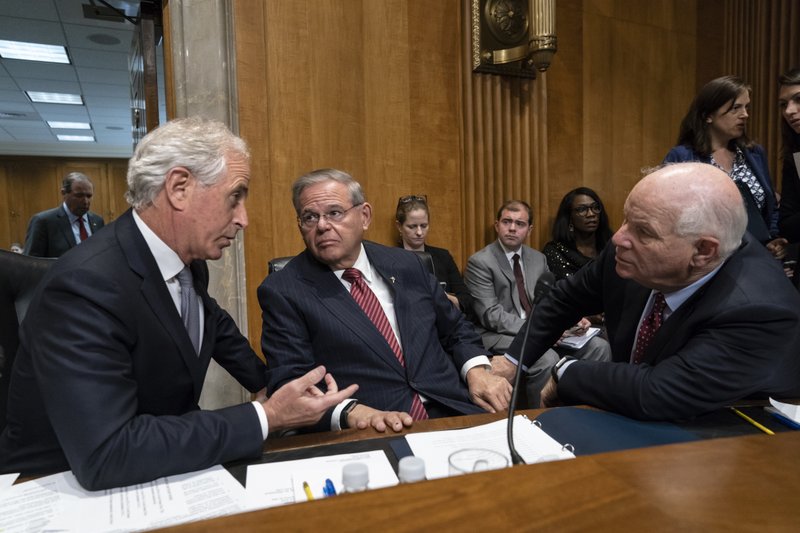
Mike Pompeo, President Donald Trump’s choice for secretary of state, avoided a rare rebuke Monday as the Senate Foreign Relations Committee narrowly recommended him, but the vote served as a warning shot to the White House as nominees to lead the CIA and Veterans Affairs are hitting stiff resistance. Pompeo, who’s now CIA director, received the panel’s approval only after Trump’s last-minute overtures to Sen. Rand Paul, R-Ky. Pompeo’s nomination now goes to the full Senate, where votes are tallying in his favor and Senate Majority Leader Mitch McConnell said he looks forward to voting to confirm him later this week. Trump has been quick to fire his top cabinet secretaries, but Senate Democrats are not so fast to confirm replacements. A grilling is expected Wednesday of Ronny Jackson, the White House physician nominated to head the VA, and Pompeo’s potential replacement at the CIA, Gina Haspel, is also facing scrutiny. It’s also a reminder of how tough it could be to replace Deputy Attorney General Rod Rosenstein. Trump has publicly mused about firing Rosenstein, who is overseeing special counsel Robert Mueller’s investigation into Russian interference in the 2016 election. “Hard to believe,” Trump tweeted Monday about what he called “obstruction.” ″The Dems will not approve hundreds of good people… They are maxing out the time on approval process for all, never happened before. Need more Republicans!” Republicans hold just a slim Senate majority, 50-49, with the prolonged absence of Sen. John McCain, R-Ariz. Pompeo’s bid to become the nation’s top diplomat was in the hands of a few senators, but received a boost Monday when two Democrats, Sen. Joe Manchin of West Virginia and Sen. Joe of Indiana, announced their support. Pressure is mounting on senators from all sides. White House allies are unloading ad campaigns against Democrats from Trump-won states, but progressive groups are pounding senators’ offices in opposition. As soon as Sen. Heidi Heitkamp, D-N.D., announced her support for Pompeo, one group called on her to switch. Ahead of the Foreign Relations Committee’s vote, chairman Bob Corker, R-Tenn., said of the full Senate, “It does appear Mike Pompeo has the votes to be secretary of state.” Supporters point to Pompeo’s resume as a West Point and Harvard Law School graduate who has the president’s confidence, particularly on North Korea. Opponents are focusing on his hawkish foreign policy views and negative comments about gay marriage and Muslims. Paul’s earlier objections to Pompeo, along with overwhelming opposition from Democrats, had set the secretary of state nominee on track to be the first since 1925, when the committee started keeping records, not to receive a favorable recommendation. But Trump and Paul talked repeatedly, including a chat just moments before the vote. “I have changed my mind,” Paul said, explaining he received reassurances that Pompeo agrees with the president that the Iraq war was a “mistake” and that it is time for U.S. troops to leave Afghanistan. Paul’s office said he “got a win” — the promise that Pompeo sides with Trump on those issues — out of the situation, but declined to provide details. “I want Trump to be Trump,” Paul said. Asked about Paul’s change of heart, Trump said, “He’s a good man.” Senators are anxious to have Pompeo in place before international meetings scheduled for later this week and ahead of North Korea talks. Republicans blamed partisan politics for opposition, saying Pompeo is just as qualified as past secretaries of state nominees Hillary Clinton or John Kerry, both of whom received overwhelming support. “A majority of Democrats continue their pointless obstruction to score cheap political points with their base as a willful attempt to undermine American diplomacy,” said White House spokeswoman Sarah Huckabee Sanders. But Democrats resisted easy confirmation of the nation’s top diplomat, and support peeled. Sen. Maggie Hassan, D-N.H., who had been among more than a dozen Democrats who supported Pompeo for CIA director, announced her no vote Monday. “I am concerned that Mr. Pompeo has not demonstrated an understanding that the Secretary of State has an obligation to the American people to stand up for our core values,” she said. Sen. Chris Coons, D-Del., who was among the last Democrats on the foreign relations panel to announce his no vote, said he is concerned that Pompeo “will embolden, rather than moderate or restrain” Trump’s “most belligerent and dangerous instincts.” In a late setback Monday, the panel was short one Republican vote needed for a favorable recommendation because Sen. Johnny Isakson was delivering a eulogy in his home state of Georgia. Rather than postpone voting until his return very late Monday, Coons agreed to allowed his vote to be recorded as “present” so the committee could finish its work. Republished with the permission of the Associated Press.
Anxiety grows for Donald Trump after raid on his personal lawyer
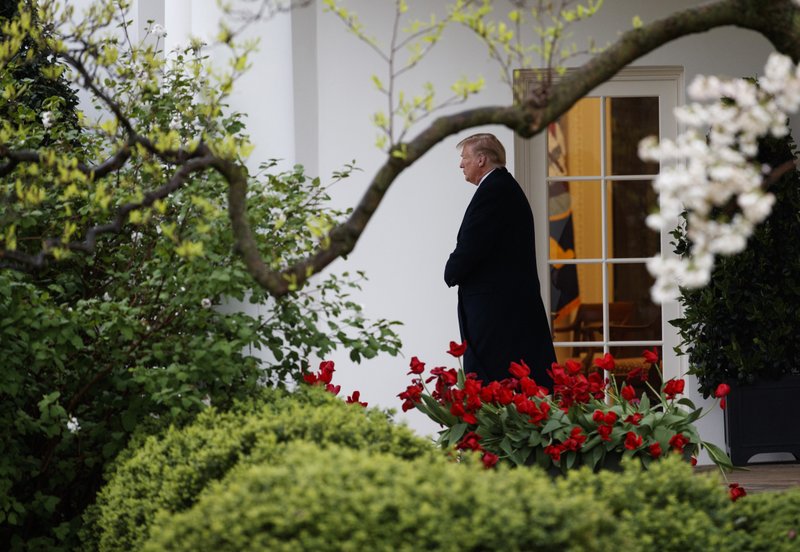
President Donald Trump and his allies have hit a new level of anxiety after the raid on his personal attorney’s office, fearful of deeper exposure for Trump, his inner circle and his adult children — and more than concerned that they don’t know exactly what is in those records and electronic devices seized last week. There is also some worry that Michael Cohen, the self-described legal fixer who helped make bad stories go away and took a leading role in Trump Organization projects in foreign outposts, may strike a deal with prosecutors out of concern about his own prospects. “I think it’s a huge minefield for Donald Trump and the Trump Organization,” said trial attorney Joseph Cammarata, who represented Paula Jones in her sexual harassment suit against President Bill Clinton. “I think this is on its own track and this train is coming down the track with brute force.” The wild legal show continued to play out Monday, at a court hearing in New York before a federal judge who is considering what to do with the material that the FBI seized from Cohen. The scene was punctuated by dramatic entrances and revelations. Stormy Daniels — the porn actress who alleged she had a sexual affair with the president — made an appearance, stumbling on her high heels as she was swarmed by press. Cohen was forced to reveal that another one of his clients is Fox News host Sean Hannity, a high-profile confidant of the president. Trump left the White House for Florida, for a two-day summit with Japanese Prime Minister Shinzo Abe at the president’s Mar-a-Lago estate. Advisers are hoping the meeting will draw attention from the legal tempest in Washington and New York. On the trip south, White House spokeswoman Sarah Huckabee Sanders sought to put distance between Trump and Cohen, saying: “I believe they’ve still got some ongoing things, but the president has a large number of attorneys, as you know.” The federal raid, carried out a week ago in New York City, sought bank records, information on Cohen’s dealing in the taxi industry, Cohen’s communications with the Trump campaign and information on payments he made in 2016 to former Playboy model Karen McDougal and to Daniels, both of whom allege relationships with Trump. The court proceedings Monday dealt with who gets to look at Cohen’s seized documents and devices before they are turned over to prosecutors. Though Cohen once said he “would take a bullet” for Trump, he is aware of the possible outcome — including potential prison time — and has expressed worry about his family, said a person who has spoken to the lawyer in recent days but is not authorized to discuss private conversations. Cohen has not been charged with anything. Trump’s moods have grown darker in recent days, as he lashes out at the “overreach” of the raid. Further angering the president is that the raid was triggered in part by a referral from special counsel Robert Mueller, who is looking into Russian interference in the 2016 U.S. presidential election. The raid was authorized by the U.S. Attorney for the Southern District of New York. On Twitter Sunday, Trump said that all lawyers are now “deflated and concerned” by the FBI raid on Cohen, adding that “Attorney Client privilege is now a thing of the past.” Trump has also taken to downplaying Cohen’s role. The president also inveighed further against former FBI Director James Comey, who said Monday morning that Trump was morally unfit to be president. That was a few hours after Comey said the same and worse in a highly promoted ABC interview. Many in the White House view the aftershocks of the Cohen raid as potentially more threatening than Mueller’s Russia probe, fearful of what skeletons may be in the lawyer’s closets, according to five officials and outside allies who all spoke on the condition of anonymity to discuss private conversations. “I agree with the consensus forming that it’s very dangerous for the president, probably the most serious thing yet,” said Sol Wisenberg, a defense attorney who was a deputy independent counsel during the Starr special counsel investigation into Clinton. “Even if you shut Mueller down some way, how do you shut down the Southern District (federal court)?” Trump’s anger at the probe has intensified, with him musing publicly about firing Mueller and the man who authorized the probe, Deputy Attorney General Rod Rosenstein. Those around Trump have hoped that this week’s visit to Mar-a-Lago, where he is generally happier, along with the tightly scheduled summit with Abe, would somewhat distract him from Cohen and from Comey’s ongoing publicity tour. But White House aides have also expressed worry that they can control Trump less at his palatial Florida estate, where he is known to seek out counsel from club members and get revved up by their at-times provocative advice. One recent presidential dinner guest was Hannity, a longtime Trump ally whose connection to Cohen shed more light on the attorney who was more than just a lawyer for Trump. Cohen has long been a key power center in the Trump Organization and a fixture along the edges of Trump’s nascent political life. In Cohen’s own estimation, he is Trump’s Ray Donovan, the bruising television character who takes whatever steps are needed to fix problems for the tycoon he serves. He has regularly threatened lawsuits against those who pose a challenge to Trump. He has berated reporters for writing unflattering words about his boss. He has worked with tabloids, including the National Enquirer, to kill unfavorable stories about Trump. He has said he used a home-equity loan to finance a $130,000 payment to Daniels in the final days of the 2016 campaign and did so without Trump’s knowledge. The president has consistently denied a relationship with Daniels, who claims the two had sex not long after first lady Melania Trump gave birth to the couple’s son Barron. He has also pushed back against other claims from women. A
James Comey compares Donald Trump to mob boss
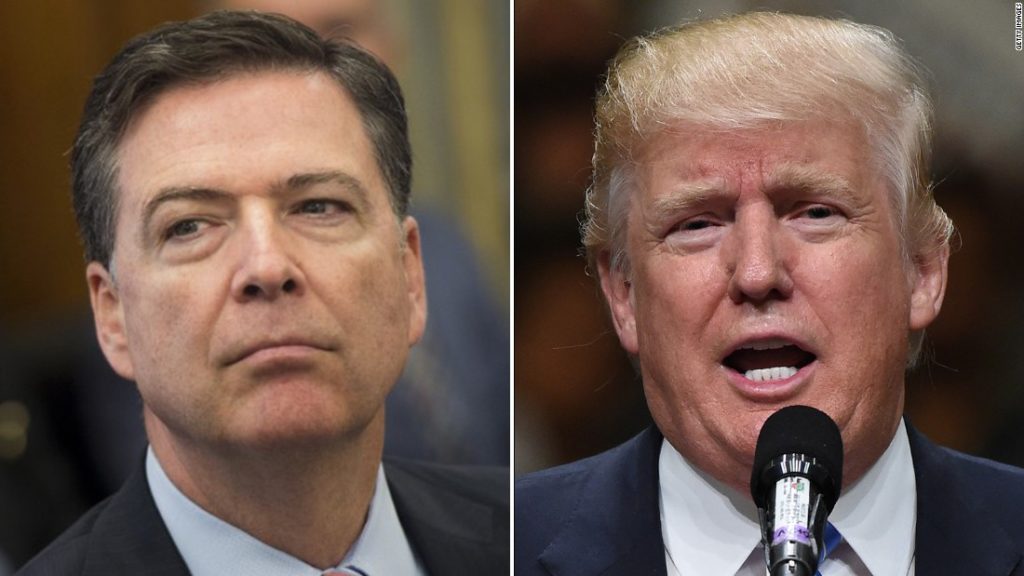
Firing back at a sharply critical book by former FBI director James Comey, President Donald Trump blasted him Friday as an “untruthful slime ball,” saying, “It was my great honor to fire James Comey!” Trump reacted on Twitter early Friday, the day after the emergence of details from Comey’s memoir, which says Trump is “untethered to truth,” and describes him as fixated in the early days of his presidency on having the FBI debunk salacious rumors he said were untrue but that could distress his wife. The book, “A Higher Loyalty,” is to be released next week. The Associated Press purchased a copy this week. In the book, Comey compares Trump to a mafia don and calls his leadership of the country “ego driven and about personal loyalty.” Comey also reveals new details about his interactions with Trump and his own decision-making in handling the Hillary Clinton email investigation before the 2016 election. He casts Trump as a mobster-like figure who sought to blur the line between law enforcement and politics and tried to pressure him personally regarding his investigation into Russian election interference. The book adheres closely to Comey’s public testimony and written statements about his contacts with Trump and his growing concern about Trump’s integrity. It also includes strikingly personal jabs at Trump that appear sure to irritate the president. The 6-foot-8 Comey describes Trump as shorter than he expected with a “too long” tie and “bright white half-moons” under his eyes that he suggests came from tanning goggles. He also says he made a conscious effort to check the president’s hand size, saying it was “smaller than mine but did not seem unusually so.” “Donald Trump’s presidency threatens much of what is good in this nation,” Comey writes, calling the administration a “forest fire” that can’t be contained by ethical leaders within the government. On a more-personal level, Comey describes Trump repeatedly asking him to consider investigating an allegation involving Trump and Russian prostitutes urinating on a bed in a Moscow hotel, in order to prove it was a lie. Trump has strongly denied the allegation, and Comey says that it appeared the president wanted it investigated to reassure his wife, Melania Trump. Trump fired Comey in May 2017, setting off a scramble at the Justice Department that led to the appointment of Robert Mueller as special counsel overseeing the Russia investigation. Mueller’s probe has expanded to include whether Trump obstructed justice by firing Comey, which the president denies. Trump has assailed Comey as a “showboat” and a “liar.” Top White House aides also criticized the fired FBI director on Friday. White House spokeswoman Sarah Huckabee Sanders questioned Comey’s credibility in a tweet and White House counselor Kellyanne Conway said Comey took “unnecessary, immature pot shots.” Comey’s account lands at a particularly sensitive moment for Trump and the White House. Officials there describe the president as enraged over a recent FBI raid of his personal lawyer’s home and office, raising the prospect that he could fire Deputy Attorney General Rod Rosenstein, who appointed Mueller, or try to shut down the probe on his own. The Republican National Committee is poised to lead the pushback effort against Comey by launching a website and supplying surrogates with talking points that question his credibility. Trump has said he fired Comey because of his handling of the FBI’s investigation into Clinton’s email practices. Trump used the investigation as a cudgel in the campaign and repeatedly said Clinton should be jailed for using a personal email system while serving as secretary of state. Democrats, on the other hand, have accused Comey of politicizing the investigation, and Clinton herself has said it hurt her election prospects. Comey writes that he regrets his approach and some of the wording he used in his July 2016 press conference in which he announced the decision not to prosecute Clinton. But he says he believes he did the right thing by going before the cameras and making his statement, noting that the Justice Department had done so in other high profile cases. Every person on the investigative team, Comey writes, found that there was no prosecutable case against Clinton and that the FBI didn’t find that she lied under its questioning. He also reveals new details about how the government had unverified classified information that he believes could have been used to cast doubt on Attorney General Loretta Lynch’s independence in the Clinton probe. While Comey does not outline the details of the information — and says he didn’t see indications of Lynch inappropriately influencing the investigation — he says it worried him that the material could be used to attack the integrity of the probe and the FBI’s independence. Comey’s book will be heavily scrutinized by the president’s legal team looking for any inconsistencies between it and his public testimony, under oath, before Congress. They will be looking to impeach Comey’s credibility as a key witness in Mueller’s obstruction investigation, which the president has cast as a political motivated witch hunt. The former FBI director provides new details of his firing. He writes that then-Homeland Security Secretary John Kelly — now Trump’s chief of staff — offered to quit out of disgust at how Comey was dismissed. Kelly has been increasingly marginalized in the White House and the president has mused to confidants about firing him. Comey also writes extensively about his first meeting with Trump after the election, a briefing in January 2017 at Trump Tower in New York City. Others in the meeting included Vice President Mike Pence, Trump’s first chief of staff, Reince Priebus, Michael Flynn, who would become national security adviser, and incoming press secretary, Sean Spicer. Comey was also joined by NSA Director Mike Rogers, CIA Director John Brennan and Director of National Intelligence James Clapper. After Clapper briefed the team on the intelligence community’s findings of Russian election interference, Comey writes, he was taken aback by what the Trump team didn’t ask. “They were about to lead a country
Donald Trump threatens Syria strike, cancels summit travel
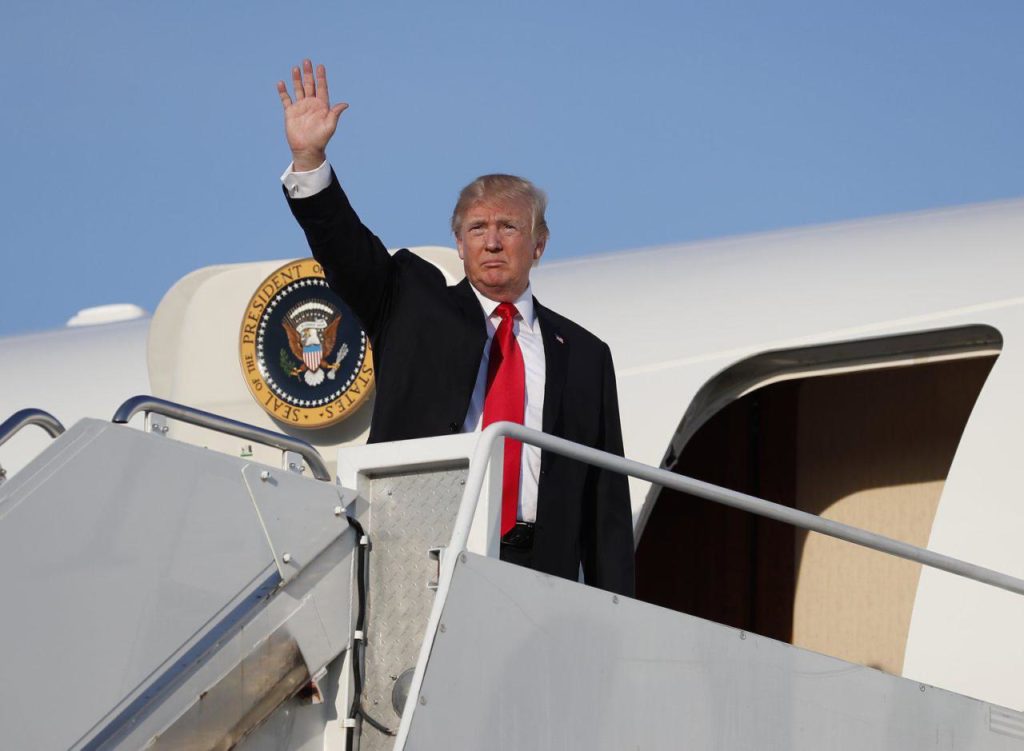
After threatening a military strike against Syria, President Donald Trump on Tuesday cancelled plans to travel to South America later this week, choosing to stay in the United States to manage the response to an apparent chemical weapons attack. White House spokeswoman Sarah Huckabee Sanders said Tuesday that Trump will not attend the 8th Summit of the Americas in Lima, Peru or travel to Bogota, Colombia as planned, remaining in the United States to “oversee the American response to Syria and to monitor developments around the world.” The decision marks the first time an American president has not attended the summit. Vice President Mike Pence will travel in Trump’s place. Trump on Monday promised a decision on Syria within hours, declaring that Russia or any other nation found to share responsibility for Saturday’s apparent chemical weapons attack on civilians will “pay a price.” The White House sharply rejected any suggestion that Trump’s own words about pulling U.S. troops out of Syria had opened the door for the attack, which killed more than 40 people, including children. Trump, asked whether Russian President Vladimir Putin bore any responsibility, responded, “He may, yeah, he may. And if he does it’s going to be very tough, very tough.” He added, “Everybody’s gonna pay a price. He will. Everybody will.” Amid the tough talk from the White House, the U.S. military appeared to be in position to carry out any attack order. A Navy destroyer, the USS Donald Cook, was underway in the eastern Mediterranean after completing a port call in Cyprus. The guided missile destroyer is armed with Tomahawk cruise missiles, the weapon of choice in a U.S. attack one year ago on an airfield in Syria following an alleged sarin gas attack on civilians. The Russian military, which has a presence in Syria as a key Assad ally, said its officers had visited the weekend site in a suburb of Damascus, the Syrian capital, and found no evidence to back up reports of poison gas being used. Russia’s U.N. ambassador, Vassily Nebenzia, accused Washington of deliberately stoking international tensions by threatening Russia in a tone “beyond the threshold of what is acceptable, even during the Cold War.” Trump said there was little question that Syria was responsible for the apparent weekend attack, although the government of President Bashar Assad denied it. “To me there’s not much of a doubt, but the generals will figure it out,” Trump said. He promised a decision on a possible military response within 24 to 48 hours, “probably by the end of today.” Emphatic in his condemnation of the apparent gas attack, Trump noted graphic pictures of the dead and sickened, calling the assault “heinous,” ″atrocious,” ″horrible” and “barbaric.” Fielding questions at the White House, Trump press secretary Sarah Sanders said it would be “outrageous” to say that Trump’s recent announcement that he intends to remove all U.S. forces from Syria in the coming months had emboldened Assad. “I think that it is outrageous to say that the president of the United States green-lit something as atrocious as the actions that have taken place over the last several days,” she said. Defense Secretary Jim Mattis, in separate remarks at the Pentagon, also suggested Moscow bore some blame. He criticized Russia for what he suggested was its failure to ensure the elimination of Syria’s chemical weapons arsenal under terms of a 2013 agreement. Trump was to meet late in the day with senior national security aides, and no action was “off the table,” the president said. Monday was the first day on the job for his new national security adviser, John Bolton, who has previously advocated military action against Syria. Trump said, “If it’s Russia, if it’s Syria, if it’s Iran, if it’s all of them together, we’ll figure it out.” The United States, meanwhile, urged the U.N. Security Council to adopt a resolution that would condemn the continuing use of chemical weapons in Syria “in the strongest terms” and establish a new body to determine responsibility for chemical attacks. The draft resolution, obtained by The Associated Press, was circulated ahead of an emergency Security Council meeting. An American official said the U.S. was discussing with allies whether they would participate in a retaliatory strike. If Trump decides to proceed quickly, the most likely partner would be France rather than Britain, because of concerns about obtaining permission from Parliament, said the official, who wasn’t authorized to discuss the planning publicly and requested anonymity. As U.S. officials consider whether and how to respond, they are looking at what type of chemical agent might have been used. When Trump ordered airstrikes last year after a chemical weapons attack, it was a response to the use of sarin gas, which is banned by the Chemical Weapons Convention that Syria has signed. An attack with chlorine, which can be used as a weapon but is not outright banned by the treaty, could raise precedent issues, as there have been numerous recent allegations of chlorine attacks in Syria that have drawn no response from the Trump administration. Republished with the permission of the Associated Press.
U.S. raises prospect of Trump-Putin meeting at the White House
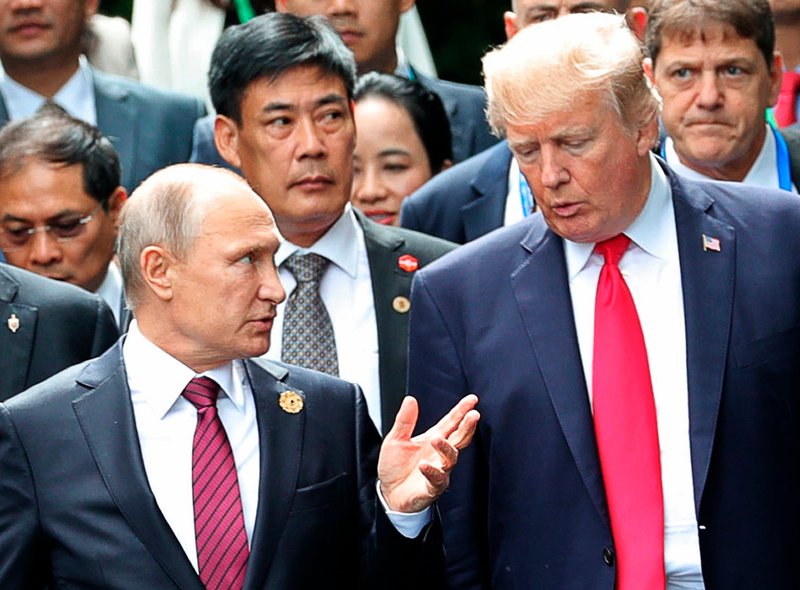
The Trump administration says it is amenable to a White House meeting between President Donald Trump and Russian President Vladimir Putin, raising the prospect of the Russian president’s first Washington visit in more than a decade even as relations between the two powers have eroded. White House press secretary Sarah Huckabee Sanders said the White House was among “a number of potential venues” discussed in Trump’s telephone call last month with Putin. The Kremlin said earlier Monday that Trump invited Putin during the call. Both sides said they hadn’t started preparations for such a visit. If it happens, Putin would be getting the honor of an Oval Office tete-a-tete for the first time since he met President George W. Bush at the White House in 2005. Alarms rang in diplomatic and foreign policy circles over the prospect that Trump might offer Putin that venue without confronting him about Russia’s interference in the 2016 presidential election or allegations that Russia masterminded the March 4 nerve agent attack on a former Russian double agent. “It would confer a certain normalization of relations and we’re certainly not in a normal space,” said Alina Polyakova, a foreign policy fellow at the Brookings Institution. “Nothing about this is normal.” Much has happened since Trump and Putin spoke in the March 20 phone call. Trump said afterward he hoped to meet with Putin “in the not too distant future” to discuss the nuclear arms race and other matters. But their call was followed by reports that Trump had been warned in briefing materials not to congratulate the Russian president on his re-election but did so anyway. Since the call, two dozen countries, including the U.S. and many European Union nations, and NATO expelled more than 150 Russian diplomats in solidarity with Britain over the poisoning of Sergei Skripal, the former spy, and his daughter Yulia. Moscow has denied any involvement in the nerve attack and retaliated by expelling the same number of diplomats from each nation. Putin’s foreign affairs adviser, Yuri Ushakov, told reporters Monday that when the two leaders spoke by phone, “Trump suggested to have the first meeting in Washington, in the White House,” calling it a “quite interesting and positive idea.” Ushakov voiced hope that tensions resulting from the diplomatic expulsions wouldn’t derail discussions about a summit. Trump has said maintaining a strong personal relationship with Putin is in the U.S. interest and has signaled to allies that he trusts his own instincts in dealing with the Russian president. A White House official, speaking on condition of anonymity to describe private discussions, said Trump raised the possibility of a White House meeting in a “casual, open-ended” fashion during the call. The official reiterated that no extensive preparations had taken place. Talk of a White House summit comes as Trump is preparing to meet North Korean leader Kim Jong Un at an undetermined location. White House welcomes are typically reserved for friends and allies. Trump has avoided criticizing Putin personally even as his administration has crossed Moscow by providing Ukraine with lethal weapons and upholding Obama-era sanctions against Russia and its shuttering of diplomatic outposts. Michael McFaul, who served as the U.S. ambassador to Russia under President Barack Obama, said the “symbolism of Putin standing in the East Room with the president at a news conference” would be a major goal for the Russian leader. “The only reason you should do it is if you’re going to obtain a concrete objective that serves America’s national security interest before the meeting,” he said. McFaul said he feared that Trump “thinks that a good meeting with Putin is the objective of his foreign policy with Russia. That should never be the objective. That should be the means to achieve things that are actually of importance to the United States.” Trump had already fallen under sharp criticism from some Republican lawmakers for congratulating Putin on his re-election during the call and for not raising the ex-spy’s poisoning. The fact that Trump also extended a White House invitation during that call was likely to increase concerns that Trump, when in direct contact with Putin, is inclined to offer olive branches and reluctant to raise difficult issues. “I worry that Trump wittingly or unwittingly may be sending a more positive signal to Putin than he deserves,” said Nicholas Burns, a top State Department official during the Bush administration who also served as U.S. ambassador to NATO. Russia’s disclosure of the invitation came the day before the leaders of three Baltic countries — Latvia, Lithuania and Estonia — were to visit the White House. The three NATO nations are seen as a bulwark against Russia’s aspirations of extended influence west of its border. Trump has met Putin twice as president, at the Group of 20 summit in Germany last summer and briefly at the Asia-Pacific economic summit in Vietnam in November. Putin, who was president of Russia once before, visited the White House in 2005, when Bush welcomed him in the East Room as “my friend.” Putin has been to other parts of the U.S. frequently in recent years, including a visit to the Bush family compound in Maine. Putin’s meetings with Obama occurred at international summits and along the sidelines of the United Nations gathering in New York. Obama met Russian President Dmitry Medvedev at the White House in 2010, when the pair also chowed down on burgers at a popular hamburger joint outside the capital. Republished with the permission of the Associated Press.
Donald Trump hails border wall start, but it’s not quite true
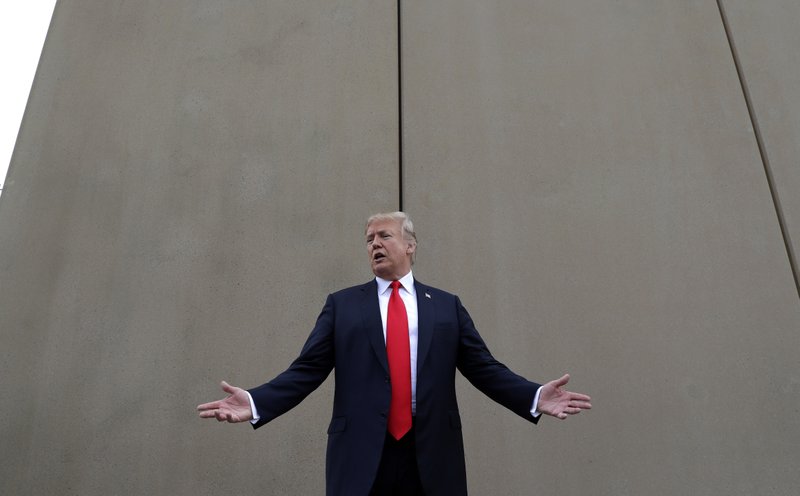
President Donald Trump hailed the start of his long-sought southern border wall this past week, proudly tweeting photos of the “WALL!” Actually, no new work got underway. The photos showed the continuation of an old project to replace two miles of existing barrier. And on Saturday, he ripped Amazon with a shaky claim that its contract with the post office is a “scam.” Trump and his officials departed from reality on a variety of subjects in recent days: the census, Amazon’s practices and the makeup of the Supreme Court among them. Here’s a look at some statements and their veracity: TRUMP: “Great briefing this afternoon on the start of our Southern Border WALL!” — tweet Wednesday, showing photos of workers building a fence. TRUMP: “We’re going to be starting work, literally, on Monday, on not only some new wall — not enough, but we’re working that very quickly — but also fixing existing walls and existing acceptable fences.” — Trump, speaking the previous week after signing a bill financing the government. THE FACTS: Trump’s wrong. No new work began on Monday or any other time this past week. And the photos Trump tweeted were misleading. They showed work that’s been going on for more than a month on a small border wall replacement project in Calexico, California, that has nothing to do with the federal budget he signed into law last week. The Calexico project that began Feb. 21 to replace a little more than 2 miles (3.2 kilometers) of border wall was financed during the 2017 budget year. A barrier built in the 1990s mainly from recycled metal scraps is being torn down and replaced with bollard-style barriers that are 30 feet (9.1 meters) high. Ronald D. Vitiello, acting deputy commissioner of U.S. Customs and Border Protection, defended the president’s statements, saying Friday “there’s construction” underway. TRUMP: “If the P.O. ‘increased its parcel rates, Amazon’s shipping costs would rise by $2.6 Billion.’ This Post Office scam must stop. Amazon must pay real costs (and taxes) now!” — tweet Saturday. TRUMP: “I have stated my concerns with Amazon long before the Election. Unlike others, they pay little or no taxes to state & local governments, use our Postal System as their Delivery Boy (causing tremendous loss to the U.S.), and are putting many thousands of retailers out of business!” — tweet Thursday. THE FACTS: Trump is misrepresenting Amazon’s record on taxes, the U.S. Postal Service’s financial situation and the contract that has the post office deliver some Amazon orders. Federal regulators have found that contract to be profitable for the Postal Service. People who buy products sold by Amazon pay sales tax in all states that have a sales tax. Not all third-party vendors using Amazon collect it, however. As for the post office, package delivery has been a bright spot for a service that’s lost money for 11 straight years. The losses are mostly due to pension and health care costs — not the business deal for the Postal Service to deliver packages for Amazon. Boosted by e-commerce, the Postal Service has enjoyed double-digit increases in revenue from delivering packages, but that hasn’t been enough to offset declines in first-class letters and marketing mail, which together make up more than two-thirds of postal revenue. While the Postal Service’s losses can’t be attributed to its package business, Trump’s claim that it could get more bang for its buck may not be entirely far-fetched. A 2017 analysis by Citigroup concluded that the Postal Service was charging below-market rates as a whole for parcels. The post office does not use taxpayer money for its operations. Trump is upset about Amazon because its owner, Jeff Bezos, owns The Washington Post, one of the targets of his “fake news” tweets. TRUMP: “Because of the $700 & $716 Billion Dollars gotten to rebuild our Military, many jobs are created and our Military is again rich. Building a great Border Wall, with drugs (poison) and enemy combatants pouring into our Country, is all about National Defense. Build WALL through M!” — tweets Sunday and Monday. THE FACTS: Trump is floating the idea of using “M″ — the Pentagon’s military budget — to pay for his wall with Mexico. Such a move would almost certainly require approval from Congress and there’s plenty of reason to be skeptical about the notion of diverting military money for this purpose. Only Congress has the power under the Constitution to determine federal appropriations, leaving the Trump administration little authority to shift money without lawmakers’ approval. Pentagon spokesman Chris Sherwood referred all questions on the wall to the White House. Spokeswoman Sarah Huckabee Sanders declined to reveal specifics, but said Trump would work with the White House counsel to make sure any action taken was within his executive authority. DAVID SHULKIN, citing reasons Trump fired him as veterans affairs secretary: “I have been falsely accused of things by people who wanted me out of the way. But despite these politically based attacks on me and my family’s character, I am proud of my record and know that I acted with the utmost integrity.” — op-ed Thursday in The New York Times. THE FACTS: His statement that he and his family were subjected to politically based attacks is disingenuous, though politics contributed to his dismissal. White House support for Shulkin eroded after a blistering report in February by VA’s internal watchdog, a non-partisan office. The inspector general’s office concluded that he had violated ethics rules by accepting free Wimbledon tennis tickets. The inspector general also said Shulkin’s chief of staff had doctored emails to justify bringing the secretary’s wife to Europe with him at taxpayer expense. It is true, though, that Shulkin had encountered resistance from about a half-dozen political appointees at the VA and White House who rebelled against him. In an extraordinary telephone call, John Ullyot, a top communications aide, and VA spokesman Curt Cashour asked the Republican staff director of the House Veterans Affairs Committee to push for Shulkin’s
Donald Trump emerging from seclusion to promote infrastructure plan
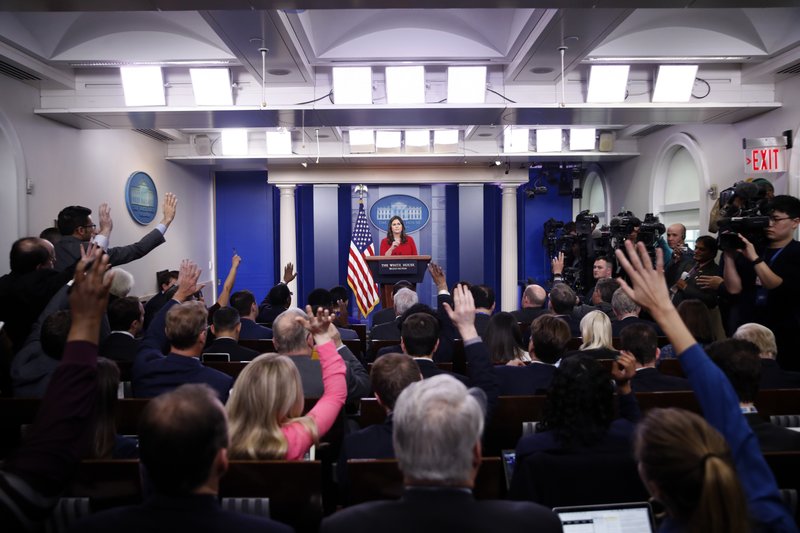
Attempting a policy reset, President Donald Trump will push for upgrades to the nation’s aging roads and bridges Thursday in his first public appearance since an adult-film actress claimed on national TV that they had sex months after his wife gave birth to his fifth child. Trump is visiting Richfield, Ohio, to sell Americans on his plan to use $200 billion in federal money to spur at least $1.5 trillion in spending over a decade to repair or replace highways, bridges, ports, airports and other infrastructure. Trump unveiled the sweeping infrastructure proposal in February and cast it as one that could garner bipartisan support. But the plan relies heavily on state and local governments for the bulk of the spending, raising concerns among members of Congress about the possibility of higher commuter tolls and the sale of assets to raise the money. There is little expectation that Congress will take up a sweeping infrastructure proposal along the lines of what Trump envisions — or that Republicans in control of the House and Senate will write their own legislation — as lawmakers begin to shift their focus to the challenge of getting re-elected in November. Instead, Congress plans to package a series of related measures, including beefed-up spending in the big budget bill Trump signed into law last week, as infrastructure investments. That bill, which funds the government through Sept. 30, included more money for transportation projects, rural broadband and other investments. House Speaker Paul Ryan, R-Wis., promoted it in a tweet as “Long-overdue updates to our country’s infrastructure.” Trump was last seen in public on Friday, when he used an appearance at the White House to criticize a massive government funding bill he had signed into law. The president, first lady Melania Trump and their 12-year-old son, Barron, spent last weekend at their Palm Beach, Florida, estate. Trump returned to the White House on Sunday shortly before CBS’ “60 Minutes” aired its interview with porn actress Stormy Daniels, who says the married Trump had sex with her in his Lake Tahoe hotel room in 2006. Trump, through his personal attorney and White House aides, has denied the affair. He has not commented on the allegations himself. The president has kept a relatively low profile since the broadcast, except for a series of tweets about trade and his pending meeting with North Korea’s leader. White House press secretary Sarah Huckabee Sanders denied Trump was in hiding. “He’s been incredibly active all week long,” Sanders said, pointing to actions by Trump on trade and the expulsion of scores of Russian intelligence officials. Trump has previously suggested the infrastructure proposal was not as important to him as other efforts to cut taxes and increase military spending. “What was very important to me was the military, what was very important to me was the tax cuts, and what was very important to me was regulation,” Trump said as he unveiled the plan in February before state and local leaders gathered at the White House. In Ohio, Trump was also expected to discuss findings in a new report from the White House Council of Economic Advisers that the infrastructure proposal would contribute modestly to economic growth over the 10-year period and help put hundreds of thousands of unemployed laborers back to work. After the speech, Trump was expected to fly to his Florida home. Republished with the permission of the Associated Press.
Leaders finalize U.S. budget bill voting could begin Thursday
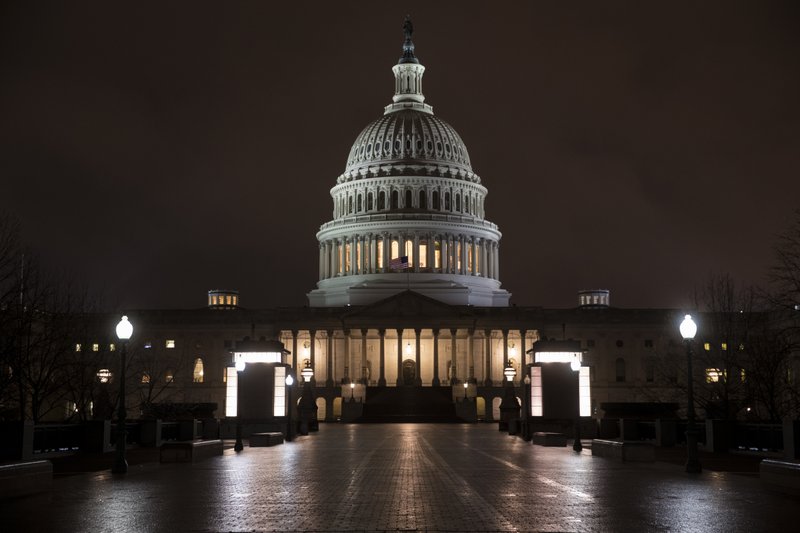
Congressional leaders have finalized a sweeping $1.3 trillion budget bill that substantially boosts military and domestic spending but leaves behind young immigrant “Dreamers,” deprives President Donald Trump some of his border wall money and takes only incremental steps to address gun violence. As negotiators stumbled toward an end-of-the-week deadline to fund the government or face a federal shutdown, House Speaker Paul Ryan dashed to the White House amid concerns Trump’s support was wavering. Although some conservative Republicans balked at the size of the spending increases and the rush to pass the bill, the White House said the president backed the legislation. Trump himself sounded less than enthused, tweeting late Wednesday: “Had to waste money on Dem giveaways in order to take care of military pay increase and new equipment.” Talks had stretched into Wednesday evening before the 2,232-page text was finally released. “No bill of this size is perfect,” Ryan said. “But this legislation addresses important priorities and makes us stronger at home and abroad.” Leaders hoped to start voting as soon as Thursday. A stopgap measure may be needed to ensure federal offices aren’t hit with a partial shutdown at midnight Friday when funding for the government expires. Negotiators have been working for days — and nights — on details of the bill, which is widely viewed as the last major piece of legislation likely to move through Congress in this election year. Lawmakers in both parties sought to attach their top priorities. Two of the biggest remaining issues had been border wall funds and a legislative response to gun violence after the clamor for action following recent school shootings, including the one in Parkland, Florida. On guns, leaders agreed to tuck in bipartisan provisions to bolster school safety funds and improve compliance with the criminal background check system for firearm purchases. The bill states that the U.S. Centers for Disease Control and Prevention can do research on gun violence, though not advocacy, an idea Democrats pushed. But there was no resolution for Dreamers, the young immigrants who have been living in the United States illegally since childhood but whose deportation protections are being challenged in court after Trump tried to end the Deferred Action for Childhood Arrivals program, or DACA. Democrats temporarily shut down the government earlier this year as they fought for that protection. But the issue only rose to a discussion item when Trump made a late-hour push for a deal in exchange for $25 billion in border wall funds. Instead, Trump is now poised to win $1.6 billion for barriers along the border, but none of it for the new prototypes he recently visited in California. Less than half the nearly 95 miles of border construction, including levees along the Rio Grande in Texas, would be for new barriers, with the rest for repair of existing segments. In one win for immigrant advocates, negotiators rejected Trump’s plans to hire hundreds of new Border Patrol and immigration enforcement agents. “We are disappointed that we did not reach agreement on Dreamer protections that were worthy of these patriotic young people,” said House Minority Leader Nancy Pelosi. The emerging plan removes a much-debated earmark protecting money for a rail tunnel under the Hudson River. The item was a top priority of Trump’s most powerful Democratic rival, Senate Minority Leader Chuck Schumer of New York, but Trump vowed to veto the bill over the earmark. Under the legislation, the project would remain eligible for funding, however, and a Schumer aide said it was likely to win well more than half of the $900 million sought for the project this year. The core purpose of the bill is to increase spending for military and domestic programs that have been sharply squeezed under a 2011 agreement that was supposed to cap spending. It gives Trump a huge budget increase for the military, while Democrats scored wins on infrastructure and other domestic programs that they failed to get under President Barack Obama. That largesse has drawn opposition from some fiscal conservatives and could make passage a potentially tricky process. Last month, Kentucky Sen. Rand Paul triggered a brief government shutdown over his objections to the deficit spending. On Wednesday, he tweeted his opposition to the emerging legislation, known as an “omnibus.” “It’s a good thing we have Republican control of Congress or the Democrats might bust the budget caps, fund planned parenthood and Obamacare, and sneak gun control without due process into an Omni … wait, what?” Paul tweeted. Most essential was support from Trump, who has been known to threaten to veto legislation even when his team is involved in the negotiations. Word of Trump’s discontent sent Ryan to the White House, where he was invited to a face-to-face with the president, with Senate Majority Leader Mitch McConnell on the phone. White House aides said the president’s support was never in doubt, but one senior White House official said the president was concerned that details of the package weren’t being presented as well as they could be, both to members of Congress and the public. The group discussed how they could better sell the package, said the official, who was granted anonymity to discuss the private conversation. “The president and the leaders discussed their support for the bill,” said White House press secretary Sarah Huckabee Sanders, adding that it would fund Trump priorities such as wall construction, add money to combat the opioid crisis and provide new infrastructure spending. Both parties touted $4.6 billion in total funding to fight the nation’s opioid addiction epidemic, a $3 billion increase. More than $2 billion would go to strengthen school safety through grants for training, security measures and treatment for the mentally ill. Medical research at the National Institutes of Health, a longstanding bipartisan priority, would receive a record $3 billion increase to $37 billion. Funding was also included for election security ahead of the 2018 midterms. Child care and development block grants would receive a huge $2.4 billion increase to $5.2 billion.
Alabama’s Congressional Democrats ready for gun control action, Republicans mum
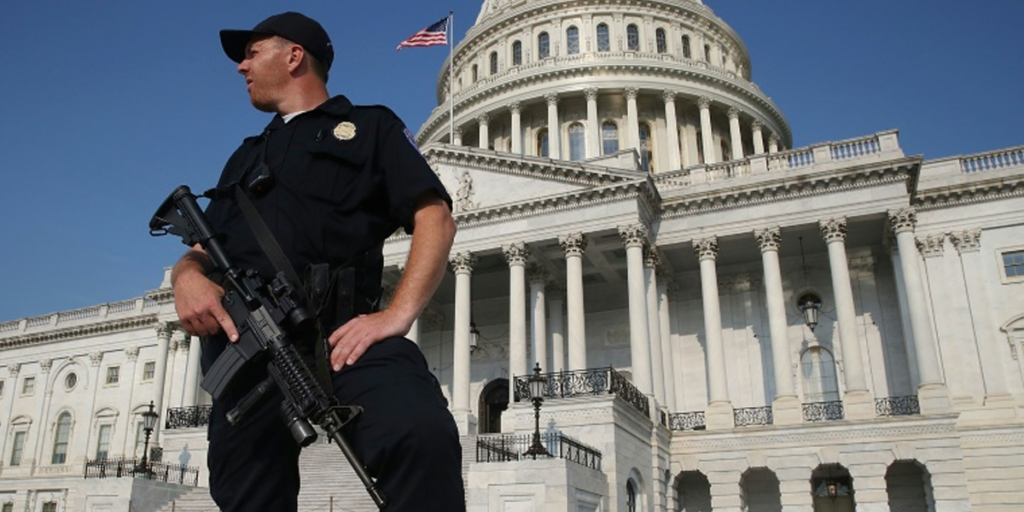
Americans across the country are once again calling on Congress to take action on gun control following last week’s massacre in Parkland, Fla. that left 17 people dead at a high school. While Congress has yet to take action, President Donald Trump helped move the conversation forward on Monday when he offered support for a limited strengthening of federal background checks on gun purchases. “While discussions are ongoing and revisions are being considered, the president is supportive of efforts to improve the federal background check system,” confirmed White House press secretary Sarah Huckabee Sanders. Trump’s is referring to the Fix NICS Act. Introduced last year by Texas-Republican U.S. Sen. John Cornyn, the bill is aimed to “fix” the way in which existing background checks can prevent firearm purchases by those who present possible red flags to state and local authorities. The legislation would ensure that federal and state authorities comply with existing law and accurately report relevant criminal history records to the National Instant Criminal Background Check System (NICS). The bill also penalizes federal agencies that fail to properly report relevant records and incentivizes states to improve their overall reporting and directs more federal funding to the accurate reporting of domestic violence records. Within the Alabama delegation, Democrats U.S. Sen. Doug Jones and 7th District U.S. Rep. Terri A. Sewell are glad to see Trump’s support for policy change and are ready to see Congress take action. “I absolutely support strengthening our background check system, and I’m glad the President agrees,” said Jones. “We need better data reported to the database, we need to close the gun show loophole, and we need to look at ways we can improve school safety. These won’t fix the problem overnight, but they are common sense first steps that we can take immediately.” Sewell agrees the Fix NICS Act is a step in the right direction. “I strongly agree that the Congress must take bipartisan action to strengthen background checks and address the epidemic of gun violence that has claimed so many lives,” remarked Sewell. “The Fix NICS Act is a step in the right direction, but alone, it is not enough to address the tragic reality of gun violence in America that has struck communities from Parkland to Las Vegas to Newtown.” But Sewell doesn’t believe the bill, which is backed by the National Rifle Association (NRA) and the National Shooting Sports Foundation, goes far enough on its own. “This bill does not close the gun show loophole or prevent the reckless sale of bump stocks, both of which deserve legislative solutions,” Sewell added. “I believe the President’s support for Sen. Cornyn’s bill is proof of the growing public demand for action among both Republicans and Democrats. I have always been a strong proponent of the Second Amendment, but Congress can no longer settle for symbolic gestures when gun violence kills more Americans every day.” Meanwhile Republicans have remained mostly mum offering only their thoughts and prayers to the victims’ families. 1st District U.S. Rep. Bradley Byrne being the only exception. When Alabama Today asked all members of the Alabama delegation whether or not they supported improving the federal background check system, Byrne’s was the only Republican office to respond. “Congressman Byrne is open to evaluating any proposal from the Trump Administration regarding potential changes to the background check system. He will wait to review the proposals before weighing in,” said Byrne spokesperson Seth Morrow.
Darryl Paulson: Please fire Robert Mueller!
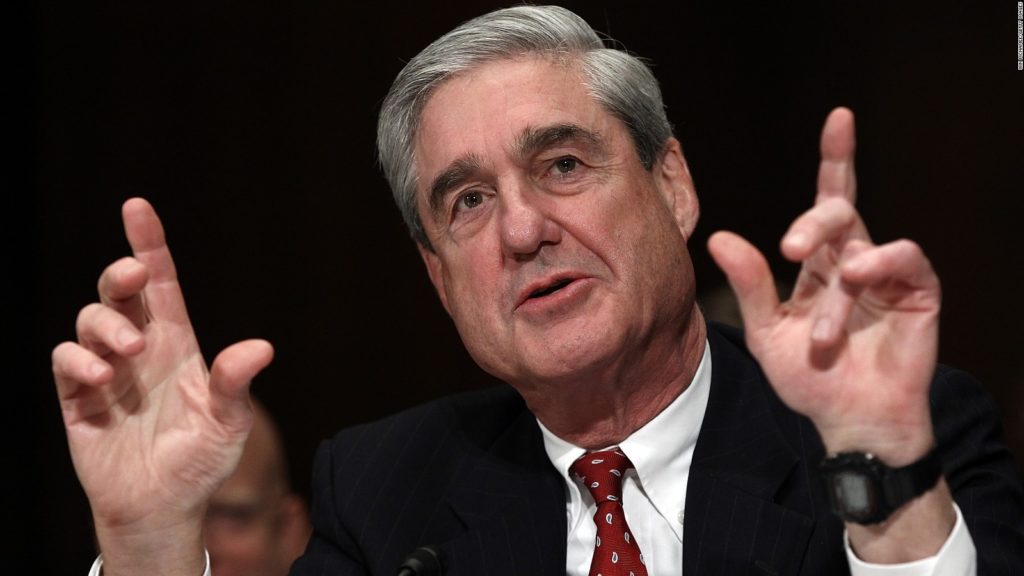
For all my friends who think I have finally gone off the deep end, I really do not want Special Counsel Robert Mueller to be fired. I do think the firing of Mueller, if it happens, may be the only way to end the tyranny of President Donald Trump. Trump has already fired FBI Director James Comey, as well as releasing National Security Adviser Michael Flynn and Press Secretary Sean Spicer. This does not include a half dozen lesser-known officials who have been shown the door in the first six months of Trump’s presidency. Nor does it include the likely departures of Attorney General Jeff Sessions, Chief of Staff Reince Priebus and Special Counsel Mueller. Trump fired Comey out of fear of where the Russian investigation was headed, although he told the public that Comey had lost the confidence of FBI employees. There was no evidence to support that. Trump told Russian officials in the Oval Office that Comey was fired because “he was crazy, a real nut job. I faced great pressure because of Russia. That’s taken care of.” Or, so he thought! Terminating Mueller would mean that the two highest-ranking officials investigating the Russian influence in the 2016 election were fired. If Mueller is fired, Republicans will quickly distance themselves from Trump, something they should have done long ago. Democrats will clamor for Trump’s impeachment. The American public will be asking why Trump fired both Comey and Mueller. What did he have to fear? What was hiding in his financial records that might demonstrate Trump’s ties to Russian government and business? If Trump has nothing to hide, as he has maintained from the beginning, then why stop the investigations? What could be better for Trump than to be given a clean bill of health by one of the most respected individuals in government? If that were to happen, I could envision Trump’s early morning tweet: “I told you so. What a waste of taxpayer’s time and money. I have been completely exonerated.” A clean bill from Mueller would do more to help Trump than anything imaginable. Mueller is a decorated Vietnam veteran, a respected attorney, and appointed by Republican president George W. Bush as Director of the FBI in 2001. Mueller served the full ten-year term and stayed on for two additional years at the request of President Obama. Not only is Mueller universally admired by both Republicans and Democrats, but he is more trusted by the American public than is the president. 64 percent of Americans said, “Donald Trump is more concerned about protecting his administration from being investigated,” than “protecting the United States from Russian interference.” When asked if President Trump should stop the investigation by the Special Counsel, 81 percent said no. The attacks on Mueller are two-pronged. First, Trump has attacked the scope of the investigation. Trump told The New York Times that if Mueller looks at anything involving his business dealings, “that’s a violation.” Trump Press Secretary Sarah Huckabee Sanders told the media that “the investigation should stay within the confines of Russian meddling in the election. Nothing beyond that.” Both Trump and Sanders fail to recognize that Mueller’s mandate was given to him by Deputy Attorney General Rod Rosenstein who appointed Mueller to his position. Rosenstein stated that Mueller had the authority to look into “any links and/or coordination between the Russian government and individuals associated with the campaign.” The second attack on Mueller relates to potential “conflicts of interest.” Trump argues that the day before Mueller was appointed Special Counsel he was being interviewed to head the FBI. “He wanted the job,” said Trump. Even if he did, I am not sure how this constitutes a conflict of interest. The Justice Department regulations do allow the Special Counsel to be fired for “conflict of interest,” as well as “misconduct, dereliction of duty and incapacity.” Rosenstein has stated he sees no grounds for removing Mueller. During the debate at the Constitutional Convention on impeachment, George Mason of Virginia asked whether “any man be above the law.” Future president James Madison included some of the grounds for impeachment, including that the president “might betray his trust to a foreign power.” (Now known as the Trump Provision.) If Trump is wise, he will let the Mueller investigation run its course. Wisdom has not been one of Trump’s strengths during his first six months in office. Trump could fire Mueller, and that would lead to a constitutional crisis. Perhaps nothing could be done to unify the nation or the political parties more than Trump acting like Caesar. Trump and his advisors are looking at whether he can pardon himself and family members. Although there is no precedent for this, Trump is not likely to find this a successful path. If, as Trump has repeatedly stated, there is no substance to the allegation of collusion with the Russians, then let Mueller complete his investigation and issue his findings. If there is something that would indicate collusion between Trump and the Russians, then Trump would be best advised to step aside and let Vice President Mike Pence assume office. To a great extent, Trump may have one last chance to “make America great again.” ••• Darryl Paulson is Emeritus Professor of Government at the University of South Florida in St. Petersburg specializing in Florida Politics and Elections.
Sarah Sanders replaces Sean Spicer as press secretary
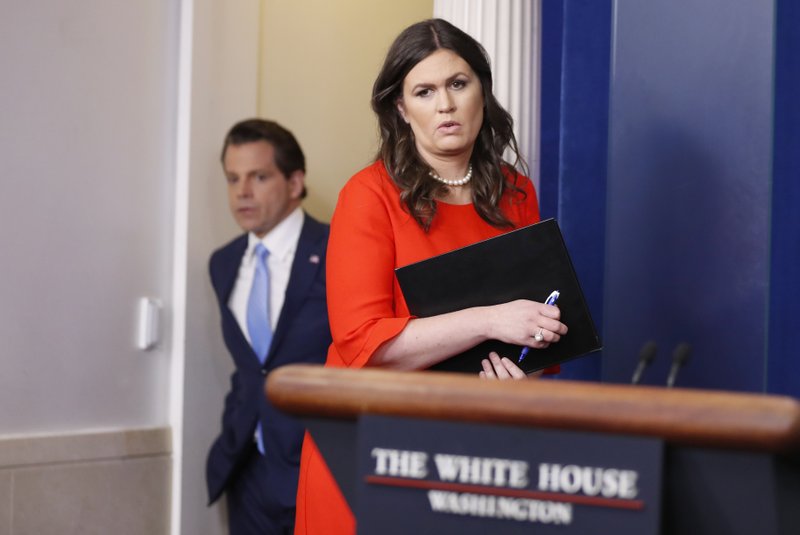
The Latest on changes to the White House communications staff (all times local): 2:45 p.m. New York financier Anthony Scaramucci has been formally named White House communications director and Sarah Huckabee Sanders has been promoted to press secretary in the Trump White House’s latest shakeup. Trump says in a statement read by Sanders that he’s “grateful” for departing press secretary Sean Spicer’s “work on behalf of my administration and the American people.” He adds: “just look at his great television ratings!” Scaramucci also is addressing reporters at the White House. He calls Spicer “a true American patriot” and says he hopes Spicer “goes on to make a tremendous amount of money.” ___ 2 p.m. Outgoing press Secretary Sean Spicer says that he chose to resign from his position to give incoming communications director Anthony Scaramucci a fresh start. Spicer says during a brief phone conversation with The Associated Press following his announced departure that, “we’re at the point where” the president “could benefit from a clean slate.” He says he felt it would be best for Scaramucci to be able to build his own operation “and chart a new way forward.” Spicer is also complimenting Scaramucci, a New York financier and frequent defender of the president who was a staple at Trump Tower during the president’s transition. Spicer says of Scaramucci’s hiring: “It’ll be great, he’s a tough guy.” ___ 1:50 p.m. White House press secretary Sean Spicer says it’s been “an honor” and “privilege” to serve President Donald Trump and the country. Spicer resigned Friday in protest over the hiring of a new White House communications director. He says in a tweet that he will continue his service through August. One person with knowledge of the situation said Spicer objected to the hiring of New York financier Anthony Scaramucci’s lack of qualifications for the communications role. The person spoke on condition of anonymity because they were not authorized to discuss the personnel matter publicly. ___ 1 p.m. White House deputy press secretary Sarah Huckabee Sanders will be conducting an on-camera briefing on Friday afternoon, following White House press secretary Sean Spicer’s resignation. Spicer announced his departure after President Donald Trump hired a new White House communications director, ending his rocky six-month tenure as Trump’s top spokesman. Sanders has been handling most of the briefing duties in recent weeks, and most briefings have been off-camera. The last on-camera White House briefing was held on June 29. ___ 12:35 p.m. White House chief of staff Reince Priebus says he supports incoming communications director Anthony Scaramucci “100 percent.” His comments come moments after White House press secretary Sean Spicer resigned over Scaramucci’s hiring. Priebus and Spicer spent years working closely together at the Republican National Committee. Priebus has also reportedly opposed hiring Scaramucci for various administration positions. Priebus told The Associated Press that he and Scaramucci are “very good friends.” He says it’s “all good here” at the White House. ___ 12:07 p.m. White House press secretary Sean Spicer is resigning his position, according to two people with knowledge of the decision. One of those people said Spicer is quitting because of objections over the appointment of a new White House communications director, New York financier Anthony Scaramucci. The people with knowledge of the decision insisted on anonymity because they were not authorized to discuss the personnel matter publicly. Republished with permission of The Associated Press.
