
As Russia scandal touches his son, Donald Trump privately rages

The snowballing revelations about Donald Trump Jr.’s meeting with a Russian lawyer during last year’s presidential campaign have broadsided the White House, distracting from its agenda as aides grapple with a crisis involving the president’s family. The public has not laid eyes on the president since his return from Europe Saturday. But in private, Trump has raged against the latest Russia development, with most of his ire directed at the media, not his son, according to people who have spoken to him in recent days. The only comment from Trump on the matter for much of the day came in a brief statement via spokeswoman Sarah Huckabee Sanders, who said Tuesday that the president believes his son is “a high-quality person.” On Wednesday morning, Trump tweeted that his son was “open, transparent and innocent,” again referring to the investigation as “the greatest Witch Hunt in political history.” The president also questioned the sources of the media reporting on the story. The bombshell revelation that Trump Jr. was eager to accept information from the Russian government landed hard on weary White House aides. While staff people have grown accustomed to a good news cycle being overshadowed by the Russia investigations, Trump aides and outside advisers privately acknowledged that this week’s developments felt more serious. Trump Jr. released four pages of emails Tuesday in which he communicates with an associate trying to arrange a meeting with a Russian lawyer. In the emails, the intermediary says the attorney has negative information about Democrat Hillary Clinton that is part of the Russian government’s efforts to help Trump in the campaign. The then-candidate’s son responds: “I love it.” This new setback raises new questions about whether the Trump campaign coordinated with Moscow during the election, a charge the president has denied for months. And it points those questions more directly at the inner circle of Trump’s own family. As has been the pattern for Trump’s White House, the controversy has sparked a new round of recriminations among the president’s team. Nearly a dozen White House officials and outside advisers spoke on the condition of anonymity in order to discuss the mood in the West Wing. The president, in conversations with confidants, has questioned the quality of advice he has received from senior staff, including chief of staff Reince Priebus. However, Priebus has been a frequent target of criticism for months and even those taking aim at him now said it did not appear as though a shakeup was on the horizon. There has also been a difference of opinion within the West Wing has to how to handle the crisis, with some aides favoring more transparency than others. Some of the unhappiness centers on Trump’s legal team, which is led by New York attorney Marc Kasowitz. An unusual statement Saturday night from the legal team’s spokesman Mark Corallo appeared to claim Trump Jr., [Jared] Kushner and [Paul] Manafort were duped into meeting with the Russian lawyer, and was viewed as particularly unhelpful by senior White House officials. The revelations come at a pivotal moment for Trump and the Republican Party, as GOP senators race to finish work on a health care overhaul that has divided the party. Trump has largely stayed on the sidelines of the policy negotiations on the measure, but has still publicly pressed GOP senators to wrap up work on legislation this summer and fulfill one of the party’s central promises to voters. On Capitol Hill, some Republican lawmakers cast the snowballing Russia controversy as a distraction from the health care debate. “We ought to be disciplined and not be distracted by things that may be legitimate but not right now in our lane,” said Sen. Thom Tillis of North Carolina. The matter has also distracted from a brief stretch in which some White House advisers believed they were finding their footing. Trump aides, who view clashes with the media as central to the president’s agenda, were emboldened when three journalists from CNN resigned after the network withdrew a story about a Trump ally. Trump’s allies were also heartened by his trip to Europe last week, feeling that his speech saluting national pride in Poland was a high point of his presidency and believing that he held his own during meetings with foreign leaders at an international summit in Germany. But the afterglow of Trump’s trip quickly vanished, replaced once again with questions about the swirling federal and congressional investigations into Russia’s election meddling. And Trump allies took notice Tuesday when Vice President Mike Pence distanced himself from the revelation by the president’s son. In a statement, Pence spokesman Marc Lotter said the vice president “was not aware of the meeting,” adding Pence was “not focused on stories about the campaign especially those pertaining to the time before he joined the campaign.” Pence was named Trump’s running mate in the middle of July 2016, several weeks after the meeting involving the president’s son. Trump Jr, who is running the family business with his brother, huddled with friends and close business associates after the first stories dropped, his mood shifting from worry to defiance over the story’s lifespan, according to confidants. He has told those close to him that while he realizes the optics of the meeting aren’t ideal, he has echoed his father in believing that the media have overblown the matter and, despite some opposition among his allies, has said he wants to publicly fight back. But White House aides struggled with bringing forth a strong defense against the scandal that also touched Jared Kushner, the president’s son-in-law and senior adviser who attended the 2016 meeting. Though Sanders called charges of collusion “ridiculous,” the White House press briefing remained off-camera for the second consecutive day, limiting the power of her pushback. And the president himself was slated to stay out of sight. He had no public events scheduled for Wednesday until he departs for another overseas trip, this time to France. Republished with permission of The Associated Press.
Donald Trump trashes media, cheers wins at $10 million fundraiser
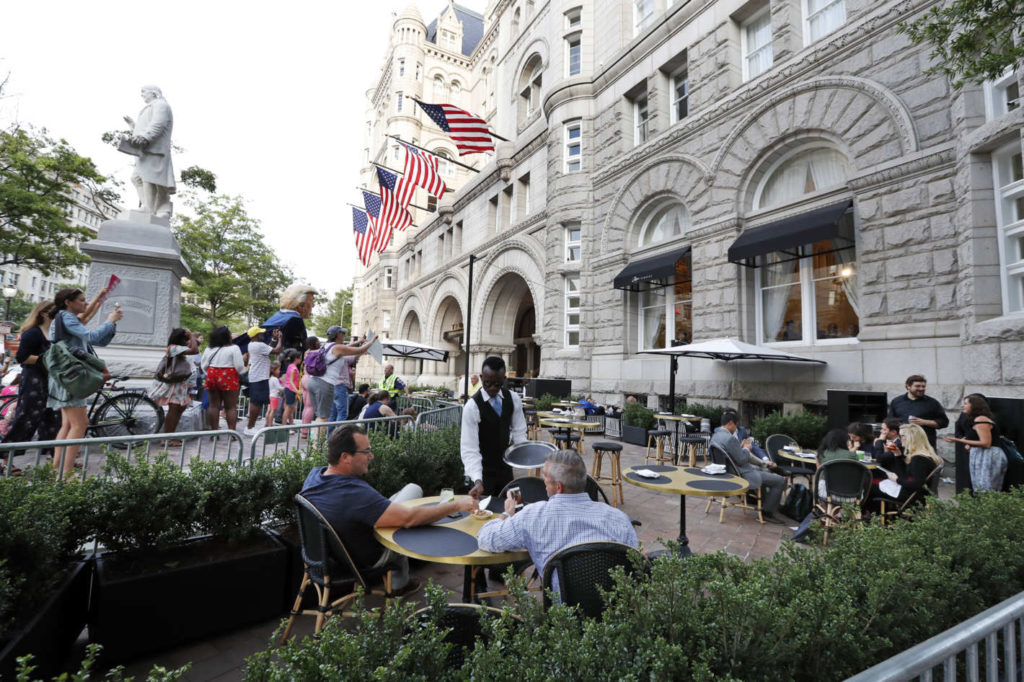
Republican donors paid $35,000 apiece to hear familiar a message from President Donald Trump: The media, particularly CNN, keep trying to take him down, and yet Republicans just keep on winning elections. He noted with pride that his party had won four special elections this year. The president was whisked a few blocks from the White House to the Trump International Hotel, his name-branded Washington venue, for an evening of hobnobbing behind closed doors Wednesday with major party financiers, including Las Vegas casino mogul Steve Wynn. One attendee stood out: Nevada Sen. Dean Heller, part of a small group of Republicans whose objections just a day earlier had doomed — at least for now — the Senate’s effort to repeal and replace President Barack Obama’s health care law. Trump did not single out Heller, but Wynn, the lead fundraiser for the Republican National Committee, gently jabbed him by urging all Republicans to come together to support the president’s agenda. Breaking with the tradition of his predecessor, Trump barred reporters from the event, despite an announcement earlier in the day that a pool of reporters would be allowed inside. Two people in the room, demanding anonymity to discuss a private event, relayed the messages given by Trump and Wynn. “It’s a political event, and they’ve chosen to keep that separate,” White House deputy press secretary Sarah Huckabee Sanders said when asked why the event was closed to the media. Trump’s first re-election fundraiser comes some 40 months ahead of Election Day. Joined by first lady Melania Trump and top advisers, he held court for about two hours at an event attended by about 300 people that raised more than $10 million. The money is to be spread among Trump’s campaign, the RNC and other GOP entities. Security was tight at the hotel, where guests in long gowns and crisp suits began arriving around 5 p.m. But the event also drew critics. The president’s motorcade was greeted by dozens of protesters, who hoisted signs with slogans like “Health care, not tax cuts” and chanted “Shame! Shame!” Among the event’s guests: Longtime GOP fundraiser-turned television commentator Mica Mosbacher and Florida lobbyist and party financier Brian Ballard. The Trump International Hotel has become a place to see — and be seen — by current and former Trump staffers, lobbyists, journalist and tourists. Several Washington figures of considerable influence popped into the lobby even though they didn’t plan to attend the fundraiser in an adjacent ballroom. Trump’s decision to hold a fundraiser at his own hotel has raised issues about his continued financial interest in the companies he owns. Unlike previous presidents who have divested from their business holdings or interests before taking office, Trump moved his global business empire assets into a trust that he can take control of at any time. That means that when his properties — including his Washington hotel — do well, he stands to make money. Trump technically leases the hotel from the General Services Administration, and profits are supposed to go to an account of the corporate entity that holds the lease, Trump Old Post Office LLC. It remains unclear what might happen to any profits from the hotel after Trump leaves office, or whether they will be transferred to Trump at that time. Under campaign finance rules, neither the hotel nor the Trump Organization that operates it can donate the space for political fundraisers. It must be rented at fair-market value and paid for by the Trump campaign, the RNC or both. Although this was Trump’s first major-donor event, his re-election campaign has been steadily raising money since the day he was inaugurated, mostly through small donations and the sale of Trump-themed merchandise such as the ubiquitous, red “Make America Great Again” ball caps. The campaign raised about $7 million in the first three months of the year, according to Federal Election Commission reports. The RNC also is benefiting from the new president’s active campaigning, having raised about $62 million through the end of last month. The party has raised more online this year than it did in all of 2016 — a testament to Trump’s success in reaching small donors. Trump’s re-election money helps pay for his political rallies. He’s held five so far, and campaign director Michael Glassner says those events help keep him connected to his base of voters. The constant politicking, however, means it is challenging for government employees to avoid inappropriately crossing ethical lines. Some watchdog groups have flagged White House employee tweets that veer into campaign territory. White House spokeswoman Lindsay Walters says the employees work closely with lawyers to avoid pitfalls. Walters also says the White House takes care to make sure that Trump’s political events and travel — including the Wednesday fundraiser — are paid for by the campaign and other political entities. Republished with permission of The Associated Press.
Sean Spicer out as WH press secretary; seeking ‘less public’ role, replacement
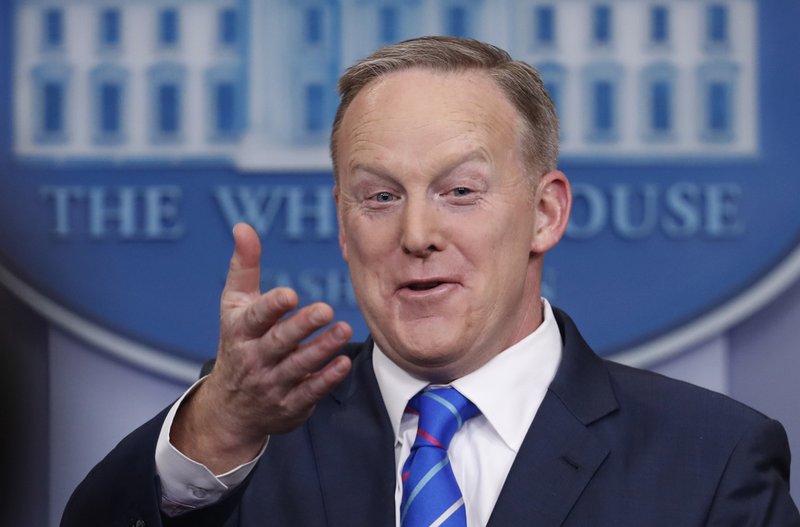
White House press secretary Sean Spicer is seeking to take on a more strategic role that would give him a limited presence in the daily press briefings that have made him a prominent face of the Trump administration. A senior administration official and three people familiar with the potential changes said Monday that Spicer has discussed taking a more senior communications role at the White House. The three people said he has reached out to possible successors at the podium and as communications director. The people spoke on condition of anonymity in order to discuss internal deliberations before a final decision is made. “We have sought input from many people as we look to expand our communications operation. As he did in the beginning, Sean Spicer is managing both the communications and press office,” said Sarah Huckabee Sanders, a deputy White House press secretary. She declined further comment on the potential changes. Discussions about overhauling the White House communications office have been ongoing for several weeks, according to the senior administration official. Spicer’s preference is to step away from the press briefings entirely, though other configurations have also been discussed. It’s unclear how quickly a decision will be made, and, as with all things involving President Donald Trump, the situation could change. Major staffing shake-ups have been a constant subject of conversation at the White House, but have failed to materialize in recent weeks, aside from the departure of communications director Mike Dubke in early June. The White House has consulted an array of Republicans and Trump allies, including Laura Ingraham, the conservative radio host and political commentator. However, Ingraham is not expected to take the press secretary position. David Martosko, the U.S. political editor of London’s Daily Mail, who covered the president’s campaign, has also interviewed for senior communications jobs, according to a person familiar with the interviews who spoke on condition of anonymity to discuss the private deliberations. The possible changes for Spicer were first reported by Bloomberg News and Politico. Spicer’s public role has already diminished in recent weeks. The White House has increasingly tapped Cabinet officials and other White House advisers to address reporters on camera and moved to take some of the daily briefings off cable television to keep the focus on Trump, who makes a habit of watching the televised performances. Spicer spoke Monday from the podium at an off-camera gaggle that barred broadcast outlets from using the audio of the question-and-answer session. Asked about the changes, Spicer said Trump had spoken before cameras during an Oval Office meeting with the president of Panama and would later make remarks in front of the media at an event with technology leaders. “There are days that I’ll decide that the president’s voice should be the one that speaks and iterate his priorities,” Spicer said. The White House has generally only used that excuse on days that the president has held a press conference or delivered a major speech. Spicer’s briefings have been must-see TV during the start of the Trump era, beginning with his fiery, inaccurate claim that journalists wrongly portrayed the size of Trump’s inauguration audience. He has been the subject of recurring skits by comic Melissa McCarthy on “Saturday Night Live” and his afternoon briefings have garnered strong ratings. In April, the former Republican National Committee strategist apologized for making an “inappropriate and insensitive” statement comparing Adolf Hitler to Syrian President Bashar Assad by suggesting Hitler “didn’t even sink to using chemical weapons.” His comments ignored Hitler’s use of gas chambers to kill Jews. Trump threatened in May to shut down daily press briefings and told Fox News Channel at the time that Spicer was “doing a good job, but he gets beat up.” The president has long seen himself as his most effective spokesman, and has faulted his communications team for much of the early turbulence at the White House as well as the backlash from the firing of FBI Director James Comey. Republished with permission of The Associated Press.
About that unusually tense interview between Stephanopoulos, Trump aide
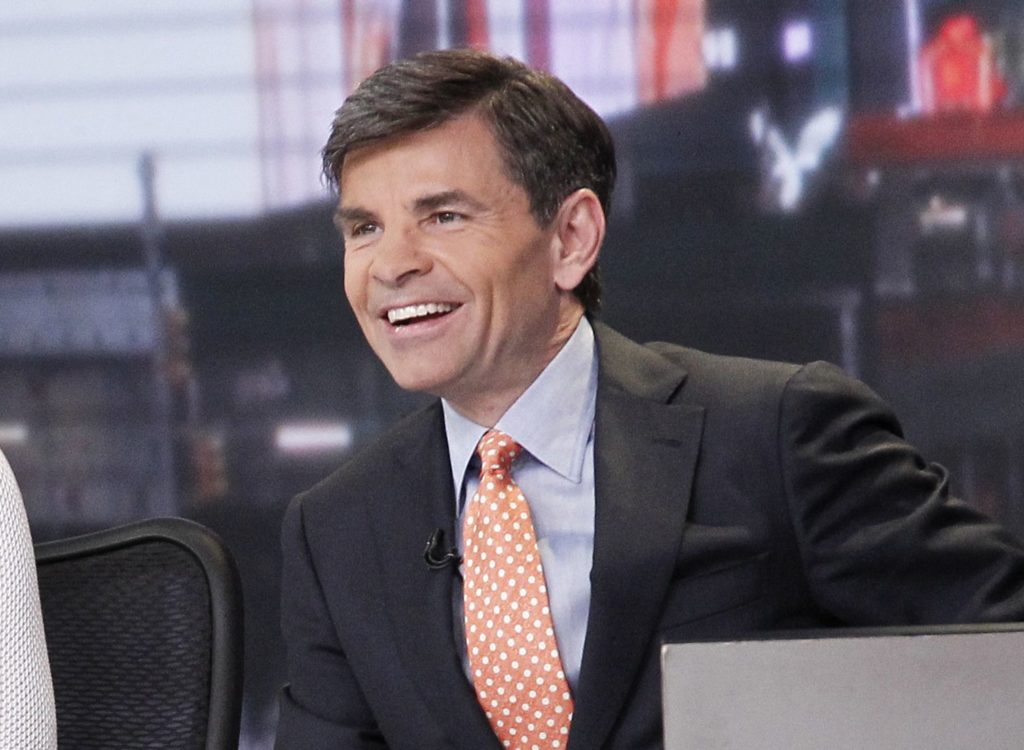
George Stephanopoulos‘ “Good Morning America” interview with White House spokeswoman Sarah Huckabee Sanders on Monday is an instant milestone in the hostile relationship between the Trump administration and the media. In the discussion about President Donald Trump‘s weekend accusations — offered without proof — that former President Obama ordered Trump’s New York home wiretapped, Stephanopoulos repeatedly interrupted and stopped Sanders when he felt she veered from the truth. It was a crackling exchange unusual for the generally happy terrain of network morning television, and made Stephanopoulos a hero or villain depending on whose social media feed is followed. It was also the second time in a month that the ABC anchor had a notably sharp interview with a Trump administration official. On “This Week” last month, he repeatedly pressed Trump aide Stephen Miller for evidence to back up the claim that there was massive voter fraud in the election. Sanders was also interviewed on NBC’s “Today” show on Monday, while “CBS This Morning” turned down the White House’s offer to have her on. Fox News Channel’s “Fox & Friends” brought presidential counselor Kellyanne Conway on to speak about Trump’s allegations, less than a day after White House press secretary Sean Spicer said there would be no further comment on the issue. It wasn’t clear what changed the administration’s strategy. Stephanopoulos began his interview by asking Sanders whether Trump accepted reports that FBI director James Comey had denied there was any wiretapping of Trump. Sanders said she didn’t believe he did, and started talking about wiretapping reports in other media outlets. “Sarah, I have got to stop you right there,” Stephanopoulos said. The stories she cited did not back up the president’s claims, he said. “What is the president’s evidence?” he asked. Sanders said there was “wide reporting” suggesting that the administration could have ordered wiretapping. Stephanopoulos stopped her to note there was a report of a court-ordered wiretapping, although James Clapper, former director of national intelligence under Obama, had denied that. Stephanopoulos stopped Sanders again when she noted that the unsubstantiated report of a wiretapping order came under the Obama administration and that “all we’re asking is that Congress be allowed to do its job.” “Hold on a second,” he said. “There is a world of difference between a wiretap ordered by a president and a court-ordered wiretap by a federal judge.” Noting that Obama’s representatives, Comey and Clapper had all said there was no wiretapping, Stephanopoulos asked, “is the president calling all three of these people liars?” Sanders said that he wasn’t, but that it was a matter for congressional investigators to look into. She said she considered it a double standard that the media does not believe Trump when he says nothing untoward had happened between him and Russia, while reporters accept denials by the Obama administration on the wiretap accusation. “If the president walked across the Potomac, the media would be reporting that he could not swim,” she said. The interview illustrated the difficulties the media faces in trying to report on the president’s unsubstantiated tweets. There was a furious debate on the “Good Morning America” Facebook page on Monday afternoon between people who cheered the host, a one-time adviser to President Bill Clinton, for calling out untruths, and others who believed he was rude — even suggesting they would boycott ABC’s morning show because they were disgusted by the interview. Many of Trump’s supporters are angered by aggressive questioning because they believe the media did not ask similar tough questions of the Obama administration, said Tim Graham of the Media Research Center, a conservative media watchdog. “You have no right to tell us what the truth is,” Graham said. At the same time, reporters face pressure from Trump opponents who give no quarter, as witnessed by last week’s backlash against television analysts who suggested Trump gave an effective speech before Congress. There are also some who believe the wiretap accusation itself is a way to distract people from the story about Russia, and the media effectively supports the strategy by reporting it. Stephanopoulos said after the interview that his job is to elicit as much clarity as possible, and he believed his interview was an important opportunity to get the Trump administration on the record on these issues. “If I hear something that I know to be untrue, then I think it’s my responsibility to point that out,” he said. Sanders’ interview on “Today” was more peaceful, but still had some tense moments. Savannah Guthrie interrupted Sanders to ask a second time when she wouldn’t answer her question about whether the president had made his accusations solely after seeing media reports. She said she didn’t know. Sanders later repeated the same line about the Potomac River. Conway was given more time to talk on “Fox & Friends,” although she did face pushback on whether Trump associates who had conversations with Russian officials had hurt the president. She drew laughs when she said she wished she had $50 for every time Russia was mentioned in the news. “A drinking game,” one of the Fox anchors joked off-screen. Republished with permission of The Associated Press.
Jeff Sessions spoke with Russian envoy in 2016, Justice Dept says
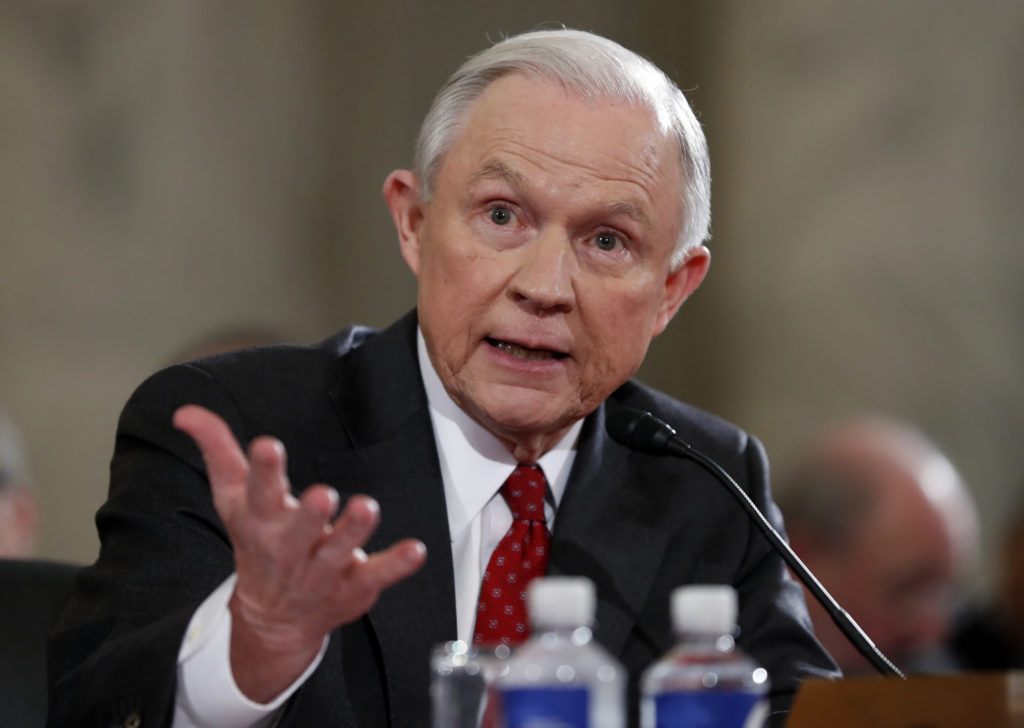
Attorney General Jeff Sessions talked twice with Russia’s ambassador to the United States during the presidential campaign, the Justice Department confirmed, communications that spurred calls in Congress for him to recuse himself from an investigation into Russian interference in the U.S. election. Sessions, an early supporter of President Donald Trump‘s candidacy and a policy adviser to the Republican, did not disclose those discussions at his Senate confirmation hearing in January when asked what he would do if “anyone affiliated” with the campaign had been in contact with officials of the Russian government. Sessions replied that he had not had communications with the Russians. In a statement late Wednesday, Sessions said, “I never met with any Russian officials to discuss issues of the campaign. I have no idea what this allegation is about. It is false.” Justice Department spokeswoman Sarah Isgur Flores said Wednesday night that “there was absolutely nothing misleading about his answer.” That statement did not satisfy Democrats, who even before Wednesday had sought his recusal from the ongoing federal investigation and had raised questions about whether he could properly oversee the probe. Sessions said Thursday in a brief interview with NBC, “I have said that, when it’s appropriate, I will recuse myself.” White House spokeswoman Sarah Huckabee Sanders earlier called the disclosure of the talks with the ambassador, Sergey Kislyak, “the latest attack against the Trump administration by partisan Democrats.” She added that Sessions “met with the ambassador in an official capacity as a member of the Senate Armed Services Committee, which is entirely consistent with his testimony.” House Democratic leader Nancy Pelosi accused Sessions of “lying under oath” and demanded that he resign. Other Democrats called on him to step aside from the investigation. House Majority Leader Kevin McCarthy, appearing Thursday on MSNBC’s “Morning Joe” show, “I just think he needs to clarify what these meetings were.” The California Republican said it isn’t unusual for members of Congress to meet with ambassadors, but he added that if a question arose about the integrity of a federal investigation, “I think it’d be easier” for an attorney general to step away from the probe. Sessions had more than 25 conversations with foreign ambassadors last year in his role as a U.S. senator and senior member of the Armed Services Committee, and had two separate interactions with Kislyak, the department confirmed. One was a visit in September in his capacity as a senator, similar to meetings with envoys from Britain, China, Germany and other nations, the department said. The other occurred in a group setting following a Heritage Foundation speech that Sessions gave during the summer, when several ambassadors — including the Russian ambassador — approached Sessions after the talk as he was leaving the stage. Revelations of the contacts, first reported by The Washington Post, came amid a disclosure by three administration officials that White House lawyers have instructed aides to Trump to preserve materials that could be connected to Russian meddling in the American political process. The officials who confirmed that staffers were instructed to comply with preservation-of-materials directions did so on condition of anonymity because they were not authorized to publicly disclose the memo from White House counsel Don McGahn. On the Sessions revelation, Rep. Adam Schiff of California, the top Democrat on the House Intelligence Committee, said: “If reports are accurate that Attorney General Sessions — a prominent surrogate for Donald Trump — met with Ambassador Kislyak during the campaign, and failed to disclose this fact during his confirmation, it is essential that he recuse himself from any role in the investigation of Trump campaign ties to the Russians.” Asked by reporters Monday about the prospect of a recusal, Sessions had said, “I would recuse myself from anything that I should recuse myself on.” At the confirmation hearing in January, Sen. Al Franken of Minnesota asked Sessions about allegations of contact between Russia and Trump aides during the 2016 election. He asked Sessions what he would do if there were evidence that anyone from the Trump campaign had been in touch with the Russian government during the campaign. Sessions replied he was “unaware of those activities.” Then he added: “I have been called a surrogate at a time or two in that campaign and I didn’t have, did not have communications with the Russians, and I’m unable to comment on it.” Flores, the Justice Department spokeswoman, said that response was not misleading. “He was asked during the hearing about communications between Russia and the Trump campaign — not about meetings he took as a senator and a member of the Armed Services Committee,” she said in a statement. Franken said in a statement he was troubled that the new attorney general’s response to his question was “at best, misleading.” He said he planned to press Sessions on his contact with Russia. “It’s clearer than ever now that the attorney general cannot, in good faith, oversee an investigation at the Department of Justice and the FBI of the Trump-Russia connection, and he must recuse himself immediately,” Franken said. Separately in January, Sen. Patrick Leahy, a Judiciary Committee Democrat, asked Sessions in a written questionnaire whether “he had been in contact with anyone connected to any part of the Russian government about the 2016 election, either before or after election day.” Sessions replied simply, “No.” Republished with permission of The Associated Press.
