
Tommy Tuberville decries Joe Biden’s weaponization of DOJ
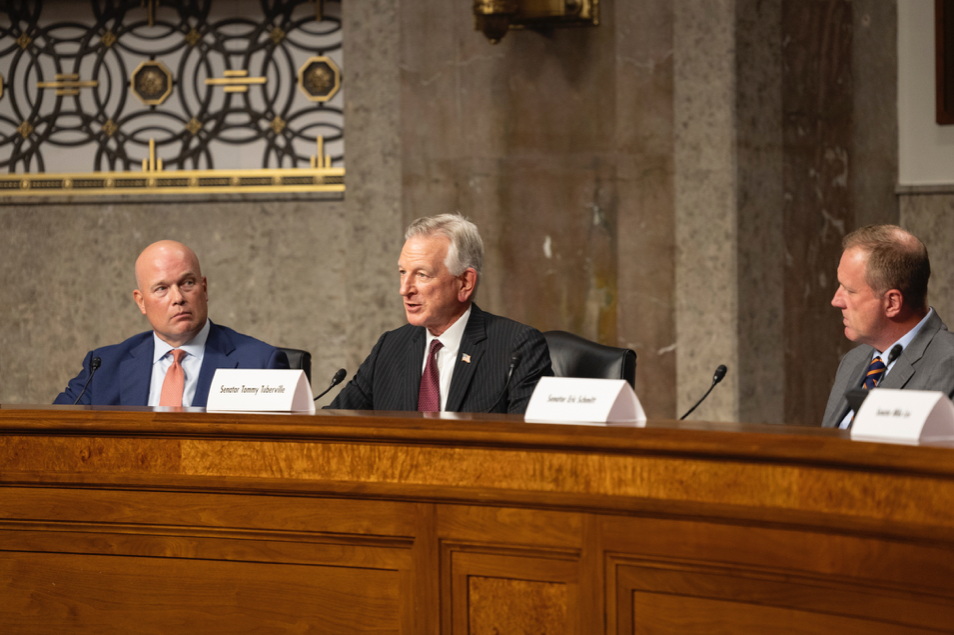
Yesterday, U.S. Senator Tommy Tuberville joined Senator Eric Schmitt, who led the panel, as well as Senators Mike Lee and Roger Marshall in a roundtable discussion on the weaponization of Joe Biden’s Justice Department against its political opponents. Other participating panelists included Matt Whitaker, former Acting United States Attorney General; Stephen Miller, former Senior Advisor to President Trump and President of America First Legal; and Kevin Roberts, President of The Heritage Foundation. WATCH: I’m leading my Senate Republican colleagues in a Roundtable on the Politicization of our Justice System. https://t.co/Unne9AAbvN — Senator Eric Schmitt (@SenEricSchmitt) July 9, 2024 Tuberville spoke to the weaponization of federal agencies, saying “Since taking office, President Biden has used taxpayer dollars and resources to attack conservative parents on school boards, Catholics, and pro-life advocates. It’s very obvious.” He pointed out that “[N]o one has been more impacted by Joe Biden’s weaponization of justice than President Trump. […] [The New York v. Trump] trial was a complete joke and a massive waste of taxpayer dollars. It was a clown show. As if it wasn’t obvious enough that this case was political, a former top Biden DOJ official delivered opening arguments for the prosecution. The fact that the Biden campaign staged a press conference outside the court tells you everything you need to know. Let’s be clear, this case would have never made it to court if Donald Trump wasn’t running for President. If we don’t return to our Constitution, which guarantees every U.S. citizen equal treatment under the law and the right to a fair trial, we are no better than Venezuela or communist China.” You can read more about Tuberville’s work to end the weaponization of the Justice System in a full op-ed recently published by The Daily Signal.
In Senate race, Mo Brooks leans into Trump ties
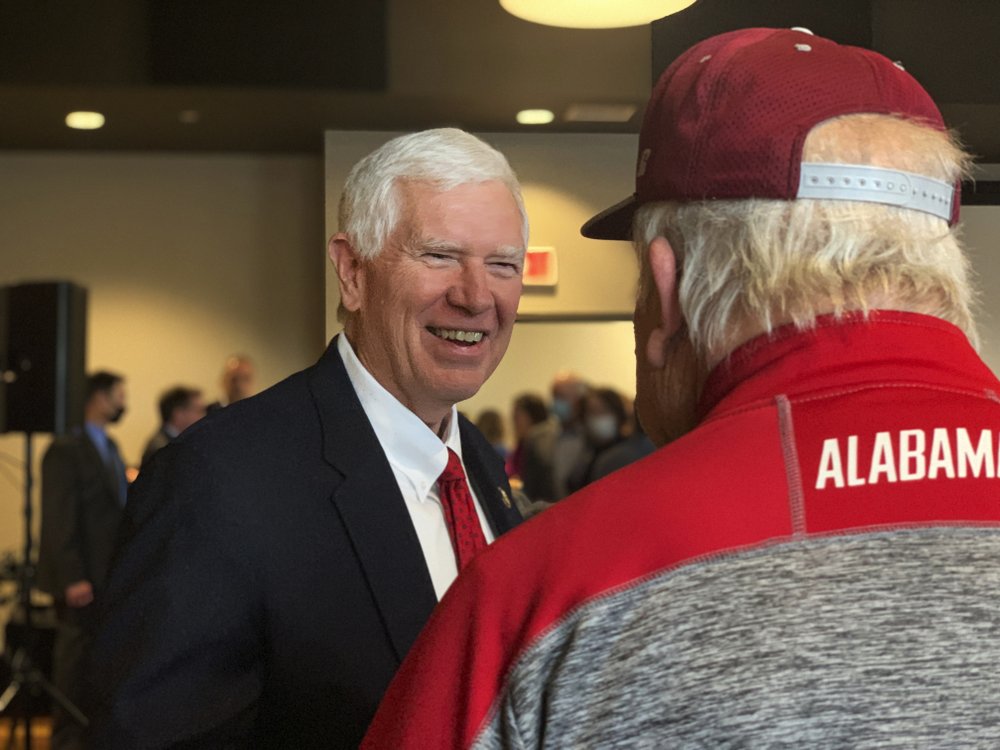
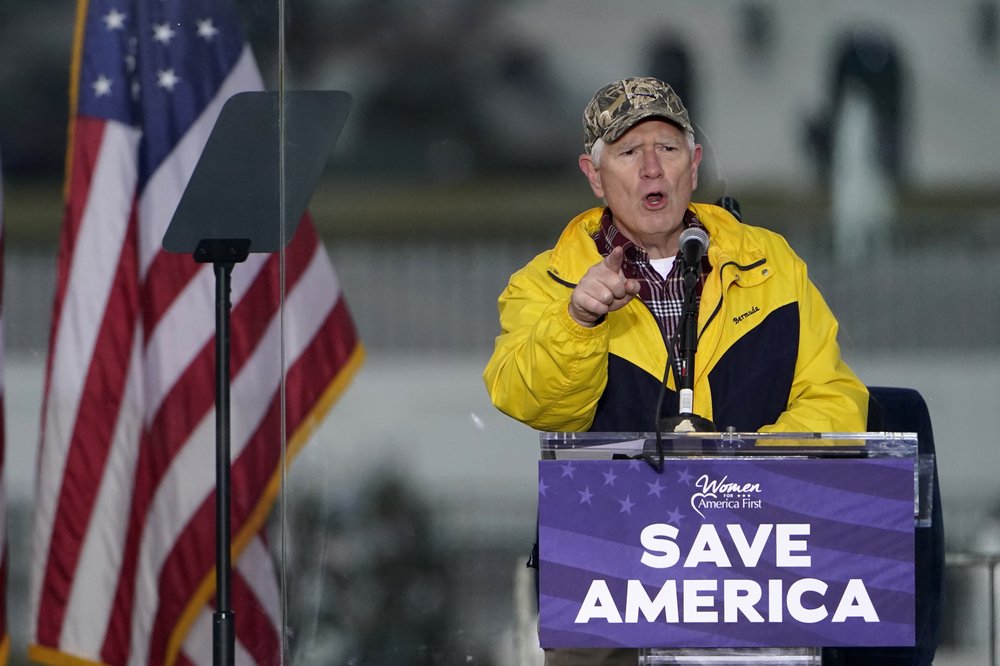
U.S. Rep. Mo Brooks, who helped lead GOP objections to President Donald Trump’s loss and come under fire for remarks he made preceding the attack on the U.S. Capitol, said Wednesday that he is better known to voters this time as he runs for U.S. Senate. The north Alabama firebrand is seeking the seat that will be vacated when Sen. Richard Shelby retires. He ran for Alabama’s other Senate seat in 2017 but came in third in the primary when he faced attack ads accusing him of being disloyal to Trump. Brooks said he is now better known to voters. “This time I have an established reputation that people can discern that, ‘Yep, Mo Brooks has been beside Donald Trump’s side through thick and thin over the last four years trying to advance the Make America Great agenda,’ ” Brooks said in an interview with The Associated Press. Brooks, 66, doubled down in support of Trump’s unproven claim of widespread voter fraud in the 2020 election and maintained there is no evidence so far of a link between the Trump rally and the riot that followed at the U.S. Capitol. The outspoken congressman has come under fire for telling the pro-Trump rally that preceded the Jan. 6 Capitol riot that it was time to “start taking down names and kicking ass.” Brooks said Wednesday that the phrase, said as he was wearing a hat reading “Fire Pelosi,” was intended to fire up the crowd for the next election cycle and is being misconstrued as advocating the violence that followed. “Anyone with a brain larger than a pea knew that I was not advocating violence,” Brooks said Wednesday. He also disagreed with Sen, Mitch McConnell’s assessment that Trump was morally responsible for the violence at the Capitol. Brooks declined to say if he would support Senate Minority Leader Mitch McConnell as Senate leader, saying his vote would go to the most conservative senator seeking the leadership spot and he does not know who will be running. Shelby announced earlier this year that he would not seek reelection in 2022, igniting what is expected to be a messy GOP primary at a time when the national Republican Party is trying to chart a direction following Trump’s departure. Brooks joins former Trump ambassador Lynda Blanchard in a Republican primary field that is expected to attract several other hopefuls. Others sometimes mentioned as potential candidates are Alabama Secretary of State John Merrill and Shelby’s former chief of staff, Katie Boyd Britt, who now heads an influential business lobby. Brooks, a former prosecutor, has served five terms in the House, where the former prosecutor joined the conservative Freedom Caucus. He serves on the Armed Services Committee and Science, Space, and Technology, two important committees for his north Alabama district. Brooks told The AP that he had spoken to Trump many times about the Senate race, but declined to say if he had asked Trump for an endorsement or if he expects the former president to weigh in on the race. “Let’s wait and see what President Trump does when he decides to do whatever he is going to do,” Brooks said. Former Trump adviser Stephen Miller threw his support to Brooks at the Monday rally. Miller was widely viewed as the driving force behind the Trump administration’s hardest-line immigration policies. “Nobody has had President Trump’s back more over the last four years than Mo Brooks,” Miller said. The blunt congressman has a history of controversial remarks. In 2014 he accused Democrats of engaging in a “war on whites.” In what could be a war of a GOP primary, Brooks is leaning hard into his combative image, “America can simply not afford senators who cower in their foxholes when the political battles are being fought.” “I am seeking the position of the United States Senate because I believe our country is at risk. I fear for our country’s future more so than any time in my life,” Brooks said. Republished with the permission of the Associated Press.
GOP firebrand Mo Brooks enters Senate race
U.S. Rep. Mo Brooks, a conservative firebrand and staunch supporter of former President Donald Trump who has come under fire for remarks he made preceding the attack on the U.S. Capitol, joined the Alabama GOP primary field on Monday to replace Sen. Richard Shelby. The north Alabama Republican announced his entry into the race at an event with former Trump adviser Stephen Miller. He joins former Trump ambassador Lynda Blanchard in a Republican primary field that is expected to attract a number of other hopefuls. “America’s status as the greatest nation in world history is at risk. And it’s at risk from those within our country,” Brooks told people packed into a meeting hall of a gun range in the northern city of Huntsville. Later, he added, “We are a beacon of freedom and liberty for the world, and we need to stay that way.” Miller was an influential force in pushing Trump’s efforts to curb immigration. He engineered the former president’s Muslim travel ban and was widely viewed as the driving force behind the Trump administration’s hardest-line immigration policies. “Nobody has had President Trump’s back more over the last four years than Mo Brooks. Now I need you to have his back,” Miller said as he introduced Brooks. Brooks, 66, has come under fire for telling the rally that preceded the Capitol riot that it was time to “start taking down names and kicking ass.” Brooks said the phrase was intended to fire up the crowd for the next election cycle and is being misconstrued as advocating the violence that followed. Shelby announced earlier this year that he would not seek reelection in 2022, igniting what is expected to be a messy GOP primary at a time when the national Republican Party is trying to chart a direction following Trump’s departure. Brooks has served five terms in the House, where the former prosecutor joined the conservative Freedom Caucus. He serves on the Armed Services Committee and Science, Space, and Technology, two important committees for his north Alabama district. “America cannot afford senators who cower in their foxholes,” Brooks said. He added, “As President Trump can vouch, I don’t cut and run. I stand strong when the going gets tough.” Republican hopefuls in a state where Trump won 62% of the vote are expected to try to convince primary voters they are the rightful banner carriers for the Trump agenda. But some observers worry the race could crown a far-right nominee to replace one of the Senate’s most senior leaders with a deep establishment ties. Republican former Rep. Bradley Byrne of Alabama said the winner of the GOP primary will likely be whoever can convince voters they are the best heir to Trump and his “Make America Great Again” agenda. “They are going to be very conservative. They are going to be the most genuine, most effective carrier of the Trump/MAGA flame,” Byrne said. David Mowery, an Alabama-based political consultant, said support for Trump is “the table stakes” — a requirement to get in the game for Republicans seeking office in Alabama. However, Mowery said he thinks there is trepidation among establishment Republicans. While Shelby amassed a far-right conservative voting record, he never embraced the bombastic, populist style that has propelled Republicans like Georgia Rep. Marjorie Taylor Greene. “I think people are worried that you are going to get someone that’s more concerned about throwing bombs and seeing their name in the paper then you are somebody who does what Shelby does and that is bring home the bacon and make sure Alabama is taken care of in every spending bill,” Mowery said. Others sometimes mentioned as potential candidates are Alabama Secretary of State John Merrill and Shelby’s former chief of staff, Katie Boyd Britt, who now heads an influential business lobby. Republished with the permission of the Associated Press.
With eyes on midterms, Donald Trump embraces immigration fight
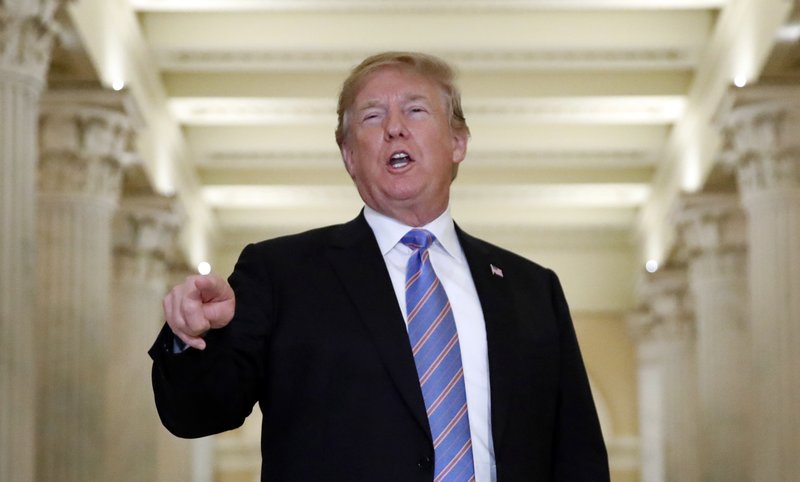
Calling the shots as his West Wing clears out, President Donald Trump sees his hard-line immigration stance as a winning issue heading into a midterm election he views as a referendum on his protectionist policies. “You have to stand for something,” Trump declared Tuesday, as he defended his administration’s immigration policy amid mounting criticism over the forced separation of children from their parents at the U.S.-Mexico border. The chorus of condemnation includes Democrats, as well as Republicans, who are increasingly worried that reports about bereft children taken from their parents could damage the GOP’s chances in November. Still, Trump believes that his immigration pledges helped win him the presidency and that his most loyal supporters want him to follow through. He made a rare trip to Capitol Hill late Tuesday to meet with GOP legislators and endorse a pair of bills that would keep detained families together, among other changes, but he remains confident that projecting toughness on immigration is the right call, said five White House officials and outside advisers who spoke on condition of anonymity because they were not authorized to speak publicly. “It’s amazing how people are surprised that he’s keeping the promises he made on the campaign trail now,” said Trump political adviser Bill Stepien. While the White House signaled Trump may be open to a narrow fix to deal with the problem, the president spent the day stressing immigration policies that he has championed throughout his surprise political career. He has resisted calls to reverse the separation policy, saying any change must come through Congress. In a speech to a business group earlier Tuesday, Trump said he wanted to see legislation deal with family separation, which, he said, “We don’t want.” He also emphasized border security and again made the false argument that Democrats are to blame for the family separation problem. Said Trump: “Politically correct or not, we have a country that needs security, that needs safety, that has to be protected.” Several White House aides, led by adviser Stephen Miller, have encouraged the president to make immigration a defining issue for the midterms. And Trump has told advisers he believes he looks strong on the matter, suggesting that it could be a winning culture war issue much like his attacks on NFL players who take a knee for the national anthem. Former Trump senior adviser Steve Bannon said the president is emphasizing the policies that brought him to the White House. “I think this is one of his best moments. I think this is a profile in courage. This is why America elected him,” Bannon said. “This is not doubling down, it is tripling down.” Still, Trump, a voracious watcher of cable news who is especially attuned to the power of images, appeared to acknowledge later Tuesday that the optics could be doing damage. During his closed-door meeting with lawmakers on the Hill, Trump said his daughter Ivanka had encouraged him to find a way to end the practice, and he said separating families at the border “looked bad,” according to several attendees. “He said, ’Politically, this is bad,’” said Rep. Randy Weber, R-Texas. “It’s not about the politics. This is the right thing to do.” Trump’s immigration standoff comes as he escalates his nationalist trade moves, imposing new tariffs on imports and threating more. With few powerful opposing voices remaining in the West Wing, Trump is increasingly making these decisions solo. Some key advisers have left, and chief of staff John Kelly appears sidelined. Republicans, particularly those in more moderate districts, are worried they will be damaged by the searing images of children held in cages at border facilities, as well as by audio recordings of young children crying for their parents. The House Republicans’ national campaign chairman, Ohio Rep. Steve Stivers, said Monday that he’s asking “the administration to stop needlessly separating children from their parents.” Other conservatives also raised concerns, but many called for Congress to make changes instead of asking Trump to directly intervene. Ralph Reed, chairman of the Faith & Freedom coalition of evangelical voters, added to the drumbeat to end the child separation policy Tuesday, calling on Congress to pass legislation that would end the process as part of a broader immigration overhaul. But asked if the border policy was bad for Trump politically, Reed suggested core supporters remain on the president’s side. He said the group’s members are “more than willing to give the president and his administration the benefit of the doubt that this is being driven by a spike in people crossing the border, a combination of existing law and court decisions require this separation, and the fact that the Democrats refused to work with the administration to increase judges so that this can be dealt with more expeditiously.” Trump on Tuesday mocked the idea of hiring thousands of new judges, asking, “Can you imagine the graft that must take place?” Worried that the lack of progress on his signature border wall will make him look “soft,” according to one adviser, Trump has unleashed a series of tweets playing up the dangers posed by members of the MS-13 gang — which make up a minuscule percentage of those who cross the border. He used the loaded term “infest” to reference the influx of immigrants entering the country illegally. As the immigration story becomes a national flashpoint, Trump has been watching the TV coverage with increasing anger, telling confidants he believes media outlets are deliberately highlighting the worst images — the cages and screaming toddlers — to make him look bad. The president has long complained about his treatment by the media, but his frustrations reached a boiling point after he returned from his Singapore summit with North Korea’s Kim Jong Un to face news reports questioning his negotiating skills. He complained to one adviser that the media had not given him enough credit after the summit and was continuing to undermine him on immigration, according to a person familiar with the conversation but
Donald Trump’s unprecedented hands-on messaging carries risks
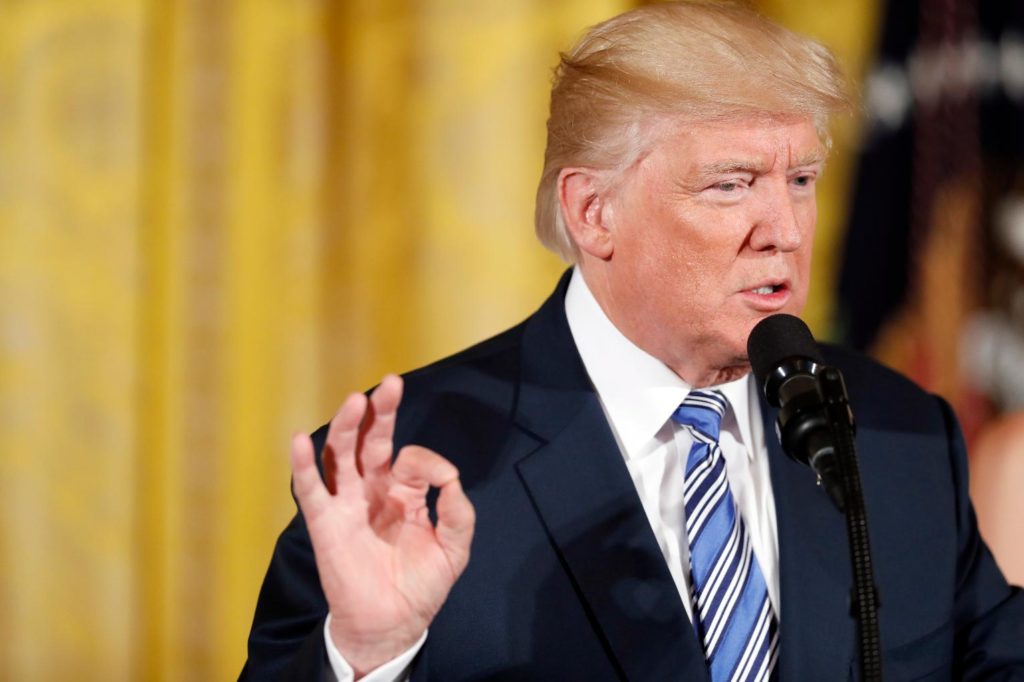
For the third time in six months, President Donald Trump is on the hunt for a new communications director. But in practice, the job is filled. It’s Trump who’s the White House’s leading expert and the final word on what and how he communicates with the public. Despite decrying most negative media coverage as “fake news” and personally insulting members of the media, he has inserted himself into the White House’s press operations in an unprecedented fashion for a president. Trump has dictated news releases and pushed those who speak for him to bend the facts to bolster his claims. He has ignored the advice of his legal team and thrown out carefully planned legislative strategies with a single 140-character tweet. His direct, hands-on style helped him win the White House and still thrills his supporters. It also, however, poses increasing political and potentially legal risks. The clearest example is his involvement in crafting a statement for son Donald Jr. about a meeting with a Kremlin-connected lawyer. That declaration was quickly proven erroneous and raised questions about whether the president was trying to cover for his son. Trump has struggled to find a communications adviser that meets his approval. His first, Mike Dubke, stayed behind the scenes and never clicked with Trump, leaving after three months. Then Sean Spicer, Trump’s oft-beleaguered press secretary, took on the communications director job as well. He resigned both posts last month when Trump brought in hard-charging New York financier Anthony Scaramucci. Scaramucci lasted only 11 days before being fired in the aftermath of an expletive-filled interview. A fourth candidate for the post, campaign spokesman Jason Miller, was named to the job during the transition but turned it down days later, citing a need to spend time with his family. More recently there have been some informal internal conversations about an increased communications role for White House aide Stephen Miller, according to an administration official who was not authorized to discuss private talks by name and requested anonymity. Those talks are still seen as preliminary. Miller recently clashed with some reporters over immigration policy at a contentious press briefing. This past week, as White House staffers readied a statement accompanying Trump’s signature on legislation approving toughened sanctions on Russia — a bill Trump criticized — word came down that the president wanted to add some off-topic language into the statement. That’s according to two officials familiar with the matter who spoke on condition of anonymity because they were not authorized to publicly talk about internal discussions. “I built a truly great company worth many billions of dollars,” the new section read. “That is a big part of the reason I was elected. As president, I can make far better deals with foreign countries than Congress.” That personal and boastful rhetoric is a far cry from the formal language normally found in presidential statements. It also appeared aimed at angering the same lawmakers he will need if he wants to pass any major legislation. “All presidents are their own best messengers,” said Ari Fleischer, press secretary for President George W. Bush. Fleischer said that Bush, too, would at times get involved with the White House press shop. Fleischer noted there was always a safety net of advisers at work. That does not appear to exist around the current president — particular around his Twitter account. “The lesson for this president is that it’s perfectly fine to be involved and to, at times, go around the mainstream media with Twitter,” Fleischer said. “But he needs to tweet smarter.” Corralling the president’s impulses is a challenge that now falls to new White House chief of staff John Kelly, a four-star Marine general tasked with straightening out an unruly West Wing. But many Trump allies don’t believe he’ll alter his ways. “The reality is President Trump is sitting in the Oval Office,” said Sam Nunberg, a former campaign staffer. “And before that, he was a mogul with a business that spanned continents. He did it his way. He’s not going to change. It got him where he is and it will keep him where he is.” Trump has long considered himself his own best spokesman and cares deeply about his public perception. While a budding real estate magnate in New York in the 1980s and 1990s, he was known to call reporters to plant anonymously sourced scoops about himself. He vaulted to national stardom with “The Apprentice” and micromanaged aspects of his appearances, including his hair and lighting. During the 2016 campaign, Trump was known to obsess over single images in a commercial or the font for an ad. As president, he frequently has raged about his communications staff, blaming them for White House’s stumbles while almost never taking responsibility himself. An avid consumer of cable news, Trump scolds surrogates when he thinks they are not adequately defending him on television. His frequently shifting positions also challenge his staffers, who have grown to be fearful of answering basic questions about the president’s beliefs for fear of later being contradicted, according to more than a half dozen White House officials and outside advisers speaking on the condition of anonymity to discuss private conversations. And the president has pushed staff to defend untruths, including when he ordered Spicer, in Spicer’s first White House briefing, to claim that the size of Trump’s inauguration crowd was larger than his predecessor’s, according to three White House officials and outside advisers familiar with the encounter. More untruths have followed. In March, Trump tweeted without evidence that President Barack Obama had wiretapped Trump Tower. And soon after firing FBI Director James Comey, Trump tweeted a warning that Comey had better hope there were no tapes of their White House conversations. There weren’t. Another statement has received bipartisan condemnation and could face scrutiny from investigators probing possible collusion between Trump’s campaign and Russian officials. As news broke last month that Trump Jr. had met with Russians in June 2016, the president’s eldest son released a statement
About that unusually tense interview between Stephanopoulos, Trump aide
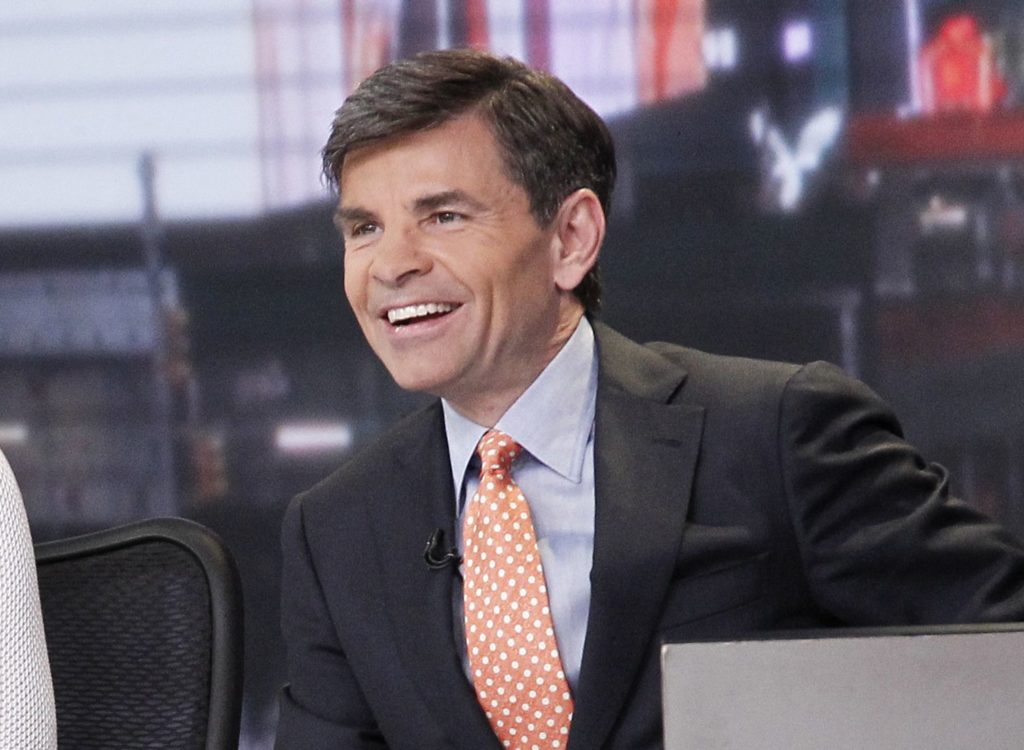
George Stephanopoulos‘ “Good Morning America” interview with White House spokeswoman Sarah Huckabee Sanders on Monday is an instant milestone in the hostile relationship between the Trump administration and the media. In the discussion about President Donald Trump‘s weekend accusations — offered without proof — that former President Obama ordered Trump’s New York home wiretapped, Stephanopoulos repeatedly interrupted and stopped Sanders when he felt she veered from the truth. It was a crackling exchange unusual for the generally happy terrain of network morning television, and made Stephanopoulos a hero or villain depending on whose social media feed is followed. It was also the second time in a month that the ABC anchor had a notably sharp interview with a Trump administration official. On “This Week” last month, he repeatedly pressed Trump aide Stephen Miller for evidence to back up the claim that there was massive voter fraud in the election. Sanders was also interviewed on NBC’s “Today” show on Monday, while “CBS This Morning” turned down the White House’s offer to have her on. Fox News Channel’s “Fox & Friends” brought presidential counselor Kellyanne Conway on to speak about Trump’s allegations, less than a day after White House press secretary Sean Spicer said there would be no further comment on the issue. It wasn’t clear what changed the administration’s strategy. Stephanopoulos began his interview by asking Sanders whether Trump accepted reports that FBI director James Comey had denied there was any wiretapping of Trump. Sanders said she didn’t believe he did, and started talking about wiretapping reports in other media outlets. “Sarah, I have got to stop you right there,” Stephanopoulos said. The stories she cited did not back up the president’s claims, he said. “What is the president’s evidence?” he asked. Sanders said there was “wide reporting” suggesting that the administration could have ordered wiretapping. Stephanopoulos stopped her to note there was a report of a court-ordered wiretapping, although James Clapper, former director of national intelligence under Obama, had denied that. Stephanopoulos stopped Sanders again when she noted that the unsubstantiated report of a wiretapping order came under the Obama administration and that “all we’re asking is that Congress be allowed to do its job.” “Hold on a second,” he said. “There is a world of difference between a wiretap ordered by a president and a court-ordered wiretap by a federal judge.” Noting that Obama’s representatives, Comey and Clapper had all said there was no wiretapping, Stephanopoulos asked, “is the president calling all three of these people liars?” Sanders said that he wasn’t, but that it was a matter for congressional investigators to look into. She said she considered it a double standard that the media does not believe Trump when he says nothing untoward had happened between him and Russia, while reporters accept denials by the Obama administration on the wiretap accusation. “If the president walked across the Potomac, the media would be reporting that he could not swim,” she said. The interview illustrated the difficulties the media faces in trying to report on the president’s unsubstantiated tweets. There was a furious debate on the “Good Morning America” Facebook page on Monday afternoon between people who cheered the host, a one-time adviser to President Bill Clinton, for calling out untruths, and others who believed he was rude — even suggesting they would boycott ABC’s morning show because they were disgusted by the interview. Many of Trump’s supporters are angered by aggressive questioning because they believe the media did not ask similar tough questions of the Obama administration, said Tim Graham of the Media Research Center, a conservative media watchdog. “You have no right to tell us what the truth is,” Graham said. At the same time, reporters face pressure from Trump opponents who give no quarter, as witnessed by last week’s backlash against television analysts who suggested Trump gave an effective speech before Congress. There are also some who believe the wiretap accusation itself is a way to distract people from the story about Russia, and the media effectively supports the strategy by reporting it. Stephanopoulos said after the interview that his job is to elicit as much clarity as possible, and he believed his interview was an important opportunity to get the Trump administration on the record on these issues. “If I hear something that I know to be untrue, then I think it’s my responsibility to point that out,” he said. Sanders’ interview on “Today” was more peaceful, but still had some tense moments. Savannah Guthrie interrupted Sanders to ask a second time when she wouldn’t answer her question about whether the president had made his accusations solely after seeing media reports. She said she didn’t know. Sanders later repeated the same line about the Potomac River. Conway was given more time to talk on “Fox & Friends,” although she did face pushback on whether Trump associates who had conversations with Russian officials had hurt the president. She drew laughs when she said she wished she had $50 for every time Russia was mentioned in the news. “A drinking game,” one of the Fox anchors joked off-screen. Republished with permission of The Associated Press.
Stephen Miller: former Alabama staffer ‘who helped Trump find his voice’

Stephen Miller was a teenager in California when got his first political gig as a regular guest on a local conservative talk radio show, eager to complain about his liberal high school. In columns written for local newspapers, he took on what he called its plague of political correctness. The school’s decision to make announcements in Spanish “demeans the immigrant population as incompetent, and makes a mockery of the American ideal of personal accomplishment,” Miller wrote. He complained about the school offering condoms to underage students, allowing a club for gay students and failing to ask students to recite the Pledge of Allegiance every day. “You thought he was like a 35-year-old constitutional lawyer,” Steve Bannon, President-elect Donald Trump‘s chief strategist and senior adviser, said of Miller’s radio days. “That’s how he built his reputation.” The young caller who caught the ear of prominent conservatives, including the late Andrew Breitbart, founder of Breitbart News, went on to do the same with Trump after joining his campaign a year ago. Starting Friday, Miller assumes the role of assistant and senior adviser to the president for policy, a job that starts with helping Trump as the president-elect writes his inaugural address. If you’ve heard Trump speak at any point over the last year, you’ve likely heard Miller’s work. “I think he and Trump hit it off from the very beginning,” Bannon said. “You could tell the difference in Trump’s speeches. … The ideas became more powerful, they were a little crisper.” “I think he helped Trump find his voice,” Bannon said. A throwback to an earlier era who speaks in a punctuated staccato and is rarely seen in anything but a dark suit and signature skinny tie, the 31-year-old Miller started in Trump’s campaign as senior policy director, but quickly became a jack of all trades in the Republican’s threadbare operation. He assumed the role of Trump’s chief speechwriter, channeling the candidate’s freewheeling talking points into structured, teleprompter-ready prose. He even warmed up the crowd at Trump’s signature rallies. Jason Miller, who served as the campaign’s communications director, said when others were unwinding after a long day on Trump’s campaign plane, “Steve has his little keyboard up and he’s still furiously typing away.” Traveling from rally to rally on the plane, Stephen Miller kept a close ear on what Trump was saying, said Jason Miller said, cataloguing his comments and using them as the building blocks for the candidate’s formal speeches. “When Steve presents the president-elect with an idea, it’s already something that the president-elect is supportive of or has suggested himself,” Miller said. “(Trump) always knows what he wants to say and he always has key points he wants to make.” Miller, who declined a request for an interview, built on his high school days as a conservative provocateur at Duke University, quickly becoming a minor campus celebrity as he founded a chapter of Students for Academic Freedom and led the Duke Conservative Union. In his column for the campus’ student newspaper, Miller described himself as “a deeply committed conservative who considers it his responsibility to do battle with the left.” He railed against liberal professors, against attempts to curb the sale of cigarettes on campus and against Hollywood movies that “promote alternative lifestyles and erode traditional values.” When three Duke students who played lacrosse for the Blue Devils were accused of rape, Miller advocated tirelessly on their behalf. When the racially charged case fell apart and the three were declared innocent by the state’s attorney general, Miller was hailed by conservatives for his outspoken defense of his fellow students. He moved to Washington after graduation, taking a job with then-Minnesota Rep. Michele Bachmann and, later, Alabama Sen. Jeff Sessions. In seven years as a Sessions aide, Miller fought efforts to overhaul the nation’s immigration laws, and warned of the dangers of radical Islam and what he and his boss called the Republican Party’s failure to communicate with the nation’s working class. “When it comes to policy, issues and messaging, there isn’t anybody else that I’ve known who would be as valuable to a White House and a new administration as Stephen is,” said Sessions, who is Trump’s pick to serve as attorney general. “He is not a hired gun,” Sessions added in a statement. “He understands and supports the Trump movement” and he “understands America, loves her great values and people, and since high school in Los Angeles has defended them with passion and success.” Sam Nunberg, who helped lay the groundwork for Trump’s campaign, said that Miller was the first aide on Capitol Hill to be really open and accessible to the billionaire businessman’s campaign. “We had a similar message and similar policies as Sessions. And we were a vehicle to promote that agenda,” Nunberg said. “So we had mutual objectives.” But Garrett Murch, who worked side-by-side with Miller for five years in Sessions’ office, said the Trump and his soon-to-be-speechwriter also shared an anger and attitude. “What seemed to drive Stephen as much as anything was his rightful disgust with how inadequately Republicans communicated with everyday working Americans,” he said, adding: “Steven saw a lot of incompetence in the Republican Party and its messaging that I think he’d spent years thinking about. It would only seem natural that they would bond over that alone.” Republished with permission of The Associated Press.
Donald Trump taps former Sessions aide to write inaugural address
Sen. Jeff Sessions‘ former 31-year-old policy wunderkind Stephen Miller has been tapped by President-elect Donald Trump to pen his inaugural address. Miller’s words will be centerstage January 20 when Trump delivers the highly anticipated speech from the U.S. Capitol. No stranger to Team Trump, Miller left Capitol Hill back in January where he began writing most of Trump’s prepared speeches on the campaign trail, including Trump’s address to the Republican National Convention in July. According to POLITICO.com, “early discussions of the address have focused on laying out some of the structural problems facing the country, and then framing Trump’s first-term agenda in more nationalistic than ideological terms.” From there the speech will focus on the nation’s education system, infrastructure, border security, the state of the military and the economy, including the outsourcing of jobs. Earlier this month, Trump announced Miller will serve as Assistant to the President and Senior Advisor to the President for Policy. “Stephen played a central and wide-ranging role in our primary and general election campaign,” Trump said in a news release. “He is deeply committed to the America First agenda, and understands the policies and actions necessary to put that agenda into effect. He is a strong advocate for protecting American workers, and will fulfill a crucial role in my Administration as my senior advisor on matters of policy.” In addition to being the campaign’s chief speechwriter, throughout 2016 Miller served as Trump’s top advisor on policy where he oversaw the entire policy operation, led the policy development and formulation efforts, and directed strategic policy decisions on a day-to-day basis. He is currently the policy director for the President-elect’s Transition Team.
Alabama’s Jeff Sessions snags No. 2 spot on 2016’s POLITICO 50 List

POLITICO Magazine Monday revealed its 2016 Politico 50 list, comprised of “thinkers, doers and visionaries transforming American politics in 2016.” As the magazine puts it, “in the midst of an often-bizarre and sometimes downright depressing election, this list represents something altogether surprising: a collection of people who, no matter their widely divergent views, offer powerful examples of how and why ideas continue to make a difference in politics and policy.” Snagging the No. 2 spot for 2016, this year’s list recognizes Alabama’s own U.S. Sen. Jeff Sessions, along with former Sessions staffer Stephen Miller, as “Trump’s policy whisperers.” Sessions, a a 69-year-old Republican senator from Hybart, is best known for his ultra-conservative policies on immigration and was the first U.S. Senator to endorse Donald Trump. Long before he donned a “Make America Great Again” hat at a February rally in Alabama, Sessions advocated for some of the same outsider views that Trump’s candidacy has turned into the new normal in the GOP. Throughout this election cycle, Sessions and Trump have become kindred political spirits, drawn together by a shared belief that some of their Republican Party leaders are selling out their own voters on immigration, as well as on trade.
Donald Trump speech will focus on ‘foreign policy realism’
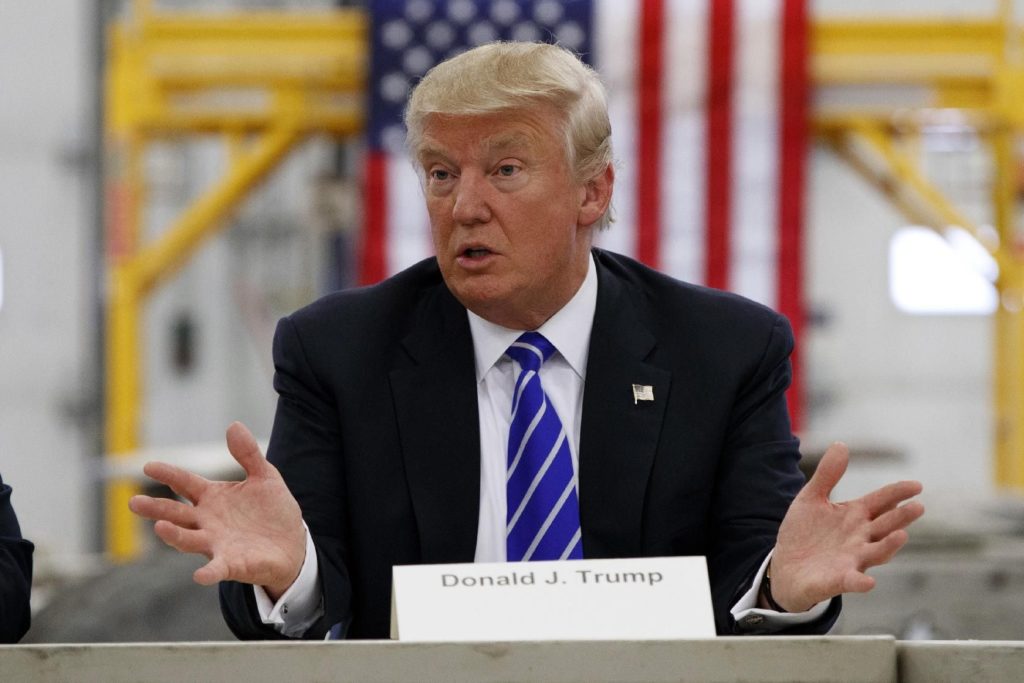
Donald Trump will declare an end to nation-building if elected president, replacing it with what aides described as ‘‘foreign policy realism’’ focused on destroying the Islamic State and other terrorist organizations. In a speech the Republican presidential nominee was scheduled to deliver Monday in Ohio, Trump will argue that the country needs to work with anyone who shares that mission, regardless of other ideological and strategic disagreements. Any country that wants to work with the United States to defeat ‘‘radical Islamic terrorism’’ will be a US ally, he is expected to say. ‘‘Mr. Trump’s speech will explain that while we can’t choose our friends, we must always recognize our enemies,’’ Trump senior policy adviser Stephen Miller said ahead of the speech. Trump is also expected to outline a new immigration policy proposal under which the United States would stop issuing visas in any case where it cannot perform adequate screenings. It will be the third iteration of a policy that began with Trump’s unprecedented call to temporarily bar foreign Muslims from entering the country — a religious test that was criticized across party lines as un-American. In a speech after the Orlando nightclub shooting, Trump introduced a new standard, vowing to ‘‘suspend immigration from areas of the world where there is a proven history of terrorism against the United States, Europe or our allies, until we fully understand how to end these threats.’’ Now, aides say, the campaign needs access to undisclosed government documents to assess exactly where the most serious threats lie. He is also expected to propose creating a new ideological test for admission to the country that would assess a candidate’s stances on issues such as religious freedom, gender equality, and gay rights. Through questionnaires, searching social media, or other means, applicants would be vetted to see whether they support US values like tolerance and pluralism. The candidate is also expected to call in the speech for declaring in explicit terms that, like during the Cold War in the fight against communism, the nation is in an ideological conflict with radical Islam. Trump’s Democratic rival Hillary Clinton and top US government officials have warned of the dangers of using that kind of language to describe the conflict, arguing that it plays into militants’ hands. While Trump has been criticized in the past for failing to lay out specific policy solutions, aides say that Monday’s speech will again focus on his broader vision. Additional speeches with more details are expected in the weeks ahead, they said. Trump is also expected to spend significant time going after President Obama and Clinton, the former secretary of state, blaming them for enacting policies he argues allowed the Islamic State to spread. ‘‘Mr. Trump will outline his vision for defeating radical Islamic terrorism, and explain how the policies of Obama-Clinton are responsible for the rise of ISIS and the spread of barbarism that has taken the lives of so many,’’ Miller said Sunday in an email, using an alternative acronym for the Islamic State group. The speech comes as Trump has struggled to stay on message. Last week, an economic policy speech he delivered calling for lower corporate taxes and rolling back federal regulations was overshadowed by a series of provocative statements, including falsely declaring that Obama was the ‘‘founder’’ of the Islamic State group. Trump’s allies said Sunday they’re confident that this time, the billionaire developer will stay on track. ‘‘Stay tuned, it’s very early in this campaign. This coming Monday, you’re going to see a vision for confronting radical Islamic terrorism,’’ his vice presidential running mate, Mike Pence, said on Fox News Sunday. Trump and his top advisers, meanwhile, have blamed the media for failing to focus on his proposals. ‘‘If the disgusting and corrupt media covered me honestly and didn’t put false meaning into the words I say, I would be beating Hillary by 20 percent,’’ he tweeted Sunday. Republished with permission of The Associated Press.
The ballad of Jeff Sessions and Donald Trump
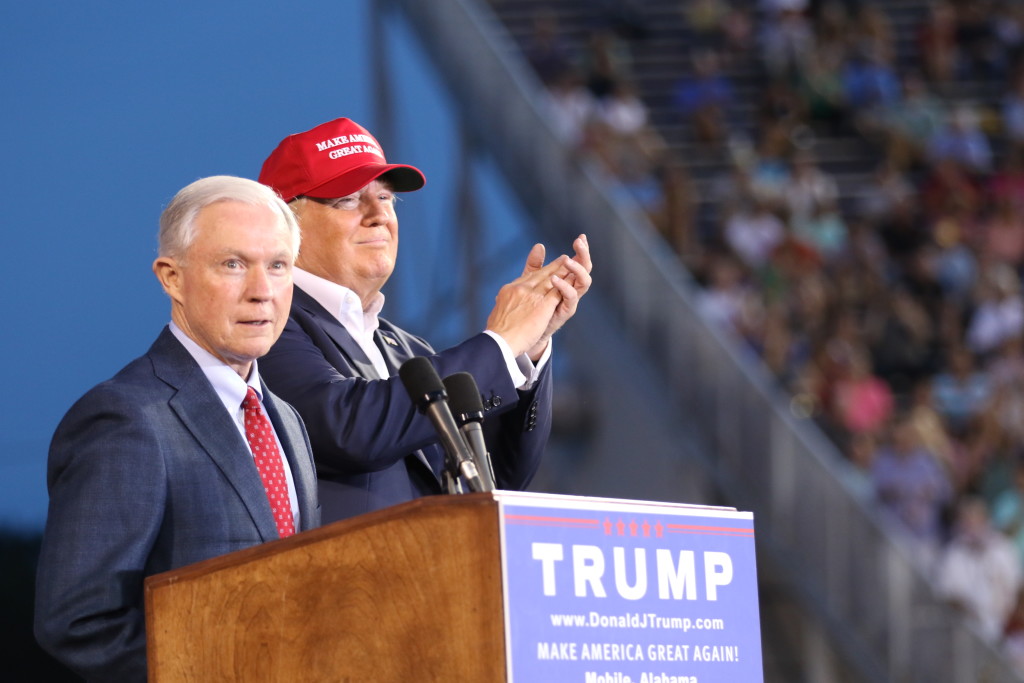
U.S. Sen. Jeff Sessions and Donald Trump go way back. How, exactly? The United Nations of course, writes Elise Viebeck of the Washington Post. As Viebeck explains, a $1.2 billion proposed renovation of the U.N.’s New York City headquarters brought the two men together in opposition. Trump, whose Trump World Tower is across the street from the building, sharply criticized the move saying the organization was “a mess,” and that the 10-figures project was “unnecessary.” Sessions — no fan of the U.N. either — heard about Trump’s views and looked him up: [T]he Alabama Republican and former Sen. Tom Coburn (R-Okla.) invited him to come to Washington to talk about building renovation and air his criticism of the U.N. project at a Senate subcommittee hearing. The result was the best congressional testimony Sessions says he had ever heard. Even now, as Trump’s sole Senate endorser and the heart of his presence in Washington, Sessions loves telling the story. That’s partly because he likes to do his Trump impression. “Y’all are gettin’ taken to the cleaners!” Sessions said while mimicking Trump in a recent interview, his accent drifting somewhere between Queens and the Alabama Gulf Coast. “There is no way it should cost that much! … If you give it to me, I’ll save you a billion dollars!” The relationship persists, writes Viebeck, and culminated in Sessions’ endorsement of Trump despite Texas Sen. Ted Cruz‘s aggressive wooing of Sessions. Their rapport has also come to have a personal basis, political affinities aside: Eleven years have passed since that hearing, and sitting in his office on Capitol Hill, Sessions can’t suppress his natural affection for Trump. So perhaps it’s no surprise that the ultra-conservative southerner has become Trump’s main man in Washington as the leading presidential campaign careens toward the Republican convention. “I think he can win, and I believe he will,” Sessions said. “He will need to continue to flesh out the details of his policies. But his instinctive response to Americans’ current situation has been pretty darn good.” Sessions described why he thinks Trump appeals to a large swath of voters that are seemingly his opposite — neither rich nor well-educated — and why his ostentatious lifestyle and private jet don’t put off supporters. “I do think it’s one of the charms he has. It’s more of a blue-collar attitude, but he is so proud of that plane!” Sessions said. “He doesn’t try to be cool, like, ‘I’m a rich person.’ He says, ‘Let me show you this, let me show you that!’ He takes you around and he wants to show you his towers.” Could Sessions even be a VP pick for Trump, who has said he wants a consummate insider to help balance his outsider, populist-driven style? Don’t count it out, writes Viebeck: A Trump-Sessions ticket would permanently link the political odd couple, with their collision of North and South, brash and mild, business and politics. But the two are already joined by their controversial drive to pull the GOP — and through it, the country — toward nativism on immigration, trade and foreign policy. “Sessions and Trump are united in the conviction that public policy in the United States should be tailored toward the interests of American citizens,” said Stephen Miller, a longtime Sessions aide who departed for Trump’s campaign in January. “That should be a non-controversial thought, but it is not in our politics today.”
Senior Jeff Sessions staffer joins Donald Trump’s presidential campaign; Session says US needs “strong negotiator”

The communication director for Sen. Jeff Sessions, Stephen Miller, has joined the presidential campaign of Donald Trump as a senior policy advisor, deepening the already well-worn ties between Alabama’s junior senator and Trump’s 2016 bid for the White House. The same day Miller moved to the campaign, his erstwhile boss again spoke out in support of Trump, touting their common opposition to the Obama administrations Trans Pacific Partnership trade deal. Sessions, briefly donning one of Trump’s signature red “Make American Great Again” caps, told Republicans set to vote in Iowa’s first-in-the-nation caucuses on February 1 that Trump has fought admirably against Obama on trade policy, though he stopped short of formally endorsing him “We need to negotiate better,” Sessions said. “So, what I’d say to the people in Iowa: ‘This is a matter of supreme importance that neither party should nominate a candidate who does not oppose this agreement. You can be for trade, you can be for negotiating agreements with countries around the world but not this way and not creating these kinds of transnational commissions that only hamper the United States as we go forward in the decades.’” Miller’s move was lauded by conservative pundit Ann Coulter, who Tweeted upon reading news of the personnel shift: “I’M IN HEAVEN! Trump hires Sen. Sessions’ brain trust, Stephen Miller. He’s not backing down on immigration.” Both Trump and Sessions have nearly in lock-step when it comes to immigration, with both men taking a hard line against accepting refugees from war-torn Syria and in favor of deporting undocumented immigrants.
