
Bradley Byrne introduces Constitutional amendment to impose term limits on Congress

Alabama 1st District U.S. Rep. Bradley Byrne proposed a Constitutional amendment on Wednesday that would impose term limits on members of both houses of Congress. House Joint Resolution 25 would amend the Constitution to limit Congressional service to six two-year House terms and two six-year Senate terms, or twelve years in each case. “Seats in Congress belong to the American people, not any single elected official,” explained Byrne. “Our Founding Fathers never expected individuals to make a career out of Congressional service, and term limits will allow us to keep fresh blood and ideas in the halls of Congress. “When I first ran for Congress, I pledged to support term limits, and I remain committed to that promise. I urge my colleagues in Congress to support this legislation to ensure the power remains with the people, not the government.” In April of last year, President Donald Trump voiced his support for term-limits for members of Congress. I recently had a terrific meeting with a bipartisan group of freshman lawmakers who feel very strongly in favor of Congressional term limits. I gave them my full support and endorsement for their efforts. #DrainTheSwamp — Donald J. Trump (@realDonaldTrump) April 30, 2018 Byrne cosponsored similar amendments in the 113th, 114th, and 115th Congress. Watch Byrne discuss his support for term limits:
Bill Hightower runs for governor on flat tax, term limits
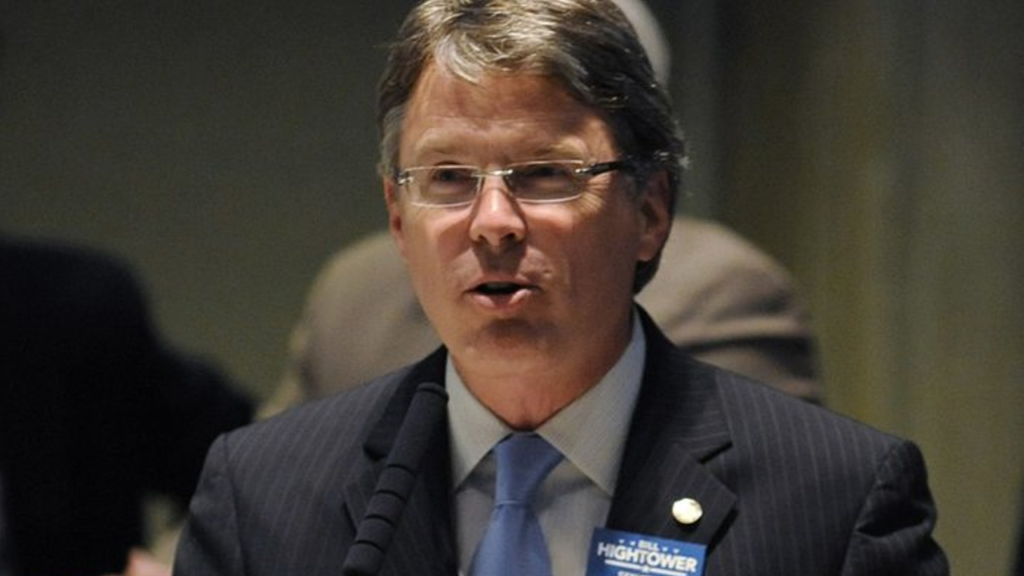
State Sen. Bill Hightower is stressing his background as a businessman as he runs for governor on a sweeping platform of proposed government overhauls that include term limits for legislators and replacing the state income tax code with a flat tax. “I think Alabama needs a businessman. I think Alabama needs something different than they ever had before,” Hightower said in an interview with The Associated Press. Hightower is challenging Alabama Gov. Kay Ivey in the June 5 Republican primary along with evangelist Scott Dawson and Huntsville Mayor Tommy Battle. A relative newcomer in state politics, Hightower was first elected to the Alabama Senate in a 2013 special election and won a full term in 2014. Hightower said he didn’t feel as strongly about term limits when he first was elected to the Alabama Legislature, but believes that lawmakers should be limited to three consecutive terms. “It seems like the enemy of improvement became the professional politician, the people who are trying to keep the status quo. Term limits will change Montgomery in a way which I think will enable us to make the reforms,” Hightower said. A graduate of the University of South Alabama who earned an MBA at Vanderbilt University, Hightower worked for large manufacturing companies, living overseas. He moved back to Mobile in 2002, saying he and his wife wanted to raise their children “at home” in Alabama. “My background in corporate was a lot of strategic planning. I want to develop that plan that’s going to serve Alabama well,” Hightower said. As a member of the Legislature, Hightower proposed to change Alabama’s income tax to a flat tax, and said he will propose that again if elected governor. “You just go online, or go on a post card and pay your taxes.” He said he would also like to end budgetary earmarks and “reprioritize” spending, noting that Alabama earmarks more revenue than any other state. “Nobody else in the nation is saying Alabama does it right and I’m convinced waste and fraud is in the budget,” Hightower said. Alabama lawmakers have previously rejected those proposals — un-earmarking, a flat tax and term limits — as bills on those topics failed to win approval. However, Hightower said believes the ideas are popular with voters and will gather momentum. The Republican senator said he is against tax increases until the state enacts budgetary reforms. On infrastructure, Hightower said he wants to create an Alabama Road and Bridge Commission, sell unneeded state property holdings to fund construction and commission a study to determine the feasibility of connecting major Alabama cities by high-speed rail. He said he would also like to increase partnerships between the two-year college system, businesses and high schools to improve vocational education. Hightower has been critical of Ivey’s decision to skip two debates, saying it’s important for the public and press to get a chance to “vet the candidates.” “She’s not being properly vetted,” Hightower said. Hightower was also the first candidate to raise the issue of health, releasing his own medical records and challenging candidates to do the same. Ivey, who became Alabama’s governor last year when her predecessor resigned in a sex-tinged scandal, has both a fundraising and name recognition advantage over her lesser-known primary challengers. However, Hightower believes Ivey will be forced into a July runoff with one of her competitors. Hightower said he believes voters largely make up their minds in the final two weeks of the campaign, and are interested in the policies and proposals of candidates. “You can’t accuse me of being light on policy,” Hightower said. Republished with permission from the Associated Press.
State Senate votes against term limits for lawmakers
According to a poll commissioned by the organization and conducted by McLaughlin and Associates 84% of Alabamians want term limits placed on Members of Congress, but only nine state senators voted to bring a term limits bill to the floor for debate on Wednesday. State Sens. Bill Hightower, Trip Pittman, Paul Sanford, Bill Holtzclaw, Greg Reed, Larry Stutts, Phil Williams, Rusty Glover and Arthur Orr voted in favor of bringing SB127 to the floor for debate. But the bill failed a procedural motion, 9-15, to do so. “Today’s decision by Montgomery Insiders to vote against legislative term limits legislation epitomizes why Alabama voters are so frustrated with their state government,” said the bill’s sponsor, Mobile-Republican state Senator, and candidate for Governor, Bill Hightower. “More than four in five Alabama voters believe we need term limits, but career politicians understand this is a threat to their personal ambition and power. This morning the Montgomery Insiders put cronyism and smoke-filled backroom deals above the people they are supposed to represent.” SB127 would have proposed an amendment to the Constitution of Alabama that would provide that no person may be elected to either house of the state Legislature for more than three consecutive four-year terms. Currently, most other constitutional offices in Alabama have term or age limits. Hightower’s term limits legislation is a key component of his gubernatorial platform — the Alabama First Agenda, which is focused on reforming the way Montgomery operates. “We will not stop until we end the old boys network that is stopping real change!,” Hightower continued. “We will never change Montgomery if we continue to elect the same insiders, and that is why I am running for Governor, to shake up the establishment and bring positive change to Alabama. As Governor, we will continue to push for term limits and many other reforms that the career politicians know will end their grip on power,” concluded Hightower. Most all of the senators who voted in favor of bringing SB127 up for debate, are all self-term limited: Sen. Bill Hightower: self term limited after 2 terms Sen. Trip Pittman: self term limited after 3 terms Sen. Paul Sanford: self term limited after 3 terms Sen. Bill Holtzclaw: self term limited after 2 terms Sen. Phil Williams: self term limited after 2 terms Sen. Rusty Glover: self term limited after 3 terms
Legislative session weekly wrap-up: State of the State, income tax cut, term limits
Alabama lawmakers are officially back to work; the 2018 legislative session kicked off on Tuesday. Because it is an election year, many legislators expect a short session that could end by late April allowing them more time to campaign ahead of the June 5 primaries. Overall, it was a fairly light week. Tuesday was dominated by Gov. Kay Ivey’s first State of the State address and Thursday by Senate Republicans introducing their legislative priorities for the year including an income tax cut, and the House passing a term limits bill. Here are the highlights out of Montgomery this week: In the Governor’s office: Ivey gives her first State of the State address: On Tuesday night, Ivey gave her first State of the State address before a joint session of the Alabama Legislature. She painted an optimistic outlook of the state as she told the crowd the dark cloud over the state has been lifted, the ship of state steadied. She also touched on various policy initiatives she hopes to accomplish in the new year. State of Emergency issued due to widespread flu outbreak: Ivey declared a State Public Health Emergency on Thursday. Healthcare facilities are overwhelmed due to the influx of flu patients, and Ivey’s emergency declaration allows those facilities to implement “alternative standards of care” plans to preserve lives. Senate news: Republican’s 2018 legislative agenda unveiled: The Alabama Senate Republican Caucus announced their legislative priorities for the 2018 legislative session at a press conference on Thursday morning at the Statehouse. The “Fighting for Alabama” agenda will focus on legislation to spur economic growth, encourage infrastructure improvements, and protect children. Bill proposed for state income tax cut: Alabama Senate Republicans on Thursday announced they have proposed a bill that would allow more taxpayers to take the maximum standard deduction on their state income taxes. House news: Bill passed to impose term limits on members of the U.S. Congress: On Thursday, the state House passed a resolution calling for there to be a Article V convention of the states to impose term limits on members of the federal government. The single-issue amendment convention would allow the American people to term limit Congress without needing federal lawmakers’ approval. This process, was designed by America’s Founders specifically to rein in abuses of power coming from members of the U.S. House and Senate.With the success in the Alabama House, the resolution is expected to pass the Alabama Senate this session as well, placing Alabama at the forefront of states proposing an amendment for term limits on the U.S. Congress. Will ridesharing soon be a reality for all of Alabama?: Mountain Brook-Republican State Rep. David Faulkner and Greensboro-Democratic State Sen. Bobby Singleton are soon introducing a bill that would create a ridesharing network across the state for companies like Uber and Lyft, making ridesharing operations available statewide.
Alabama House passes resolution to impose term limits on U.S. Congress
There have never been term limits set for members of the U.S. Congress, but if the Alabama House has anything to say about it, that could soon be changing. On Thursday, the state House passed a resolution calling for there to be a Article V convention of the states to impose term limits on members of the federal government. The single-issue amendment convention would allow the American people to term limit Congress without needing federal lawmakers’ approval. This process, was designed by America’s Founders specifically to rein in abuses of power coming from members of the U.S. House and Senate. The resolution, HJR23, sponsored by Albertville-Republican State Rep. Kerry Rich cleared the Alabama House on Thursday and now moves to the Senate for further consideration. With the success in the Alabama House, the resolution is expected to pass the Alabama Senate this session as well, placing Alabama at the forefront of states proposing an amendment for term limits on the U.S. Congress. But in order for term limits to become a reality, more states would have to follow suit. The process would work like this: Two-thirds of state legislatures (34) must pass bills applying for a convention to consider only amendments for congressional term limits. Congress is compelled by law to call the convention, which includes delegates chosen solely by their respective states. The convention reports out an amendment for congressional term limits. The amendment must be ratified by either three-quarters (38) of state legislatures or state conventions. According to Philip Blumel, President of U.S. Term Limits, the nationwide leader in the movement to term limit elected officials,“More than 75% of Americans have rejected the career politician model and want to replace it with citizen leadership. The way to achieve this goal is through congressional term limits. The best chance we have of success is through term limits proposal convention applications through the state legislatures.” According to the last nationwide poll on term limits conducted by Gallup, the issue enjoys wide bipartisan support. The results demonstrate that 75 percent of Americans support congressional term limits. Gallup’s analysis states, “Republicans and Independents are slightly more likely than Democrats to favor term limits; nevertheless, the vast majority of all party groups agree on the issue. Further, Gallup finds no generational differences in support for the proposal.”
In Colorado, Donald Trump calls for Congressional term limits

Donald Trump on Tuesday said that he’ll push for a constitutional amendment to impose term limits on members of Congress if he’s elected to the White House. The proposal, announced at rallies in Colorado Springs and Grand Junction, came as the GOP nominee sharpened his focus on cracking down on government corruption. The Republican presidential nominee said he would propose a six-year limit for members of the House and a 12-year limit for members of the Senate. “Decades of failure in Washington and decades of special-interest dealing, must and will come to an end,” he said. “We have to break the cycle of corruption.” Trump’s running mate, Indiana Gov. Mike Pence, served 12 years, or six terms, in the House. In recent days Trump has added to a list of proposed ethics reforms, including prohibiting executive branch officials and members of Congress and their staffs from lobbying the government for five years after they leave office. He has also proposed expanding the definition of lobbyist and banning senior executive branch officials from lobbying on behalf of foreign governments at any time in their lives. Trump has increasingly lashed out at congressional leaders, including House Speaker Paul Ryan, and criticized members of the GOP who have declined to support his bid. Trump had previously said that he would “look into” the issue of congressional term limits, which came up occasionally during question-and-answer sessions over the course of his campaign. Republished with permission of the Associated Press.
Marco Rubio backs little-used method to amend constitution
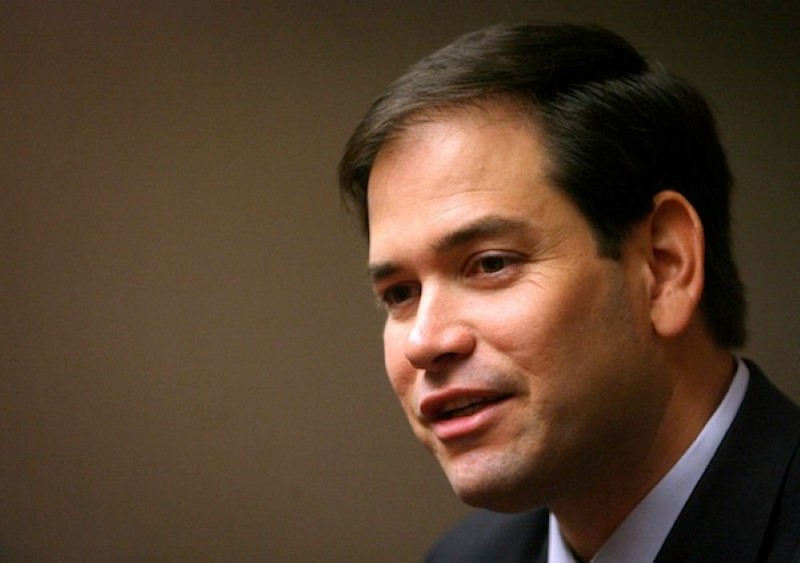
A little-used method of updating the U.S. Constitution recently got a boost from a top presidential contender. On Wednesday, Marco Rubio said he would support convening a convention of states to amend the Constitution. The obscure process, outlined in Article V of the Constitution, is a convention of state legislatures to propose amendments to the Constitution. The last time a convention of states was used was in 1787. During a speech last week, Rubio said he would support a convention on topics that could limit the reach of the federal government. “One of the things I’m going to do on my first day of office, I will announce I am supporter, and as president will put the weight of the presidency behind, of a constitutional convention of the states so we can pass term limits on members of Congress and the Supreme Court, and so we can pass a balanced budget amendment into the Constitution,” said Rubio during an Iowa campaign stop. Calls for a constitutional convention aren’t new. The conservative Convention of States project has advocated for such a convention, and has included a proposed draft of convention rules on its website. The group celebrated Rubio’s endorsement last week, saying it was honored to hear that Rubio endorsed the convention. “I’ve never been more excited about our prospects for achieving real government reform as I am right now, on the eve of 2016,” wrote Mark Meckler, president of Citizens for Self Governance, on the Convention of States website. “Every day moves us closer and closer to a Convention of States to restrain the federal government. And today moves us one giant step closer.” Some Florida lawmakers are also making a push for a convention of states. In December, Sen. Aaron Bean filed a Senate memorial calling on Congress to call a convention of states for “the sole agenda” of an amendment addressing term limits for members of the U.S. House and Senate. That memorial cleared both Senate committees and now heads to the full state Senate for a vote. An identical House measure, sponsored by Rep. Larry Metz, cleared its first committee hearing.
