
Supreme Court rules that Joe Biden’s executive order forgiving student loan debt unconstitutional
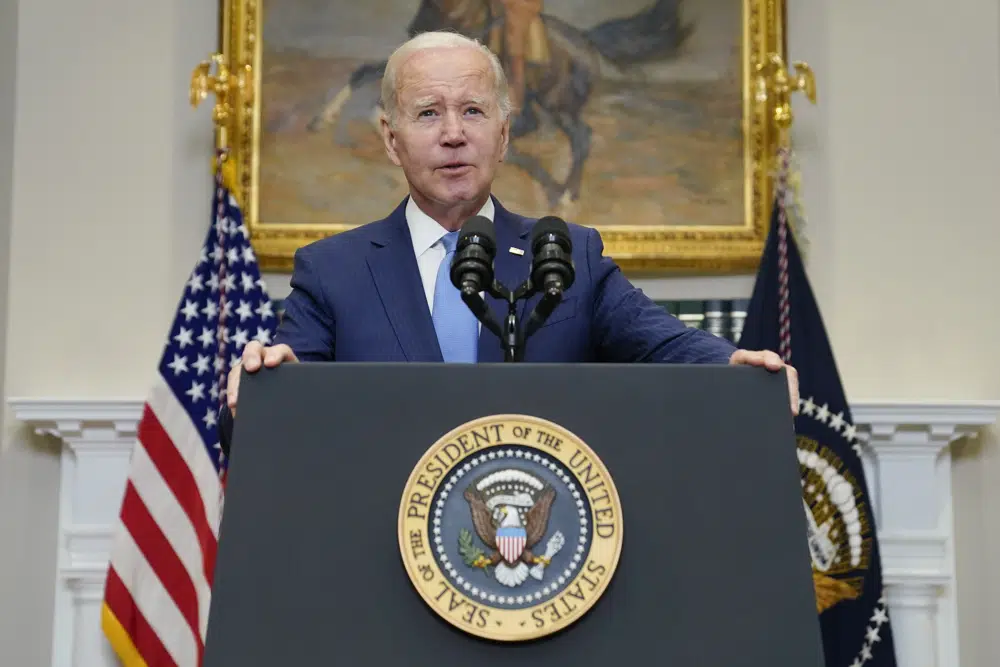
On Friday, the U.S. Supreme Court ruled that President Joe Biden’s controversial executive order to forgive millions of student loans exceeded the powers of the President as enumerated by the Constitution. The Biden administration had argued before the Court that it had acted lawfully as the COVID-19 global pandemic meant that the President had the unilateral right to cancel student loans as part of its emergency response. They also cited a 2003 law called the HEROES Act, passed during the Iraq War. The Court rejected the administration’s arguments in a 6-to-3 ruling Friday in Biden vs. Nebraska. Chief Justice John Roberts wrote, “The HEROES Act allows the secretary to ‘waive or modify’ existing statutory or regulatory provisions applicable to financial assistance programs under the Education Act, but does not allow the secretary to rewrite that statute to the extent of canceling $430 billion of student loan principal.” When President Biden was running for office in 2020, he promised student loan forgiveness to motivate young people to vote for him over then-incumbent President Donald Trump. Even though Democrats controlled both Houses of Congress for his first two years in power, Biden could not pass student loan forgiveness through Congress, so he opted for the legally dubious step of doing it by executive fiat. The Supreme Court, in Friday’s ruling, rejected that effort. Congresswoman Terri Sewell, a Biden loyalist, released a statement in response to the Supreme Court’s decision. “Today, the Supreme Court has chosen to side with Republican state officials who would rather score political points against President Biden than help hard-working Americans being crushed by student loan debt. To say that I am disappointed would be an understatement,” Rep. Sewell said. “In light of this terrible decision, I am calling on my colleagues in Congress to take action to combat the student debt crisis and make higher education more affordable for our students.” U.S. Senator Katie Britt voiced her support for the Court’s decision. “Hard work and personal responsibility are at the heart of the American Dream,” Britt said on Twitter. “As we knew all along, the Biden Administration’s student loan debt transfer scheme was unfair, unjust, and unlawful. I was proud to join @SenateGOP colleagues on an amicus brief in this important case.” Congressman Barry Moore also released a statement in support of the Supreme Court ruling. “The Supreme Court just declared Biden’s student loan giveaway unconstitutional,” Rep. Moore said on Twitter. “Huge victory for American taxpayers, who would have been forced to foot the bill of $400 billion over the next 30 years.” To connect with the author of this story or to comment, email brandonmreporter@gmail.com.
Terri Sewell hosts symposium on Shelby v. Holder
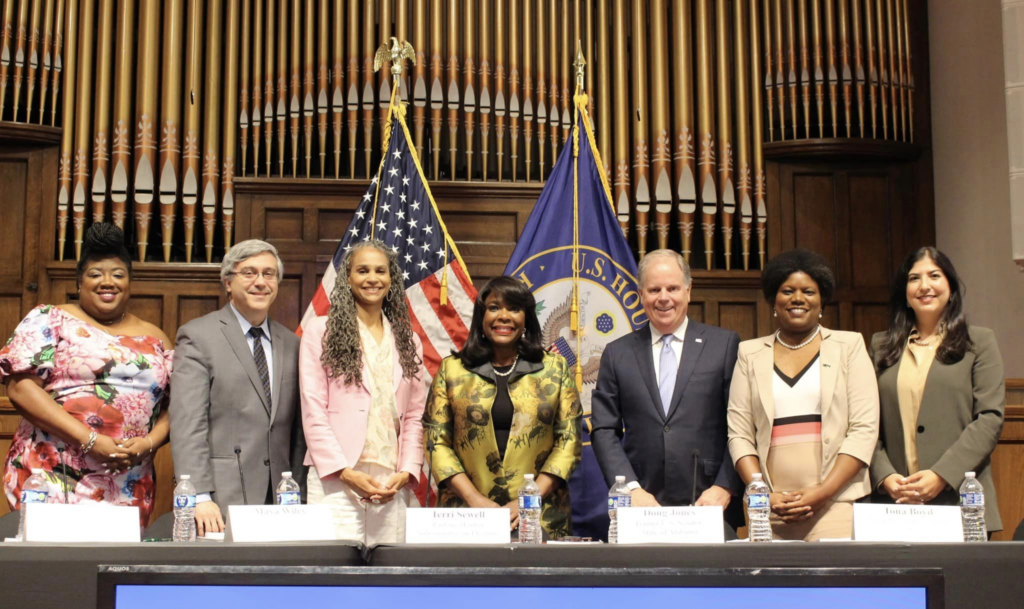
On Wednesday, Congresswoman Terri Sewell (D-AL07) led a symposium in Birmingham on the landmark Supreme Court ruling Shelby v. Holder that struck down the preclearance section of the Voting Rights Act 1965. “This morning, I convened some of our nation’s premiere civil rights and voting rights leaders at the 16th Street Baptist Church to commemorate the 10th anniversary of the Shelby County v. Holder decision which gutted the Voting Rights Act,” said Sewell on Facebook. “In the decade since the Shelby decision, one thing is clear—old battles have become new again as the right to vote has come under attack. But we in Alabama have seen this before and we’re not going down without a fight. The Foot Soldiers left us a blueprint to protect their progress and advance it. Drawing courage from their sacrifice, we will protect the right to vote in Alabama and across the country.” Sewell was joined on Wednesday by President & CEO of The Leadership Conference on Civil and Human Rights Maya Wiley, former U.S. Senator Doug Jones, the President & General Counsel of the Mexican Americans Legal Defense Fund (MALDEF) Thomas A. Saenz, the Associate Director-Counsel, NAACP Legal Defense Fund (LDF) Tona Boyd, Staff Attorney, Native American Rights Fund (NARF) Jacqueline De Leon, Birmingham Civil Rights Institute President & CEO DeJuana Thompson, the executive director of Alabama Forward Evan Milligan, the Co-Founder & Executive Director of Black Voters Matter Cliff Albright, the Vice President of Census & Voting Programs for Asian Americans Advancing Justice (AAJC) Terry A. Minnis, the Co-Director of the Voting Rights Project for Lawyers’ Committee for Civil Rights Under Law Marcia Johnson, and the Alabama Policy Director for the Southern Poverty Law Center Jerome Dees. “The Shelby decision was decided in 2013,” Sewell said. “It had tremendous ramifications. The disastrous decision in Shelby versus Holder gutted key provisions of the Voting Rights Act of 1965,” Sewell said. “The preclearance section stopped really restrictive voting laws before they went into effect.” “The Leadership Council on Civil and Human Rights is the lobbying arm of the civil rights movement,” President Wiley said. “Barack Obama won in 2008, and that was the beginning of the end of bipartisanship on voting rights.” “In 2006, George Bush supported, and very few members of Congress were willing to oppose, extending the Voting Rights Act,” Wiley said. “After Obama’s win, things changed. Instead of contesting for our votes, they made it harder for us to vote,” Wiley said. Sen. Jones said, “Terri has become, since the death of John Lewis, the champion of voting rights in the U.S. Congress.” Jones said that in the effort to make it harder to vote, “we (the state of Alabama) have kind of led the way.” Jones said that Alabama has a “very restrictive voting law.” “Alabama has done a good job of registering people, but we have made it very difficult to vote,” Jones said. “Our voting is still below the national average, even in Georgia.” “Racial turnout gaps have increased in Alabama over the last ten years,” Sewell said. “I am proud to be the lead sponsor of the John Robert Lewis Voter Protection Act. Restoring preclearance is the key to unlocking a lot of the voting suppression laws that we have.” Saenz said the Shelby v. Holder ruling gave “a green light to further restrict people of color, blacks, and Latinos.” “But for Shelby County, Texas would be a swing state today,” Saenz said. “The Voting Rights Act was the most effective federal civil rights law in United States history.” Since Shelby County v. Holder, Saenz said it is much more difficult for MALDEF to be aware of voting process changes, especially at the local level. “A pronounced lack of transparency in what is happening at local levels across this country to suppress minority voters across this country,” Saenz said. “We don’t know about some of these changes until it is too late to go into court to do something.” “There are five states where the Black population is rising faster than the Hispanic population, and Alabama is one of those states,” Jones said. “20% of the Black population is under the age of 20. Times are a changing, and the people on the other side know it.” Jones said that nonpartisan committees for redistricting congressional seats and legislatures is a change that is needed. “Congress needs to pass some minimal standards for early voting,” Jones said. To connect with the author of this story or to comment, email brandonmreporter@gmail.com.
Rep. Terri Sewell says Supreme Court ruling striking down affirmative action “ignores our history”
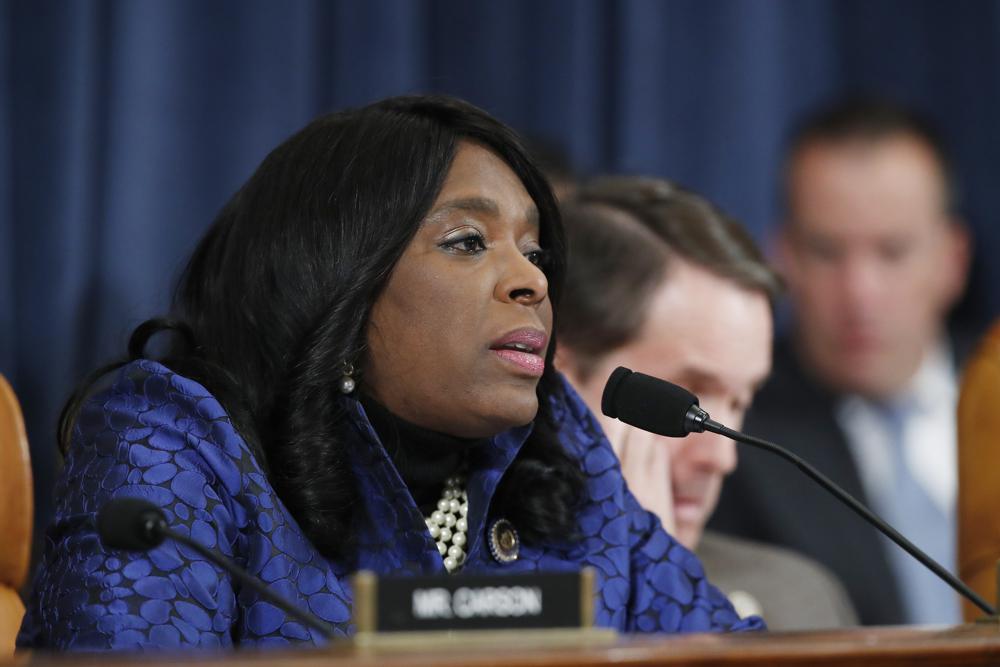
The U.S. Supreme Court released a pair of decisions on Thursday severely limiting the use of race as a factor in college admissions. This decision effectively ends those affirmative action programs that many colleges have used for years. The Court’s six conservative justices invalidated both Harvard’s and the University of North Carolina at Chapel Hill’s (UNC) admissions schemes by ruling they did not comply with the 14th Amendment’s guarantee of equal protection. “Both programs lack sufficiently focused and measurable objectives warranting the use of race, unavoidably employ race in a negative manner, involve racial stereotyping, and lack meaningful end points,” Chief Justice John Roberts wrote for the majority. “We have never permitted admissions programs to work in that way, and we will not do so today,” Roberts continued. “At the same time, as all parties agree, nothing in this opinion should be construed as prohibiting universities from considering an applicant’s discussion of how race affected his or her life, be it through discrimination, inspiration, or otherwise.” “The Court today makes clear that, in the future, universities wishing to discriminate based on race in admissions must articulate and justify a compelling and measurable state interest based on concrete evidence,” stated Justice Clarence Thomas. “Given the strictures set out by the Court, I highly doubt any will be able to do so.” Congresswoman Terri Sewell released a statement stating her opposition to Thursday’s ruling. “For centuries, African Americans were systematically denied the opportunity to pursue a higher education and gain financial independence, leaving a painful legacy of discrimination that persists to this day,” Rep. Sewell said. “It was during my parents’ lifetime that institutions like the University of Alabama finally allowed Black students to enroll alongside their peers. For the past four decades, the Supreme Court has recognized the important role of affirmative action in breaking down educational barriers for Black students. After all, our entire nation benefits when talented students of diverse backgrounds get a fair shot at success. But with today’s extreme reversal, the Court has chosen to ignore our history and roll back our hard-fought progress. “This is another solemn reminder that progress is elusive, and every generation must fight to preserve the progress of the past and advance it,” said Sewell. The Biden administration had backed the two schools before the Court. The biggest beneficiary of this will be Asian Americans. Asians as a group have a disproportionately high percentage of high performers on standards such as grade point average, ACT scores, GRE scores, etc., so they may face discrimination in the number allowed into colleges and universities. To connect with the author of this story or to comment, email brandonmreporter@gmail.com.
Terri Sewell hopeful two of Alabama’s seven congressional districts will become majority-minority
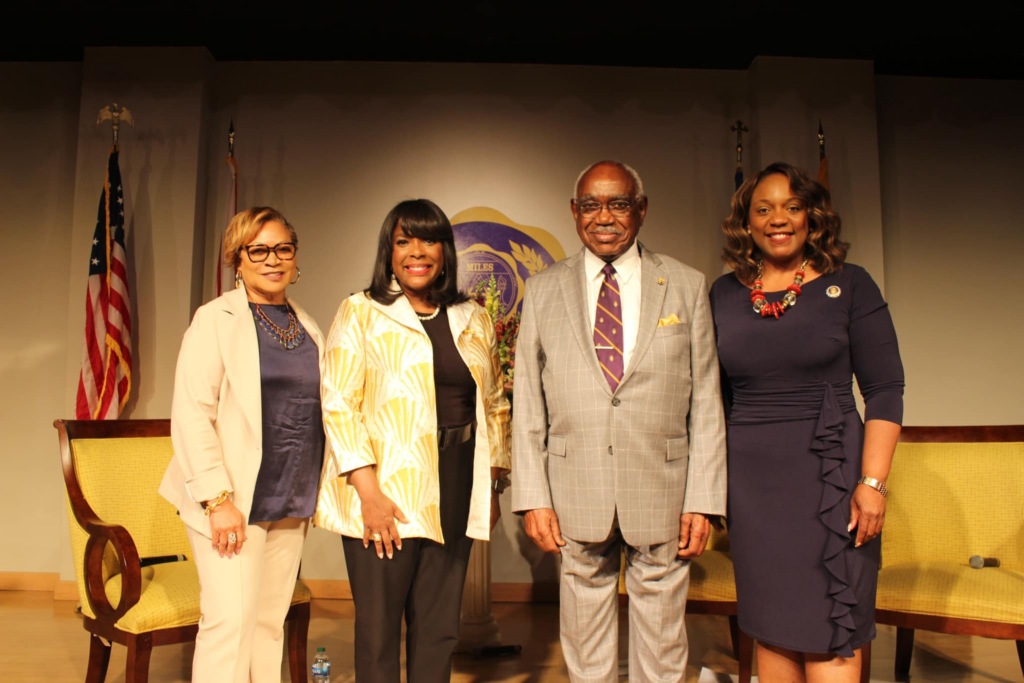
Congresswoman Terri Sewell (D-AL07) participated in a symposium on the Milligan v. Allen decision at Miles College on Tuesday. There Sewell said she would not be satisfied with less than “50 percent plus one or more” African American in two of Alabama’s congressional districts. The Legislature redistricted the state in 2021, but the federal courts have since ruled that the Legislature’s redistricting violated the Voting Rights Act of 1965 and have ordered the Legislature to draw two majority-minority districts or at least two districts that were largely minority. Sewell said that the recent Supreme Court decision affirming the three-judge panel of the Eleventh Circuit Court of Appeals decision was a surprise given previous court decisions by this current court. “We all expected the Supreme Court to once again gut the Voting Rights Act,” Sewell said. “I am so excited about the historic nature of our victory,” Sewell said. “It was a historic victory for not just Black Americans, but it was a victory for democracy.” Sewell continued, “It is going to force the Alabama Legislature to draw a new congressional districting map by July 21. It (the ruling) does not say that we have to have two majority minorities districts.” On Twitter, Sewell wrote, “The fight for voting rights is the fight of a lifetime. We’ve made progress, but if we are not vigilant about advancing it, we will lose it. Thank you @MilesCollege for hosting this critical and timely discussion! I was honored to join these distinguished guests!” Retired federal Judge U.W. Clemons said that he felt that the map adopted would be one that kept counties together as much as possible. “I think the three-judge panel will give great deference to the map that respects the integrity of the counties,” Clemons said. “I am looking for 50% (Black voters) plus more in each of the districts,” Sewell said. “I am convinced that not only will this decision affect Alabama, it will affect the nation,” Clemons said. “The Supreme Court abided by the precedent set in Thornburgh versus Gingrich.” Clemons explained that “three conditions” exist for creating a majority-minority district under the Thornburgh v. Gingrich precedent. “It has to have a large enough population of minority voters,” Clemons explained. “It has to be able to draw a cohesive district, and there has to be a history of the majority voting in a racially polarizing way. We meet all of those conditions here in Alabama.” “Brown versus the Topeka Board of Education was first argued before the Supreme Court in 1952,” Clemons said. Clemons explained that the ruling determined that separate but equal education was inherently unequal. “That ruling was the first evidence during my life for that there was a God,” Clemons said, adding that this ruling also was likely due to God. Clemons is retired from the federal bench, but he is not retired. “This ruling has the potential to reshape this nation,” Clemons said. Clemons said concerns about the public popularity of the current court may have motivated Chief Justice John Roberts to write this opinion in Milligan versus Allen. “This court has the lowest credibility of any Supreme Court that has ever sat,” Clemons said. “The Chief Justice felt that he had to try to maintain at least some credibility with the public. It is a signal that he, as a chief justice, is representing the nation.” “The Milligan case will have profound impact across this nation,” Sewell said. State Senator Merika Coleman (D-Birmingham) said. “It truly is profound what has happened with the Milligan case.” Coleman continued, “Of course, there will be some people who will try to do something that is not what the court said. A Senator I will not name here told me on the phone: We are just going to give you two districts that are 47% African American.” Coleman said that the maps that the Legislature draws will still have to be shown to Milligan and the other plaintiffs in the case, and they can either accept them or ask that the three-judge panel appoint a special master to draw the districts. “If they draw two districts that are 47% African American, a special master will have to come in,” Coleman said. “We want to be able to draw those districts ourselves.” “We already have a safe African American congressional district,” Coleman said. Coleman said that both districts need to be “50 percent plus one or more Black voting age population.” “We have a real opportunity to pick our candidate of choice,” Coleman said. “I have absolutely no faith that the Alabama Legislature is going to do the right thing. It never has,” Clemons said. “The courts are going to do it.” “Neither Democrats or Republicans want the special master to come in,” Coleman said. “Congressional District Two is the one where my former colleague Barry Moore is.” “The Legislature is going to do what it usually does,” Clemons said, “In 1872, we had one Black member of Congress. In 1874, we had one member of Congress.” Alabama would not have another Black member of Congress until Earl Hilliard in 1992. Hilliard’s Seventh Congressional District was 65% African American. Today the Seventh Congressional District is represented by Sewell. “It was 61% African American before redistricting,” Sewell explained. “It dropped to 55% in this redistricting. “It would not be fair for it to fall to below 50%.” Clemons said that it is important that Blacks are united politically. “If the Black Community had four political parties and all four were equal in strength, we would not be politically cohesive,” Clemons said. “For better or worse, most Black communities are Democrats. Frankly, our being Democrats means that we are politically cohesive.” Sewell said that, “Change comes when ordinary people fight to do better, and they work on the ground.” Sewell predicted that if the Democrats pick up a new majority-minority seat in Alabama, Louisiana, Arkansas, Georgia, Florida, and South Carolina, “the first African-American man Hakeem Jeffries will become the Speaker of the House.” The Governor has called a special session for redistricting to start on July 17.
Department of Commerce to send $1.4 billion to Alabama to boost ongoing efforts to expand broadband access

On Monday, Alabama Governor Kay Ivey announced that the National Telecommunications and Information Administration has released the state allocations from the Broadband Equity, Access, and Deployment program. The Alabama Department of Economic and Community Affairs (ADECA), which oversees state broadband initiatives, will administer the grant funds. “My priority is for Alabama to gain full ability to be connected to high-speed internet,” said Gov. Ivey. “We have taken several significant strides toward this goal, and today’s announcement provides a tremendous boost in the journey toward full broadband access no matter where you live in Alabama.” States receiving the funds have 180 days to prepare and submit plans to the NTIA for use of the funds. ADECA’s Alabama Digital Expansion Division will complete Alabama’s required proposal. The division also manages funding from the American Rescue Plan Act and the Alabama Broadband Accessibility Fund for grant programs to help internet service providers extend service to previously unserved or underserved areas. “Thanks to the leadership of Gov. Ivey and a strong team effort among the Legislature, internet service providers, and many others, Alabama is continuing to make great progress in broadband mapping, planning, and deployment,” said ADECA Director Kenneth Boswell. “These efforts have put us in good position with the BEAD program to accelerate our work to close the digital divide in Alabama.” Since 2018, Alabama has invested $88.6 million of state dollars through grant awards supporting 109 projects through the Alabama Broadband Accessibility Fund. Once all Alabama Broadband Accessibility Fund projects awarded to date have been completed, access to broadband service will be available to more than 82,000 Alabama households, businesses, and community institutions that currently have no option to subscribe. ADECA has also developed a statewide broadband map and the Alabama Connectivity Plan, which guide the state’s expansion efforts into unserved areas. In September 2022, Governor Ivey announced a grant to support broadband “middle-mile” network infrastructure to improve access for last-mile projects. ADECA completed community broadband meetings in each of Alabama’s 67 counties in May. The White House made the announcement on Monday when President Joe Biden announced more than $42 billion in new federal funding to expand high-speed internet access nationwide. This will reportedly help an estimated 8.5 million families and small businesses attain connectivity. “For around 24 million Americans across this country, there is no high-speed Internet,” Biden said. “And for millions more, their Internet connection is limited or unreliable. High-speed Internet isn’t a luxury anymore; it’s become an absolute necessity. That’s why we acted as soon as we did — as soon as we came to office — with the American Rescue Plan.” The additional money will be parceled out to states over the next two years. In a formal unveiling at the White House, the president compared the new infrastructure project to the government’s work to electrify the nation’s darkened heartland in the late 1930s. “It’s the biggest investment in high-speed internet ever because for today’s economy to work for everyone, internet access is just as important as electricity or water or other basic services,” Biden said. “In our 21st-century economy, access to reliable high-speed internet is not a luxury. It is a necessity,” said Congresswoman Terri Sewell (D-AL07). “Thanks to President Biden’s Bipartisan Infrastructure Law, we’re devoting more resources than ever before to expanding broadband, closing the digital divide, and ensuring that every Alabamian can connect to high-speed internet. These funds will be a game-changer for our state, and I look forward to working with ADECA to ensure that they are equitably distributed to HBCUs and underserved communities, including in Birmingham and the Black Belt.” Alabama will receive $1,401,221,901.77. California, which has a much bigger population, received over $1.8 billion. To connect with the author of this story or to comment, email brandonmreporter@gmail.com.
Terri Sewell to commemorate 10th anniversary of landmark Shelby County versus Holder ruling
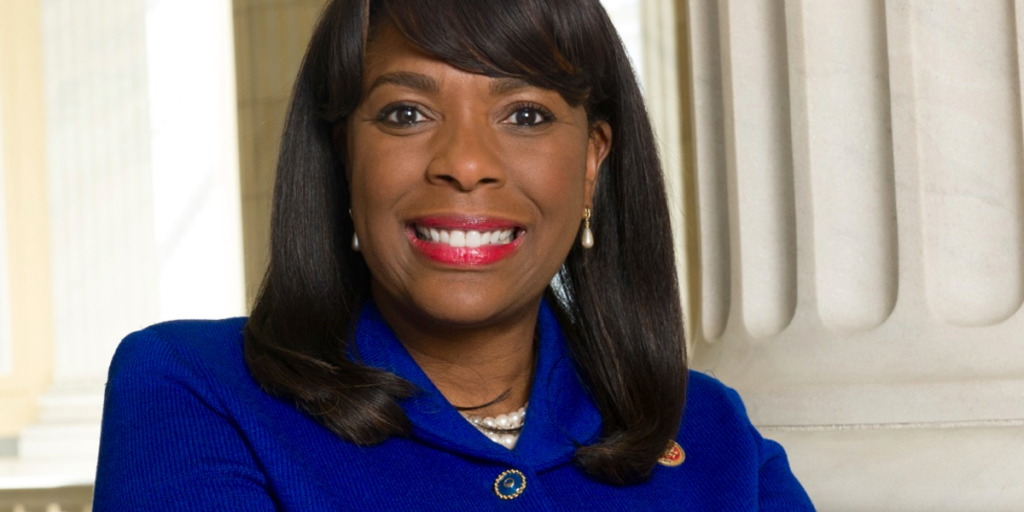
Congresswoman Terri Sewell will commemorate the 10th anniversary of the landmark Shelby County vs. Holder Supreme Court decision with two events on Tuesday and Wednesday. On June 25, 2013, the Supreme Court ruled that the controversial preclearance section 5 of the Voting Rights Act was archaic and no longer legally enforceable, upsetting many in the civil rights community, including Rep. Sewell. “Exactly 10 years ago, the Supreme Court gutted the Voting Rights Act of 1965 in its disastrous Shelby County vs. Holder decision, unleashing a wave of voting restrictions across the nation,” Rep. Sewell said Sunday on Facebook. Sewell is the author and lead sponsor of the John R. Lewis Voting Rights Advancement Act. If passed, the bill would restore the requirement that southern states receive preclearance from the U.S. Department of Justice Civil Rights Division before legislatures can pass changes to their voting rules or decennial redistricting. The federal courts have recently found Alabama in violation of the remaining intact provisions of the Voting Rights Act of 1965 with its congressional redistricting in the Allen vs. Milligan decision. Congresswoman Sewell will be joined by retired federal Judge U.W. Clemon, State Senator Rodger Smitherman (D-Birmingham), State Senator Merika Coleman (D-Birmingham), Miles College President Bobbie Knight, Fairfield Mayor Eddie Penny, Birmingham Mayor Randall Woodfin, and Birmingham Times Executive Editor Barnett Wright for a panel discussion on the Supreme Court’s Allen v. Milligan Decision on Tuesday at Miles College. Sewell will be joined on Wednesday by President & CEO of The Leadership Conference on Civil and Human Rights Maya Wiley, former U.S. Senator Doug Jones (D-Alabama), the President & General Counsel of MALDEF Thomas A. Saenz, the Associate Director-Counsel, NAACP Legal Defense Fund (LDF) Tona Boyd, Staff Attorney, Native American Rights Fund (NARF) Jacqueline De Leon, Birmingham Civil Rights Institute President & CEO DeJuana Thompson, the executive director of Alabama Forward Evan Milligan, the Co-Founder & Executive Director of Black Voters Matter Cliff Albright, the Vice President of Census & Voting Programs for Asian Americans Advancing Justice (AAJC) Terry A. Minnis, the Co-Director of the Voting Rights Project for Lawyers’ Committee for Civil Rights Under Law Marcia Johnson, and the Alabama Policy Director for the Southern Poverty Law Center Jerome Dees. The group will hold a symposium, “Shelby County a Decade Later: The Path Forward in Our Ongoing Fight for the Right to Vote,” at the historic 16th Street Baptist Church in Birmingham on Wednesday. Sewell is the Ranking Member of the House Committee on Administration Subcommittee on Elections. Sewell is in her seventh term representing Alabama’s Seventh Congressional District. To connect with the author of this story or to comment, email brandonmreporter@gmail.com.
Terri Sewell announces $21+ million grant to support the Birmingham Urban Trail and enhance multimodal transportation network
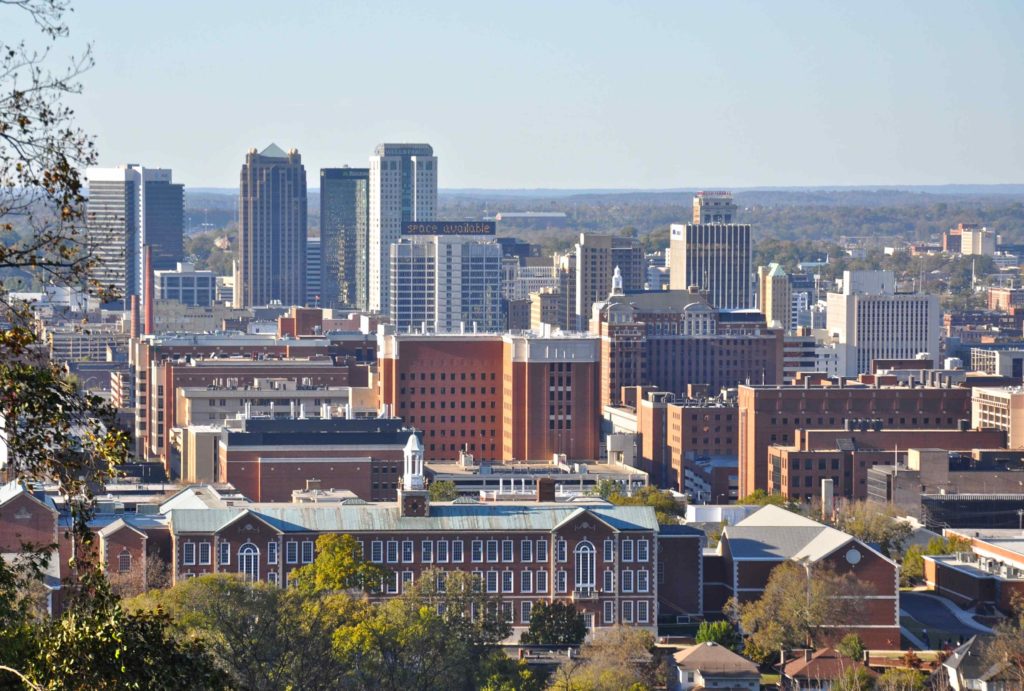
Congresswoman Terri Sewell (D-AL07) announced that the City of Birmingham has been awarded a $21,681,306 grant from the United States Department of Transportation (DOT) to support the development of the Birmingham Urban Trail and Multimodal Corridor. “This is such great news for the Birmingham area!,” said Rep. Sewell. “I was so proud to help the City of Birmingham secure this $21 million grant to develop the Birmingham Urban Trail, and I know that it will go a long way in making our city more walkable, bikeable and livable. I applaud the Biden-Harris Administration for making this transformational investment and for their continued partnership as we work to bring more resources and better opportunities to our communities here in Birmingham.” The @cityofbhamal has been awarded a nearly $22 million federal grant to create a new urban trail to connect downtown to historic neighborhoods just west of the city center.@RepTerriSewell lauded the grant as a “transformational investment.”https://t.co/oAA5UfoQbV — AL.com Birmingham (@ALcomBirmingham) June 23, 2023 The funding is part of DOT’s Rebuilding American Infrastructure with Sustainability and Equity (RAISE) Grant Program and will be used to enhance transportation networks and create a more walkable, bikeable, safe, connected, and livable community. This grant will support the “Birmingham Civil Rights Crossroads: Reconnecting Historic Neighborhoods Through Active Mobility” project which will create an urban trail and multi-modal corridor. The trail will be the spine of a growing multimodal transportation network, providing safe and equitable options via an urban trail and complete streets and creating a more walkable, bikeable, safe, connected, and livable community. This funding will be used to redevelop approximately 2.5-miles of road with a complete streets approach. The RAISE Grant program provides a unique opportunity for the DOT to invest in road, rail, transit and port projects that promise to achieve national objectives. Previously known as the Better Utilizing Investments to Leverage Development (BUILD) and Transportation Investment Generating Economic Recovery (TIGER) Discretionary Grants, Congress has dedicated nearly $12.1 billion for fourteen rounds of National Infrastructure Investments to fund projects that have a significant local or regional impact. The State of Alabama has long-term plans to develop a statewide trails initiative eventually linking all 67 Alabama Counties. Terri Sewell is in her seventh term representing Alabama’s Seventh Congressional District. To connect with the author of this story or to comment, email brandonmreporter@gmail.com.
Tommy Tuberville leads first Alabama delegation prayer breakfast
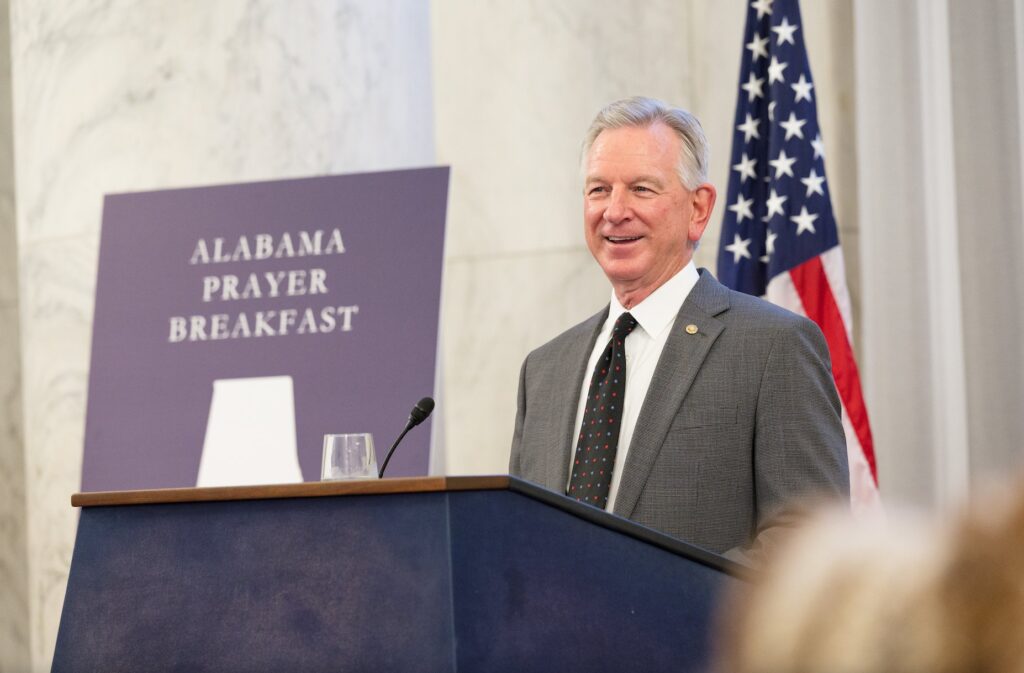
The Alabama Congressional delegation met for a prayer breakfast in Washington, D.C., this week. U.S. Senator Tommy Tuberville, along with U.S. Senator Katie Britt and U.S. Representatives Robert Aderholt, Terri Sewell, Gary Palmer, Barry Moore, Jerry Carl, and Dale Strong, joined to host an Alabama prayer breakfast. More than 100 Alabamians joined congressional leaders praying for the state and nation. “Our uniting in prayer is more important now than ever because I think we can all agree that we are facing a lot of division and brokenness in our country,” said Senator Tuberville. “And the solutions to these problems aren’t found in the Hall of Congress or the White House—but among God’s people. Our presence here today shows we recognize that God is the only one who can heal and restore. But first, America needs to turn back to God. That begins with you and me.” Honored to host the inaugural Alabama Prayer Breakfast with Alabama legislators, faith leaders, & constituents to pray for our great state & nation. Thank you to all those who joined us in prayer. May we continue to look to the Lord for guidance and remain one nation under God. pic.twitter.com/0sAGzZpznk — Coach Tommy Tuberville (@SenTuberville) June 21, 2023 Senator Britt said on Twitter, “Blessed to start the day in prayer with my colleagues and constituents. Thankful that we had such a great group of Alabamians join our congressional delegation for this morning’s prayer breakfast. All things are possible through Him!” Congressman Palmer said on Twitter, “It was an honor to join fellow Alabamians in prayer this morning for our state and our nation at the first annual Alabama Prayer Breakfast. Thank you to @SenTuberville for hosting.” The members were joined by faith leaders from Alabama, including University of Alabama President Stuart Bell, Dr. Jim Carter of Monroeville, Pastor Troy Garner of Huntsville, and Birmingham Theological Seminary President Ike Reeder. The leaders read passages from the Bible and took turns praying for our families, education system, churches, economy, and military. More than 100 Alabamians gathered in the Kennedy Caucus Room of the Russell Senate Office Building. To connect with the author of this story or to comment, email brandonmreporter@gmail.com.
Rep. Terri Sewell secures key wins for Alabama in FY2024 NDAA
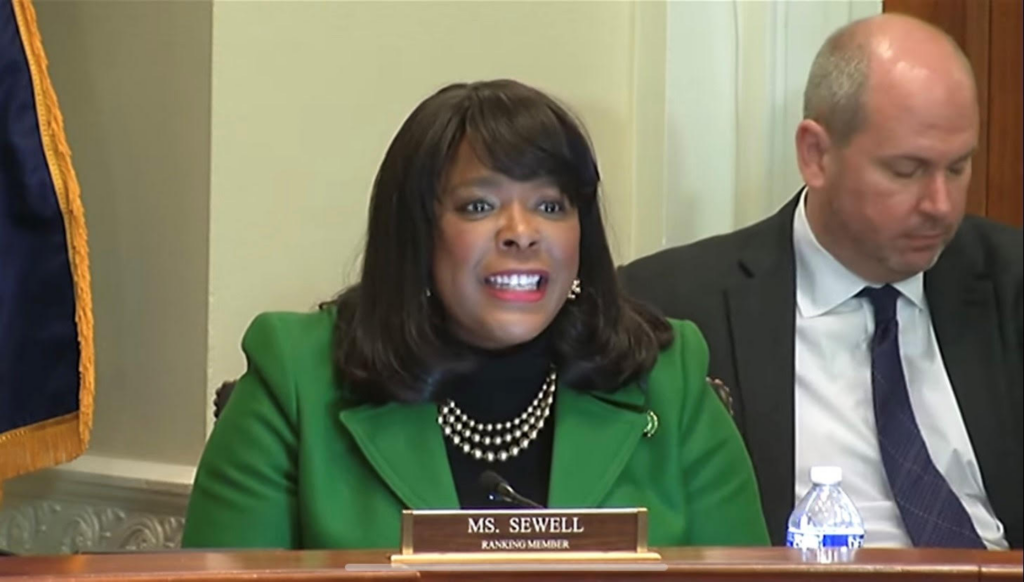
On Thursday, Congresswoman Terri Sewell (D-AL07) announced the inclusion of key priorities in H.R. 1282, the Fiscal Year 2024 (FY24) National Defense Authorization Act (NDAA), which passed out of committee on Wednesday. Sewell is a member of the House Armed Services Committee. “As a proud member of the House Armed Services Committee and the representative for critical military installations in Alabama, I take very seriously my responsibility to ensure that our service members get the tools and support they need to keep our nation safe,” said Rep. Sewell. “I’m thrilled to report that this year’s NDAA includes my provisions to continue modernizing Alabama’s Air National Guard facilities and support leadership training at Maxwell Air Force Base.” Terri Sewell is in her seventh term representing Alabama’s Seventh Congressional District. “I was also proud to help secure numerous provisions to support our nation’s HBCUs in this year’s NDAA,” continued Sewell. “Our HBCUs perform critical research and help train a talented and diverse group of students whose skills are an asset to our national security. We must ensure that their potential does not go untapped. Thanks to a series of amendments and requests that we submitted, this NDAA strengthens the partnership between our military and our HBCUs, creates a workforce pipeline for minority students, and includes a record $125 million to invest in cutting-edge research at HBCUs.” Rep. Sewell credited her leadership for securing the inclusion of critical priorities in the FY24 NDAA. The first of these was modernizing Alabama’s Air National Guard Facilities and recognizing Air Force professional development education at Maxwell AFB. Rep. Sewell’s amendment directing the Secretary of the Air Force to brief the Armed Services Committee on facility modernization plans for Air National Guard installations in Alabama, including the 117th Air Refueling Wing in Birmingham. Thanks to a request submitted by Sewell, the NDAA acknowledges the important role Air University at Maxwell Air Force Base plays in training our brightest Air Force leaders, paving the way for innovative research, and advancing USAF combat operations. The NDAA also includes an amendment that Rep. Sewell co-sponsored to boost research funding for HBCUs and MSIs by $20 million. This year’s NDAA includes a record $125 million to support cutting-edge research programs at HBCUs and MSIs and create workforce pipelines from minority and underserved communities. It includes Rep. Sewell’s amendment to strengthen and expand partnerships between DoD and our nation’s HBCUs. The amendment directs the Air Force to brief the House Armed Services Committee on how it plans to partner with HBCUs to leverage their expertise in cybersecurity, artificial intelligence, augmented reality, and Additive Manufacturing. Sewell also worked towards expanding Reserve Officers’ Training Corps (ROTC) Programs at HBCUs. The NDAA includes Rep. Sewell’s amendment requiring the Secretary of Defense to brief Congress on the DoD’s efforts to reduce opioid addiction among servicemembers and expand the use of non-opioid treatment alternatives. The NDAA includes an amendment co-sponsored by Rep. Sewell to explore the process of improving the certification process for military families accessing free- and reduced-price school meals. The NDAA includes an amendment co-sponsored by Rep. Sewell requiring the Secretary of Defense to brief the Armed Services Committee on the DoD’s efforts to screen for breast cancer among TRICARE beneficiaries. This year’s NDAA authorizes crucial investments in America’s global alliances and partnerships. The NDAA includes robust investments to address the challenges posed by the People’s Republic of China (PRC) and acute threats from Russia and North Korea. It supports our nation’s service members and military families with a 5.2% pay raise. The NDAA has been passed annually by Congress since 1961. The NDAA authorizes funding levels for the Department of Defense (DoD) and allows the Armed Forces to pay, train, and equip U.S. service members, support America’s allies worldwide, and carry out essential national security operations. Congressman Mike Rogers (R-AL03) is the Chairman of the House Armed Services Committee. To connect with the author of this story or to comment, email brandonmreporter@gmail.com.
Rep. Mike Rogers applauds committee passage of NDAA
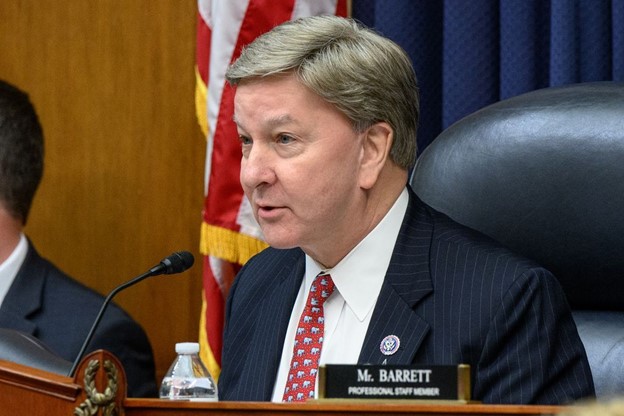
On Wednesday, Congressman Mike Rogers (R-AL03), the Chairman of the House Armed Services Committee, released a statement applauding the full committee for passage of the Fiscal Year 2024 National Defense Authorization Act (NDAA). “Providing for our nation’s defense is the top priority for the House Armed Services Committee, and I am incredibly proud of the bipartisan work we’ve accomplished in the FY24 NDAA,” said Rogers. This year’s NDAA includes provisions that counter China’s aggression, boost oversight of the Department of Defense, and support our servicemembers and their families. Additionally, this year’s bill saves taxpayers billions of dollars while still making critical investments in innovative technologies and our defense industrial base.” “I am especially proud of the strong provisions in the FY24 NDAA that support the critical role Alabama plays in our national defense and strengthens that role for years to come,” said Rogers. “I thank my colleagues on the committee for their hard work in support of our national security. I look forward to advancing this bill to the full House in the coming weeks.” The House Armed Services Committee oversees U.S. military forces, both here and across the globe. “Recently I traveled to the U.S. Africa Command region with the House Armed Services Committee,” said Congressman Dale Strong (R-AL05 on Facebook. “We met with many servicemen and women, serving in some of the harshest conditions anyone can imagine.” “One of the bases was located in the middle of the Saharan Desert – 350 individuals with the armed forces all volunteered for the assignment (it was 106°),” Strong said. “They are executing an extremely important role that protects American lives and interests. They had very few complaints, but they did say mail was often delayed getting there. I’m asking that you take a moment from your day to write a letter to these service members. You can mail or deliver the letters to my Huntsville office for us to send them overseas. Let these men and women know their voice was heard by Congressman Strong and AL-05. Let’s show them how much America appreciates their service which ensures our FREEDOM!!!” The proposed House Defense Department appropriation is $874,212,219, which is unchanged from the DoD’s request. Alabama is represented on the House Armed Services Committee by Rogers, Strong, and Jerry Carl (R-AL01). Alabama is represented on the House Armed Services Committee by Rogers, Strong, Terri Sewell (D-AL07), and Jerry Carl (R-AL01). To connect with the author of this story or to comment, email brandonmreporter@gmail.com.
Americans celebrate Juneteenth, nation’s newest federal holiday

President Joe Biden signed legislation two years ago making Juneteenth, or June 19, our newest federal holiday. Juneteenth commemorates the end of slavery. For the third year in a row, Alabama Governor Kay Ivey has authorized state employees to also take the day off since it’s designated at the federal level. Post offices, government buildings, courthouses, and many schools will be closed today. Most private businesses will be open, but there are exceptions, so call first before making plans. Juneteenth commemorates June 19, 1865, when Union soldiers brought the news of freedom to enslaved Black people in Galveston, Texas — two months after the Confederate Army of Northern Virginia had surrendered. That was also about 2 1/2 years after the Emancipation Proclamation freed slaves in the Southern states. Since Texas was not a major area of operations for the invading Union Army, Texas slaves had not been informed that they were free until the invasion of Texas in the closing days of the war. Slavery was formally abolished in all of the United States with the ratification of the Thirteenth Amendment to the U.S. Constitution on December 6, 1865. Observed on June 19, Juneteenth celebrates the end of slavery in the United States and commemorates the day that the news of its abolition reached slaves in Galveston, Texas, in 1965. It is also known as Emancipation Day, Jubilee Day, Black Independence Day, and Juneteenth Independence Day. The bill making Juneteenth a federal holiday passed unanimously in both the U.S. Senate and the House of Representatives and was signed into law by President Biden. “Juneteenth is, above all, a celebration of Black freedom,” said Congresswoman Terri Sewell (D-AL07). “It is long past time for the federal government to recognize Juneteenth as a federal holiday,” Sewell said when the legislation was passed into law. “I was so proud to be an original cosponsor of this legislation and even prouder to cast my vote for it today. Black Americans have continued to face systemic racism since we were recognized as full citizens more than 100 years ago. While this is a significant and symbolic step, we must fully grapple with the injustices of our country’s history, including the continued assault on Black Americans’ right to vote, before achieving true justice. Now is a time to recommit ourselves to that critical work and see to it that our Nation lives up to its promise of liberty and justice for all.” The Confederate government of Texas did not announce to slaves that the Union had freed them. Following General Robert E. Lee’s surrender at Appomattox Court House on April 9, 1865, and General Joseph Johnston’s surrender on April 26 (celebrated annually to this day in Alabama as Confederate Memorial Day), the Union turned its attention to the remaining Confederates in Texas. Confederate General Edmund Kirby Smith, commander of the Confederate Trans-Mississippi division, did not agree to surrender his army until May 26, 1865, when his second in command agreed to terms in negotiations in New Orleans. Smith’s army in Galveston did not lay down their arms until June 2. Gen. Kirby Smith fled the country to Mexico and then Cuba. He returned to Virginia in November 1865 to sign an amnesty oath. The Union transported an entire army to Texas to occupy the state. It was only on June 19, 1865, that most Texas slaves learned that they had been freed. “To me, making Juneteenth a federal holiday wasn’t just a symbolic gesture. It was a statement of fact for this country to acknowledge the origin of — original sin of slavery,” said President Biden. “To understand the war [that] was never fought over it — it wasn’t just about a Union, but it was most fundamentally about the country and freedom.” “To remember the Emancipation Proclamation wasn’t just a document. It captured the essence of freedom that galvanized the country. It proved that some ideas are more powerful; they can’t be denied,” Biden continued. “It’s a reminder that the promise of America is we all are created equal in the image of God, and we deserve to be treated equally throughout our entire lives. We’re the most unique country in Amer- — in the world. Other countries are founded based on faith, on ethnicity, on other things — religion. But we — we are founded on an idea. An idea unlike any other country in the world, that we hold these truths to be self-evident that all men and women are created equal, endowed by their Creator with certain inalienable rights. While we’ve never fully lived up to that promise, we’ve never walked away from it either. On our best days, enough of us have the guts and the heart to stand up for the best in us. It matters. It really matters.” “Juneteenth, as a federal holiday, is meant to breathe new life into the very essence of America — to make sure all Americans feel the power of this day and the progress we can make as a country; to choose love over hate, unity over disunion, and progress over retreat,” Biden continued. Choosing to remember history, not erase it; to read books, not ban them — no matter how hard some people try. That’s what’s great about it. That’s what great nations do. And we’re a great nation.” The Birmingham Civil Rights Institute is a good venue for families to learn about the history of slavery and civil rights. BCRI celebrated Juneteenth on Saturday with performers and a cookout, but usually, BCRI is closed on Mondays. For most Alabamians, this is a festive time of year with many holidays. The unofficial start of Summer begins in late May with Memorial Day. Two weeks ago, state employees got another three-day weekend celebrating Jefferson Davis’s birthday. Now federal and state workers have today off for Juneteenth. The Fourth of July, the Independence Day holiday, is just two weeks away. To connect with the author of this story or to comment, email brandonmreporter@gmail.com.
Reps. Terri Sewell and Gus Bilirakis introduce legislation to increase access to oral prescription drugs
Congresswoman Terri Sewell (D-AL07) joined U.S. Representative Gus Bilirakis (R-Florida) in introducing H.R. 4011, the Timely Access to Clinical Treatment (TACT) Act. This bipartisan legislation would require patients to receive their oral drugs within an acceptable time frame. “Undergoing treatment for a serious illness is difficult enough. No patient should also have to worry about delays in receiving potentially life-saving medication,” said Rep. Sewell. “The TACT Act is a simple, commonsense solution that would remove unnecessary roadblocks and empower doctors to get their patients the critical care that they need in a timely manner. I am proud to introduce this bill and urge my colleagues to support it.” “This bill is about removing the red tape within our healthcare system and ensuring that patients have timely access to their medications,” said Rep. Bilirakis. “Doctors, not bureaucrats, best understand the needs of their patients and should be empowered with the tools needed to provide the best possible care—especially when time is of the essence.” According to the sponsors, patients’ access to the appropriate medically necessary treatment within a reasonable time frame is increasingly challenged by our complex healthcare delivery system. This is especially true for oral drugs. The sponsors claim that pharmacy benefit managers (PBMs), health insurance plan sponsors, and specialty and mail-order pharmacies are notorious for slowing down the process by which patients receive their oral drugs, even in cases where specialty practices can provide those drugs at the site of care via an in-house pharmacy or dispensing facility. In some cases, PBMs even disallow the medications prescribed. The TACT Act requires that patients be provided their oral drugs within an acceptable time frame of 72 hours, allowing for situations—such as acquiring financial support—that are understandable and reasonable. The TACT Act will: · Require PBMs, plan sponsors, insurers, and contract pharmacies, including specialty and mail-order pharmacies, to ensure that patients are able to receive their prescription medication within 72 hours of having the prescription submitted to the patient’s pharmacy benefit plan provider in order to ensure that there is no undo delay in the initiation of the patient’s treatment; · Allow patients who are not able to receive their prescription from a pharmacy benefit plan provider within 72 hours to seek pharmacy services and receive their prescription medication from any other duly-licensed entity that can fill the patient’s prescription and require that it be covered under the patient’s plan with full use of the patient’s applicable benefit(s); · Require pharmacy benefit plan providers receiving the prescription to confirm within 24 hours to the patient’s prescriber receipt of the prescription and the ability to fill it within the 72-hour period; and · Require that any prior authorization required by the pharmacy benefit plan provider take place in such a time that the 72-hour time limit is not exceeded. Ted Okon is the Executive Director of the Community Oncology Alliance. “The Timely Access to Clinical Treatment legislation is vital for patients with cancer and other serious diseases across the country,” said Director Okon. “We hear stories daily about patients not being able to receive their potentially life-saving cancer treatments because of needless delays by contract pharmacies. We applaud Congressman Bilirakis and Congresswoman Terri Sewell for leading this effort to empower patients to ensure they receive their medications in a timely manner.” Terri Sewell is in her seventh term representing Alabama’s Seventh Congressional District. To connect with the author of this story or to comment, email brandonmreporter@gmail.com.
