
Greg Reed: Alabama’s innovative reform to medicaid is paying dividends
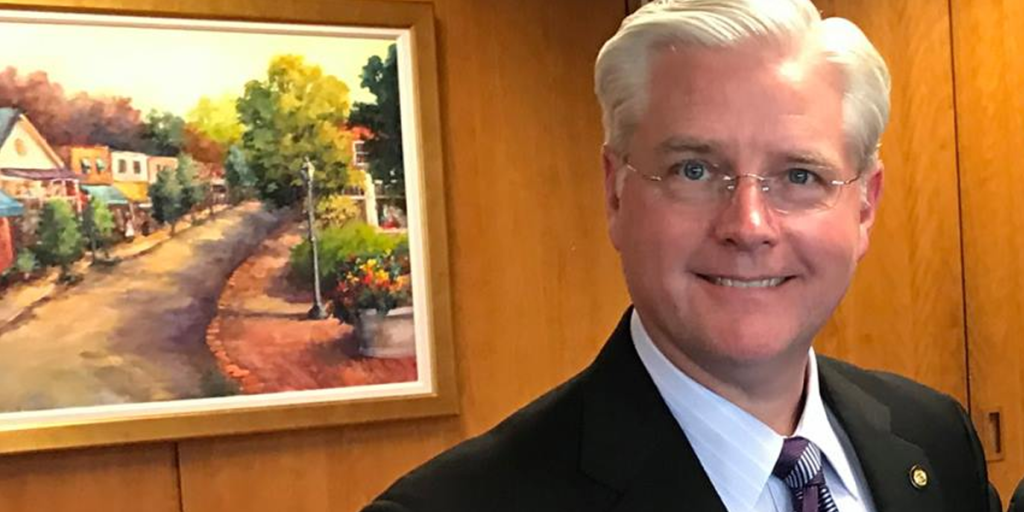
One of the toughest, yet least-talked about, challenges facing the U.S. today is how to effectively deliver affordable health care to America’s growing population of senior citizens. The U.S. Census Bureau has predicted that by 2035, the number of adults over the age of 65 will exceed the number of children under the age of 18. The graying of America’s population especially creates a challenge for what, at times, can be a fractured and overly complicated health care delivery system. In Alabama, over 90,000 senior citizens’ health care is funded in part via Medicaid, the federally-mandated insurance program that serves the elderly, the poor, and the disabled. Even though Medicaid is federally-mandated, that definitely does not mean that the federal government covers all of the costs — Alabama’s portion of the costs provided by the general fund was $755 million in Fiscal Year 2019, a figure which eats up 37 percent of all non-education spending by the State of Alabama. Over the past several years, I have worked closely with the past two Governors, other legislative leaders, Medicaid Commissioner Stephanie Azar, and private sector partners to identify new delivery models that will bend the cost curve down for Medicaid, while ensuring Alabama’s senior citizens on Medicaid still receive good medical care. In early 2017, I went to Washington, along with Speaker of the Alabama House of Representatives Mac McCutcheon, Medicaid Commissioner Azar, and other state leaders, to meet with Dr. Tom Price, who then served as President Donald Trump’s Secretary of Health and Human Services. That trip and subsequent phone calls and data presentations paid off: in 2018, the Centers for Medicare and Medicaid Services (CMS) in Washington granted Alabama the opportunity to pursue a new delivery model of health care services for the more than 20,000 senior citizens in Alabama who are receiving long-term care through Medicaid. Let me tell you: it is not an easy thing to persuade a federal agency to grant a state a waiver from any program’s requirements. Federal government employees – even the hardest-working and best-intentioned – are not necessarily keen on innovation. In October of 2018, Alabama launched the Integrated Care Network (ICN). In this new model, Medicaid contracts with an Alabama-based healthcare provider to serve the 22,500 patients who are receiving long-term care through Medicaid. These senior patients and their families have expanded choices through the ICN: most are in nursing homes, but about 30 percent have chosen to receive care in the comfort of their own homes. Where are we nearly a year down the road from the ICN launch? A few weeks ago, I convened a meeting of Medicaid, the Department of Senior Services, nursing home owners, and health care providers. Their reports were encouraging. According to Medicaid’s estimates, the ICN model has already saved the state $4 million — and Medicaid projects the savings to grow over the next few years. In 2039, if trends hold, 42 percent of Alabamians will be 60 years or older. For the senior citizens who will need Medicaid’s assistance, it is imperative that we continue to modernize and innovate in the area of health care, especially for programs like Medicaid that are funded by the taxpayers. Newton’s first law states that an object will remain at rest or in uniform motion along a straight line, unless it is acted upon by an external force — inertia, in a word. That is a concept that often applies to government programs and agencies. In this instance, the innovation of the Integrated Care Network represents the external force that is moving Medicaid to a sounder fiscal footing. Greg Reed is the Alabama Senate Majority Leader, and represents Senate District 5, which is comprised of all or parts of Walker, Winston, Fayette, Tuscaloosa, and Jefferson counties.
Donald Trump’s VA choice bows out in latest Cabinet flame-out
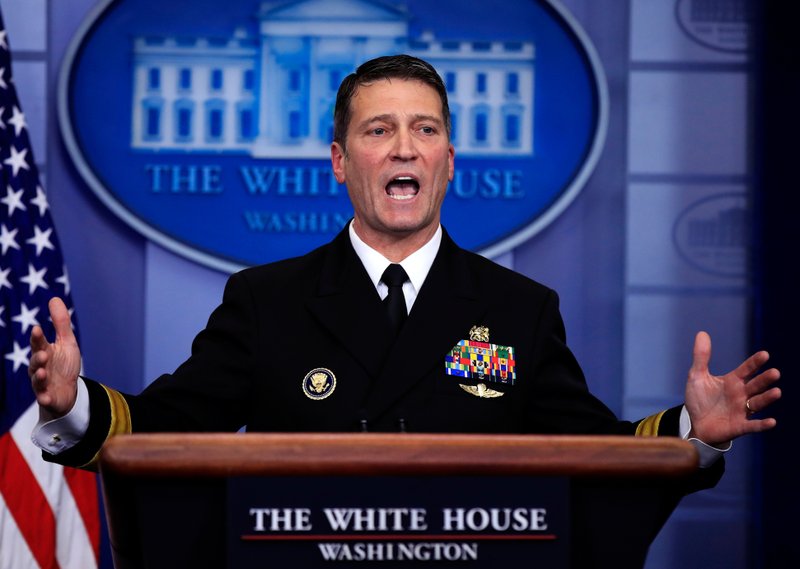
President Donald Trump’s White House doctor reluctantly withdrew his nomination to be Veterans Affairs secretary Thursday in the face of accusations of misconduct, the latest embarrassing episode highlighting Trump’s struggles to fill key jobs and the perils of his occasional spur-of-the-moment-decision-making. The weeks-long saga surrounding the nomination of Navy Dr. Ronny Jackson leaves the government’s second-largest agency without a permanent leader while it faces an immediate crisis with its private health care program. And it abruptly tarnished the reputation of a doctor beloved by two presidents and their staffs. White House officials say they are taking a new look at the way nominees’ backgrounds are checked — and they believe they will persuade Trump to take additional time to ensure that a replacement is sufficiently vetted. The leading person now under consideration for the VA post is former Rep. Jeff Miller, who chaired the House Veterans Affairs Committee before retiring last year, according to White House officials. Miller is a strong proponent of expanding private care for veterans, a Trump priority. Trump quickly selected Jackson, a rear admiral in the Navy, to head the VA last month after firing Obama appointee David Shulkin following accusations of ethical problems and a mounting rebellion within the agency. Jackson, a surprise choice who has worked as a White House physician since 2006, faced immediate questions from Republican and Democratic lawmakers as well as veterans groups about whether he had the experience to manage the massive department of 360,000 employees serving 9 million veterans. Then this week’s unconfirmed allegations by current and former colleagues about drunkenness and improper prescribing of controlled substances, compiled and released by Democrats, made the nomination all but unsalvageable. “The allegations against me are completely false and fabricated,” Jackson said in a statement announcing his withdrawal. Press secretary Sarah Huckabee Sanders said Jackson was back at work at the White House on Thursday. But his future there remains uncertain. He had stepped aside from directing Trump’s medical care and leading the medical unit while his nomination was being considered. “I would hope the White House would closely consider whether he is the best person to provide medical care for the president,” said Democratic Sen. Chris Coons of Delaware. Trump himself praised Jackson, saying, “He’s a great man, and he got treated very, very unfairly.” Then the president went after Democratic Sen. Jon Tester of Montana, who released a list of allegations against Jackson that was compiled by the Democratic staff of the Senate Veterans Affairs Committee. Trump aides said the president was furious with Tester, who faces a tough re-election fight this fall, and plans to aggressively campaign against him. “I think Jon Tester has to have a big price to pay in Montana,” Trump warned on “Fox & Friends” on TV. Tester, meanwhile, called on Congress to continue its investigation of Jackson. “I want to thank the service members who bravely spoke out over the past week. It is my constitutional responsibility to make sure the veterans of this nation get a strong, thoroughly vetted leader who will fight for them,” he said. Elsewhere in the capital, Congress was questioning another Trump official whose job appears in jeopardy. Scott Pruitt, head of the Environmental Protection Agency, was questioned closely by House Democrats about revelations of unusual security spending, first-class flights, an advantageous condo lease and more. Even Republicans who support Pruitt’s deregulation efforts, said his conduct needed scrutiny. Tom Price, Trump’s first secretary of the Department of Health and Human Services, resigned last year after criticism of his use of private charter flights and military jets. The turmoil at the VA comes as it faces a budget shortfall for its private-sector Veterans Choice program, a campaign priority of Trump’s, with lawmakers deadlocked over a long-term fix due to disagreements over cost and how much access veterans should have to private doctors Veterans are “exhausted by the unnecessary and seemingly never-ending drama,” said Paul Rieckhoff, executive director of Iraq and Afghanistan Veterans of America. “VA’s reputation is damaged, staff is demoralized, momentum is stalled and the future is shockingly unclear.” The VA issued a statement late Wednesday that it would push to have Congress move on an expansion of Choice next month. Sen. Johnny Isakson of Georgia, chairman of the Veterans Affairs Committee, said Thursday he would “work with the administration to see to it we get a VA secretary for our veterans and their families.” White House officials were visibly dismayed Wednesday and Thursday as they watched Jackson suffer the blows of the allegations. The doctor, who is well-liked by and has personal relationships with many White House staffers, cited the withering pressure for withdrawing from consideration for the post, but maintained he had done nothing wrong. Trump said on Fox that he has an idea for a replacement nominee, adding it will be “someone with political capability.” Miller, the former congressman who was described as the leading candidate, is a strong proponent of expanding private care for veterans, Miller led the push to create Choice in 2014. However, major veterans groups and Democrats stand opposed to an aggressive expansion of Choice, seeing the effort as a potential threat to VA medical centers. Dan Caldwell, executive director of the conservative Concerned Veterans for America, urged the White House to take more time “to carefully select and vet a new nominee” who could head VA. “The VA currently has a competent Acting Secretary in Robert Wilkie who can manage the VA along with the rest of his leadership team,” he said. “Considering the tremendous challenges that the last three VA secretaries have faced, it is important that a capable individual with a high level of integrity is selected.” During the presidential campaign, Trump repeatedly pledged to fix the VA by bringing accountability and expanding access to private doctors, criticizing the department as “the most corrupt.” At an Ohio event last July, Trump promised to triple the number of veterans “seeing the doctor of their choice.” Currently, more than 30
Lax vetting on Trump nominees begins to frustrate senators
As President Donald Trump’s pick to lead Veterans Affairs skids to a halt, senators from both parties are voicing frustration that the White House is skipping crucial vetting of nominees and leaving lawmakers to clean up the mess. That sentiment was evident Tuesday on Capitol Hill after senators delayed hearings for White House physician Ronny Jackson, Trump’s surprise pick to head the VA. Jackson is facing questions about improper workplace behavior, and even Trump himself acknowledged that there were concerns about his nominee’s experience. “The White House still seems to be feeling its way on the nomination process,” said Sen. Susan Collins, R-Maine, “and does not fully appreciate how important it is to do a thorough vetting and FBI background check on nominees.” Sen. John Thune, R-S.D., said that while lawmakers want to be “deferential as much as we can” to the president’s preferences for his Cabinet, “it would be nice to know some of the issues that come up after the fact before the fact.” Trump, who promised to fill his administration with the “best people,” often gravitates toward advisers he has a personal connection with or who look the part, drawing on the approach he took as a business executive. But as president, the result is a growing list of Cabinet secretaries and other officials who do not appear to undergo the rigorous scrutiny typically expected for White House hires. Andy Puzder, Trump’s initial choice to lead the Labor Department, stepped aside before his confirmation hearings, in part over taxes he belatedly paid on a former housekeeper not authorized to work in the United States. Health and Human Services Secretary Tom Price won confirmation, but ultimately resigned amid disclosures about his expensive travel habits. Others are fighting similar charges, most notably Scott Pruitt, the embattled head of Environmental Protection Agency. Pruitt faces multiple allegations of improper housing, expensing and other practices, prompting several lawmakers to call for him to step down. The Senate has increasingly become a partisan battleground for nomination fights, a war that escalated when President Barack Obama was in the White House and Senate Democrats, who had majority control, changed the rules to allow majority vote for confirming most nominees — the so-called nuclear option — to get around GOP filibusters. Republicans returned the favor once Trump was in the White House, and they had the Senate majority, deploying the tactic to seat Neil Gorsuch on the Supreme Court. Some GOP senators argue that Democrats are slow-walking even those Trump nominees with a solid track record, including Mike Pompeo, who got votes from 14 Democrats and one aligned independent last year during his confirmation for CIA director. Pompeo is now in line to run the State Department, but has faced stiff opposition from some of the same Democrats who backed him a year ago. The Democratic opponents are going to “embarrass themselves,” said Sen. John Cornyn, R-Texas. Thune called it “really a new low.” But questions about the White House’s vetting standards have no doubt given Democrats fresh ammunition to challenge Trump’s Cabinet picks. “Our Republican colleagues bemoan the pace of the nominations,” said Senate Minority Leader Chuck Schumer, D-N.Y. But he said because of the administration’s “quick, sloppy vetting process,” the Senate job of vetting nominees “is more important than ever before.” Sen. Patty Murray, D-Wash., said senators don’t have to agree with a nominee’s position on the issue, but the Senate has a historic role — to advise and consent — that the president’s picks are up to the job. “We’re not going to allow nominees to be jammed through without proper scrutiny and debate,” Murray said. “Now hopefully, the events of the last 24 hours have made it very clear why this is so important.” Asked about the adequacy of vetting process Tuesday, Senate Majority Leader Mitch McConnell said that such questions are better raised with the White House. “Look,” McConnell said, “it’s up to the administration to do the vetting.” Republished with the permission of the Associated Press.
The doctor is in: White House physician nominated to lead VA
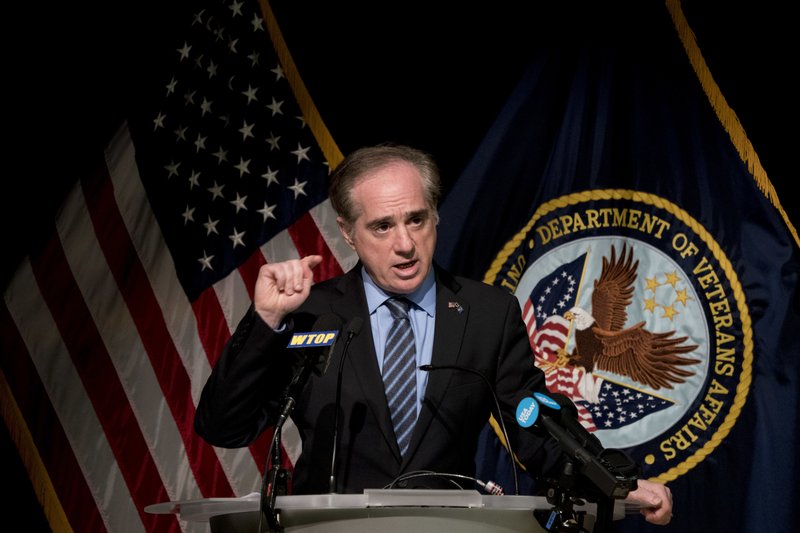
President Donald Trump fired Veterans Affairs Secretary David Shulkin and nominated White House doctor Ronny Jackson to replace him following a bruising ethics scandal and a mounting rebellion within the agency. A Navy rear admiral, Jackson is a surprise choice to succeed Shulkin, a former Obama administration official and the first nonveteran to head the VA. Trump had been considering replacing Shulkin for weeks but had not been known to be considering Jackson for the role. In a statement, Trump praised Jackson as “highly trained and qualified.” It was a decision that signaled Trump chose to go with someone he knows and trusts, rather than choosing a candidate with a longer resume, to run a massive agency facing huge bureaucratic challenges. Shulkin said he was undone by advocates of privatization within the administration. He wrote in a New York Times opinion piece that they “saw me as an obstacle to privatization who had to be removed.” He added: “That is because I am convinced that privatization is a political issue aimed at rewarding select people and companies with profits, even if it undermines care for veterans.” Jackson has served since 2013 as the physician to the president, one of the people in closest proximity to Trump day in and day out. His profile rose after he conducted a sweeping press conference about the president’s medical exam in January in which he impressed Trump with his camera-ready demeanor and deft navigation of reporters’ questions as he delivered a rosy depiction of the president’s health, according to a person familiar with the president’s thinking but not authorized to discuss private conversations. Jackson eagerly embraced the idea of moving to the VA, according to a White House official who spoke on condition of anonymity to discuss personnel matters. Ironically, it was Shulkin who had recommended Jackson for an undersecretary position at the agency in fall. Jackson was vetted during that time on his policy positions and other issues, the official said. The promotion of Jackson marks the latest Trump hire to be driven at least as much by personal familiarity with the president as by his vision for the role at government’s second-largest department, responsible for 9 million military veterans in more than 1,700 government-run health facilities. Brig. Gen. Dr. Richard Tubb, who trained Jackson, said in a letter read at Jackson’s briefing that the doctor had been attached like “Velcro” to Trump since Inauguration Day. “On any given day,” he wrote, “the ‘physician’s office,’ as it is known, is generally the first and last to see the President.” A White House official said Shulkin was informed of his dismissal by chief of staff John Kelly before the president announced the move on Twitter on Wednesday. A major veterans’ organization expressed concern over Shulkin’s dismissal and Trump’s intention to nominate Jackson, whom they worried lacked experience to run the huge department. “We are disappointed and already quite concerned about this nominee,” said Joe Chenelly, the national executive director of AMVETS. “The administration needs to be ready to prove that he’s qualified to run such a massive agency, a $200 billion bureaucracy.” Rep. Phil Roe, chairman of the House Veterans Affairs Committee, said he believed Shulkin did a “fantastic job” and didn’t think he should have been dismissed, but “at the end of the day, Cabinet secretaries serve at the pleasure of the president.” “I respect President Trump’s decision, support the president’s agenda and remain willing to work with anyone committed to doing the right thing on behalf of our nation’s veterans,” said Roe, a Republican from Tennessee. Shulkin is the second Cabinet secretary to depart over controversies involving expensive travel, following Health and Human Services Secretary Tom Price’s resignation last September. Trump said in a statement he is “grateful” for Shulkin’s service. Shulkin had agreed to reimburse the government more than $4,000 after the VA’s internal watchdog concluded last month that he had improperly accepted Wimbledon tennis tickets and that his then-chief of staff had doctored emails to justify his wife traveling to Europe with him at taxpayer expense. Shulkin also blamed internal drama at the agency on a half-dozen or so rebellious political appointees, insisting he had White House backing to fire them. But the continuing VA infighting and a fresh raft of watchdog reports documenting leadership failures and spending waste — as well as fresh allegations that Shulkin had used a member of his security detail to run personal errands — proved too much of a distraction. It was the latest in a series of departures of top administration officials, including Secretary of State Rex Tillerson and national security adviser H.R. McMaster. The VA change comes as Trump is trying to expand the Veterans Choice program, fulfilling a campaign promise that major veterans’ groups worry could be an unwanted step toward privatizing VA health care. His plan remains in limbo in Congress. Having pushed through legislation in Trump’s first year making it easier to fire bad VA employees and speed disability appeals, Shulkin leaves behind a department in disarray. Several projects remain unfinished, including a multibillion-dollar overhaul of electronic medical records aimed at speeding up wait times for veterans seeking medical care as well as expanded mental health treatment for veterans at higher risk of suicide. Trump selected Robert Wilkie, undersecretary of defense for personnel and readiness, to serve as the acting head of the VA. Republished with the permission of the Associated Press.
Cabinet chaos: Trump’s team battles scandal, irrelevance
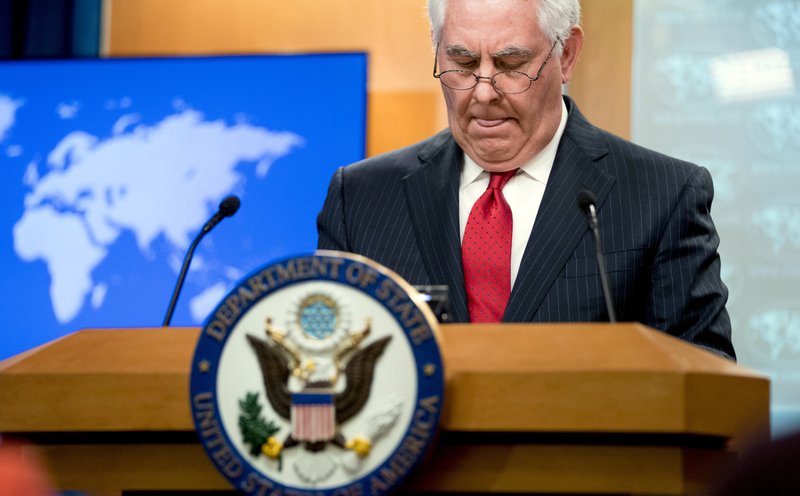
One Cabinet member was grilled by Congress about alleged misuse of taxpayer funds for private flights. Another faced an extraordinary revolt within his own department amid a swirling ethics scandal. A third has come under scrutiny for her failure to answer basic questions about her job in a nationally televised interview. And none of them was the one Trump fired. President Donald Trump’s Cabinet in recent weeks has been enveloped in a cloud of controversy, undermining the administration’s ability to advance its agenda and drawing the ire of a president increasingly willing to cast aside allies and go it alone. Trump’s ouster of Secretary of State Rex Tillerson on Tuesday may have just been the first salvo in a shakeup of a Cabinet that, with few exceptions, has been a team of rivals for bad headlines and largely sidelined by the White House. “Donald Trump is a lone-wolf president who doesn’t want to co-govern with anybody and doesn’t want anyone else getting the credit,” said presidential historian Douglas Brinkley of Rice University. “For his Cabinet, he brought in a bizarre strand of outsiders and right-wing ideologues. Many are famed conservative or wealthy business people, but that doesn’t mean you understand good governance.” The string of embarrassing headlines for Trump’s advisers, as well as the president’s growing distance from them, stands in sharp contrast to how he portrayed the group last year. “There are those that are saying it’s one of the finest group of people ever assembled as a Cabinet,” Trump said then. On Tuesday, the president hinted after firing Tillerson that more changes may be forthcoming, saying an ideal Cabinet is in the making. “I’ve gotten to know a lot of people very well over the last year,” Trump told reporters at the White House, “and I’m really at a point where we’re getting very close to having the Cabinet and other things that I want.” Even as Trump routinely convened Cabinet meetings in front of the cameras for “Dear Leader”-type tributes over the past year, his relationship with many of its members began to splinter. Last summer he began publicly bashing Attorney General Jeff Sessions, a former close adviser who was the first senator to back his campaign. Furious that the attorney general recused himself from the Russia probe that has loomed over the White House, Trump has privately mused about firing Sessions and taken to delivering unprecedented Twitter broadsides against him. Trump has used the words “beleaguered” and “disgraceful” to describe Sessions, who only recently stood up to the president and defended his recusal decision. Tillerson also frequently clashed with Trump, who never forgave the outgoing secretary of state for reportedly calling him “a moron” last summer after grumbling that the president had no grasp of foreign affairs. The pair never developed a particularly warm relationship. Last November, during a full day of meetings in Beijing, Trump and his senior staff were served plates of wilted Caesar salad as they gathered in a private room in the Great Hall of the People. None of the Americans moved to eat the unappetizing dish, but Trump prodded Tillerson to give it a try, according to a senior administration official. “Rex,” the president said, “eat the salad.” Tillerson declined, despite Trump’s urging. After repeatedly undermining and contradicting Tillerson, Trump at last fired his secretary of state in a tweet. Trump in recent days has told confidants that he feels emboldened. He’s proud of his unilateral decisions to impose sweeping tariffs on metal imports and to meet with North Korean dictator Kim Jong Un, and far less willing to put up with disloyalty around him, according to a person who has spoken to the president in recent days but was not authorized to discuss private conversations publicly. Trump’s esteem for the Cabinet has faded in recent months, according to two White House officials and two outside advisers. He also told confidants that he was in the midst of making changes to improve personnel and, according to one person who spoke with him, “get rid of the dead weight” — which could put a number of embattled Cabinet secretaries on notice. The officials all spoke on condition of anonymity to discuss internal matters. Interior Secretary Ryan Zinke underwent questioning Tuesday by Senate Democrats, who accused him of spending tens of thousands of dollars on office renovations and private flights while proposing deep cuts to conservation programs. Zinke pushed back, saying he “never took a private jet anywhere” — because all three flights he had taken on private planes as secretary were on aircraft with propellers, not jet engines. Veterans Affairs Secretary David Shulkin’s days on the job may be limited after a bruising internal report found ethics violations in connection with his trip to Europe with his wife last summer, according to senior administration officials. He also has faced a potential mutiny from his own staff: A political adviser installed by Trump at the Department of Veterans Affairs has openly mused to other VA staff about ousting the former Obama administration official. Trump has floated the notion of moving Energy Secretary Rick Perry to the VA to right the ship, believing Shulkin has become a distraction, according to two people familiar with White House discussions. They were not authorized to discuss internal deliberations and spoke on condition of anonymity. Others under the microscope: —White House aides deemed Education Secretary Betsy DeVos’ recent appearance on “60 Minutes” a disaster as she struggled to defend the administration’s school safety plan and could not answer basic questions about the nation’s education system. —Housing and Urban Development Secretary Ben Carson came under fire last month after reports his agency was spending $31,000 for a new dining set, a purchase HUD officials said was made without Carson’s knowledge. —Environmental Protection Agency Administrator Scott Pruitt has faced questions about $25,000 spent on a soundproof “privacy booth” inside his office to prevent eavesdropping on his phone calls and another $9,000 on biometric locks. —The first Cabinet member to
White House: VA’s David Shulkin not a candidate for HHS secretary
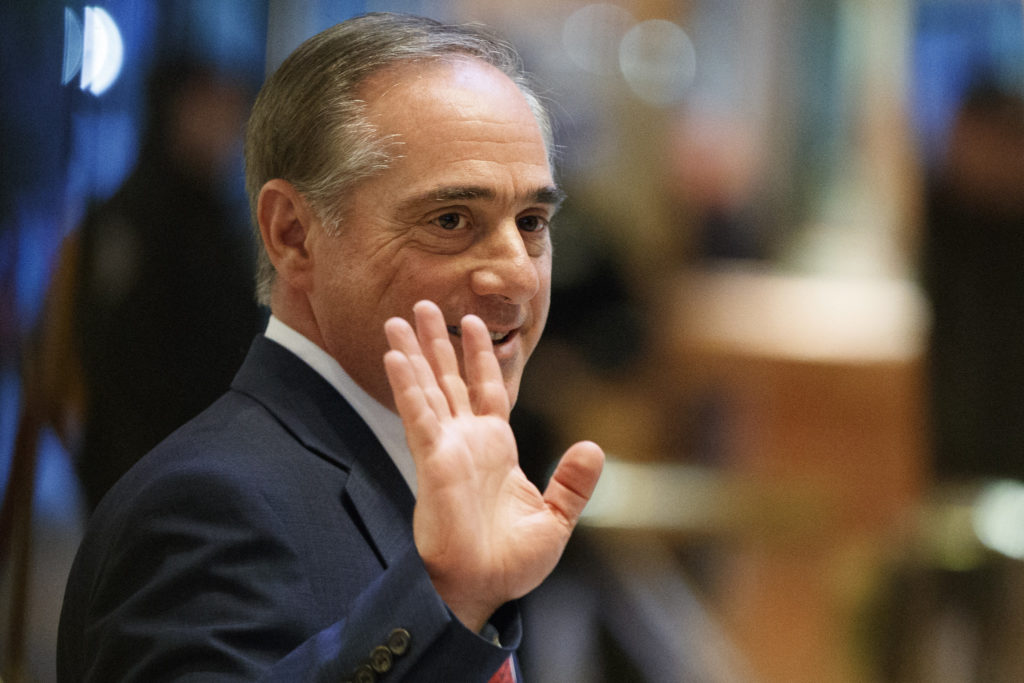
Veterans Affairs Secretary David Shulkin, who is under investigation for taking a 10-day trip to Europe that mixed business with sightseeing, is not being considered for the top job at Health and Human Services, the White House said Wednesday. Shulkin has been cited in media reports as a leading contender to replace former HHS Secretary Tom Price, who resigned last month following an outcry over his use of costly private planes for official travel. The Wall Street Journal reported over the weekend that Shulkin was interviewed by the White House and had “made his case” for becoming HHS secretary. But a White House official said Shulkin did not have an interview and “was never under consideration for the position.” The official, who insisted on anonymity because the official was not authorized to speak on the record about a personnel matter, declined to discuss reasons behind who was being considered and why. A VA spokesman did not comment, referring questions about Cabinet-level positions to the White House. Shulkin is one of several Cabinet members who have faced questions about travel after Price resigned. The VA inspector general earlier this month opened an investigation into Shulkin’s taxpayer-funded trip with his wife to Denmark and England to discuss veterans’ health issues. Travel records released by VA show four days of the July trip were spent on personal activities, including attending a Wimbledon tennis match. The VA said Shulkin traveled on a commercial airline, and that his wife’s airfare and meals were paid for by taxpayers. Major veterans’ organizations had expressed concern about uncertainty at VA should Shulkin leave his job, citing major changes underway to improve care for millions of veterans. The VA has numerous job vacancies, including top posts in its health care division. Shulkin, a physician, served as VA’s undersecretary of health during the Obama administration since 2015. President Donald Trump tapped Shulkin in January to head the VA, the government’s second-largest agency. Republished with permission from the Associated Press.
Donald Trump’s health secretary Tom Price resigns amid travel woes
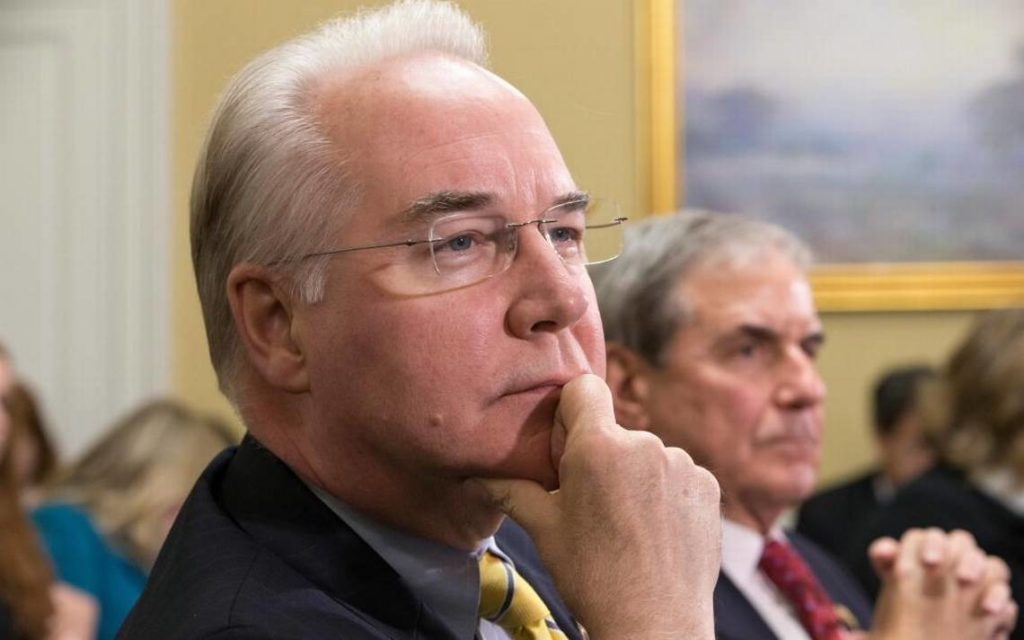
President Donald Trump’s health secretary resigned Friday, after his costly travel triggered investigations that overshadowed the administration’s agenda and angered his boss. Tom Price’s regrets and partial repayment couldn’t save his job. The Health and Human Services secretary became the first member of the president’s Cabinet to be pushed out in a turbulent young administration that has seen several high-ranking White House aides ousted. A former GOP congressman from the Atlanta suburbs, Price served just eight months. Publicly, Trump had said he was “not happy” with Price for repeatedly using private charter aircraft for official trips on the taxpayer’s dime, when cheaper commercial flights would have done in many cases. Privately, Trump has been telling associates in recent days that his health chief had become a distraction and was overshadowing his tax overhaul agenda and undermining his campaign promise to “drain the swamp” of corruption, according to three people familiar with the discussions who spoke on condition of anonymity. The flap prompted scrutiny of other Cabinet members’ travel, as the House Oversight and Government Reform committee launched a governmentwide investigation of top political appointees. Other department heads have been scrambling to explain their own travel. Price’s repayment of $51,887.31 for his own travel costs and his public expression of regrets did not placate the White House. The total travel cost, including the secretary’s entourage, was unclear. It could amount to several hundred thousand dollars. An orthopedic surgeon turned politician, Price rose to Budget Committee chairman in the House, where he was known as a fiscal conservative. When Price joined the administration, Trump touted him as a conservative policy expert who could write a new health care bill to replace the Obama-era Affordable Care Act. But Price became more of a supporting player in the GOP’s futile health care campaign, while Vice President Mike Pence took the lead, particularly in dealing with the Senate. The perception of Price jetting around while GOP lawmakers labored to repeal “Obamacare” —including a three-nation trip in May to Africa and Europe— raised eyebrows on Capitol Hill. Price flew on military aircraft overseas. Although much of Trump’s ire over the health care failure has been aimed at the Republican-controlled Congress, associates of the president said he also assigns some blame to Price, who he believes did not do a good job of selling the GOP plan. A Pence protege, Seema Verma, has been mentioned as a possible successor to Price. Verma already leads the Centers for Medicare and Medicaid Services, which runs health insurance programs that cover more than 130 million Americans. Another possible HHS candidate: FDA Commissioner Scott Gottlieb, who won some bipartisan support in his confirmation and is well known in policy, government and industry circles. Trump named Don J. Wright, a deputy assistant secretary of health, to serve as acting secretary. Price, 62, was seen in Congress as a foe of wasteful spending. As HHS secretary, he led a $1 trillion department whose future is the key to managing mounting federal budgetary deficits. As secretary, Price criticized the Medicaid health program for low-income people, saying it doesn’t deliver results commensurate with the hundreds of billions of dollars taxpayers spend on it. As a congressman, he favored Medicare privatization. But Price’s image as a budget hawk took a hit when reports of his official travel started bubbling up. Price used private charter flights on 10 trips with multiple segments, when in many cases cheaper commercial flights were available. His charter travel was first reported by the news site Politico. On a trip in June to Nashville, Tennessee, Price also had lunch with his son, who lives in that city, according to Politico. Another trip was from Dulles International Airport in the Washington suburbs to Philadelphia International Airport, a distance of 135 miles. The reports triggered a review by the HHS inspector general’s office, which is looking into whether Price’s travel violated federal travel regulations. Those rules generally require officials to minimize costs. The controversy over Price was a catalyst for Congress launching a bipartisan probe of travel by political appointees across the administration. The House oversight committee has requested travel records from the White House and 24 federal departments and agencies. Initially, Price’s office said the secretary’s busy scheduled forced him to use charters from time to time. But later Price’s response changed, and he said he’d heard the criticism and concern, and taken it to heart. His office said it would cooperate fully with investigators and he’d cease using charter flights while the inspector general investigated. Finally, he offered regrets and a repayment of his own costs, and said he’d stick to commercial flights. Trump on Friday called Price a “very fine person,” but added, “I certainly don’t like the optics.” Republished with permission from the Associated Press.
Tom Price says he’s reimbursing costs for his private flights

Fighting to keep his job, health secretary Tom Price says he’ll write a personal check to reimburse taxpayers for his travel on charter flights taken on government business and pledged to fly commercial — “no exceptions.” The repayment — $51,887.31, according to Price’s office — covered only the secretary’s seat. Price did not address the overall cost of the flights, which could amount to several hundred thousand dollars and is under investigation. “I regret the concerns this has raised regarding the use of taxpayer dollars,” Price said in a statement. “I was not sensitive enough to my concern for the taxpayer.” His mea culpa came a day after a public rebuke from President Donald Trump. A former congressman from Georgia regarded as a conservative policy expert, Price said he hopes to keep his Cabinet seat. At the White House, press secretary Sarah Huckabee Sanders wouldn’t go that far. “We’re going to conduct a full review and we’ll see what happens,” Sanders told reporters. Travel by other top officials is also attracting scrutiny. Price said the president had personally let him know of his displeasure. “As he has said publicly, he wasn’t happy, and he expressed that to me very clearly,” Price said Thursday evening on Fox News. All his travel was legally approved by officials at Health and Human Services, Price said. It amounted to 10 trips with 26 different segments. On Wednesday Trump had declared that he’s “not happy” over reports that Price flew on costly charters when he could have taken cheaper commercial flights. Asked whether he’d fire Price, Trump said, “We’ll see.” Price told reporters Thursday, “I think we’ve still got the confidence of the president.” About the controversy, he said, “We’re going to work through this.” Taxpayers “won’t pay a dime for my seat on those planes,” Price said in his statement. Price played a supporting role in the fruitless Republican effort to repeal Barack Obama’s health care law — another source of frustration for the president. Prompted partly by controversy over Price, the House Oversight and Government Reform Committee has launched a wide-ranging investigation into travel by Trump’s political appointees. On Wednesday the committee sent requests for detailed travel records to the White House and 24 departments and agencies, dating back to the president’s first day in office. Trips by Treasury Secretary Steven Mnuchin and EPA Administrator Scott Pruitt have also drawn criticism. A senior GOP lawmaker urged Trump to lay down some rules. “Considering the many travel options to and from Washington, D.C., I’m urging you to emphasize to Cabinet secretaries the necessity of using reasonable and cost-effective modes of travel in accordance with federal restrictions,” Sen. Chuck Grassley, R-Iowa, wrote to Trump on Thursday. The president had vented about Price to reporters on Wednesday as he left the White House for a trip to sell his tax overhaul in Indianapolis. “I was looking into it, and I will look into it, and I will tell you personally I’m not happy about it,” Trump responded when asked about Price’s travel. “I am not happy about it. I’m going to look at it. I’m not happy about it and I let him know it.” Price’s travels were first reported last week by Politico, which said cheaper commercial flights were a viable option in many cases. On a June trip to Nashville, Price also had lunch with his son, who lives in that city, according to Politico. Another trip was from Dulles International Airport in the Washington suburbs to Philadelphia International Airport, a distance of 135 miles. Last Friday the HHS inspector general’s office announced it was conducting a review to see if Price complied with federal travel regulations, which generally require officials to minimize costs. Price’s office had initially said the secretary’s demanding schedule sometimes did not permit the use of commercial airline flights. Price says he’s fully cooperating with investigators. Trump’s publicly expressed displeasure — or ambivalence — has been a sign in the past that the tenure of a key aide will soon be over. In August, the president was asked if he still had confidence in Steve Bannon, then a senior strategist in the White House. “He’s a good person. He actually gets very unfair press in that regard. But we’ll see what happens with Mr. Bannon,” Trump said. Bannon was out three days later. Price, an ally of House Speaker Paul Ryan, is a past chairman of the House Budget Committee, where he was a frequent critic of wasteful spending. As HHS secretary, he has questioned whether the Medicaid health insurance program for low-income people delivers results that are worth the billions of dollars taxpayers spend for the coverage. He’s a former orthopedic surgeon who once practiced in an inner-city hospital. Republished with permission from the Associated Press.
Promise, promises: What Donald Trump has pledged on health care
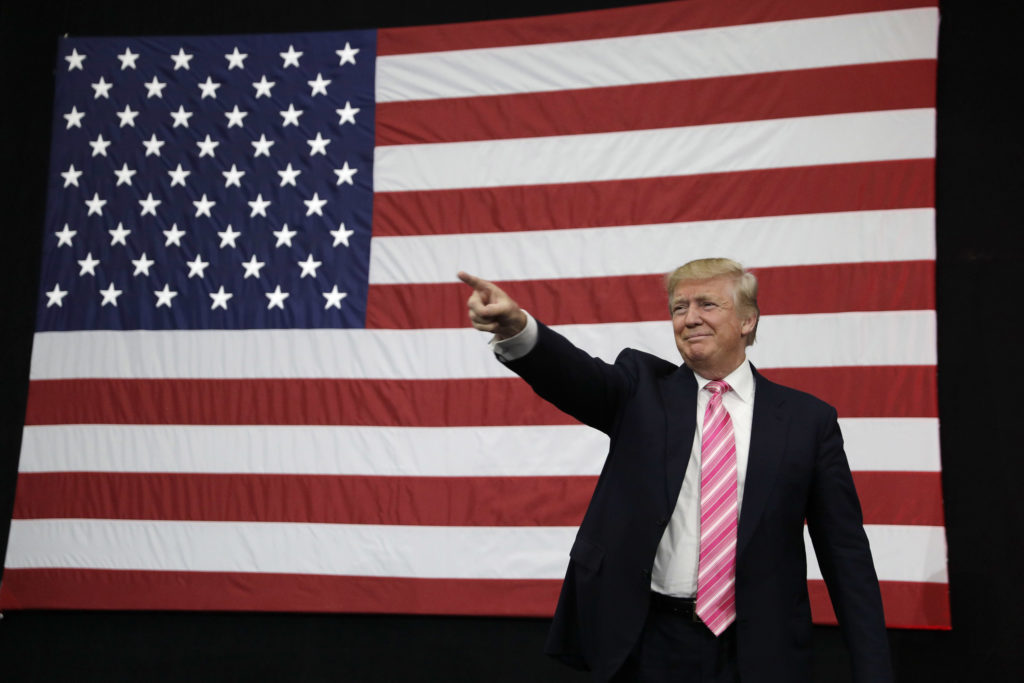
President Donald Trump is not known for plunging into the details of complex policy issues, and health care is no exception. Since his campaign days, Trump has addressed health care in broad, aspirational strokes. Nonetheless he made some clear promises along the way. Those promises come under two big headings. First, what Trump would do about the Affordable Care Act, his predecessor’s health care law, often called “Obamacare.” Second, the kind of health care system that Trump envisions for Americans. On repealing Obama’s law, Trump seems to have a realistic chance to deliver. But he’s nowhere close to fulfilling his generous promises of affordable health care for all. A look at some of the president’s major health care promises, and how the Republican legislation advancing in Congress lines up with them: REPEAL ‘OBAMACARE’ Repealing President Barack Obama‘s signature domestic achievement has been a clear and consistent promise from Trump. Under the Obama law, some 20 million people gained coverage through a combination of subsidized private insurance and a state option to expand Medicaid for low-income people. Costs have been a problem, as are shaky insurance markets for people buying their own policies. But the nation’s uninsured rate is at a historic low, about 9 percent. Both the House and Senate GOP bills would largely fulfill Trump’s promise to repeal Obama’s law. Both bills end Obama’s unpopular requirement for individuals to carry health insurance or risk fines. The legislation also phases down the Medicaid expansion and repeals hundreds of billions of dollars in taxes on upper-income people and health care industries, used under Obama to finance coverage. And it opens the way for states to seek waivers of federal health insurance requirements. Some Republican critics on the right say the congressional bills leave other major parts of “Obamacare” in place, such as subsidies for people buying private insurance, and too many rules. While the subsidy structure would remain, much less taxpayer money is invested in it. “INSURANCE FOR EVERYBODY” In a Washington Post interview before his inauguration, Trump distilled his vision for health care into a few visionary goals. “We’re going to have insurance for everybody,” he said. “There was a philosophy in some circles that if you can’t pay for it, you don’t get it. That’s not going to happen with us.” Trump said he was close to finishing a plan of his own that would have “lower numbers, much lower deductibles.” But the White House never delivered a health care plan from the president. And the congressional plans are likely to increase the number of uninsured people, because even if all Americans have access to coverage, some may no longer be able to afford it. Deductibles are likely to rise for many people with individual coverage because the congressional plans would end subsidies under Obama’s law that reduced out-of-pocket costs for those with modest incomes. The Congressional Budget Office has projected that, on average, premiums for individual policies would be lower over the long run than under current law. But there would be winners and losers. Younger adults and those in good health are likely to find better deals. Older people and those requiring comprehensive coverage could well end up paying more. TAKING AWAY THE LINES During the presidential campaign, Trump called for a system in which insurance plans would compete nationally, offering Americans choice and lower premiums. “What I’d like to see is a private system without the artificial lines around every state,” he said at one of the presidential debates. Many experts say Trump’s vision of interstate competition is unrealistic because health insurance, like real estate, reflects local prices. In any case, it remains unfulfilled in the GOP legislation. Some congressional leaders have promised that cross-state insurance will be addressed in follow-on legislation. Such a bill, however, would likely have to meet a 60-vote test in the Senate. PRESCRIPTION DRUG PRICES During the presidential campaign, and since becoming president, Trump called for action to bring down the cost of prescription drugs. The GOP bills in Congress basically sidestep that. At one point in the campaign, Trump called for giving Medicare the authority to directly negotiate prices with drug makers, an approach favored to some extent by Obama and Democratic presidential candidate Hillary Clinton. Trump also proposed letting Americans import prescription drugs from other countries, where prices are usually lower because of government regulation. But Medicare negotiations are a nonstarter for most congressional Republicans, and Trump’s call for allowing drug importation has faded. MEDICAID In a 2015 interview with The Daily Signal, Trump said: “I’m not going to cut Social Security like every other Republican and I’m not going to cut Medicare or Medicaid.” But last year, his campaign started backtracking on the Medicaid promise, endorsing the idea of limited federal financing for the federal-state program that covers some 70 million low-income people, from newborns to elderly nursing home residents, from special-needs kids to part-time workers lacking job-based health insurance. The Republican bills in Congress would phase out Obama’s financing for Medicaid expansion and limit future federal payments for the entire program as well. The Congressional Budget Office said the House bill would reduce federal Medicaid spending by $834 billion over 10 years, and the program would cover about 14 million fewer people by 2026, a 17 percent reduction. Several Republican governors have joined their Democratic counterparts calling that a massive cost-shift to the states. OPIOID CRISIS The Trump White House says it’s serious about confronting the nation’s opioid epidemic, which shows no sign of letup. “The president is all in,” health secretary Tom Price said on a recent visit to New Hampshire. “He has such passion for this issue because he knows the misery and the suffering that has occurred across this land.” But state officials say rolling back Obama’s Medicaid expansion would deal a heavy blow to their efforts to treat addiction and get its victims back to jobs and family. Among the group of low-income adults made eligible for Medicaid under Obama are many
Analysis: Dem loss in Georgia underscores party challenges
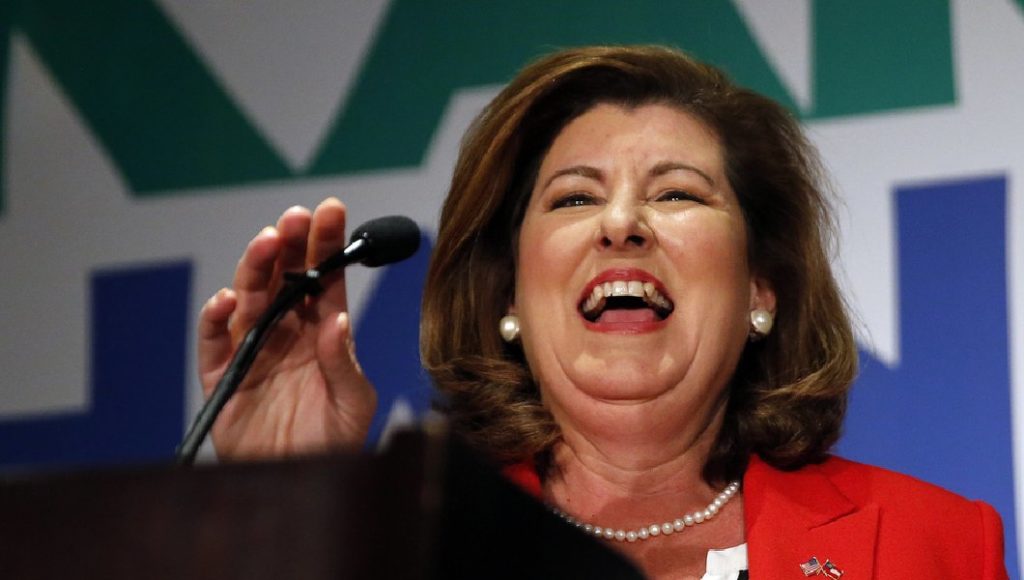
Republicans just got a big argument for sticking with President Donald Trump and pushing forward with dismantling former President Barack Obama‘s health law. And Democrats are struggling to translate the energy of their core supporters into actual election victories. Tuesday night’s outcome in a special House race in Georgia was a triumph for the GOP, and the most recent and devastating illustration of the Democrats’ problems – from a weak bench and recruiting problems to divisions about what the party stands for today. Instead of a win or even a razor-thin loss by Democrat Jon Ossoff that many had expected, Republican Karen Handel ended up winning by a relatively comfortable 4 percentage point margin in the wealthy suburban Atlanta district previously held by Health and Human Services Secretary Tom Price. That followed another recent Democratic disappointment in Montana, where the Republican candidate won even after last-minute assault charges, and an earlier loss for the Democrats in Kansas. Rep. Rick Nolan, D-Minn., said Democrats are not as good on delivering a winning message to voters as they should be. “Harry Truman said it best, if you want to be Republican-lite, people will vote for the real thing every time,” Nolan told reporters Wednesday. Indeed the best news Democrats got Tuesday night was that a different special House race, in South Carolina, ended up closer than the Georgia contest even though it had drawn little national attention. Republican Ralph Norman beat Democrat Archie Parnell by around 3 percentage points in South Carolina, closer than expected and a warning sign to the GOP not to take any seat for granted. But for Democrats, having failed to unseat a Republican in four special House elections in a row despite an extremely energized base, it’s now a time for soul-searching – and finger-pointing. Ossoff ran a careful campaign and shied away from talking about Trump, and some groups on the left wasted no time in insisting that Democrats must draw brighter contrasts with the GOP. “Defeating Republicans in districts that they have traditionally held requires doing something drastically different than establishment Democrats have done before – specifically, running on a bold progressive vision and investing heavily in direct voter contact,” said Jim Dean, chair of Democracy for America. The Georgia race was the most expensive House race in history, with many millions spent on both sides. The fact that that level of investment failed to pay off with a win against a Republican candidate widely viewed as uninspiring left Democrats frustrated and dispirited heading into the 2018 midterm elections. Democrats will need to pick up 24 House seats to take back the majority. The outcome “better be a wake-up call for Democrats – business as usual isn’t working,” Rep. Seth Moulton, D-Mass., said on Twitter. “Time to stop rehashing 2016 and talk about the future.” House Democratic leaders tried to play down the loss ahead of time, pointing out that the Georgia race took place on GOP-friendly terrain, as did the other recent special elections. Rep. Joe Crowley of New York, chairman of the House Democratic Caucus, said that there are 71 districts that will be more favorable for Democrats to contest than the one in Georgia. Democrats face gerrymandered districts after the last census combined with Trump selecting lawmakers for his administration from districts the GOP should hold. “They pick people in safe and tough districts for Democrats to win,” Crowley said Wednesday. But for Republicans from the president on down, it was time to celebrate. Trump sent supporters a text message crowing, “Congrats to Karen Handel on a HUGE win in GA! Democrats lose again (0-4). Total disarray. The MAGA Mandate is stronger than ever. BIG LEAGUE.” As the results rolled in Tuesday, AshLee Strong, spokeswoman to House Speaker Paul Ryan, mused over Twitter, “Remember when they told us we’d be punished in the special elexs for following through on our promise to #RepealAndReplace #obamacare?” Indeed the string of special election wins, especially in Georgia, sent a powerful message to Republicans that they must be doing something right, even though Trump’s approval ratings are low by historical standards and the GOP has yet to notch a single major legislative accomplishment on Capitol Hill. Far from rethinking their support for Trump or their plans to undo former President Barack Obama’s health care law, Republicans seem likely to stay the course. “It shows us that people are wanting some of the things we’ve been talking about, President Trump’s been talking about – less government, more power to the folks. Tax reform. That’s the kind of things we’ve got to get done. They believe in us being better able to do it rather than the other side,” said Rep. Roger Williams, R-Texas. And as for the Democrats, they, clearly, are doing something wrong. What exactly it is, and whether they can fix it, will be debated in the weeks and months ahead. Republished with permission of The Associated Press.
Breaking down the results of the Georgia special election

The last month has been filled with media coverage of yesterday’s special election in Georgia’s 6th Congressional District. One would think this was the most significant race in the history of Congress. Why has this race dominated the media, while another special election in neighboring South Carolina has received almost no attention? Both the Georgia and South Carolina districts feature resignations by Republicans Congressmen who took positions in the Donald Trump administration. In Georgia, Tom Price resigned to become Secretary of Health and Human Services, while in South Carolina, Mick Mulvaney gave up his seat to become Director of the Office of Management and Budget. One reason for the attention on the Georgia race may be that the seat was previously held by Newt Gingrich before Price took over, and it has been a Republican district since 1979. That hardly explains the attention on the Georgia district and the neglect of the South Carolina district. Many viewed the election as a referendum on the Trump administration. Mitt Romney won the district by 23 percent in 2012; Trump won by only 1.5 percent in 2016. Many saw this as an opportunity for Democrats and a sign of Republican dissatisfaction with Trump as party leader. The Democratic candidate in District 6 was Jon Ossoff, a 30-year-old political activist who did not even live in the district. Although the Constitution does not require House candidates to live in the district where they run, not doing so is usually a fatal blow. Handel constantly reminded voters that Ossoff could not vote in the election because he did not reside there. Ossoff raised over $25 million for his campaign, and his Republican opponent, Karen Handel, raised a similar amount making this the most expensive House race in congressional history. Conspicuously lacking was any discussion, especially by Democrats, of the corrupting influence of money in congressional campaigns. The media focused great attention on Ossoff, but comparatively little focus on his Republican opponent Handel. We knew that Ossoff worked for a number of Democratic causes and candidates, and considered himself to be a progressive. Ossoff had the backing of the progressive establishment, including John Lewis, an icon in both congressional and civil rights history. The lack of focus on Handel may be due to the fact Ossoff received 48 percent of the vote in the blanket primary, compared to only 20 percent for Handel. It should be remembered that Republican candidates collectively received 51 percent of the primary vote. We also know that the Ossoff campaign had 12,000 volunteers, a number seldom reached by statewide candidates. He was clearly a political juggernaut, as his $25 million dollars in campaign funds demonstrated. During the campaign, one of the candidates posted on their website that the country needs to “cut the wasteful spending. Reduce the deficit so the economy can keep growing.” The site also suggested that the minimum wage be adjusted “at a pace that allows employers to adapt their business plans.” The above policy pronouncements sound like something from Herbert Hoover, Ronald Reagan or Handel. They were actually from Ossoff. Hardly progressive sentiments. Did Ossoff’s attempt to moderate his progressive views actually “turn off” progressive voters? Republican strategy was to tie Ossoff to Nancy Pelosi, a common strategy, but one that many felt was no longer effective. One ad asked voters to “Say ‘No’ to Pelosi’s ‘Yes Man.’” Another ad called Ossoff a “rubber stamp for Pelosi’s failed agenda.” Ossoff lead by as much as 7 points only a month ago and never trailed Handel until the day before the election when she led by a single point. The polls indicated that Ossoff’s support came from voters from 18 to 64, where he lead by 8 to 15 points; Handel led among voters over 65 by a margin of 62 to 36. Males supported Handel 52.6 to 45.7 percent while women supported Ossoff by almost exactly the same margin. White voters preferred Handel 55.8 to 43.2 percent while African-Americans favored Ossoff 88.7 to 9.4 percent for Handel. Why did Handel win and what does it mean? There are several reasons why Handel won and Ossoff lost. Perhaps most damaging was the outsider label, which effectively damaged the Ossoff campaign. Not being able to vote for yourself in such an important campaign put Ossoff in a difficult position. Carpetbaggers in politics have seldom fared well. Another part of the outsider problem was self-imposed by Ossoff. In an attempt to negate the outsider charge, Ossoff said he lived “a few blocks outside District 6. In fact, it was found that he lived 3.2 miles outside the district. A final part of the outsider charge related to campaign contributions. Although Ossoff raised over $25 million, most of the contributions came from outside the district. He received fewer than 1,000 donations from District 6 residents, but got over 7,200 contributions from California residents. It is too early to know for sure, but I am guessing senior voters turned out at very high rates, while younger voters supported Ossoff, but turned out at a far lower rate. We cannot forget that this was a Republican district and the results reflected typical voting patterns. Democrats are clearly going to be demoralized after expecting to win this seat almost from the beginning. Ossoff did lead almost the entire campaign, but momentum is everything in politics. A seven-point Ossoff advantage a month out from the election completely vanished by election day. Neither party should read too much into the election results. A Handel victory is no more an endorsement of Trump than an Ossoff victory would have meant that Trump and the Republicans were doomed.
Repeal in doubt, what Donald Trump alone can do on ‘Obamacare’
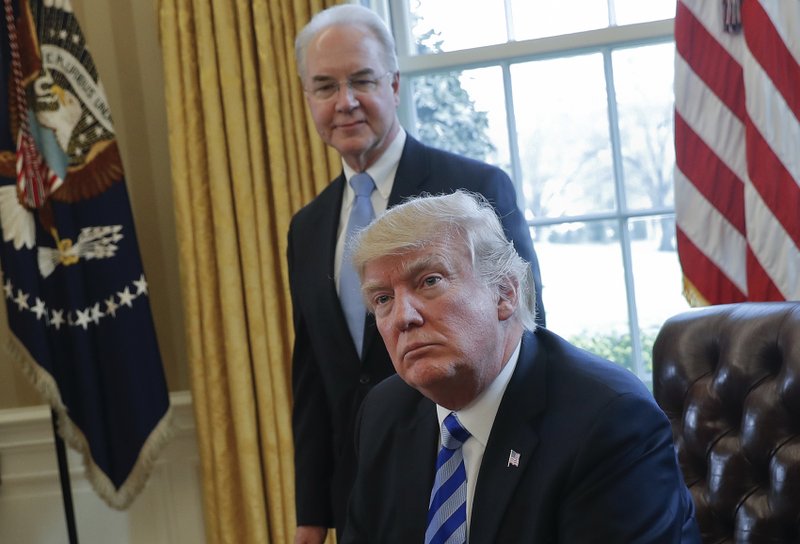
With prospects in doubt for repealing “Obamacare,” some Republicans say the Trump administration can rewrite regulations and take other actions to undo much of the health care law on its own. Some of those moves could disrupt life for millions of people, many in states that the new president carried. And then there’s the risk of court challenges. Remember the White House travel ban? “In a world where Obamacare is not going to be repealed and replaced, do you work to try to make it succeed, or do you take steps to undermine it in order to continue blaming President Obama and the Democrats for the dysfunction of the health care system?” asked Nicholas Bagley, a University of Michigan law professor who’s analyzed the administration’s leeway to make changes. “Right now we don’t know the answer, and we are getting conflicting signals from the administration.” The nonpartisan Congressional Budget Office recently concluded that insurance markets would probably be stable “in most areas” under the Obama-era Affordable Care Act, or ACA. But President Donald Trump has said “it’s imploding, and soon will explode.” GOP congressional leaders, who had to pull their repeal bill, describe a multi-pronged attack on “Obamacare” that includes administration action. Democrats warn of “sabotage.” Enduring political turmoil is seen as contributing to insurers’ worries about returning to the health law’s markets next year. Here’s a look at the pros and cons of some actions Trump could order: STOP COST-SHARING SUBSIDIES In addition to subsidized insurance premiums, the ACA provides financial assistance for deductibles and copayments to consumers with modest incomes. House Republicans have challenged the constitutionality of aid payments, estimated at $7 billion this year. A U.S. district judge in Washington agreed, finding that the law does not explicitly authorize such expenditures. The case is on hold by mutual consent of the House and the Trump administration. Insurers, who are legally obligated to provide assistance to qualifying customers, continue to be reimbursed by the government. That could end unless the legal issue is resolved. Pro: For opponents of the ACA, stopping the cost-sharing payments would be the boldest step they could take short of outright repeal. Con: Insurers would bail out or jack up premiums to make up for the loss of government payments. A market “death spiral” could begin in short order. “There’s a tension here for the White House between avoiding a crisis in the insurance markets and facilitating the collapse of a program they bitterly oppose,” said Larry Levitt of the nonpartisan Kaiser Family Foundation. Officials won’t comment on pending litigation, but there doesn’t appear to be any policy change in the new administration. ___ TWEAK INSURANCE BENEFITS The ACA requires insurers to cover ten categories of “essential health benefits,” from prevention to prescriptions, maternity to mental health. While broad categories are written into law, key specifics are spelled out in regulations and guidance. The administration could propose changes. Pro: It could bring down premiums for consumers who are comfortable buying less-than-comprehensive policies. That might entice more people into the market. “Every American ought to be able to purchase the kind of coverage that they want,” Health and Human Services Secretary Tom Price told Congress. Con: Patient advocacy groups battled for the ACA’s required benefits and they’ll fight changes seen as harmful. “Essential health benefits are critical to assure access to what most people think is basic care,” said Mara Youdelman of the National Health Law Program. “If the administration attempts to get around the four corners of the law, we would certainly explore options for litigation.” ___ REMAKE MEDICAID Alongside subsidized private insurance for people who don’t have job-based coverage, the ACA expanded Medicaid to serve millions more low-income adults. With the repeal effort stalled, some of the 19 states that have refused the expansion may come forward. That gives the Trump administration an opportunity to steer an important program in a different direction. Price and Seema Verma, Trump’s new head of Medicare and Medicaid, have told governors they are willing to consider a broad range of new Medicaid approaches, including work requirements. Verma also says she wants to improve health, not just treat disease. Pro: States may gain more authority over a program that consumes major resources. The whole country could learn from individual state experiments. More low-income people may gain coverage. Con: New requirements may discourage some from signing up. “The majority of people are working,” said Judy Solomon of the Center on Budget and Policy Priorities, which advocates for the poor. “For those who aren’t, it’s because of illness or caring for someone.” ___ WINK ON INSURANCE PENALTY Tax penalties on people who remain uninsured are the most unpopular part of the Obama-era law. The Trump administration has already eased enforcement. The IRS scrapped a plan to hold up tax returns of people who fail to indicate if they have coverage. Pro: If the tax man looks the other way altogether, it could win points for a president elected on a populist message. Some of those paying the fine are young people trying to get traction in life. Con: Policy experts say the insurance penalty is essential for nudging healthy people into the market. And it remains the law. ___ Trump’s next move is uncertain. But a recent AP-NORC poll found that 6 in 10 Americans disapproved of his handling of health care. Blaming the Obama administration may not be a viable option much longer. “If somebody can’t pay for their cancer medicine, they don’t want to hear you fulminate about how had Obamacare is,” said Bagley. Republished with permission of The Associated Press.
