
Trump administration acts to ‘stabilize’ health insurance

With a new health secretary in office, the Trump administration is proposing its first regulatory changes to the health insurance markets created by President Barack Obama‘s overhaul. Among the most noticeable change for consumers: a shorter sign-up window of 45 days, as opposed to three months. Administration officials said Wednesday the new regulations will help to stabilize the individual insurance market for next year. That could buy time for the Republican-led Congress to make good on its promise to repeal the Obama-era health care overhaul and replace it with a conservative approach. Many of the proposed changes reflect the wishes of the insurance industry. Even so, insurer Humana announced Tuesday it will not participate in next year in the government-run marketplaces. Human Services Secretary Tom Price was confirmed Friday. Republished with permission of the Associated Press.
New Health and Human Services Secretary Tom Price takes office
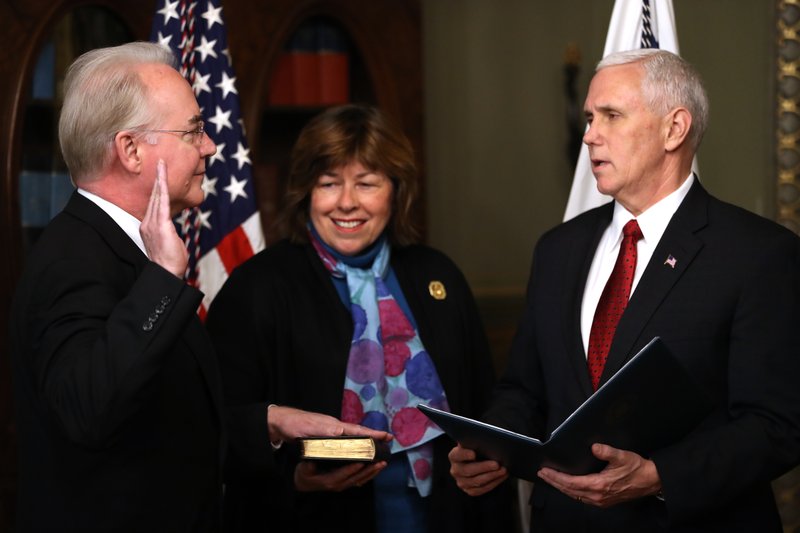
President Donald Trump‘s new health secretary took office Friday after becoming the latest Cabinet nominee to eke out a confirmation victory in the bitterly divided Senate. Vice President Mike Pence administered the oath of office to Tom Price, of Georgia, at the White House hours after the Senate confirmed him 52-47 in a party-line vote. That roll call came in the dead of night, thanks to Democrats’ tactic of forcing prolonged debates to broadcast their opposition to Trump and his team. Pence said Price, an orthopedic surgeon, is “uniquely qualified” for the job and playing a leading role in helping the Republican-controlled Congress achieve its top priority of repealing and replacing the Obama-era Affordable Care Act. Pence called Price “the most principled expert on health care policy” in Congress. Price served seven terms in the House. As head of the Health and Human Services Department, Price will take center stage as the administration and congressional Republicans try delivering on their pledge to scrap President Barack Obama’s health care law and substitute their own programs. After years of trying, they finally command both the White House and Congress but have so far struggled to craft a plan with enough votes to win approval. Price is likely to play a lead role both in shaping health care legislation and issuing department regulations aimed at weakening Obama’s statute. “Having Dr. Tom Price at the helm of HHS gives us a committed ally in our work to repeal and replace Obamacare,” House Speaker Paul Ryan, R-Wis., said Friday. Democrats focused on the legislation Price once sponsored, including efforts to kill Obama’s law. He’s also sought to reshape Medicare’s guarantee of health coverage for seniors into a voucher-like program, cut Medicaid, which helps poor people afford care, and halt federal payments to Planned Parenthood because it provides abortions. Sen Elizabeth Warren, D-Mass., conceded that Price had experience but added, “It’s the kind of experience that should horrify you.” That battle won, Republicans were preparing to next win Senate confirmation for financier Steven Mnuchin to be Treasury secretary. He was expected to get the chamber’s approval Monday, along with Trump’s choice to head the Department of Veterans Affairs, physician David Shulkin. Republicans have lauded Mnuchin’s long career in the finance and banking worlds. As they did with Price, Democrats are attacking Mnuchin’s background, such as criticizing OneWest bank, which he led, for not protecting thousands of homeowners from unnecessary foreclosures. They also said he failed to disclose nearly $100 million in assets on forms he filed with the Senate. Price’s nomination is part of a larger clash in which Republicans want to quickly enact priorities long blocked by Obama. Democrats, with few tools as Congress’ minority, are making a show of resistance, stretching some floor debates to the maximum 30 hours Senate rules allow. The high stakes plus Trump’s belligerent style have fed the combativeness. They’ve also produced remarkable scenes, including Democratic boycotts of hearings, Republicans suspending committee rules to approve nominees and GOP senators voting to bar Warren from joining one debate. Democrats have accused Price of lying about his acquisition of discounted shares of an Australian biotech company and benefiting from insider information. They’ve also asserted he pushed legislation to help a medical implant maker whose stock he’d purchased. Price has said he’s done nothing wrong. It’s illegal for members of Congress to engage in insider trading. His close confirmation was the fourth consecutive Senate clash over a Cabinet nominee that closely followed party lines. Attorney General Jeff Sessions was confirmed 52-47, after Warren was punished for reading a 1986 letter by Coretta Scott King criticizing him. Betsy DeVos became Education secretary by 51-50, thanks to a tie-breaking vote by Vice President Mike Pence. And Former Exxon-Mobil CEO Rex Tillerson became secretary of state by 56-43. Those close tallies are a departure from most Cabinet votes, in which the Senate usually grants overwhelming approval in a show of deference to letting presidents choose their teams. Just four of 31 votes for then-President Barack Obama’s Cabinet vacancies drew at least 40 “no” votes, as did only two of 34 votes for Cabinet positions under President George W. Bush. During that period, the closest tally for health secretary before Price was the 65-31 roll call for Obama’s 2009 pick, Kathleen Sibelius. Republished with permission of The Associated Press.
Tom Price nears Senate confirmation as Donald Trump health secretary
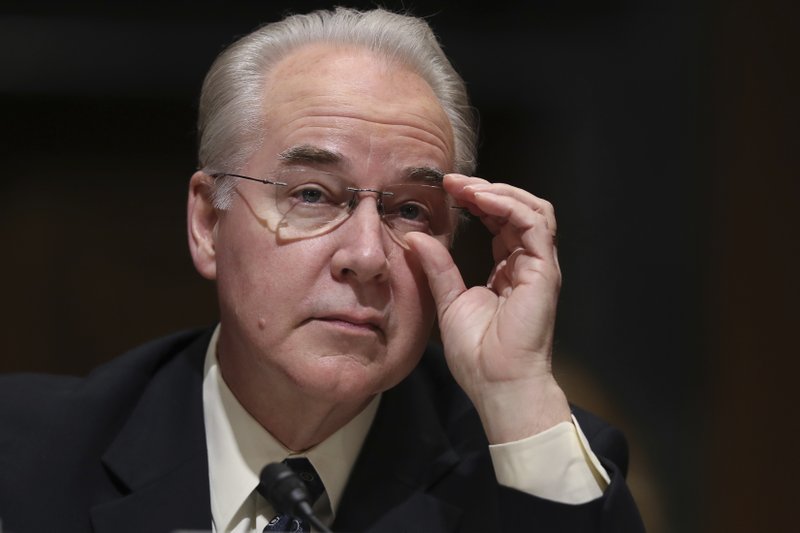
Republicans pushed President Donald Trump‘s pick for health secretary toward Senate confirmation on Thursday, overpowering Democrats who complained that the GOP drive to erase and replace former President Obama’s health care law will end up taking away peoples’ coverage. The debate over the nomination of Rep. Tom Price, R-Ga., to head the Health and Human Services Department was the latest over Trump’s choices, which have prompted near party-line votes and helped fuel a sour atmosphere in the new president’s first weeks. Senate Majority Leader Mitch McConnell, R-Ky., praised Price for knowing “more about health care policy than just about anyone.” He added that the conservative seven-term House member from Atlanta’s suburbs “has a clear-eyed view about Washington’s capacity to do great harm.” Democrats were strongly against Price, a long-time proponent of dismantling Obama’s health care law and reshaping and curbing Medicare and Medicaid. Sen. Sherrod Brown, D-Ohio, said Price’s past support for raising the usual Medicare eligibility age of 65 is “immoral.” And No. 2 Senate Democratic leader Richard Durbin of Illinois said Price’s backing for reshaping Medicare into a voucher-like program would thrust seniors “back into the loving arms of health insurance companies.” Price’s nomination came in a week that has seen Democrats, eager to show liberal constituents that they are taking a stand against Trump, ferociously but unsuccessfully oppose two other nominees for top administration jobs. Over solid Democratic opposition and two GOP defections, it took a tie-breaking vote by Vice President Mike Pence for the Senate to approve wealthy GOP donor Betsy DeVos on Tuesday to head the Education Department. Under the Constitution, one of the duties of a vice president is to break tie votes in the 100-member Senate. On Wednesday, the chamber confirmed Sen. Jeff Sessions, R-Ala., to be attorney general. That debate was bitter, fueled by Democratic accusations that Sessions lacked a devotion to civil rights laws and wouldn’t stand up to Trump. The Sessions battle also saw a rare Senate wrist-slap against one of its own as Republicans late Tuesday pushed through a rebuke of Sen. Elizabeth Warren, D-Mass., for violating the chamber’s rule against impugning a colleague. That came after Warren read on the Senate floor a 1986 letter from Coretta Scott King, Dr. Martin Luther King‘s widow, criticizing Sessions during his rejected judicial nomination 31 years ago. Republicans have talked longingly of confirming Price because one pillar of their strategy to gut Obama’s law is for the Department of Health and Human Services, which he would run, to issue regulations weakening it. Those might include letting states experiment with how they use federal Medicaid funds and restricting access to free birth control for women who work for religious-affiliated nonprofits. At Senate hearings on Price’s nomination, Democrats focused on the former orthopedic surgeon’s considerable stock holdings, especially in health care industry companies. They’ve accused him of conflicts of interest by acquiring those shares, pushing legislation that could benefit those companies and making investments using insider information. Price has said he’s done nothing wrong. It is against the law for members of Congress to engage in insider trading. Democrats have focused on Price’s purchase last year of around 400,000 shares in Innate Immunotherapeutics Ltd., an Australian biotech firm. Price has said he learned of the firm from a colleague, Rep. Chris Collins, R-N.Y., the company’s largest shareholder, and Price testified to Congress that the shares he bought were available to any investor. The company has said Price received a special offer to buy shares at a discount. Price has conceded he understated the value of those stocks in financial disclosure forms he filed. Price also purchased stock last year in Zimmer Biomet, a manufacturer of medical implant devices, around the same time he introduced legislation that would have suspended Medicare rules seen as problematic for such companies. Price has said the purchase was done by his stockbroker. Republished with permission of the Associated Press.
GOP suspends Senate rule, muscles Donald Trump picks through panel
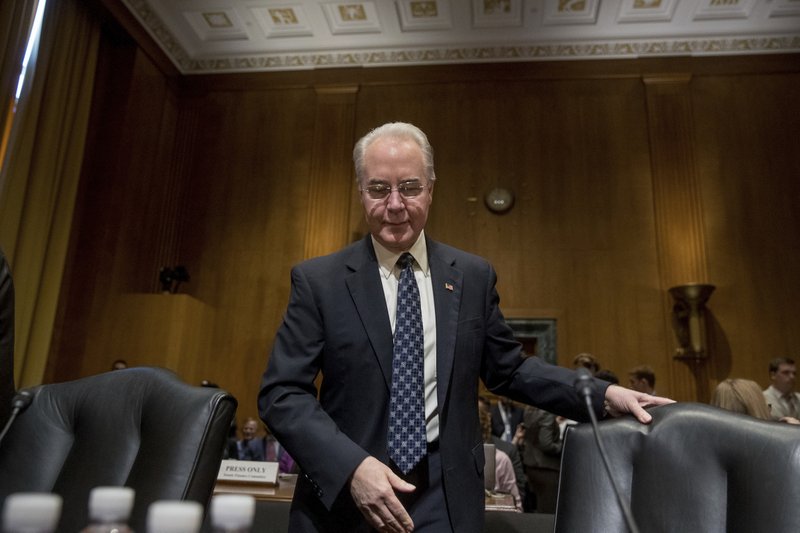
In the latest intensification of partisan hostilities, Republicans rammed President Donald Trump‘s picks to be Treasury and health secretaries through a Senate committee on Wednesday with no Democrats present after unilaterally suspending panel rules that would have otherwise prevented the vote. By a pair of 14-0 roll calls, the Senate Finance Committee approved Rep. Tom Price, R-Ga., to be Health and Human Services secretary and banker Steve Mnuchin to be Treasury secretary. Both nominations must be confirmed by the full Senate. The GOP’s show of brute political muscle came shortly before a testy session of the Senate Judiciary Committee at which lawmakers approved Sen. Jeff Sessions, R-Ala., to be attorney general. Later Wednesday, the full Senate planned to vote on confirming Rex Tillerson, the former Exxon Mobil CEO, as secretary of state. Republicans and Democrats have battled virtually nonstop since Trump entered the White House 12 days ago over his refugee ban, his firing of the acting attorney general and GOP plans to erase former President Barack Obama‘s health care law. With Republicans controlling both the White House and Congress for the first time in a decade, the GOP display of strength seemed to signal that the party will do all it can to block Democratic attempts to frustrate them. Democrats had boycotted Wednesday’s abruptly called Finance Committee meeting, as they’d done for a session a day earlier, demanding more time to question the two men about their past financial practices. Before approving the two nominees, the committee’s Republicans voted 14-0 to temporarily suspend a rule requiring at least one Democrat to be present for any votes. Committee Chairman Orrin Hatch, R-Utah, said the Senate parliamentarian had approved the extraordinary tactic and blamed it on Democrats, saying their boycott was “one of the most pathetic things I’ve ever seen” and “a nefarious breach of protocol.” In a written statement, top Finance panel Democrat Ron Wyden of Oregon said, “It’s deeply troubling to me that Republicans on the Finance Committee chose to break the rules in the face of strong evidence of two nominees’ serious ethical problems In a letter, Finance panel Democrats sent to Hatch early Wednesday, they wrote that they were not attending meetings because “both nominees have yet to answer important questions that impact the American people” about their financial backgrounds and submitted questions for them to answer. They also cited “significant concerns that both Mr. Mnuchin and Congressman Price gave inaccurate and misleading testimony and responses to questions to the Committee.” In confirmed by the full Senate, Price would lead Republican efforts to erase Obama’s health law. Democrats cited a newspaper report that officials of an Australian biomed company said Price received a special offer to buy their stock at a reduced cost, despite Price’s congressional testimony that the offer was available to all investors. Democrats also said a bank run by Mnuchin used a process for handling home foreclosures that critics have associated with fraud. Both men and congressional Republicans said they’d done nothing wrong. Separately, the Judiciary committee used a party-line 11-9 vote to send Sessions’ nomination to be attorney general to the full Senate. At that session, Sens. Al Franken, D-Minn., and John Cornyn, R-Texas, argued angrily over previous committee testimony and Franken complained that his integrity had been abused. Democrats had scuttled a planned vote Tuesday in the wake of Trump’s decision to fire Acting Attorney General Sally Yates. Several Democrats said they had no confidence Sessions would be able to stand up to Trump. Wednesday was just the latest instance of building tensions among Republicans and Democrats over Trump’s executive order on immigrants and refugees. But Democrats lack the numbers in the Senate to block Tillerson from becoming the nation’s chief diplomat. Republicans hold a four-seat advantage and during a procedural vote Monday on the nomination, Democrats Joe Manchin of West Virginia, Heidi Heitkamp of North Dakota and Mark Warner of Virginia cast their ballots for Tillerson. They’re unlikely to change their minds. Democrats boycotted a planned vote in the Senate Environment and Public Works Committee on Scott Pruitt, Oklahoma’s state attorney general in line to lead the Environmental Protection Agency. The vote was postponed. In his current position, Pruitt has frequently sued the agency he hopes to lead, including a multistate lawsuit opposing the Obama administration’s plan to limit planet-warming carbon emissions from coal-fired power plants. Like Trump, Pruitt has cast doubt on the extensive body of scientific evidence showing that the planet is warming and man-made carbon emissions are to blame. Pressed by Democrats in his Senate confirmation hearing in January, however, Pruitt said he disagreed with Trump’s earlier claims that global warming is a hoax created by the Chinese to harm the economic competitiveness of the United States. Another panel postponed a vote on Trump’s pick to head the White House Budget Office, tea party Rep. Mick Mulvaney, R-S.C., as Democrats asked for more time to read the nominee’s FBI file. Republished with permission of The Associated Press.
Dems force delays in votes on Jeff Sessions, Steve Mnuchin, Tom Price
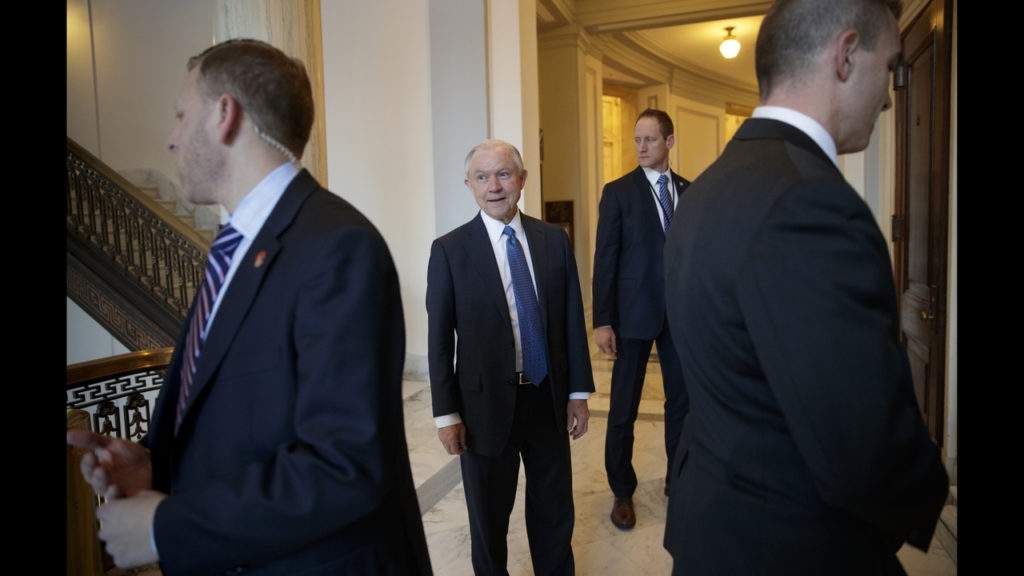
Democrats forced delays Tuesday in planned Senate committee votes on President Donald Trump‘s picks for Health and Treasury secretaries and attorney general, amid growing Democratic surliness over the administration’s aggressive early moves against refugees and an expected bitter battle over filling the Supreme Court vacancy. Democrats abruptly boycotted a Senate Finance Committee meeting called to vote on Rep. Tom Price, R-Ga., the Health nominee and Steve Mnuchin, Trump’s Treasury selection, saying both had misled Congress about their financial backgrounds. The Democrats’ action prevented the Finance panel from acting because under committee rules, 13 of its members — including at least one Democrat — must be present for votes. It was unclear when the panel would reschedule to votes. At the Senate Judiciary Committee, a meeting considering Sen. Jeff Sessions, R-Ala., to be attorney general lasted so long — chiefly because of lengthy Democratic speeches — that Chairman Charles Grassley, R-Iowa, said the panel would meet again Wednesday. The meeting on Sessions’ nomination was coming with Democrats and demonstrators around the country in an uproar over Trump’s executive order temporarily blocking refugees. Even some Republicans were warning it could hinder anti-terrorism efforts. Not everything ground to a halt. The Senate education committee voted 12-11 to send Trump’s pick to head the Education Department, Betsy DeVos, to the full Senate for a confirmation vote. The Senate Energy and Natural Resources Committee quickly approved former Texas Gov. Rick Perry as Energy secretary by 16-7, and Rep. Ryan Zinke, R-Mont., to head Interior by 16-6. And the full Senate easily confirmed Elaine Chao to become transportation secretary by a 93-6 vote. Chao was labor secretary under President George W. Bush, and is wife of Senate Majority Leader Mitch McConnell, R-Ky. Just before the Finance committee was scheduled to vote on Price and Mnuchin, Democrats called a briefing for reporters and announced their plan to force a delay. Sen. Debbie Stabenow, D-Mich., said Price and Mnuchin would hold positions “that directly affect peoples’ lives every day. The truth matters.” Finance Committee Chairman Orrin Hatch, R-Utah, accused Democrats of “a lack of desire to fulfill their constitutional responsibilities.” “They ought to stop posturing and acting like idiots,” he said. In 2013 when Democrats controlled the Senate, Republicans boycotted a committee vote on Gina McCarthy to head the Environmental Protection Agency, temporarily stalling it. Democrats cited one report in The Wall Street Journal that Price received a special, discounted offer to buy stock in a biomedical company, which contradicted his testimony to Congress. They said another report in The Columbus Dispatch showed documents revealing that Mnuchin had not been truthful with the Senate in the confirmation process in comments about how his bank OneWest had handled home foreclosures. Republicans have supported both men, and both have strongly defended their actions. Democrats have opposed Price, a seven-term congressional veteran, for his staunch backing of his party’s drive to scuttle Obama’s health care law and to reshape Medicare and Medicaid, which help older and low-income people afford medical care. They’ve also assailed Price for buying stocks of health care firms, accusing him of using insider information and conflicts of interest for backing legislation that could help his investments. Price says his trades were largely managed by brokers and that he’s followed congressional ethics rules. Democrats have criticized Mnuchin for not initially revealing nearly $100 million in assets, and were expected to vote against both nominees. They’ve also accused him of failing to protect homeowners from foreclosures and criticized him for not initially disclosing all his assets. DeVos, a wealthy GOP donor and conservative activist, has long supported charter schools and allowing school choice. That’s prompted opposition from Democrats and teachers’ unions who view her stance as a threat to federal dollars that support public education. Critics have also mocked her for suggesting that guns could be justified in schools to protect students from grizzly bears. Two prominent Republicans on the education committee, Sens. Susan Collins of Maine and Lisa Murkowski of Alaska, said they remained uncertain if they will vote for her on the Senate floor. Murkowski said DeVos has yet to prove that she deeply cares about America’s struggling schools and its children. Republished with permission of the Associated Press.
Tom Price tries to reassure on health care; Dems not buying it

Offering reassurances, President-elect Donald Trump‘s pick for health secretary said Wednesday the new administration won’t “pull the rug out” from those covered by “Obamacare.” Democrats were unimpressed, noting a lack of specifics. Rep. Tom Price, R-Ga., also told the Senate Health, Education, Labor and Pensions Committee that Trump is “absolutely not” planning to launch an overhaul of Medicare as he tries to revamp coverage under President Barack Obama‘s signature health care law. He acknowledged that high prescription drug costs are a problem, but did not endorse the idea of government directly negotiating prices. Throughout the nearly four-hour hearing, Democrats peppered Price with questions about his stock trades. The sometimes confusing exchanges involved different transactions under distinct circumstances. Price, who has signed a government ethics agreement to sell his stock, was clearly annoyed by the suggestion that he profited from his official position. “I’m offended by that insinuation,” he told Sen. Elizabeth Warren, D-Mass. Committee Chairman Lamar Alexander, R-Tenn., lauded Price’s performance, but ranking Democrat Patty Murray of Washington said she remains deeply concerned. No Democrats offered support for the 62-year-old nominee, an orthopedic surgeon-turned-legislator. Price said he wants to reopen a bipartisan dialogue on health care centered on practical solutions. “One of my goals in this entire debate is to lower the temperature,” said Price, speaking in even, measured tones. “People need to know that no rug is going to be pulled out from under them.” Alexander said he took that to mean that the Trump administration will be careful, and not attempt to repeal the 2010 health care law without a replacement ready to go. The Affordable Care Act is providing coverage to about 20 million people, and government as well as private experts say repealing without a concrete substitute would make millions uninsured and spike premiums. But Sen. Tim Kaine, D-Va., Hillary Clinton’s running mate, said, “I don’t think ‘lowering the temperature’ is consistent with rushing” to repeal and replace. Trump has promised to unveil his plan when Price is confirmed. With coverage for millions at stake, Price faced pointed questions about Trump’s evolving stance on health care. Trump campaigned on repealing Obama’s law, but at times he’s sounded more like a liberal. For example, he made recent comments about providing insurance for everyone and taking on the drug companies. In an interview aired Wednesday on Fox News Channel, Trump said his approach would offer coverage through private insurers for people who cannot afford it. “Nobody is going to be dying on the streets with a President Trump,” he said. He said his plan would “probably” turn Medicaid over to the states in the form of block grants to cover low-income people. Democrats reminded Price that approach could lock in big cuts. Price represents Atlanta’s northern suburbs and until recently led the House Budget Committee. A budget hawk and a social conservative, he drafted his own plan to replace Obama’s health law. It would have saved taxpayers money but covered fewer people, according to an outside analysis. Sen. Bernie Sanders, I-Vt., pressed Price on whether Trump intends to keep promises repeatedly made during the presidential campaign not to cut Social Security, Medicare and Medicaid. “I have no reason to believe he’s changed his position,” Price said. He expressed support for some provisions of the Obama health law, including allowing young adults to remain on parental coverage, protecting people with pre-existing medical conditions, and closing the Medicare prescription drug coverage gap. Questioned by Sen. Tammy Baldwin, D-Wis., Price acknowledged there are “certain areas where drug price increases seem to have little basis in rational actions.” But pressed on whether he would support Trump’s call for Medicare to negotiate with drug companies, Price tried to sidestep. If confirmed, Trump would be his boss, Price said, but he also suggested the idea of negotiations needs further study. He was supportive of requiring drugmakers to provide more public information about how they set prices. Democrats also challenged Price on his extensive stock portfolio. His investments have prompted questions about potential conflicts of interest and calls for a Securities and Exchange Commission investigation of possible insider trading. Sen. Al Franken, D-Minn., suggested Price got a special deal in the purchase of stock in an Australian drug company, Innate Immunotherapeutics. But Price insisted other investors also had the same option. “I think our job is to avoid the appearance of conflict,” Franken chastised. “And you have not done that.” Republicans bristled at such questions. “To question whether you are honest is insulting,” Sen. Rand Paul, R-Ky., told Price. HELP is one of two Senate committees that will hold hearings on Price. The Finance Committee, which actually votes on reporting the nomination to the Senate floor, will conduct a hearing next week. Republished with permission of The Associated Press.
Debbie Wasserman Schultz accuses HHS nominee Tom Price as another of Donald Trump’s ‘swamp’
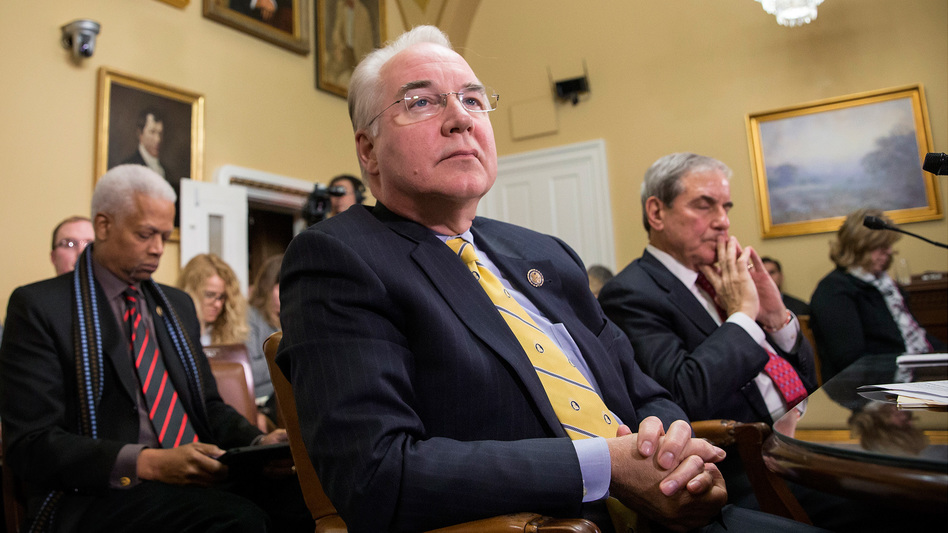
Tom Price, President-elect Donald Trump’s nominee for Health and Human Services Secretary, is poised to be grilled by Senate Democrats when he appears Wednesday before the Senate Health, Education, Labor and Pensions Committee. The six-term Georgia Republican congressman has been one of the leading opponents of the Affordable Care Act in Congress, and an advocate for the restructuring of the Medicaid and Medicare health entitlement programs. Democrats have vowed to fight the nomination of Price, an orthopedic surgeon. Undoubtedly, Price will be asked about his stock holdings in more than three dozen companies, including health care related agencies like Aetna, Biogen and Zimmer Biomet Holdings. It’s his purchase in that latter stock that may get him in some trouble with the committee. CNN reported that in March, Price bought between $1,001 to $15,000 worth of shares in Zimmer Biomet, a medical device manufacturer, before introducing legislation that would have directly benefited the company. That news comes after The Wall Street Journal reported last month that he traded roughly $300,000 in shares over the past four years in health companies while pursuing legislation that could impact them. Democrats pounced on that revelation. “With what we have recently learned about his apparent conflicts of interest — including filing legislation to benefit a medical device company in which he recently bought stock — it’s clear that he’s also another swimmer in President-elect Donald Trump’s ‘swamp,’” declared South Florida Representative Debbie Wasserman Schultz Wednesday. “No Member of Congress or Cabinet secretary — or president for that matter — should be creating the appearance of lining their own pockets on the taxpayers’ dime. Unfortunately, President-elect Trump, whose own record is rife with conflicts of interest, has tapped a number of Cabinet appointees that fit this alarming pattern. Congressman Price’s appalling record on health care policy should be reason enough to reject his nomination, but it should be withdrawn if these allegations prove to be accurate.” Wasserman Schultz also is criticizing Price for his opposition to the ACA and repeatedly proposing “draconian legislation to restrict women’s access to reproductive health care.” “He is committed to dragging American health care back several decades with his proposed cuts to Medicare, our social safety net, and would callously ensure that 129 million Americans who live with a pre-existing condition like me — a breast cancer survivor — will be denied coverage based on our medical history.” Wednesday’s hearing is being called just a “warm up,” because, in fact, Price faces confirmation by another committee — the Senate Finance Committee, and not the group of senators he speaks to Thursday.
Donald Trump urging GOP to talk up Jeff Sessions ‘strong’ civil rights record
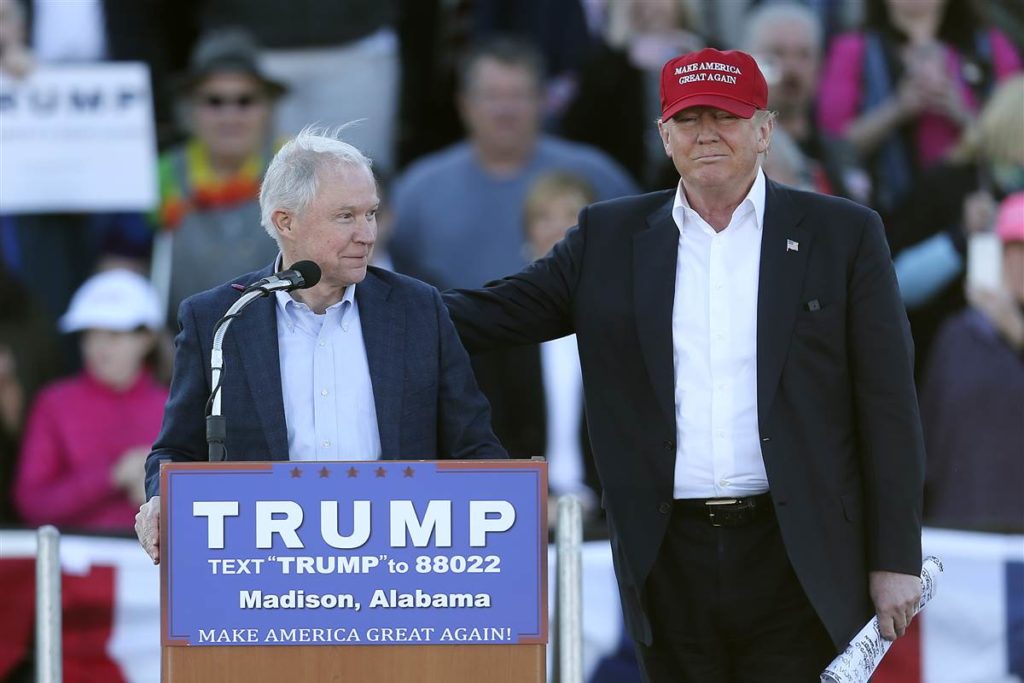
Donald Trump’s transition team is encouraging GOP Senators to talk up Alabama Sen. Jeff Sessions “strong civil rights record” and Justice Department experience during his confirmation hearings next year. The talking points, obtained by Politico, mention Sessions’ large role in Trump’s campaign and that the longtime Senator “is known for his deep respect and adherence to the rule of law, the cornerstone of American democracy.” The memo also highlights that Sessions filed “a host of desegregation lawsuits” during his time as a U.S. Attorney in Alabama, voted in favor of the 30-year extension of the Civil Rights Act, voted to confirm former Attorney General Eric Holder and his efforts to award the Congressional Gold Medal to Rosa Parks. One of the marks on Sessions’ record is his failed confirmation to a federal judgeship due to allegations of racist comments, but the memo includes a talking point that individuals who voted against Sessions’ confirmation in 1986 “ultimately regretted it.” The memo includes a quote late Sen. Arlen Specter, who said his “vote against candidate Sessions for the federal court was a mistake because I have since found that Sen. Sessions is egalitarian.” The memo also includes talking points on other Trump appointees, such as former Goldman Sachs executive Steven Mnuchin, who the administration emphasizes is a “world-class financier.” The talking points also highlight his Secretary of Commerce pick Wilbur Ross’ “extraordinary business career,” Secretary of Transportation pick Elaine Chao as “one of the most successful Cabinet officials in American history,” and Secretary of Health and Human Services pick Tom Price as a “renowned physician” and “tireless problem solver.”
HHS nominee Tom Price opposes Obamacare, backs Medicare vouchers
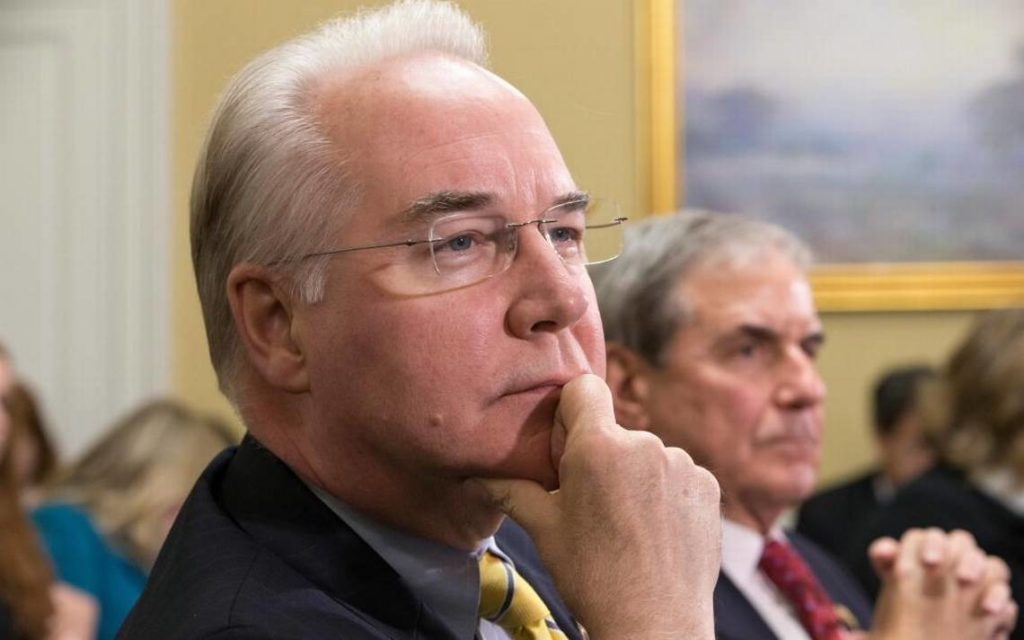
As a congressman, Georgia Republican Tom Price has been thwarted in his hopes to repeal the Affordable Care Act and transform Medicare into a voucher-like program for future participants. Now, as President-elect Donald Trump‘s choice to run the Department of Health and Human Services, Price will wield great power as Trump’s top health policy adviser and preside, Republicans hope, over the dismantlement of President Barack Obama’s signature health care law. Price, 62, carries himself with a surgeon’s confidence and possesses deep knowledge of health policy. He is one of very few Republicans to actually propose a replacement for Obamacare, and promises to be a staunchly conservative voice in Trump’s Cabinet. Price is buttoned down and unfailingly polite, but he is not shy about swinging his elbows in the heat of debate. As chairman of the House Budget Committee, Price emerged as a top advocate of Speaker Paul Ryan’s plan to transform Medicare from a program that supplies a defined set of benefits into a “premium support” model that would, similar to Obamacare, offer subsidies for participants to purchase health care directly from insurance companies. He also wants the Medicare eligibility age to rise to 67. Price also supports, as does Trump, a plan by House Republicans to sharply cut the Medicaid health program for the poor and disabled and turn it over to the states to run. Like Trump and most other Republicans, Price wants federal funding withdrawn from Planned Parenthood, which has come under attack for its practice of supplying tissue from aborted fetuses to medical researchers. Trump has said he opposes GOP plans to provide vouchers for future Medicare beneficiaries and GOP support for the idea has never been tested beyond its inclusion in non-binding budget blueprints. Price’s plan would require people who are now in their late 50s to accept the Medicare subsidies, which critics say would fail to keep pace with inflation and force higher out-of-pocket costs like deductibles and co-payments. Trump named Price on Tuesday and called him “a tireless problem solver and the go-to expert on health care policy, making him the ideal choice” to run HHS. “He is exceptionally qualified to shepherd our commitment to repeal and replace Obamacare,” Trump said. While Republicans are generally united in their desire to repeal Obama’s health law, there’s no consensus on what should replace it. Price has offered a solution that would provide tax credits to subsidize the purchase of individual and family health insurance policies. His proposal would also allow insurers to sell policies across state line, boost incentives for health savings accounts, and create high-risk pools to help individuals afford coverage, while barring assistance for nearly all abortions. It will fall to Price, once confirmed, to be the prime go-between Trump and Capitol Hill Republicans in what are certain to be difficult and complicated negotiations over replacing the health care law. Price serves on the powerful Ways and Means Committee, which has jurisdiction over Obamacare, but he hasn’t been seen as an inside player in much of the panel’s work. The HHS secretary also has great power over the workings of Medicare and Medicaid and the medical profession in general. Price led the House Republican Study Committee, a powerful band of conservative voices, during the first two years of the Obama administration. He lost a close election in 2012 to become the No. 4 Republican in House GOP ranks despite the support of Ryan, a friend and confidante. At the time, Republicans faced criticism for a lack of diversity in their leadership ranks, and GOP leaders like former Speaker John Boehner of Ohio swung behind Rep. Cathy McMorris Rogers of Washington. Democrats reacted with alarm, though they lack the power to block Price because of a change to filibuster rules they orchestrated when controlling the Senate. “Congressman Price has proven to be far out of the mainstream of what Americans want when it comes to Medicare, the Affordable Care Act, and Planned Parenthood,” said incoming Senate Minority Leader Charles Schumer, D-N.Y. “Thanks to those three programs, millions of American seniors, families, people with disabilities and women have access to quality, affordable health care. Nominating Congressman Price to be the HHS secretary is akin to asking the fox to guard the hen house.” Republished with permission of the Associated Press.
Donald Trump taps Tom Price to lead HHS, plans 2nd meeting with Mitt Romney
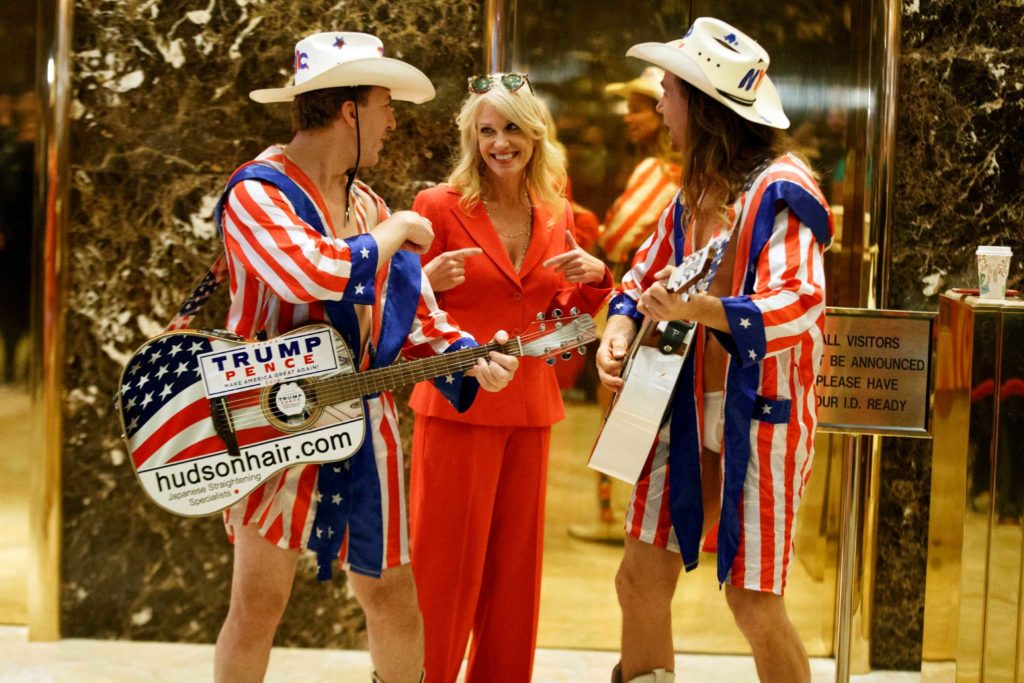
President-elect Donald Trump moved to fill out his Cabinet Tuesday, tapping Georgia Rep. Tom Price to lead the Department of Health and Human Services. Aides signaled that at least one other Cabinet nomination was imminent. The president-elect appeared to still be torn over his choice for secretary of state. He summoned former Massachusetts Gov. Mitt Romney to New York for dinner Tuesday night to discuss the post for a second time. He was also meeting with Tennessee Sen. Bob Corker, the chairman of the Senate Foreign Relations Committee who was getting new attention from Trump’s team. On Monday, Trump spent an hour with retired Gen. David Petraeus, another new contender. Trump’s decision to consider Romney for the powerful Cabinet post has sparked an unusual public backlash from some of his closest aides and allies. Campaign manager Kellyanne Conway has warned that it would be a “betrayal” to Trump supporters if he selected Romney, who was a fierce critic of the president-elect. Three people close to the transition team said Trump was aware that Conway planned to voice her concerns about Romney in public and they pushed back at suggestions that the president-elect was angry at her for doing so. Even as he weighed crucial Cabinet decisions, Trump appeared distracted by outside forces — or eager to create distractions himself. He took to Twitter early Tuesday to declare that “nobody should be allowed to burn the American flag.” He warned that those who do should face “perhaps loss of citizenship or year in jail!” Trump offered no context for his message. The Supreme Court has ruled that flag burning is protected by the First Amendment. The president-elect spent the weekend tweeting his opposition to a recount effort in up to three states that is led by Green Party candidate Jill Stein and joined by Hillary Clinton‘s team. He also falsely claimed that millions of people had voted illegally in the presidential election and provided no evidence to back up the baseless charge. Trump won praise from Republicans Tuesday for his pick of Price to serve as health and human services secretary. A six-term congressman and orthopedic surgeon, Price has been a leading critic of President Barack Obama‘s health care law. If confirmed by the Senate, he’ll be a leading figure in Republican efforts to repeal the measure. Incoming Senate Democratic Leader Chuck Schumer said Price “has proven to be far out of the mainstream of what Americans want” for programs that help seniors, women, families and those with disabilities. His nomination, Schumer said, is “akin to asking the fox to guard the henhouse.” Trump’s team also announced Tuesday that Seema Verma had been chosen to be administrator of the Centers for Medicare and Medicaid Services. Jason Miller, a transition team spokesman, said at least one other Cabinet post would be announced in the afternoon. He did not elaborate. Transition aides said Trump was likely at least a few days away from a decision on secretary of state. Romney has supposed from Vice President-elect Mike Pence, who is heading the transition efforts. Romney was fiercely critical of Trump throughout the campaign, including his preparedness for the foreign policy and national security decisions that confront a president. Still, he is said to be interested in serving in the administration and held a lengthy initial meeting with Romney before Thanksgiving. Other top Trump allies, notably Conway, have launched a highly unusual public campaign against a Romney nomination. Conway’s comments stirred speculation that she is seeking either to force Trump’s hand or give him cover for ultimately passing over Romney. Former New York City Mayor Rudy Giuliani, a loyal Trump ally, was initially seen as the leading contender to helm the State Department. But questions about his overseas business dealings, as well as his public campaigning for the job, have given Trump pause. Trump is now said to be considering Giuliani to head the Homeland Security Department, according to those close to the transition process. Republished with permission of the Associated Press.
U.S. House of Representatives: Sept. 21 – Oct. 2
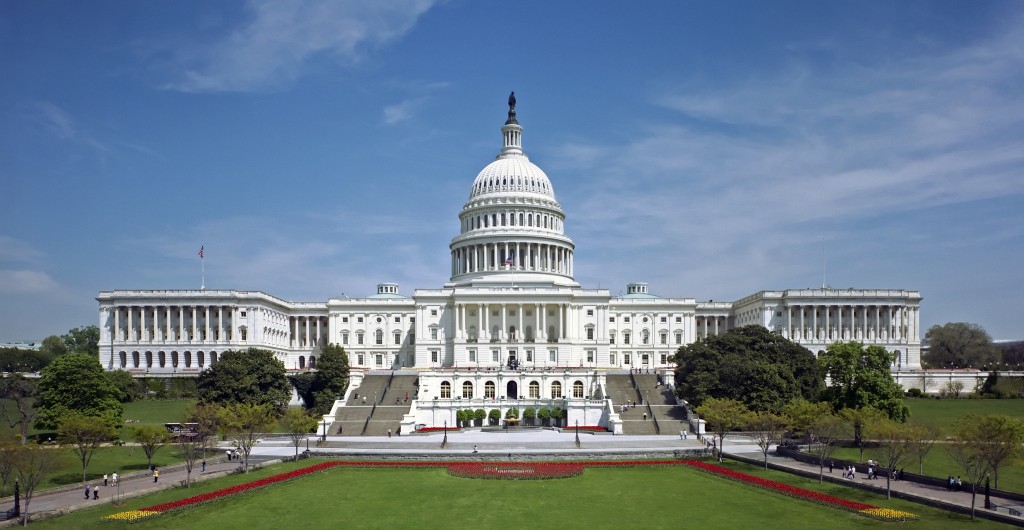
Even though the House was out of session for all but two days last week, it proved to be one of the most eventful two days of the year in the U.S. House of Representatives — with Pope Francis in town to address a joint session of Congress Thursday and House Speaker John Boehner announcing his retirement Friday. The impending vacancy of the Speakership has left the party scrambling to find a successor. Five term congressman and current Majority Leader Kevin McCarthy (R-CA) seems to be the overwhelming favorite to win, and several Members are eyeing key leadership roles within the caucus further down the ballot. The Majority Leader position is shaping up to be highly contested as current Majority Whip Steve Scalise (R-LA), current Conference Chair Cathy McMorris Rodgers, as well as Tom Price (R-GA) who has previously served as chairman of the Republican Study Committee and the Republican Policy Committee have all announced interest in the job. Now that Boehner is no longer threatened by losing his Speakership as a consequence of moving a clean CR he has announced he will bring up the Senate CR for a House vote. With less than 72 hours away from the Sept. 30th deadline to fund the government or risk a repeat of the 2013 government shutdown, the vote is expected to take place Wednesday and should pass with moderate Republican and Democratic support, thus thwarting a shutdown. On Monday and Tuesday, the House is in session and will consider several bills under suspension of the rules. A full list of bills can be found here. This week the house will consider: H.R. 3614: Airport and Airway Extension Act of 2015. This bill extends current federal aviation administration (FAA) authorities, programs and excise taxes at existing levels for six months H.R. 2061: the Equitable Access to Care and Health (EACH) Act. The bill expands the religious conscience exemption under Obamacare. Alabama co-sponsors: Rep. Martha Roby (AL-02), Rep. Robert Aderholt (AL-04) H.R. 1624: the Protecting Affordable Coverage of Employees Act. Beginning in January, under the Affordable Care Act, the definition of small employers will change from groups of up to 50 employees to include groups of up to 100 employees. This legislation would repeal this national standard and allow states the ability to set their own definitions if they so choose. Alabama co-sponsors: Rep. Bradley Byrne (AL-01), Rep. Martha Roby (AL-02), Rep. Robert Aderholt (AL-04), Rep. Mo Brooks (AL-05) H.R. 3495: the Women’s Public Health and Safety Act. The bill provides states increased flexibility to exclude Medicaid contracts to those medical providers who also perform abortions, thus permitting states to deny non-abortion health care reimbursements to organizations such as Planned Parenthood. Alabama co-sponsor: Rep. Mike Rogers (AL-03) For the balance of the week, several items are possible including: legislation that prohibits lifting Iran sanctions as part of the nuclear deal unless the country first pays the court-ordered damages owes to victims of Iranian-backed acts of terrorism; a House/Senate conference agreement on FY 2016 Defense Authorization. The House is not in session Friday.
