
Tommy Tuberville says it is no longer safe for Americans to cross Mexican border
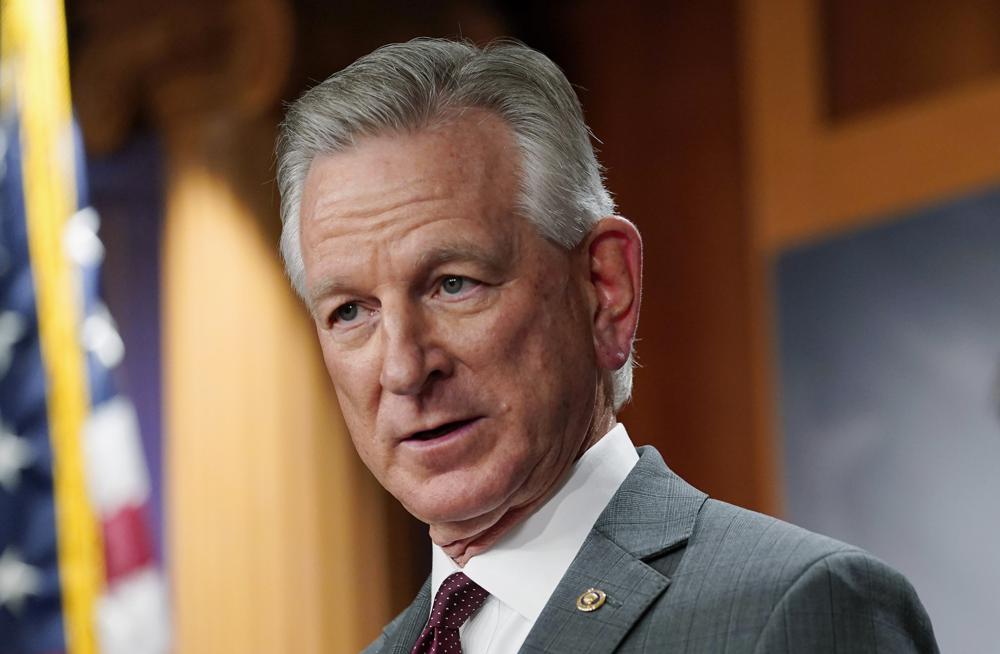
Four Americans were kidnapped while making a cross-border visit to Mexico. Authorities rescued two of those Americans, but the other two were found executed. On Wednesday, U.S. Senator Tommy Tuberville told the Alabama press corps, “You can’t go freely across the border.” “I hate this happened to four Americans,” Sen. Tuberville said in his weekly press call. “We lost two lives, and it is sad what happened. That you can’t go freely across the border, you can’t go at any stop across the border now. It is out of control.” “Well, it just goes to show you, not just on our side, but on their side – they’re losing control of their borders, Mexico is,” Tuberville continued. “Mexico actually is being held hostage by the cartels. The cartels are running the country of Mexico. Their government is under siege. You have got to be very careful. It is a different country than it has been in the past.” Tuberville urged President Joe Biden to talk to the President of Mexico and urge Mexico to send military to the border. “I would hope that President Biden would step up and have a meeting with the president over there,” said Tuberville. “I know President Trump did. He held them accountable and said we are going to stop trade if you don’t get your chips in a row. They straightened up. They gave us people at the border Military that would help out the border.” Tuberville said that President Biden is partly to blame for the border chaos. “President Biden is partly to blame for this for what he has done on our side of the border – opened up the border and let the cartel come through as they may,” Tuberville said. “So hopefully, this administration in the White House will wake up and smell the roses. It is wrong. It is wrong for the people of Mexico, and it is wrong for law-abiding citizens of Mexico, and something needs to be done, and there needs to be huge talks. We have got wars all over the world, but we have got a war right at our border, and we better wake up and see this and start getting some kind of answers to it at the border on both sides.” The four friends from South Carolina were traveling to Mexico for inexpensive cosmetic surgery. Eric James Williams, Zindell Brown, and cousins Latavia “Tay” McGee and Shaeed Woodard drove into Matamoros, Mexico, in the northeastern state of Tamaulipas just south of Brownsville, Texas. Their white minivan was fired on by heavily armed gunmen in body armor. The foursome was then taken hostage and forced at gunpoint to leave in another car. The hostages were moved frequently to avoid authorities who were frantically seeking to rescue the Americans. Williams and McGee were both rescued Tuesday morning. Brown and Woodard’s ordeal ended in tragedy. One of the victims’ bodies was found in the house with the survivors. The other body was found outside the home. All four are back in America now. White House Press Secretary Karine Jean-Pierre was asked on Wednesday if the President had spoken to the victims. Jean-Pierre told reporters, “I just don’t have anything more to share. Clearly, our hearts go out to the family members who lost — who lost a loved one. It is devastating, clearly, the news that we heard and the reports and what we know of the case thus far. And so, our hearts go out to them. I just don’t have anything to read — to read out.” A 24-year-old suspect, who allegedly was assigned to guard the hostages, is in custody, and authorities are seeking more suspects. Irving Barrios is the attorney general of Tamaulipas. Barrios said that the Americans were not directly targeted and that he believes it all “was a misunderstanding.” The FBI is urging anyone with information to call its San Antonio office at 210-225-6741 or submit information on its website. Tuberville was elected to the U.S. Senate in 2020. Since his election, he has visited the southern border multiple times and has urged Biden to address the growing border chaos. To connect with the author of this story or to comment, email brandonmreporter@gmail.com.
Tommy Tuberville expresses concerns about new federal red snapper limits
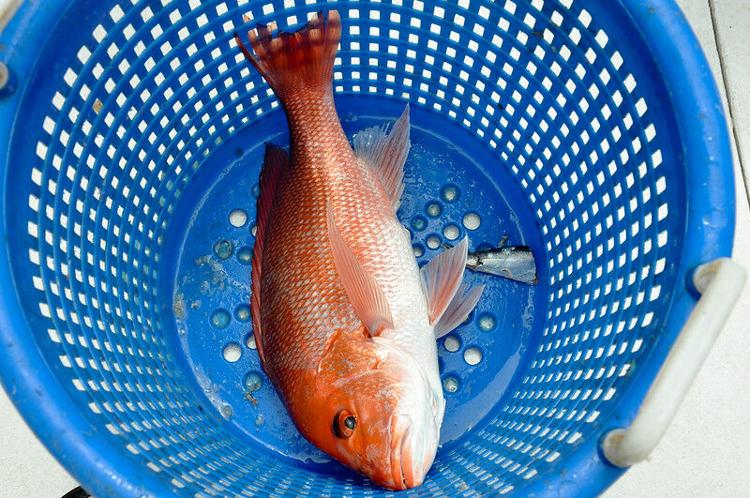
The new U.S. Department of Commerce regulation on red snapper harvest is expected to cut the amount of fish that Alabama’s red snapper fishermen are allowed to harvest during Alabama’s red snapper season. U.S. Senator Tommy Tuberville expressed his concerns about the new regulation on Monday. The Department of Commerce’s new rule requires the National Marine Fisheries Service to convert all fisheries into a single federal system. Tuberville said that this will have negative implications for Alabama’s red snapper industry. “Once again, the Biden administration is trying to force its one-size-fits-all approach and ignore the adverse effects of its decisions,” said Senator Tuberville. “Red snapper fishing is a huge part of Alabama’s Gulf Coast economy, which is why I’ll continue pushing back against the Department of Commerce’s disastrous proposal to decrease limits for red snapper anglers based on inaccurate data.” Last August, Tuberville joined his congressional colleagues in urging Commerce Secretary Gina Raimondo to reverse the department’s proposed rule to undo the National Marine Fisheries Service’s standard of setting quotas and annual catch data on a state-by-state basis. Instead, the department proceeded with its rule to implement a standardized catch limit in all states, even Alabama, with fishery programs certified by the National Marine Fisheries Service. This rule is expected to severely cut Alabama’s red snapper catch limits for 2023 by 51 percent, according to the Alabama Department of Conservation and Natural Resources (ADCNR). In 2021, the Gulf of Mexico Fishery Management Council decided to delay the calibration of red snapper allocation until January 2023 and approve a moderate increase in the 2021 annual catch limit rejecting the National Oceanic and Atmospheric Administration’s (NOAA) attempts to cut Alabama’s red snapper season in half. Under a final rule published by NOAA Fisheries on December 1, Alabama’s private recreational anglers will see a 51% decrease in the 2023 red snapper quota. The rule went into effect on January 1, reducing Alabama’s private recreational quota from 1,122,662 pounds in 2022 to just 558,200 pounds in 2023. Critics of the new federal regulation claim that there are three times as many red snapper in the Gulf than previously estimated. Scott Bannon is the Commissioner of the Alabama Department of Conservation and Natural Resources “Each Gulf state is accounting for their recreational harvests using different data programs from what the federal government is using,” Bannon stated. “Under the other final rule that created state management of red snapper in 2018, there was a requirement to align the landings into the same currency through a calibration method. Alabama and Mississippi have very accurate reporting systems, and we feel the harvest estimates from NOAA are inflated and unreasonable. “Since before state management of red snapper was initiated, we have pushed the Gulf of Mexico Fishery Management Council (Gulf Council) that we should manage the amount of fish off each state. From Alabama’s perspective, this is in part due to the investments made by the state and private individuals in artificial reef building from which a significant number of red snapper and other reef species are produced in Alabama’s reef zones.” Bannon points to Alabama’s investments in creating artificial reefs to provide habitat for the snapper and other reef fish as one reason Alabama’s quota should be higher. Federal regulation of the red snapper season has been a point of contention with state officials for years. Federal authorities are essentially ignoring years of data that state wildlife managers have collected on red snapper numbers. The new rules mean that red snapper fishermen will be able to spend fewer days on the water pursuing the fish this year and that while doing so, they will be allowed to keep fewer fish. Fishermen who customarily fill their freezers with red snapper for their family’s protein needs will have to pursue a different fish species this year and be prepared for this dramatic change in their fishing habits and strategy. Alabama Today will continue to follow this story and have more details when the 2023 red snapper season rules are finalized. Tommy Tuberville has represented Alabama in the United States Senate since 2021. Tuberville unseated incumbent Sen. Doug Jones in the 2020 election. To connect with the author of this story or to comment, email brandonmreporter@gmail.com.
Tommy Tuberville opposes biological males competing in women’s sports
U.S. Senator Tommy Tuberville authored an op-ed in National Review outlining his reintroduction of the Protection of Women and Girls in Sports Act to preserve Title IX protections and keep biological males from competing in female sports. The reintroduction of this legislation comes as the U.S. Department of Education is moving forward to implement new rules in May that would allow biological males to compete in girls’ and women’s sports beginning in the 2023-2024 school year. “50 years ago, we discovered a winning strategy for all of America’s female athletes: Title IX. Signed into law in 1972, the 37 words of this relatively simple legislation empowered women to win by leveling the playing field and providing them access to the same athletic opportunities that their male counterparts enjoyed,” Tuberville wrote. “That level playing field is now under attack by activists who care more about politics than what’s best for female athletes.” “We must protect women’s sports. That is why I reintroduced the Protection of Women and Girls in Sports Act yesterday to push back against the far left’s attempts to destroy women’s sports and preserve the opportunities they have provided female athletes for half a century,” Tuberville explained.” My legislation would require institutions to recognize an athlete’s gender as what it was at birth and stop giving federal funding to any program or institution that allows biological males in women’s sports.” “Last year, on the 50th anniversary of Title IX, the Department of Education proposed a new rule to allow biological males to compete in women’s sports, citing the change as more ‘inclusive.’” Tuberville continued. “I submitted a public comment to the proposed rule change and discussed seeing the positive impacts of Title IX firsthand, four years after its enactment, while coaching girls’ basketball at Hermitage High School in Arkansas. But like those of many other athletes, coaches, educators, and parents, my concerns were ignored by Secretary Miguel Cardona as the Department of Education charged ahead with plans to finalize this change in May.” “There is nothing inclusive about forcing female athletes who train all their lives in hopes of achieving first place to instead compete for second, third, and fourth place because the top spot is invariably taken by athletes who have obvious physical advantages associated with their gender,” Tuberville said. “Biological men have won 28 women’s sports titles since 2003. This number will only increase when the boundaries are completely removed.” Tuberville appeared on Fox and Friends to defend women’s sports. Specifically, the Protection of Women and Girls in Sports Act will: Ensure Title IX provisions treat gender as “recognized based solely on a person’s reproductive biology and genetics at birth.” Ban recipients of federal funding from operating, sponsoring, or facilitating athletic programs that permit a male to participate in a women’s sporting event. The legislation is endorsed by Independent Women’s Voice, Concerned Women for America, and Heritage Action for America. Carrie Lukas is the vice president of Independent Women’s Voice. “More than 50 years ago, Congress enacted Title IX to ensure equal opportunity in all aspects of education, including athletics,” said Lukas. “But without single-sex teams and single-sex competition, equal athletic opportunity is but a farce. Forcing female athletes to compete against biological males is unfair. But it’s also discriminatory. Allowing biological males to take awards, roster spots, scholarships, or spots at a school from female athletes violates Title IX’s prohibition of discrimination ‘on the basis of sex.’ The Protection of Women and Girls in Sports Act will help preserve equal athletic opportunity for both sexes. IWV is thankful for Senator Tuberville’s leadership on this important issue.” Penny Nance is the CEO and President of Concerned Women for America Legislative Action Committee – the largest women’s policy organization. “We have championed the cause of a fair playing field for female athletes for years,” said Nance. “Understanding the importance of sports, Coach Tommy Tuberville has proven to be a leader on the issue. It’s time for Congress to stop injustice and discrimination against female student-athletes in their own sports. Our Young Women for America leaders have experienced the embarrassment of competing against men and are fighting this battle on their college campuses. Passing the Protection of Women and Girls in Sports Act is a top priority. Never again should female athletes lose their trophies, their scholarships, and their dignity to males.” Jessica Anderson, executive director of Heritage Action for America, stated. “By ignoring the biological differences between men and women and forcing women to compete against men in sports, the Left is threatening to limit women’s opportunities on and off the field. The Protection of Women and Girls in Sports Act protects women’s physical safety and scholarship opportunities by making it illegal for a recipient of federal funds who operates, sponsors, or facilitates athletic programs to allow men to participate in women’s athletic teams or programs. Heritage Action supports the passage of this essential legislation and thanks Senator Tuberville for leading the fight in the Senate to protect women’s safety, privacy, and opportunities.” Joining Tuberville as original cosponsors are U.S. Senators Mike Lee (R-Utah), James Lankford (R-Oklahoma), Tom Cotton (R-Arkansas), Marsha Blackburn (R-Tennessee), Roger Marshall, M.D. (R-Kansas), Ted Budd (R-North Carolina), Kevin Cramer (R-North Dakota), Cindy Hyde-Smith (R-Mississippi), Mike Braun (R-Indiana), Rick Scott (R-Florida), Jim Risch (R-Idaho), Mike Crapo (R-Idaho), Bill Hagerty (R-Tennessee), Marco Rubio (R-Florida), Joni Ernst (R-Iowa), Cynthia Lummis (R-Wyoming), Steve Daines (R-Montana), and Josh Hawley (R-Missouri). Tommy Tuberville spent decades as a teacher and coach prior to his election to the Senate in 2020. To connect with the author of this story or to comment, email brandonmreporter@gmail.com.
Tommy Tuberville voices support for Alabama’s foresters
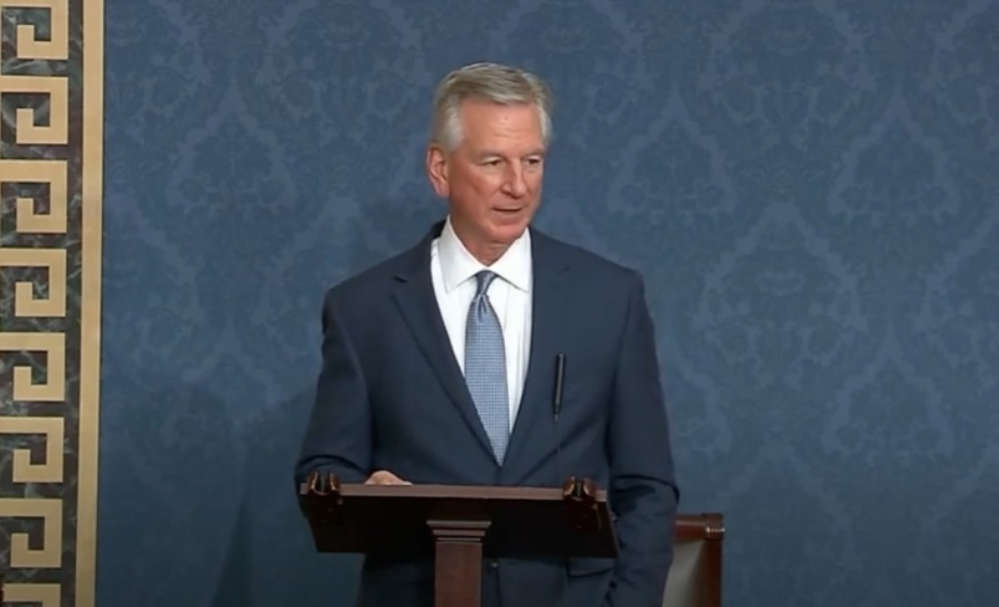
During a Senate Agriculture, Nutrition, and Forestry Committee hearing covering conservation and forestry programs in the 2023 Farm Bill, U.S. Senator Tommy Tuberville spoke with U.S. Department of Agriculture (USDA) officials about protecting Alabama’s farming and forestry industry in the 2023 Farm Bill. “We must ensure conservation programs remain voluntary, market-driven, and incentive-based. Each producer must remain in charge of what operations occur within their farmland and forestland,” Tuberville stated. “I want to thank our witnesses for being here. In particular, I want to recognize and thank Ms. Angela Coleman, an Alabama native and a Troy University graduate,” said Tuberville. “Today is significant for my state of Alabama because farming and forestry combined make up the largest industry in the state. Alabama has 23.1 million acres of forests — 94 percent of which are owned by private landowners, which is important — we also have four national forests and four state forests.” Tuberville advocated for feral swine eradication. Feral hogs are a growing problem in Alabama. “I can’t believe we have gone through this hearing for so long without talking about feral hogs,” said Tuberville. “I can’t go anywhere without farmers and foresters staying after me about having their crops and their land destroyed. The 2018 Farm Bill included $75 million for the Feral Swine Eradication and Control Pilot Program. How can we implement this better and do better? And do we need more money in the Farm Bill to help with this?” “Thank you for the question, Senator,” said National Resources Conservation Service Chief Terry Cosby. “We’ve been working very closely with our friends at APHIS to look at this problem, and we’ve been providing incentives also for this. One of the things is that our incentives go for a certain thing. You know, we don’t eradicate. We don’t do those type things. But we can help with technologies, and how do you get rid of these things. And we’ve heard this all over. I’m from the state of Mississippi. We have the same issue with feral hogs, and we just need to do a better job with the technology that traps them and what happens to them after that. Who knows? But yes, we do need to work very closely with the federal family to figure out how do we do this because it is devastating when you go out, and you look at a field that has been turned over overnight, or a farmer loses all of it, all the alfalfa or whatever has been planted there. So, yes, it is a problem. It is something that we need to talk about. How do we aid the farmers in fixing it?” “Do you think we need more money in the Farm Bill for this?” Tuberville asked. “So, the money that we’ve gotten so far, we’ve effectively used, and so we’ll look at other areas and other ways and see if there is more money available to put towards this,” Cosby answered. Wild hogs do an estimated $50 million a year to Alabama agriculture. Feral swine are not native to Alabama. There is nothing native to Alabama living in the wild that preys on wild hogs. An estimated 255,000 hogs live in the wild in Alabama, and humans are the only check on their continued spread. “For our forests to thrive, we must manage and harvest our timber,” continued Tuberville. “For our farms to continue producing food for the world, we must keep working forests and farmland in production. Our farmers and foresters are true conservationists that have been implementing, and will continue to implement, sustainable practices that benefit our environment for generations to come. We must ensure conservation programs remain voluntary, market-driven, and incentive-based. Each producer must remain in charge of what operations occur within their farmland and forestland. Mandates on our producers will not be entertained to any degree. As we consider this costly $1.4 trillion Farm Bill and the $25 billion in Inflation Reduction Act (IRA) spending for Forestry and Conservation programs — we must recognize the price tag of these programs, their damage to our national debt, and the effect of government incentives to take working forests and farmland out of production.” “Because forestry is so important to our state, I want to be sure it is protected,” Tuberville said. “In the South, insects and diseases like the southern pine beetle and pine decline can decimate pine tree species. How is the Forest Service monitoring and preparing for outbreaks that could decimate our critical forest resources?” “Thank you so much for the question, Senator. We have a very active – in our state and private forestry program – a very active pest management group,” answered U.S. Forest Service Associate Chief Angela Coleman. “And certainly, we’ve all seen the devastation of the southern pine beetle and other pests throughout the country, and climate change has only ramped up the effects. There was support and funding from recent legislation that really helps us to deliver in Farm Bill authority, that helps us deliver much more effective monitoring and entire eradication or at least response to those infestations. So clearly, it’s very much a part of our forest health work in the agency, and it’s also a contributor to our overall strategy when it comes to resilience and healthy forests.” Alabama has over 23 million acres of forestland, almost 70 percent of the state. These forests are home to rich biodiversity, employ more than 36,000 Alabamians and generate sales of more than $12 billion in timber and related products annually. Tommy Tuberville was elected to the U.S. Senate in 2020. Tuberville serves in the Senate Armed Services, Agriculture, Veterans Affairs, and HELP Committees. To connect with the author of this story or to comment, email brandonmreporter@gmail.com.
Katie Britt, Tommy Tuberville and colleagues vote to overturn Joe Biden’s ESG rule
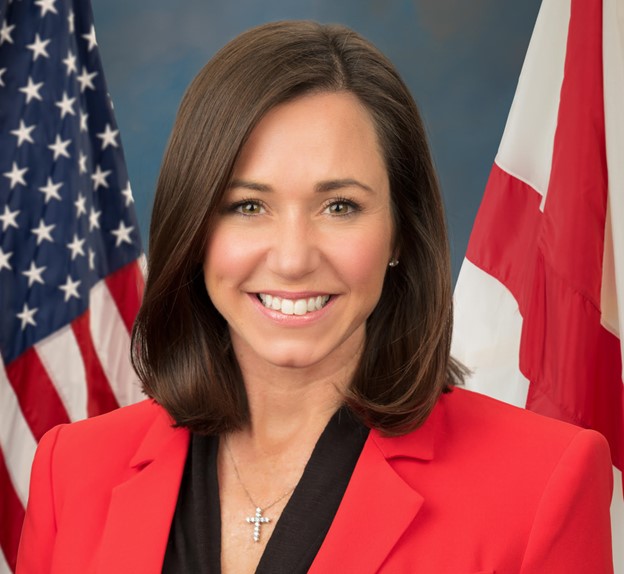
On Wednesday, U.S. Senator Katie Britt and a bipartisan group of 49 additional Senators voted to overturn the Biden Administration’s ESG rule, which Republicans argued endangered the retirement investments of 152 million Americans by prioritizing political causes over the best financial returns. Under the Congressional Review Act (CRA), the Senate voted to block the rule in a 50 to 46 vote. An identical disapproval resolution passed in the House on Tuesday in a 216-204 vote. With Senate passage, the resolution now heads to the desk of President Joe Biden, who has vowed to veto the measure. “Today, I proudly voted to protect the hardworking Americans and retirees who are already being crushed by generationally high inflation fueled by the Biden Administration’s wasteful tax-and-spend spree and reckless Green New Deal agenda,” said Sen. Britt. “The simple fact of the matter is that inflation is up 14.4% since President Biden took office, and retirees lost 23% of their 401(k) savings last year alone. The last thing Alabama families can afford right now is their hard-earned retirement savings funding someone else’s political agenda instead of their own future. Fiduciaries should put the financial well-being of their investors first, not politics. And it is past time for President Biden to put hardworking American families first instead of his own reckless political agenda.” In November, Biden’s Department of Labor instituted a rule permitting ERISA retirement plan fiduciaries to consider environmental, social, and corporate governance (ESG) factors when selecting investments and exercising shareholder rights. “The Biden administration can’t keep its hands off of Americans’ finances,” said Sen. Tommy Tuberville. “Meddling in 401(k) investments through overregulation restrains financial growth and restricts personal liberty. The federal government shouldn’t choose winners and losers in the investment game. Bureaucrats have no business telling hardworking Americans how to manage their savings accounts. My bill ensures that everyone who earns a paycheck has the financial freedom to invest in their futures however they see fit.” The Biden Administration decree overturns a previous rule which mandated fiduciary decisions be made solely on getting the best returns for the 152 million American workers that depend upon ERISA for their retirement. ERISA covers most employer-sponsored retirement plans, totaling about $11.7 trillion in assets. Under this rule, retirement fund managers can choose to prioritize ESG factors instead of financial returns in their investment decisions for workers’ hard-earned savings. Plan participants could unknowingly be enrolled in ESG funds, which may not align with their political views. In the most recent survey, most Americans think it’s a bad idea for companies to use their financial influence to advance a political or social agenda, as is the case in ESG investing. Alabama Attorney General Steve Marshall and 24 other attorneys general have filed a lawsuit opposing the rule allowing 401(k) managers to direct their clients’ money to ESG investments. The conservative AGs are concerned that the rule undermines the protections for retirees outlined in the Employee Retirement Income Security Act of 1974 (ERISA). To connect with the author of this story or to comment, email brandonmreporter@gmail.com.
Katie Britt opposes Chinese purchase of American farmland
During a Senate Committee on Banking, Housing, and Urban Affairs hearing, U.S. Sen. Katie Britt expressed her concerns about the Chinese Communist Party’s growing influence and alleged aggression around the world. “I believe that one acre of American farmland owned by the Chinese Communist Party is one acre too many.” Senator Britt directed her line of questioning to Clay Lowery, the former Assistant Secretary for International Affairs at the U.S. Department of the Treasury and former Director of International Finance at the National Security Council. Lowery also previously chaired the Committee on Foreign Investment in the United States (CFIUS). CFIUS is the government committee that reviews international mergers and acquisitions that may affect national security interests. “Before we start talking about sanctions, I wanted to take a moment to talk about the Committee on Foreign Investment in the United States (CFIUS),” Sen. Britt said. “In 2021, the U.S. Department of Agriculture noted that foreign investors held 40 million acres of our farmland. This has occurred, since 2015, at a tune of about 2.2 million acres a year. I have heard from Alabamians as I travel across our state, and this is a concern for them – specifically, the Chinese Communist Party and their willingness and their efforts and their deliberate and intentional attempts to buy up fertile U.S. farmland. I believe food security is national security. Food security is economic security. I believe that one acre of American farmland owned by the Chinese Communist Party is one acre too many. Additionally, I think there is another layer of national security concern that we’re allowing China to buy up farmland near our military installations. It is completely and totally unacceptable.” “So, my question, Mr. Lowery, for you as a former chairman of CFIUS, when it comes to ensuring we have a strong agriculture voice at the table when these decisions are being made, do you agree that it’s reasonable the Secretary of Agriculture should be involved as a member of CFIUS?” Britt said. Lowery responded, “I think it is totally reasonable.” Lowery affirmed that the Secretary of Agriculture should likely be involved in CFIUS in “a systematic way.” Britt is a cosponsor of the Foreign Adversary Risk Management (FARM) Act, which Senator Tommy Tuberville introduced. “Over the past few years, we’ve seen an alarming increase in foreign purchases of farmland and food companies, particularly by China,” said Sen. Tuberville. “These foreign investments are now reaching every piece of the very large puzzle that makes up our agriculture industry, from farming and processing, to packaging and shipping. That’s why America’s agriculture community needs to have a permanent seat at the table when our government vets foreign investment in our country. Adding all parts of the agricultural supply chain to the list of transactions reviewed by CFIUS is the first step toward ensuring America’s agricultural suppliers can keep food on tables across the country.” This bill would crack down on the CCP’s growing ownership of U.S. farmland and agricultural companies by placing the Secretary of Agriculture on CFIUS; requiring the committee to review any investment that could result in foreign control of any U.S. agricultural business; including farming systems and supply chains in the definitions of critical infrastructure and critical technologies to review such investments; and mandating that the Department of Agriculture and the Government Accountability Office must each analyze and report on foreign influence in the U.S. agricultural industry. “The spy balloon was only the latest, most visible instance in an ongoing trend of aggressive behavior by the Chinese Communist Party,” Britt stated last week. “There is no doubt that the CCP is our greatest geopolitical and national security threat, and everything they do is as our adversary. The FBI has said that they open a new counterintelligence case against China about twice per day. From stealing our intellectual property and spying on our children through TikTok to buying up American farmland and engaging in unfair trade practices that undercut Alabama steelmakers and shrimpers, we must hold the CCP accountable. We accomplish this through strength, not continued weakness, which is why I’m committed to modernizing our defense and intelligence capabilities. I’ll continue to fight to put hardworking Alabamians first while protecting our homeland.” It is estimated that Chinese investors own 192,000 acres of American farmland worth about $1.9 billion. It is not just an American phenomenon, as Chinese investors have been buying farmland in many nations over the last decade. A Chinese firm, Shuanghui International Holdings Ltd, also was allowed to buy Virginia-based Smithfield Foods – the largest pork producer in the world and one of America’s largest meatpackers for $4.7 billion – more than the company’s book value – in 2013. Some American consumers have complained that the price they pay for sausage and bacon has climbed as more and more of the company’s U.S. pork is exported to China. While young American farmers struggle to raise money to buy land to get into the farming business or grow an inherited farm, foreign investors own 40 million acres of American farmland, and foreign investments in American farmland is a growing trend. Katie Britt is the ranking member of the Homeland Security subcommittee of the Senate Committee on Appropriations and a member of the National Security and International Trade and Finance Subcommittee of the Senate Committee on Banking, Housing, and Urban Affairs. To connect with the author of this story or to comment, email brandonmreporter@gmail.com.
Tommy Tuberville praises Huntsville’s National Children’s Advocacy Center
U.S. Senator Tommy Tuberville on Monday highlighted the important work and world-class counseling services led by the National Children’s Advocacy Center (NCAC) in Huntsville. Sen. Tuberville visited the NCAC last week and was impressed by what he learned during his briefing and tour of the campus from Executive Director Chris Newlin and members of his team. “The National Children’s Advocacy Center in Huntsville is a global leader in services, investigations, and counseling for children who suffer physical and sexual abuse,” Tuberville said in a speech on the floor of the Senate. “The center’s work is important, and I’m proud to share that work today.” “Studies show that there are several long-term effects of child abuse,” Tuberville said. “These include delayed brain development, lower educational success, and limited career opportunities. Victims are also more likely to suffer from future abuse, drug usage, and medical complications. Additionally, they are less likely to own cars, buy homes, [and] engage in business, making them less likely to be able to support a family in the future.” “Founded in 1985, the National Children’s Advocacy Center — also called the NCAC — is stepping up to save lives and offer hope to thousands and thousands of young people,” Tuberville continued. The NCAC in Huntsville has established more than 1,000 children’s advocacy centers operating in the United States and in 41 countries across the globe. Their work serves thousands and thousands of kids every year.” “The center’s reach does not end in Alabama — it has expanded across the country and across the world,” Tuberville said. “In 2021, over 30,000 child abuse professionals from 50 states and 17 countries received NCAC training, and more than 400,000 children were served just in 2021. Alabama’s network of children’s advocacy centers now includes 47 different locations that have conducted tens of thousands of counseling sessions each year. And thanks to their work, more abusers have been brought to justice. Communities with Children’s Advocacy Centers have seen a 196% increase in felony prosecutions of child sexual abuse.” “During my visit, the center’s Executive Director Chris Newlin shared that one in ten American children today will be victims of abuse before the age of 18,” Tuberville said. “This is horrific, it’s unacceptable, and it’s embarrassing to our country.” “Nearly 600,000 kids in the United States were abused in 2021,” Tuberville stated. “Child abuse cases in Alabama have increased throughout the years, with more than 12,000 victims reported in 2018, costing the state of Alabama $3.7 billion dollars.” The most common form of abuse is neglect. The NCAC is holding its International Symposium on Child Abuse in Huntsville on March 20 to 23. Nineteen countries will send representatives. Former NASA astronaut Mike Massimino will be the keynote speaker. Tuberville is in his first term representing Alabama in the United States Senate. Tuberville spent 40 years as a teacher and a coach before successfully running for the Senate in 2020 – defeating incumbent Sen. Doug Jones in a landslide victory for the GOP – even though the national election that year favored Democrats. Tuberville serves on the Senate Armed Services, Agriculture, Veterans Affairs, and HELP Committees. To connect with the author of this story or to comment, email brandonmreporter@gmail.com.
Katie Britt and Tommy Tuberville join bipartisan group to support rural hospitals

On Friday, U.S. Senators Katie Britt and Tommy Tuberville joined a bipartisan group of fourteen Senators urging the extension of a policy that is helping rural hospitals in states like Alabama continue to deliver quality care. The two Alabama Republicans joined in a letter to Centers for Medicare and Medicaid Services (CMS) Administrator Chiquita Brooks-LaSure formally requesting a four-year extension of the Low Wage Index Hospital Policy, which allows hospitals in rural areas to compete for and retain high-quality staff by increasing reimbursements to hospitals in rural areas with lower overall wages. Without action, Medicare payments to these hospitals will reduce after September 30, 2023. Sen. Britt is a member of the subcommittee for Labor, Health and Human Services, Education, and Related Agencies of the Senate Committee on Appropriations. “Our rural families and communities depend on the medical services and potentially life-saving treatments that local hospitals provide,” said Sen. Britt. “Every Alabamian deserves access to quality care and the opportunity to thrive in safe, strong communities – no matter their zip code.” The four-year AWI adjustment by CMS for bottom quartile hospitals was first passed by the Trump administration in August 2019. Then, Sens. Richard Shelby and Doug Jones represented Alabama in the Senate. “For two decades, Alabama has been fighting the unfair Medicare reimbursements and today receives a rate that is just 67 percent of the national average,” Sen. Jones explained in 2019. “This rule adjustment will bring balance to Medicare reimbursement for Alabama, particularly our rural hospitals and hospitals across the country,” explained then-Sen. Shelby. “For years, I’ve been working with Alabama’s hospitals and the delegation to advocate for increased Medicare reimbursements for Alabama’s hospitals, which are currently reimbursed at the lowest rates in the country,” Congresswoman Terri Sewell stated when the rule was passed. “Today’s announcement is great news for Alabama’s hospitals, especially those in rural areas of the state where every dollar counts. With over 88 percent of rural Alabama hospitals operating in the red, it is critical that we do everything we can to help our hospitals provide the services needed to keep Alabamians healthy. Recalculating the way Medicare reimburses Alabama hospitals is a crucial step in achieving that goal.” “Unfortunately, due to disruptions in the marketplace caused by the COVID-19 pandemic, we have not had the opportunity to see the true impact of the Low Wage Index Hospital Policy envisioned by CMS,” the Senators wrote in their letter. “Extending the Low Wage Index Hospital Policy for four additional years will allow hospitals and the agency to better understand the policy’s true impact in a more normal environment.” Senators Britt and Tuberville were joined by Senators Mark Warner (D-Virginia), Marsha Blackburn (R-Tennessee), Tim Kaine (D-Virginia), Joe Manchin (D-West Virginia), John Boozman (R-Arkansas), Shelley Moore Capito (R-West Virginia), Roger Wicker (R-Mississippi), Cindy Hyde-Smith (R-Mississippi), Bill Hagerty (R-Tennessee), James Lankford (R-Oklahoma), Tim Scott (R-South Carolina), and Tom Cotton (R-Arkansas). Without a renewal and extension of the rule, CMS will revert back to compensating rural hospitals at 60 to 75% of the rates as hospitals in many major metropolitan areas based on the assumption that the cost of living and, thus, wages are less in the rural areas. The difficulty with that theory is that there is an intense nationwide competition for medical professionals who all go to the same medical and nursing schools. Rural hospitals already struggle to hire competent medical professionals due to the small rural populations. This means fewer patients seeking care, particularly specialized care, than in a major city hospital. If Medicare and Medicaid reimburse those hospitals for significantly less than the major hospitals will, then attracting and retaining staff at the rural hospitals becomes problematic. To connect with the author of this story or to comment, email brandonmreporter@gmail.com.
Katie Britt and Tommy Tuberville reintroduce bill to limit immigration paroles
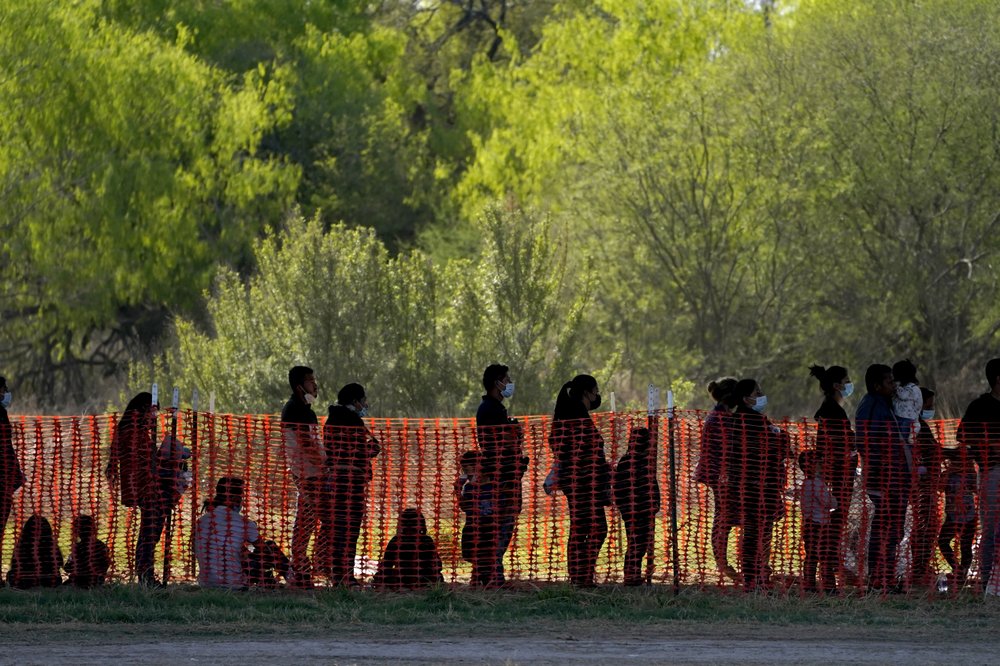
U.S. Senator Katie Britt announced on Thursday that she joined Sens. Chuck Grassley, Tommy Tuberville, and six of their Republican colleagues in reintroducing the Immigration Parole Reform Act of 2023, limiting the executive branch’s flexibility in choosing to offer immigration parole. “There is no doubt that there is an unprecedented humanitarian and national security crisis at the border, and it’s devastating families and communities across America,” said Sen. Britt. “In addition to the Biden Administration’s weak border agenda, the President’s continued abuse of our immigration system is only compounding the problem. The chaotic combination of lawless catch-and-release and expansive parole practices must end.” Senator Britt is the Ranking member of the Homeland Security subcommittee of the Senate Committee on Appropriations, “The executive branch’s abuse of immigration parole is unacceptable and totally out of line with congressional intent,” said Sen. Grassley. “I’m proud to lead the fight to curb the abuse of immigration parole and restore order to our immigration system.” “The Biden administration is using dangerous loopholes to let more illegal immigrants into the country,” said Sen. Tuberville. “Giving parole to hundreds of thousands of illegal immigrants artificially decreases the number of apprehensions at the border and instead allows them right into the country. The American people are smarter than President [Joe] Biden thinks and can see through this abuse of power. I am proud to join this legislation that clarifies executive parole authority to ensure the Department of Homeland Security enforces our immigration laws. We shouldn’t have to pass a law requiring DHS to do its job, but I’m committed to doing what it takes to secure our southern border and hold our leaders accountable.” Immigration parole was first established in 1952. It allows the executive branch to temporarily grant individuals entry into the United States on a case-by-case basis for urgent humanitarian reasons or significant public benefit. Sen. Britt and her colleagues said that several presidential administrations have abused this authority to admit entire categories of individuals in circumvention of congressionally-established pathways to allow foreign nationals to enter the United States. Some of these parole programs were created even after Congress repeatedly rejected or failed to consider and enact legislative proposals that would have created an immigration pathway for those covered by the programs. This bill would make several reforms to ensure the executive branch complies with the original, long-standing congressional intent for the immigration parole authority. It would, among other changes, clarify that parole may not be granted according to criteria that describes entire categories of potential parolees and very clearly define what qualifies as an “urgent humanitarian reason” or “significant public benefit.” It would also provide clarity on the timing and extension of immigration parole, among other reforms. Sens. Britt, Grassley, and Tuberville were joined by Sens. Tom Cotton, Bill Cassidy, J.D. Vance, James Lankford, Mike Lee, and Joni Ernst in cosponsoring this legislation. Britt was elected to the Senate in her first run for public office. She is an attorney, former President and CEO of the Business Council of Alabama (BCA), and former Chief of Staff for former U.S. Sen. Richard Shelby. She and her husband, Wesley, live in Montgomery with their children. To connect with the author of this story or to comment, email brandonmreporter@gmail.com.
Tommy Tuberville to be Ranking Member of Senate Agriculture Rural Development and Energy Subcommittee
On Friday, U.S. Senator Tommy Tuberville announced that he will serve as the Ranking Member of the Rural Development and Energy Subcommittee on the U.S. Senate Committee on Agriculture, Nutrition, and Forestry. As the lead Republican on this subcommittee, Senator Tuberville will be able to build on his work to strengthen Alabama’s rural communities and expand access to broadband. “As Alabama’s voice on the Senate Agriculture Committee, I’m honored to be the leading Republican on the Rural Development and Energy Subcommittee, where I will keep working to strengthen the communities that are home to our farms and production facilities,” Tuberville stated. As we draft the 2023 Farm Bill, I look forward to championing resources like broadband, energy, and water programs so that our rural areas are well-equipped to support Alabama’s diverse agriculture industry and our national food security.” Tuberville was also appointed to serve on two other subcommittees that are crucial to Alabama farm families: Commodities, Risk Management, and Trade, and Food and Nutrition, Specialty Crops, Organics, and Research. “The past few years have shown us the importance of food security interests to our national security,” Tuberville said. “People across America depend on Alabama’s farmers and producers to ensure they can put food on the table and provide for their families. We help lead the way in many areas, such as catfish, peanuts, and broiler chicken production, and the best way to continue this is through supporting our family farms and rich agriculture diversity. These subcommittees will best position me to continue advocating for Alabama’s agricultural interests so that our state remains a leader in national food production for generations to come.” The Senate Subcommittee on Rural Development and Energy is tasked with overseeing the many programs in USDA’s Rural Development mission area, including housing, electric and water utilities, loans, and renewable energy. As Ranking Member on this subcommittee, Sen. Tuberville will be positioned to work on these Alabama-specific issues: Tuberville’s position on this subcommittee will enable him to work on issues specific to Alabama’s agriculture industry, including: The Senate Subcommittee on Nutrition, Specialty Crops, and Agricultural Research is tasked with overseeing programs regarding food and nutrition assistance, school meals, specialty crops, and research. Tuberville’s position on this subcommittee will enable him to work on issues specific to Alabama’s agriculture industry, including: Tuberville is a member of the Senate Armed Services, Agriculture, Veterans Affairs, and HELP Committees. Tuberville was elected in 2020, defeating incumbent Sen. Doug Jones in a landslide. Prior to running for the Senate, his first elected office, Tuberville spent forty years as a teacher and a coach. His coaching career included tenures as the head football coach at Ole Miss, Auburn, Texas Tech, and Cincinnati. To connect with the author of this story or to comment, email brandonmreporter@gmail.com.
Tommy Tuberville says objects shot down last week are ‘no threat’
On Wednesday, U.S. Senator Tommy Tuberville told reporters in his weekly press call that “there is no threat” from three unidentified flying objects that were shot down over the United States and Canada in the last week. Tuberville said that defense and intelligence officials still are not sure what it was that U.S. Air Force F22 fighter jets shot down. “If they know they are not telling us,” Tuberville said. “We have been in classified briefings.” The unidentified flying objects are believed to be balloons of some type. Tuberville said that the objects may be “weather-related.” The White House has said that the objects are not extra-terrestrial in origin. Tuberville explained that after the giant Chinese intelligence balloon two weeks ago, air defense forces opened up their radar and detection systems so that defense forces are better able to detect things like balloons so in the past, objects like the objects shot down may not have even been detectable previously. “We have opened up our radars more and are picking up more of them,” Tuberville said. “I am still perplexed that we shot something down, and we still don’t know what it is.” “Our phone is ringing off the wall on this,” Tuberville said about constituents phoning his offices concerned about the objects presenting an immediate danger. Tuberville said that the Chinese intelligence balloon flew over Hawaii, Alaska, Montana, and much of the United States before being shot down. “That should never have been allowed to enter our space,” Tuberville said, given its size and other factors. President Joe Biden has suggested that the U.S. will go to war with China if China attacks Taiwan. “He never should have said that,” Tuberville said of the President’s comments, but affirmed that an attack on Taiwan should result in U.S. action. “We need to defend Taiwan,” Tuberville said. “The problem is we are not ready for China.” “We have been fighting land wars for twenty years,” Tuberville said. He argued that war with China over the island of Taiwan, “will be fought over water.” Having sufficient air and naval capabilities to keep the airspace and sea lanes open to Taiwan so the country can keep fighting in an all-out invasion by the People’s Republic of China would be problematic at best for the United States. This is something that Congress is considering and one reason why there have been robust spending increases for defense in the 2023 National Defense Authorization Act (NDAA). Tuberville serves on the Senate Armed Services Committee that is tasked with oversight of the armed forces and the preparing of the annual NDAA. “The importance of passing a strong NDAA cannot be overstated,” said Sen. Tuberville. “To maintain our role as the world’s leading superpower, we must also maintain the world’s most modern, prepared, and lethal military. Bolstering our force and military capabilities ensures we are ready to defeat any enemy at any time. I am proud of my work on the Senate Armed Services Committee to draft legislation that gives the military the tools it needs to keep our country safe.” Tuberville was elected to the Senate in 2020. To connect with the author of this story or to comment, email brandonmreporter@gmail.com.
Tommy Tuberville welcomes Nikki Haley to 2024 presidential race
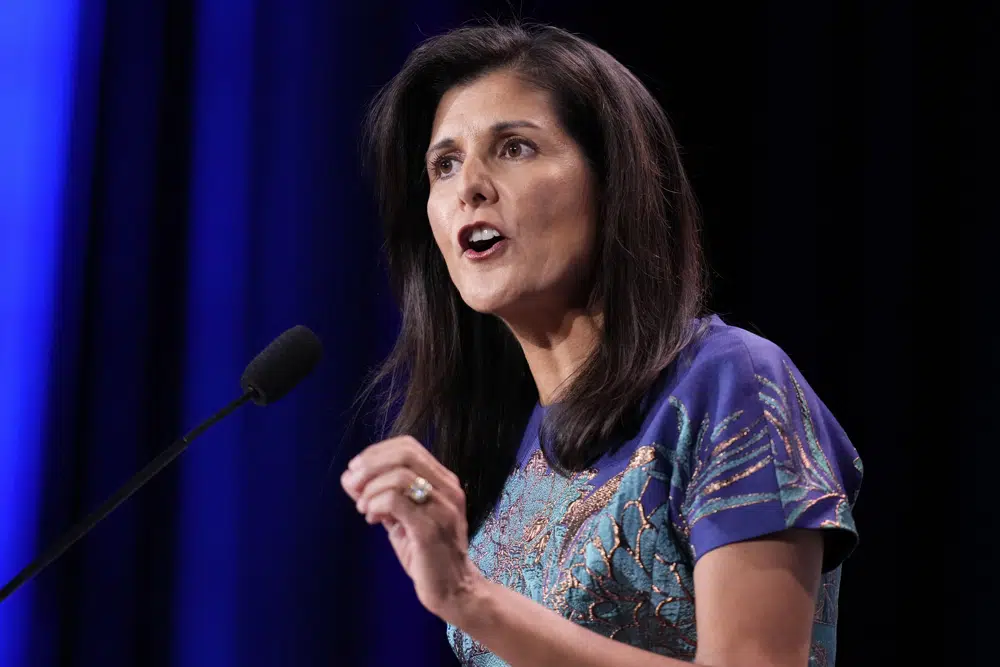
On Monday, former South Carolina Governor and UN ambassador Nikki Haley announced her candidacy for the Republican nomination for President of the United States. U.S. Senator Tommy Tuberville, who has already announced his endorsement of former President Donald Trump, welcomed Haley’s entrance into the 2024 presidential race. Tuberville told reporters that she would be a “great candidate.” Tuberville favors a large GOP primary field and said that he has recently spoken with Trump and told the former President that he hopes “they all get in.” “He needs the challenge as well as anybody,” Tuberville said. “They need to work for it. They need to fight for it.” In the 2020 election, President Trump endorsed Tuberville in his Republican primary battle for U.S. Senate with former Trump Attorney General Sen. Jeff Sessions. Tuberville had spent forty years as a teacher and coach – including stints as head football coach at Ole Miss, Auburn, Texas Tech, and Cincinnati – prior to that 2020 first run for public office. At this point, the only announced GOP candidates for the Republican nomination for 2024 are Haley and Trump, but that is expected to change quickly. Florida Gov. Ron DeSantis, former Vice President Mike Pence, and former Secretary of State Mike Pompeo are widely believed to be seriously looking at entering the race. According to the Hill, former Arkansas Gov. Asa Hutchinson, New Hampshire Gov. John Sununu, former Maryland Gov. Larry Hogan, U.S. Sen. Rick Scott, and Virginia Gov. Glenn Youngkin are also possible presidential candidates. GOP Senators who oppose a third Trump presidential run fear that a crowded GOP primary field makes it easier for Trump to emerge as the eventual GOP nominee. “Look, we were all concerned with the fact that we had 15 or 16 or 17 individuals vying for attention in the last one,” said Sen. Mike Rounds (South Dakota) told the Hill referring to the 2016 election. “We really don’t want to see that happen again. We just don’t.” U.S. Sen. Katie Britt was endorsed by Trump in her 2022 GOP primary battle with then-Congressman Mo Brooks and war veteran and defense contractor Mike Durant. Britt, however, cannot make an endorsement in the Presidential primary because she is serving on the national Republican steering committee. Trump faced a crowded field in 2016 that included U.S. Sens. Ted Cruz, Marco Rubio, Rand Paul, Rick Santorum, and Lindsey Graham, as well as former Florida Gov. Jeb Bush, former Ohio Governor John Kasich, former Arkansas Gov. Mike Huckabee, then-New Jersey Gov. Chris Christie, businesswoman Carly Fiorina, former Virginia Gov. Mike Gilmore, former New York Gov. George Pataki, then Louisiana Gov. Bobby Jindal, and Dr. Ben Carson. Trump won the 2016 Alabama Republican Primary despite the crowded field. Trump went on to win the Republican nomination and then beat former Secretary of State Hillary Clinton in the general election. Trump was unseated by former Vice President Joe Biden in 2020. Biden appears to be virtually unopposed at this point for the 2024 Democratic nomination for President. The 2024 Alabama Republican Primary is only 55 weeks away on March 5. DeSantis will speak to the Alabama Republican Party in Birmingham on March 9. To connect with the author of this story, or to comment, email brandonmreporter@gmail.com.
