
Trade issues expose the limits of Donald Trump-Shinzo Abe ‘bromance’
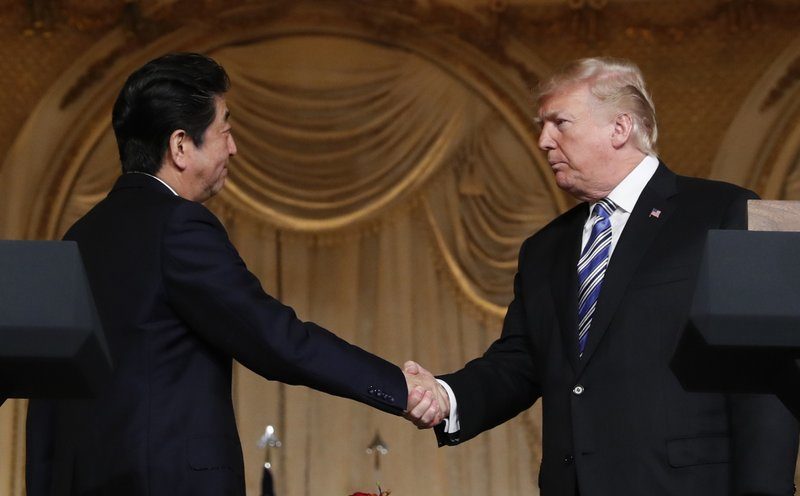
Japanese Prime Minister Shinzo Abe courted the new American president with a golden driver not long after Donald Trump won the White House. He’s met with the billionaire businessman more than any other world leader, and he is Trump’s second-most frequent caller. Yet the “bromance” between Trump and Abe has its limits. Trump appeared to be successful Tuesday in reassuring Abe that he would take Japan’s concerns to heart during his upcoming meeting with North Korea’s Kim Jong Un. But Wednesday brought public disagreements, as Trump spurned his guest’s top economic and trade priorities. Principal among them: allowing Japan an exemption from new U.S. steel and aluminum tariffs and persuading Trump to re-join the Trans-Pacific Partnership trade deal. During a roughly 40-minute joint news conference Wednesday evening, Abe tried to put on a good face, emphasizing their close relationship and their areas of accord on North Korea policy. He effusively thanked Trump for pledging to raise the issue of Japanese abductees held by North Korea in his meeting with Kim. But when pressed on the economic disagreements, Abe repeatedly consulted notes as he tried to sidestep questions on the contentious issues, instead returning to Trump’s favored call for developing a “reciprocal” trade relationship with the U.S. It marked a stark departure from Abe’s pre-summit hopes of coaxing the U.S. back into the TPP. And Japan remains the only major U.S. ally not to be exempted from the tariffs announced last month. World leaders have quickly learned that flattery is an easy way into Trump’s graces, and throughout the two-day summit, Abe appeared keen to praise the president at every opportunity. He applauded Trump’s courage for agreeing to meet with Kim and marveled at Mar-a-Lago, calling Trump’s estate “a gorgeous place.” Abe drew laughs before a dinner with the joint delegations in a baroque dining room when he recounted the strength of their relationship over food, which included a cheeseburger on the golf course and a working luncheon Wednesday. “We already had two lunches in the same day,” he said. “And now we are going to have our dinner.” “Prime Minister Abe and I have spent a lot of time today, and we really spent a lot of time since I got elected. And right from the beginning we hit it off. The relationship is a very good one,” Trump said as the pair sat down for the working lunch on economic issues. That was the session Trump suggested he was most looking forward to. “I love the world of finance and the world of economics, and probably, it’s where I do the best. But we will be able to work things out,” he said. Except it didn’t turn out that way. The session on trade and economic issues quickly turned tense and tough, according to two U.S. officials, as the leaders found themselves at an impasse on the tariffs. And Trump refused to budge on his opposition to the TPP, from which he withdrew the U.S. last year. The officials spoke on condition of anonymity to describe the private talks. Still, several officials said publicly the personal connection between the leaders is robust enough to withstand the tensions. The summit was hastily put together after Trump accepted Kim’s invitation for a meeting in the next two months, and as the president prepared to implement the metals tariffs. Trump said the invitation to his private club was a sign of how much he liked Abe. “Many of the world’s great leaders request to come to Mar-a-Lago and Palm Beach. They like it; I like it. We’re comfortable. We have great relationships,’” the president said, boosting the private club, which collects dues that enrich Trump. Trump’s most frequent caller is the president of France, Emmanuel Macron. Republished with the permission of the Associated Press.
Once critical of global deals, Donald Trump slow to pull out of any
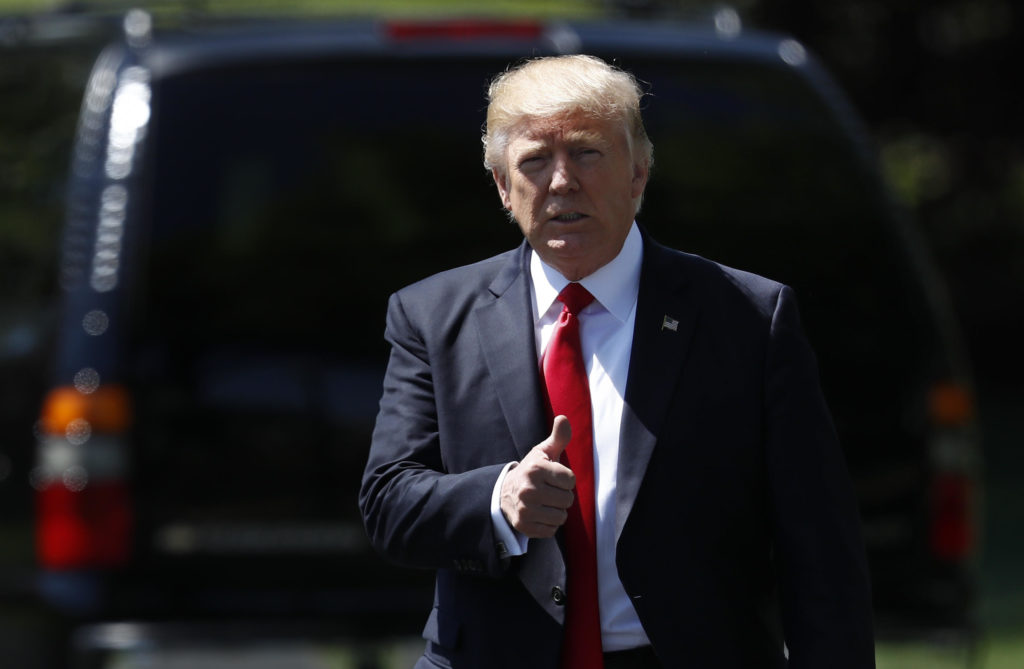
The “America First” president who vowed to extricate America from onerous overseas commitments appears to be warming up to the view that when it comes to global agreements, a deal’s a deal. From NAFTA to the Iran nuclear agreement to the Paris climate accord, President Donald Trump‘s campaign rhetoric is colliding with the reality of governing. Despite repeated pledges to rip up, renegotiate or otherwise alter them, the U.S. has yet to withdraw from any of these economic, environmental or national security deals, as Trump’s past criticism turns to tacit embrace of several key elements of U.S. foreign policy. The administration says it is reviewing these accords and could still pull out of them. A day after certifying Iran’s compliance with the nuclear deal, Secretary of State Rex Tillerson attacked the accord and listed examples of Iran’s bad behavior. His tone suggested that even if Iran is fulfilling the letter of its nuclear commitments, the deal remains on unsure footing. Yet with one exception — an Asia-Pacific trade deal that already had stalled in Congress — Trump’s administration quietly has laid the groundwork to honor the international architecture of deals it has inherited. It’s a sharp shift from the days when Trump was declaring the end of a global-minded America that negotiates away its interests and subsidizes foreigners’ security and prosperity. Trump had called the Iran deal the “worst” ever, and claimed climate change was a hoax. But in place of action, the Trump administration is only reviewing these agreements, as it is doing with much of American foreign policy. Douglas Brinkley, a presidential historian at Rice University, said Trump may be allowing himself to argue in the future that existing deals can be improved without being totally discarded. “That allows him to tell his base that he’s getting a better deal than Bush or Obama got, and yet reassure these institutions that it’s really all being done with a nod and a wink, that Trump doesn’t mean what he says,” Brinkley said. So far, there’s been no major revolt from Trump supporters, despite their expectation he would be an agent of disruption. This week’s reaffirmations of the status quo came via Tillerson’s certification of Iran upholding its nuclear deal obligations and the administration delaying a decision on whether to withdraw from the Paris climate accord. The president had previously spoken about dismantling or withdrawing from both agreements as part of his vision, explained in his inaugural address, that “every decision on trade, on taxes, on immigration, on foreign affairs will be made to benefit American workers and American families.” The Iran certification, made 90 minutes before a midnight Tuesday deadline, means Tehran will continue to enjoy relief from U.S. nuclear sanctions. Among the anti-deal crowd Trump wooed in his presidential bid, the administration’s decision is fueling concerns that Trump may let the 2015 accord stand. Tillerson on Wednesday sought to head off any criticism that the administration was being easy on Iran, describing a broad administration review of Iran policy that includes the nuclear deal and examines if sanctions relief serves U.S. interests. The seven-nation nuclear deal, he said, “fails to achieve the objective of a non-nuclear Iran” and “only delays their goal of becoming a nuclear state.” On the climate agreement, the White House postponed a meeting Tuesday where top aides were to have hashed out differences on what to do about the non-binding international deal forged in Paris in December 2015. The agreement allowed rich and poor countries to set their own goals to reduce carbon dioxide and went into effect last November, after the U.S., China and other countries ratified it. Not all of Trump’s advisers share his skeptical views on climate change — or the Paris pact. Trump’s position on trade deals also has evolved. He had promised to jettison the North American Free Trade Agreement with Mexico and Canada unless he could substantially renegotiate it in America’s favor, blaming NAFTA for devastating the U.S. manufacturing industry by incentivizing the use of cheap labor in Mexico. Now his administration is only focused on marginal changes that would preserve much of the existing agreement, according to draft guidelines that Trump’s trade envoy sent to Congress. The proposal included a controversial provision that lets companies challenge national trade laws through private tribunals. Trump has followed through with a pledge to pull the U.S. out of the Trans-Pacific Partnership, a sweeping free trade deal President Barack Obama negotiated. The agreement was effectively dead before Trump took office after Congress refused to ratify it. Even Trump’s Democratic opponent in the presidential race, Hillary Clinton, opposed the accord. But on NATO, Trump has completely backed off his assertions that the treaty organization is “obsolete.” His Cabinet members have fanned out to foreign capitals to show America’s support for the alliance and his administration now describes the 28-nation body as a pillar of Western security. Republished with permission of The Associated Press.
Repeal and replace — The end of traditional conservatism
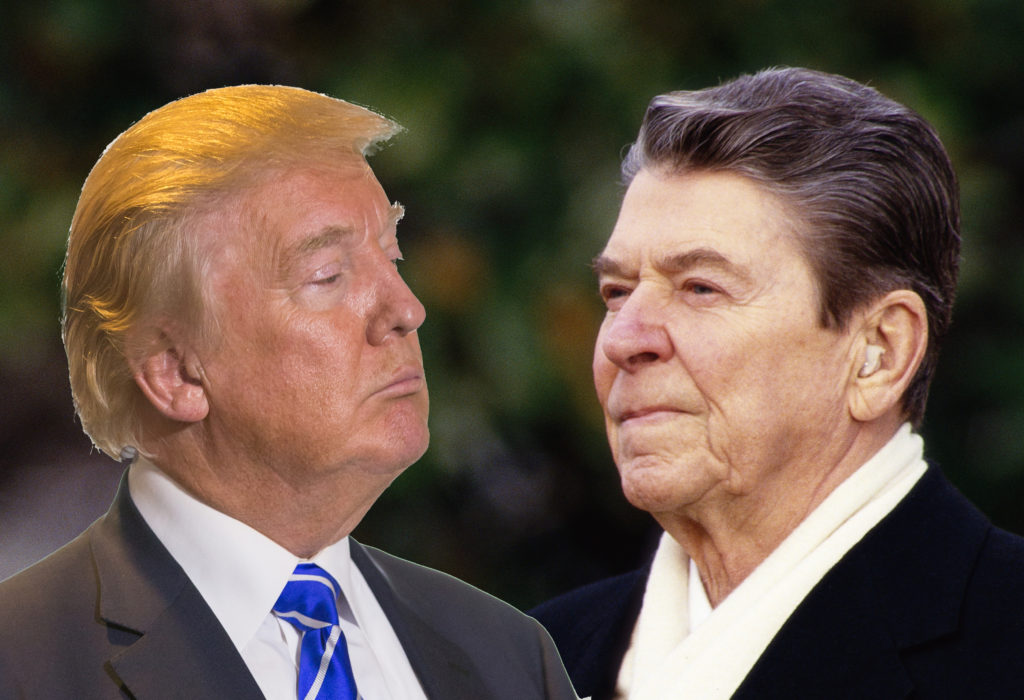
As a lifelong Republican and a former Fellow at the conservative Heritage Foundation, I have always preferred voting for the Republican and conservative candidate. Preferably, the candidate is both Republican and conservative, although that is not always the case. For only the second time in my life, I did not vote for the Republican presidential nominee: I found him neither Republican nor conservative. I know there are different strands of conservatism: classical, neo-cons, libertarians, religious and economic conservatives. I found Donald Trump to be none of the above. Trump did appeal to conservatives by supporting regulatory reform, lower taxes, unleashing the private sector and rolling back the administrative state. At the same time, Trump supported existing entitlements like Social Security and Medicare, which he called untouchable, and backed new entitlements like a paid family leave program. Until the election of Trump, Republicans venerated Ronald Reagan and his brand of conservatism. This included support for free trade, a centerpiece of conservative economic policy. Trump has denounced free trade by withdrawing from the Trans-Pacific Partnership which conservatives uniformly backed. Trump also plans to end the North American Free Trade Agreement (NAFTA) which Republicans helped to pass. Another litmus test for modern conservatism was for America to play a major role in world affairs. Reagan addressed the first Conservative Political Action Committee (CPAC) meeting in 1974 and argued that America “cannot escape our destiny, nor should we try to do so.” Reagan cited Pope Pius XII’s remarks after World War II that “Into the hands of America, God has placed the destinies of mankind.” Under Trump, American First has become the guiding philosophy. Republicans and conservatives have generally opposed entitlements and big government. Trump has made Social Security and Medicare untouchable, even though most conservatives believe these programs are not sustainable given the demographic changes in American society. Trump has called for a $1 trillion infrastructure bill, in addition to an expansive family leave policy. How do you pay for these entitlements and increase defense spending while cutting taxes? Shortly after being elected president, Trump helped negotiate a deal with Carrier in Indiana that promised government benefits to Carrier in exchange for keeping jobs in Indiana. That deal struck many conservatives as another example of “crony capitalism.” The government picks and chooses winners and losers instead of letting market forces work their will. Where most presidents have had a shaky relationship with the press, Trump is the first to call the press “enemies of the American public.” Where Reagan called the Soviets the “evil empire,” Trump has praised Vladimir Putin and asserted the moral equivalency between American and Soviet policy. Trump clearly has flip-flopped back and forth between the Democratic and Republican Party, but has actually spent more time as a Democrat. He only registered as a Republican a couple of years before announcing his candidacy. Trump may or not be a lifetime member of the GOP, but has he held consistent conservative values? Let’s look at his own words and actions. At the 2016 CPAC meeting, delegates threatened to walk out if Trump appeared. He was viewed as a false prophet of conservatism and he eventually withdrew as a speaker. At the 2017 CPAC meeting, Trump was hailed as the conquering hero. A full 86 percent of the delegates approved of Trump’s job performance and 80 percent believed Trump was “realigning the conservative movement.” As presidential counselor Kellyanne Conway observed, “well, I think by tomorrow this might be TPAC.” During his 48-minute address to the 2017 CPAC delegates, Trump no mention of Reagan, who has been the face of the modern conservative movement for four decades. Trump made no mention of “liberty” or the “constitution.” Trump made no reference to keeping government small and limited, and only once uttered the word “conservative,” which seemed odd for an audience of conservatives. Trump said: “Our victory was a victory. . . for conservative values.” The one common thread between Reagan and Trump was their appeal to working-class Americans. In 1977, Reagan told CPAC: “The New Republican Party I am speaking about is going to have room for the man and the woman in the factories, for the farmer, for the cop on the beat.” In his 2017 CPAC address, Trump said: “The GOP will be, from now on, the Party of the American worker. … We will not answer to donors or lobbyists or special interests.” (Although, being a billionaire will be considered an asset for all cabinet nominees.) One congressional staffer, after hearing Trump’s CPAC speech, called him “a moderate disguised as a conservative.” Conservative radio host John Ziegler described Trump’s CPAC speech as having the tone “it was written from a liberal perspective, in that greater government involvement was the foundational answer for nearly every problem.” Another delegate described Trump as “a fairly liberal conservative,” whatever that may mean. If CPAC is any indication, Trump is reshaping the conservative movement at breathtaking speed. Ideology is conforming to an individual, and not vice versa. “Repeal and Replace” was the centerpiece of Trumpism. We all thought he was referring to “Obamacare.” Now we know that “repeal and replace” referred to conservatism in America. Traditional conservative values have been abandoned and replaced by whatever Trump happens to say today. ___ Darryl Paulson is Emeritus Professor of Government at the University of South Florida in St. Petersburg.
Donald Trump moves to pull US out of big Asia trade deal
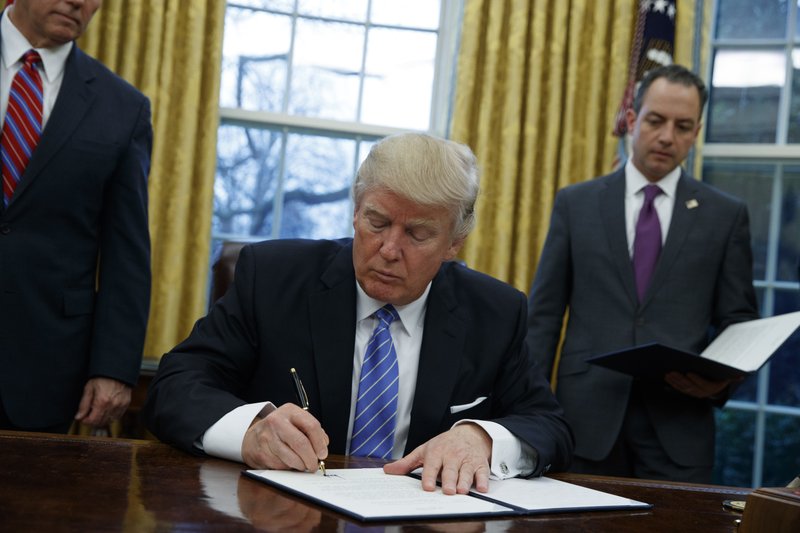
Charting a new American course abroad, President Donald Trump withdrew the United States from the sweeping Trans-Pacific Partnership on Monday, using one of his first actions in office to reject a centerpiece of Barack Obama’s attempts to counter China and deepen U.S. ties in Asia. Trump’s move on trade aimed to fulfill a central campaign promise even as he appeared to be fixated on re-litigating the 2016 election. In a meeting with congressional leaders on Monday night, Trump claimed that 3 to 5 million immigrants living in the U.S. illegally voted in the election, costing him the popular vote, according to a Democratic aide familiar with the exchange who spoke on condition of anonymity to discuss the private meeting. There has been no evidence to back up that claim. Trump’s assertions came in a White House meeting with Democratic and Republican congressional leaders. They were similar to claims he made on Twitter in late November that he had won the electoral college in a “landslide” and “won the popular vote if you deduct the millions of people who voted illegally.” Hillary Clinton won the popular vote by nearly 2.9 million votes despite losing the electoral college. Trump aimed to make jobs and the economy the focal point of his first few days in office. He has repeatedly cast the 12-nation trade pact — which was eagerly sought by U.S. allies in Asia — as detrimental to American businesses. “Great thing for the American worker that we just did,” Trump said in brief remarks as he signed a notice in the Oval Office. The Obama administration spent years negotiating the Pacific Rim pact, though the mood in Washington on trade soured over time. Obama never sent the accord to Congress for ratification, making Trump’s actions Monday largely symbolic. For Trump, the start of his first full week in office amounted to a reset after a tumultuous weekend dominated by his and his spokesman’s false statements about inauguration crowds and their vigorous complaints about media coverage of the celebrations. While Trump’s advisers have long accepted his tendency to become preoccupied by seemingly insignificant issues, some privately conceded that his focus on inauguration crowds was unhelpful on the opening weekend of his presidency. On Monday, the new president tried to regroup. He spent the day bounding from one ornate room of the White House to another for meetings, often ordering aides to summon journalists from their West Wing workspace at a moment’s notice for unscheduled statements and photo opportunities. In addition to his executive action on TPP, Trump signed memorandums freezing most federal government hiring — though he noted an exception for the military — and reinstating a ban on providing federal money to international groups that perform abortions or provide information on the option. The regulation, known as the “Mexico City Policy,” has been a political volleyball, instituted by Republican administrations and rescinded by Democratic ones since 1984. The actions were among the long list of steps candidate Trump pledged to take on his opening day as president. But other “Day One” promises were going unfulfilled Monday, including plans to propose a constitutional amendment imposing term limits on members of Congress and terminating Obama’s executive actions deferring deportations for some people living in the U.S. illegally. Spokesman Sean Spicer said Monday that Trump intended to follow through on his proposals, though on a more extended timeframe to ensure maximum attention for each move. Yet he appeared to suggest that Trump would not move quickly — or perhaps at all — to reinstate deportations for young immigrants protected from deportation under the Obama administration. Spicer said Trump’s focus would be on people in the U.S. illegally who have criminal records or who pose a threat. “That’s where the priority’s going to be, and then we’re going to continue to work through the entire number of folks that are here illegally,” he said. Spicer — making his first appearance at the briefing room podium since his angry tirade against the press on Saturday — also appeared to back away from Trump’s assertion that he could move the U.S. Embassy in Israel from Tel Aviv to Jerusalem. While presidential candidates have long made similar pledges, all have abandoned the idea over concerns that following through would further inflame tensions in the volatile region. “We are at the early stages in this decision-making process,” Spicer said of the possible embassy relocation. “If it was already a decision, then we wouldn’t be going through a process.” Spicer struck a far more conciliatory tone with reporters in Monday’s briefing and attempted to make light of his weekend appearance, which included multiple inaccurate statements about the inauguration. He conceded that he was relying on incomplete information when he used public transportation figures to boast about the crowd size, but stood by his unverifiable claim that Trump’s swearing-in was the most watched in history, counting internet views as well as TV. The crowd actually in attendance was clearly smaller than for Obama’s 2009 inauguration, though Trump denied that fact. Monday was mostly a business day for Trump. The new president, who prefers to solicit opinions from numerous people before making decisions, huddled with corporate leaders, including Tesla’s Elon Musk and Marillyn Hewson, and union heads. Eager to show off his new digs, Trump ended both meetings by bringing his guests in to see the Oval Office. In his discussions with executives, Trump warned that he would impose a “substantial border tax” on companies that move their manufacturing out of the United States. He reiterated his campaign pledge to lower taxes for companies that stay in the U.S., as well as for the middle class, “anywhere from 15 to 25 percent,” although he has not been clear on how he intends to make up for lost tax revenue. He said of his incentives for businesses, “All you have to do is stay.” In the evening, Trump hosted a White House reception for lawmakers from both parties and a separate private
Despite campaign to-do list, Donald Trump team coy about his plans
Donald Trump campaigned on a detailed and extensive to-do list for his first day in office. A day before his swearing-in, his team was being coy about when and how he plans to cross items off it. As he’s assembled his new government, Trump has backed off some of his promised speed, downplaying the importance of a rapid-fire approach to complex issues that may involve negotiations with Congress or foreign leaders. On others issues, he’s affirmed his plan, indicating significant policy announcements may be teed up in the first hours and days of the Trump administration. On Thursday, transition spokesman Sean Spicer said Trump would issue two executive orders on trade soon. On his Day One list, Trump said he would formally declare the United States’ intention to withdraw from the 12-nation Trans-Pacific Partnership trade deal, which he vigorously opposed during his campaign as detrimental to U.S. businesses and workers. He also promised to declare his intention to renegotiate the 23-year-old North American Free Trade Agreement or withdraw from the deal. “I think you will see those happen very shortly,” Spicer said. Other issues likely to see early action include energy, where he’s likely to undo regulations on oil drilling and coal, and cybersecurity, where he has already said he will ask for a report on the strength of the nation’s cyber defenses within 90 days of taking office. He’s also made broad promises to upend immediately President Barack Obama‘s immigration policies, although some of those vows may be difficult to keep. The president-elect has said he sees Monday as the first big workday of his administration, his effective Day One. Trump said at his first post-election news conference last week that people would “have a very good time at the inauguration” but his team planned “some pretty good signings on Monday and Tuesday and Wednesday and Thursday and Friday, and then, also the next week.” The real estate mogul is expected to sign some paperwork on Friday. He must formally nominate members of his Cabinet, in order to allow some of them to be voted on by the Senate. The transition team has also said he may sign executive orders — some logistical, others focused on his agenda — that will kick off his administration. “Specifically we’ve focused in the president-elect’s direction on a Day One, Day 100 and Day 200 action plan for keeping our word to the American people and putting the president-elect’s promises into practice,” Vice President-elect Mike Pence said during a briefing with reporters on Thursday. Pence, who chaired Trump’s transition team, added: “We are all ready to go to work. We can’t wait to get to work for the American people.” Trump’s Day One plan was an ambitious and specific list. It includes proposing a constitutional amendment to impose term limits on members of Congress, imposing a hiring freeze for federal workers, and beginning to remove immigrants who are criminals and living in the country unlawfully. The list includes “cancel every unconstitutional executive action, memorandum and order issued by President Obama.” Given Trump’s objections to many of Obama’s policies, that category could involve some dramatic changes. Among those would be cancellation of the Deferred Action for Childhood Arrivals program, or DACA, which has protected about 750,000 young immigrants from deportation. The program also offered those immigrants work permits. If he makes good on his promise to terminate the program, Trump could choose to immediately cancel the deportation protection and revoke the work permits, or he could opt to block new enrollment and allow those already approved to keep their work permits until they expire. Trump has said he plans to focus immigration enforcement efforts first on criminals, a group he said could including 2 million to 3 million people. Trump also pledged to “move criminal aliens out day one” in operations with state, local and federal authorities. That promise will be harder to keep on his first few days in office. Jurisdictions around the country objected to helping enforce federal immigration laws. He will also face a shortage of jail space. The government has enough money to keep 34,000 people in immigration jails at a time and has recently detained more than 40,000 people because of a surge of immigrants arrested at the Mexican border last year. Also on Trump’s list was labeling China a currency manipulator. But Trump said in an interview with The Wall Street Journal last week that he no longer planned to do that on the first day. “I would talk to them first,” he said. If Trump opts for a slower pace, it may be because he is still setting up his administration. He is awaiting confirmation of Cabinet choices and staffing federal agencies and has left vital spots such as the chairman of the Council of Economic Advisers unfilled so far. Instead of unveiling an updated series of policies, Trump devoted part of his transition to meeting with prominent CEOs and touting jobs announcements by their companies. His team has also spent weeks reviewing Obama’s executive actions to determine which ones can be eliminated quickly. Trump’s team also faces the daunting process of naming a Supreme Court justice to fill the vacancy left by the late Justice Antonin Scalia. Trump has said he will announce a nominee in about two weeks. Trump’s promises of swift changes have been cheered on by congressional Republicans, who have seen their agenda blocked by Obama for the past eight years. Pence and Trump aides have shared some details for the first few days with House leadership and told lawmakers to expect the incoming president to move quickly to undo Obama’s legacy. “There is a call of history and that calls us to put America back on the rails again,” said Rep. Steve King, R-Iowa, “and we’ve now been delivered the tools to do this by the voters.” Republished with permission of The Associated Press.
A look at how Donald Trump might shake things up in Asia
Donald Trump has offered views on U.S. relations with Asia that could indicate radical shifts in long-standing policy toward the region. From opposing free trade agreements to confronting China and questioning Japan-South Korea alliances, he appears set to be charting a course far different from previous administrations. Yet, in other areas, including North Korea, India and Pakistan, Trump appears ready to carry forward well-established U.S. policy. As Trump prepares to be sworn-in as president on Friday, here is a look at some of the stand-out issues and how developments might play out: ___ TRADE Trump says he plans to scrap the 12-nation trade pact known as the Trans Pacific Partnership agreement, or TPP. The pact was the centerpiece of the Obama administration’s outreach policy to America’s Asian partners known as “the pivot,” which also involves a greater military commitment to the region. Obama said the TPP would allow the U.S. to impose higher labor, environmental and human-rights standards, as well as give U.S. businesses access to some of the fastest-growing economies. The deal would have slashed 18,000 taxes that other countries impose on American goods and services, but Congress failed to act amid skepticism from both Republicans and Democrats. Trump’s opposition to free-trade agreements has fueled fears of protectionism and puts him at odds not only with U.S. trading partners but also with many in the Republican Party. Killing the TPP may open the way for other regional free-trade initiatives, including those pushed by rival China. “With the U.S. withdrawing from TPP, Japan will have to redesign its external economic policy,” said Harukata Takenaka, politics professor at National Graduate Institute for Policy Studies. Other options “may not be easy,” Takenaka said. ___ CHINA Trump raised China in speech after speech during his campaign, at times accusing the country of ripping America off in trade and threatening a 45 percent tariff on all Chinese imports. Things turned far more serious after his election win when he took a phone call from the president of self-governing Taiwan, upending four decades of diplomatic protocol barring such direct contacts. Critics accused him of ignoring the “one-China policy,” long considered unassailable in China-U.S. relations, to which Trump responded by questioning why the U.S. should be bound by such an arrangement without economic incentives. He again touched on the issue in an interview with The Wall Street Journal published Friday, saying “everything is under negotiation, including ‘one China.’” While the Chinese government’s response was muted, the official China Daily newspaper said he was “playing with fire.” Trump has also criticized the Chinese military’s island-building program in the South China Sea, and accused it of blocking U.S. imports through high taxes and manipulating its currency to the detriment of American exports. ___ ALLIANCES WITH JAPAN AND SOUTH KOREA Trump raised eyebrows during the campaign when he appeared to question the inviolability of long-standing U.S. military alliances with Japan and South Korea, seen as bulwarks against North Korea’s military threats and China’s push for regional dominance. The two were included in a list of countries that Trump said he would be “respectfully asking … to pay more for the tremendous security we provide them.” During the campaign, Trump suggested Japan and South Korea should obtain nuclear weapons so the U.S. would no longer be burdened with the costs of defending them, a disquieting notion in many Asian capitals. But after Trump’s election win, Japan’s Shinzo Abe became the first foreign leader to meet with him, sitting down in Trump Tower with the business mogul and his daughter, Ivanka. Japan is concerned about how spill-over from China-U.S. conflicts might affect its economy and foreign relations, possibly compelling it to play a larger role in regional security, said Harukata Takenaka, politics professor at National Graduate Institute for Policy Studies. “Trump measures would be the top priority for Prime Minister Abe this year. The biggest question is that Trump is unpredictable,” he said. ___ NORTH KOREA’S NUCLEAR THREAT Trump’s approach to North Korea probably offers the least divergence from previous administrations, but he faces stark choices on countering North Korean leader Kim Jong Un‘s missile threat. After Kim, announced in his annual New Year’s address that the country had reached the “final stages” of developing an intercontinental ballistic missile, Trump responded by Twitter: “North Korea just stated that it is in the final stages of developing a nuclear weapon capable of reaching parts of the U.S. It won’t happen!” Trump has not said how his approach to the North might differ from Barack Obama‘s, although his campaign’s position paper talked of more “modern destroyers to counter the ballistic missile threat from Iran and North Korea.” That would appear to indicate continued support for deploying the advanced Terminal High-Altitude Area Defense, or THAAD, anti-missile system in South Korea, despite Chinese and Russian objections. Trump appears to be a firm believer that North Korea could be reined-in if only its sole significant ally China would tighten the screws. ___ INDIA AND PAKISTAN During the campaign, Trump was largely positive toward both India and Pakistan, even while he piled negative rhetoric on China and other nations. However, his threat to ban Muslims from entering the U.S. has raised accusations of Islamophobia. In the days after his win, Trump appeared to follow in the well-trodden path of seeking a balance between the nuclear rivals — albeit in his unorthodox style. A phone call between Trump and Pakistan’s prime minister was remarkable mainly for the effusive praise he reportedly lavished on the struggling state. Pakistan is a U.S. ally in the battle against Islamic extremism but is also close to U.S. rival in Asia, China. In its readout of that call, Pakistan said Trump described the country as “amazing” and expressed a desire to visit — something President Barack Obama did not do. India’s national security adviser followed the Pakistan exchange with a low-key visit to Washington to meet with a senior Trump aide in a sign of New Delhi’s desire to forge close ties
Analysis: In debate, Hillary Clinton was prepared, Donald Trump was Trump

She was at her best. He was not at his worst. Weeks of Super Bowl-style hype aside, Monday night’s 90 minutes of heated clashes between Hillary Clinton and Donald Trump probably didn’t shove many undecided voters off the fence. If Clinton aimed to push her famously unpredictable opponent into a made-for-sharing disqualifying moment, she didn’t quite get there. If Trump set out to show America — particularly women — he’s completed the transformation from cartoonish pop culture staple to leader worthy of the Oval Office, he still has a way to go. But in a debate full of feisty exchanges and a personal scuffle or two, the candidates demonstrated clearly how they’ve gotten this far. Clinton was polished, prepared and proud of it —a Hermione Granger at a podium. She came with sharp and practiced answers, most notably a newly direct one for the questions about her private email server that has dogged her candidacy for months. She grinned broadly and calmly, even when under fire, and she mocked but only gently the man she called “Donald.” “I think Donald just criticized me for preparing for this debate. And, yes, I did,” Clinton said. “And you know what else I prepared for? I prepared to be president. And I think that’s a good thing.” Trump addressed his opponent as “Secretary Clinton” — even asking for her approval for the term — but by the end he called her “Hillary.” The care he took with her title was a reminder of the voters he was aiming to win over. Women, particularly college-educated white women, are the key to Trump turning his current burst of momentum into a sustained surge that lasts until Election Day. The 70-year-old businessman has struggled to persuade women, even those with doubts about the first woman president, to get behind his bid, thanks in part to his performances in past debates, which led to cringe-worthy challenges to moderator Megyn Kelly or opponent Carly Fiorina. Trump avoided another jaw-dropping, decorum-busting moment on Monday night, but it was hard to see that he did much to soften his image. He repeatedly and aggressively interrupted Clinton to rebut or deny her charges, at times talking over her or interrupting. When asked by moderator Lester Holt to explain a previous comment that Clinton doesn’t have a “presidential look,” Trump simply repeated the comment. “She doesn’t have the look. She doesn’t have the stamina,” he said. “To be president of this country, you need tremendous stamina.” Clinton came prepared to pounce: “Well, as soon as he travels to 112 countries and negotiates a peace deal, a cease-fire, a release of dissidents, an opening of new opportunities in nations around the world, or even spends 11 hours testifying in front of a congressional committee, he can talk to me about stamina.” As the debate went on, Clinton seemed to gain confidence and a better sense of timing. When Trump concluded a long and tangled defense of his years-long campaign to challenge President Barack Obama’s citizenship, she paused for a moment to let Trump’s words sink in. “Well, just listen to what you heard,” she said. Trump, too, had his moments. He delivered a searing indictment of Clinton as just another insider proposing the same-old solutions for an economy on the brink of “crashing down.” The riff was a potent reminder of why his candidacy has become a vehicle for the alienated white Americans feeling pinched by the economy and forces of globalization. “Typical politician. All talk, no action. Sounds good, doesn’t work. Never going to happen,” he said, encapsulating the core message of his campaign. He showed Clinton remains vulnerable on her support for trade deals, forcing Clinton in her clearest fib of the night when she denied having called the Trans-Pacific Partnership the “gold standard” of trade agreements and claimed she merely said she hoped it would be a good deal. But Trump missed opportunities to dive into Clinton’s other vulnerabilities. She was also able to make swift work of her email scandal, saying simply “It was a mistake and I take responsibility for that.” “That’s for sure,” Trump interjected, but left it there. The Republican didn’t raise Clinton’s description of half of his supporters as “deplorables” or the Clinton Foundation and its donor network. That left Clinton largely free to play the prepared grown up to Trump’s agitated upstart. Even Trump granted her that: “She’s got experience,” he said. “But it’s bad experience. And this country can’t afford to have another four years of that kind of experience.” Republished with permission of the Associated Press.
Tim Kaine promotes his lengthy government experience

The Latest on the Democratic National Convention (all times EDT): 10:17 p.m. Tim Kaine is promoting his lengthy government experience in his first major speech as the Democratic vice presidential candidate. The Virginia senator – in a prime-time speech at the Democratic convention – is detailing his rise from a member of the Richmond City Council to the city’s mayor, to Virginia’s lieutenant governor to governor. Kaine says if he’s good at his work, it’s because he “started at the local level listening to people, learning about their lives and trying to get results.” Kaine says it was hard work steering his state through the recession, but he says, “Hey, tough times don’t last – and tough people do.” 10:14 p.m. Democratic vice presidential nominee Tim Kaine says his Republican father-in-law has been voting for a lot of Democrats recently. Kaine’s father-in-law is a former Virginia governor, Linwood Holton. Kaine tells Democrats at their national convention that his father-in-law is in attendance – at age “90-plus and going strong.” Kaine says his father-in-law remains a Republican, but is voting for Democrats because “any party that would nominate Donald Trump for president has moved too far away from his party of Lincoln.” Kaine is inviting other voters “looking for that party of Lincoln,” to join the Democratic Party. 10:10 p.m. Virginia Sen. Tim Kaine is “humbly” accepting his party’s nomination for vice president. Kaine tells the Democratic convention in Philadelphia that he formally accepts the party’s nomination on behalf of his wife, Anne, “and every strong woman in this country,” their three children and everyone in the military. The former governor of Virginia and mayor of Richmond says he’ll run for vice president on behalf of families working to get ahead, for senior citizens hoping for a dignified retirement and for every person who wants America to be a beloved community. And Kaine says he’ll do it for his friend and running mate, Democratic presidential nominee Hillary Clinton 10 p.m. A video introducing Democratic vice presidential nominee Tim Kaine is emphasizing his working-class roots and his service as Virginia’s governor and senator. The video playing for convention delegates says Kaine’s life is “built on selfless humble service” and that he had a “Midwestern start in a working-class home in Kansas City.” The tribute notes his work as a civil rights lawyer, commitment to family and work to bring Virginia together after a shooting at Virginia Tech while he was governor 9:45 p.m. Vice President Joe Biden is calling Vladimir Putin a “dictator” – a term the U.S. government doesn’t use when referring to the Russian president. Biden says in his speech at the Democratic convention that GOP presidential nominee Donald Trump is belittling U.S. allies while embracing “dictators like Vladimir Putin.” Earlier in the day, Trump said: “Russia, if you’re listening, I hope you’re able to find the 30,000 emails that are missing.” He was referring to emails on Hillary Clinton’s private server as secretary of state that she said she deleted – because they were private – before turning other messages over to the State Department. The U.S. regularly chastises Putin for cracking down on dissent, but doesn’t consider Russia a dictatorship. Putin has won three presidential elections, most recently in 2012. 9:43 p.m. Former New York City Mayor Michael Bloomberg is endorsing Hillary Clinton – and that’s giving her the support of an independent who says he votes based on the candidate, “not the party label.” Bloomberg says at the Democratic National Convention that the country must unite around Clinton because she can “defeat a dangerous demagogue.” He’s offering a tough critique of businessman Donald Trump, saying, “I’m a New Yorker and I know a con when I see one.” Bloomberg points to his work to build a business and compares that with Trump’s beginning in real estate: “I didn’t start it with a million dollar check from my father.” Republished with permission of the Associated Press.
Tim Kaine’s mission: Win over skeptical liberals in VP speech
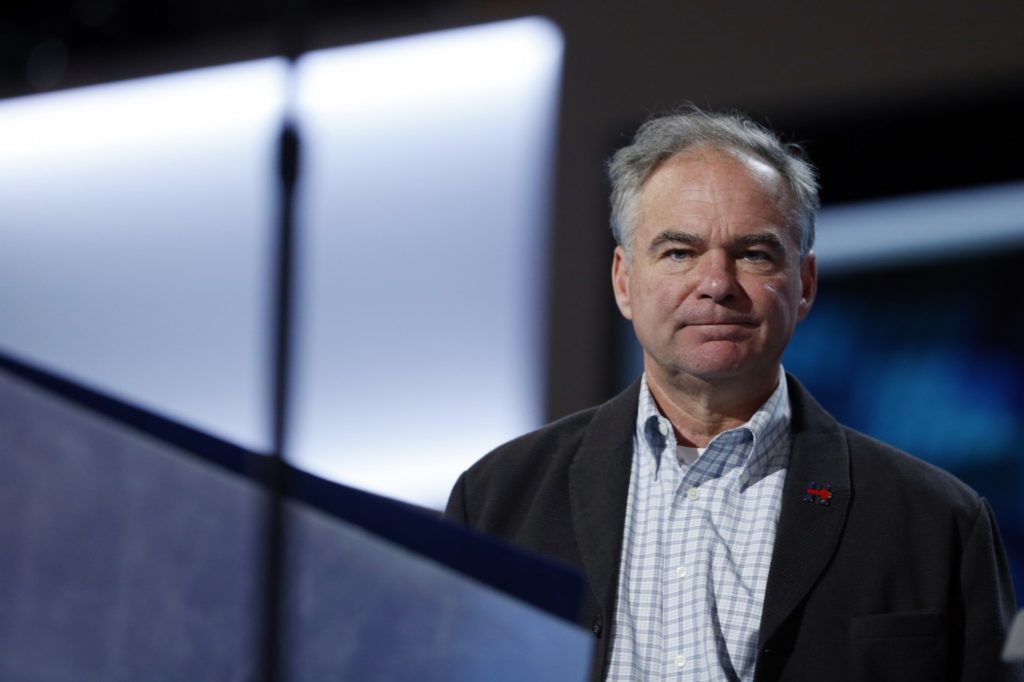
Facing a backlash from the left, Virginia Sen. Tim Kaine is expected to affirm his liberal credentials in his first prime-time speech as Hillary Clinton‘s running mate. Kaine was speaking Wednesday to the Democratic National Committee as supporters of Clinton’s one-time Democratic rival Bernie Sanders warned that Kaine had yet to forcefully oppose the Trans-Pacific Partnership trade deal. Kaine, a former Virginia governor, was introduced by Clinton last weekend in Miami, where he switched easily between English and Spanish and spoke of his time as a Catholic missionary in Honduras, his work as a civil rights attorney and an education-focused governor who managed a state through tough times. He officially became the nominee in the early moments of Wednesday’s session, joining the ticket by acclamation to cheers and a few scattered boos. Addressing his home state delegation Wednesday morning, Kaine called the campaign “a civil rights election,” panning Republican Donald Trump for mocking disabled people and using “demeaning and offensive language” about women. “The next president is going to be the one celebrating 100 years of women getting the right to vote,” Kaine said. “Is it too much to ask that it be a woman rather than somebody who offends women every time he opens his mouth?” Yet the threat of Trump hasn’t led to an open embrace of Kaine by liberals, who had pined for Clinton to select Massachusetts Sen. Elizabeth Warren, a champion of tougher restrictions on Wall Street and liberal causes. Much of their unhappiness has centered on Kaine’s vote in 2015 to support so-called “fast track” authority, allowing the president to put forward the Trans-Pacific Partnership. The Pacific Rim trade pact has been promoted by President Barack Obama as a way to increase U.S. influence in Asia and act as a counterweight to China. Kaine now opposes the deal, a position in step with Clinton, but liberals raised concerns about him after he praised parts of the agreement. “His support of this is deeply troubling to progressives,” said Shyla Nelson, a Sanders delegate from Vermont. She said that his vote for “fast-track suggests to me that he’s willing to advance a process that is undemocratic in order to achieve an objective with this. It starts to sound like parsing to me and others.” Clinton campaign chairman John Podesta praised Kaine’s “strong progressive credentials,” saying he “comes from a place of deep conviction.” He added that Clinton and Kaine will be offering a progressive agenda. Kaine’s allies, both in the Clinton and Sanders’ camps, say his record must be judged in totality. They point to his work as a civil rights attorney specializing in fair housing, his opposition to the death penalty, and record as governor of defending education funding during tough times. “I think people are going to be pleasantly surprised by the range and depth of his progressive credentials,” said Rep. Peter Welch, a Democrat from Vermont who backed Sanders. “He’s got a low-key style but don’t let that mislead you into an intensity of purpose.” Former Maryland Gov. Martin O’Malley, who unsuccessfully sought the Democratic nomination, said Kaine had brought his beliefs in Catholic social justice to his public service, something he has practiced throughout his career. “I think a person’s character is a product of a lifetime and if you look at Tim’s lifetime, you see that as a young person he was called to serve and actually went to Honduras,” said O’Malley. “And it wasn’t because of the beaches.” Republished with permission of the Associated Press.
Senior Jeff Sessions staffer joins Donald Trump’s presidential campaign; Session says US needs “strong negotiator”

The communication director for Sen. Jeff Sessions, Stephen Miller, has joined the presidential campaign of Donald Trump as a senior policy advisor, deepening the already well-worn ties between Alabama’s junior senator and Trump’s 2016 bid for the White House. The same day Miller moved to the campaign, his erstwhile boss again spoke out in support of Trump, touting their common opposition to the Obama administrations Trans Pacific Partnership trade deal. Sessions, briefly donning one of Trump’s signature red “Make American Great Again” caps, told Republicans set to vote in Iowa’s first-in-the-nation caucuses on February 1 that Trump has fought admirably against Obama on trade policy, though he stopped short of formally endorsing him “We need to negotiate better,” Sessions said. “So, what I’d say to the people in Iowa: ‘This is a matter of supreme importance that neither party should nominate a candidate who does not oppose this agreement. You can be for trade, you can be for negotiating agreements with countries around the world but not this way and not creating these kinds of transnational commissions that only hamper the United States as we go forward in the decades.’” Miller’s move was lauded by conservative pundit Ann Coulter, who Tweeted upon reading news of the personnel shift: “I’M IN HEAVEN! Trump hires Sen. Sessions’ brain trust, Stephen Miller. He’s not backing down on immigration.” Both Trump and Sessions have nearly in lock-step when it comes to immigration, with both men taking a hard line against accepting refugees from war-torn Syria and in favor of deporting undocumented immigrants.
In final year, Barack Obama seeks to stave off lame-duck status
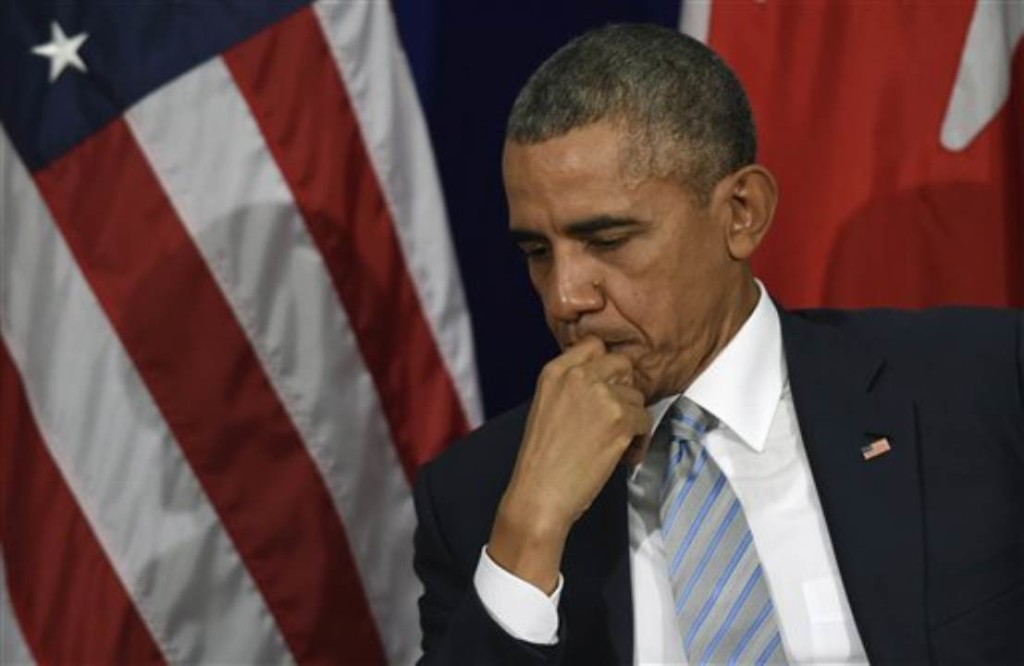
In June, during one of the best stretches of his presidency, Barack Obama strode through a West Wing hallway exclaiming, “Offense! Stay on offense!” It was a rallying cry for a White House that suddenly seemed to find its footing in the final quarter of Obama’s tenure. An Asia-Pacific trade agreement was moving forward, as was the diplomatic opening with Cuba and work on an historic nuclear accord with Iran. The Supreme Court upheld a key tenant of the president’s long-embattled health care law and legalized gay marriage nationwide. Even in the depths of tragedy following a church shooting in Charleston, South Carolina, the president struck an emotional chord with his stirring eulogy for the victims. “I said at the beginning of this year that interesting stuff happens in the fourth quarter — and we are only halfway through,” Obama said during his annual year-end news conference. But the seventh year of Obama’s presidency also challenged anew his cautious and restrained approach to international crises, particularly in the Middle East. Attacks in Paris and San Bernardino, California, heightened fears of terror on American soil and Obama’s attempts to reassure Americans fell flat. And a seemingly endless string of mass shootings elsewhere in the country exposed the sharp limits of Obama’s power to implement the gun control measures he speaks of with passion. Obama now stares down 11 months before his successor is chosen in an election shaping up to be a referendum on his leadership at home and abroad. He stirs deep anger among many Republicans, a constant reminder of his failure to make good on campaign promises to heal Washington’s divisiveness. But he remains popular among Democrats and foresees a role campaigning for his party’s nominee in the general election. The president is packing his final year with foreign travel and has about a half-dozen trips abroad planned, including a likely visit to Cuba. The White House’s legislative agenda is slim and centers mostly on areas where he already has overlapping priorities with Republicans, including final passage of the Trans-Pacific Partnership trade pact and criminal justice reform. But he’s also eyeing provocative executive actions, including an expansion of background checks for gun purchases and the closure of the Guantanamo Bay detention center. “We recognize there’s limited time left,” said Jennifer Psaki, Obama’s communications director. • • • At times, Obama’s second term has appeared to play out in reverse. He struggled to capitalize on his decisive re-election victory in 2012, stumbling through a two-year stretch that exposed the limits of his power and made him a political liability for his party. Then in an unexpected twist, his party’s devastating defeats in the 2014 midterm election spurred one of the most productive years of his presidency, positioning Obama to be a valuable political ally for Democratic presidential front-runner Hillary Clinton. “Barack Obama will loom over the election,” said Dan Pfeiffer, a longtime Obama adviser who left the White House earlier this year. Advisers say the Supreme Court’s ruling in May, which upheld the subsidies at the heart of Obama’s health care law, came as a particular relief to the president. The decision ensures the law survives his presidency, even as Republican candidates campaign on pledges to repeal it. Obama sees the Iran nuclear accord, Pacific Rim trade pact and sweeping climate change agreement finalized in Paris earlier this month as examples of how America should wield its power on the world stage. The agreements have driven the debate in the presidential campaign for long stretches — a point of pride for a White House eager to show that the president remains the country’s most relevant politician even as he eyes the exist. Yet Obama hasn’t been able to escape the Middle East. No matter how many times he tries to pivot to Asia or rebrand U.S. foreign policy as more about diplomacy than military might, the volatile region continues to be the dominant force in the way his foreign policy is viewed. Nearly every candidate running for president — including Clinton, his former secretary of state — is calling for more aggressive action to fight the Islamic State group. Obama has inched the military deeper into the conflict, including backtracking on his refusal to put U.S. troops on the ground in Syria, but has largely stuck with his initial strategy of combating the extremist group from the air. The terror attacks in Paris and California, however, have taken a worrying but distant fight against the Islamic State militants and made it top-of-mind for many Americans. White House advisers say Obama is well aware that he misjudged the public’s level of anxiety about terrorism and must scramble to counter what he sees as overheated rhetoric from Republican presidential candidates that filled the void he created by his tepid initial response. Aides say outlining an alternative to Republicans on foreign policy and other matters will be a central part of his final State of the Union address to Congress on Jan. 12. The address was purposely scheduled earlier than usual to give the president space to make his case before primary voting begins. He departed for his annual Hawaii vacation with a draft of the speech in hand. Julian Zelizer, a political historian at Princeton University, said a well-crafted speech can only go so far in helping Obama reassure the public of his national security stewardship. “The only way he regains ground is concrete victories where people can literally see progress made,” Zelizer said. “This is an area where he has to have policy gains” • • • As he closed out 2015, Obama promised he wouldn’t fade into the background in his final year in office. But he’s also realistic about the limited legislative opportunities for a Democratic president and Republican-led Congress in a presidential election year. His relatively modest congressional agenda includes final passage of the TPP trade pact, criminal justice reforms, dealing with Puerto Rico’s debt crisis and funding programs to address the spike in opioid use. At
Quiet on Keystone, Hillary Clinton faces sharper attacks from rivals

Hillary Rodham Clinton dodged questions Tuesday about her positions on trade and the Keystone XL pipeline, telling a New Hampshire voter that if the future of the project opposed by environmentalists remains “undecided when I become president, I will answer your question.” Sensing an opportunity, Clinton’s rivals for the Democratic presidential nomination escalated their critique of the party’s front-runner. “It is hard for me to imagine how you can be serious about climate change and not oppose the Keystone pipeline,” Vermont Sen. Bernie Sanders told The Associated Press. A day after laying out a sweeping plan to foster renewable energy and combat climate change, Clinton stuck with her refusal to say where she stands on the $8 billion pipeline. Environmental groups vigorously oppose the project, which would transport oil from Canada’s tar sands to refineries on the Gulf of Mexico, arguing it would contribute to global warming. “My assessment is that it is not appropriate or fair for me to prejudge in a public area what Secretary (of State John) Kerry and President (Barack) Obama eventually have to decide,” Clinton said. “I will not do it. I’m sorry if people want me to.” The former secretary of state also declined during a town hall-style meeting in the early voting state to take a firm position on the Trans-Pacific Partnership, noting her early work to lay the groundwork for the trade deal that labor unions and liberals oppose. Clinton’s aides argue her work at the State Department is a major asset for her candidacy, even if it prevents her from taking positions on certain topics – such as Keystone and the Pacific trade deal – that are closely watched by the Democratic base. “Having the experience of being a former Secretary of State distinguishes her and her candidacy, but it comes with responsibilities that at times can limit her,” said Jennifer Palmieri, communications director for the Clinton campaign. “We know that the experience is well worth whatever price she may pay politically.” As Clinton told New Hampshire voters in a steamy elementary school auditorium on Tuesday: “I’m in a very different position than any other candidate. I was there.” But refusal to say definitively where she stands on those two issues has frustrated liberals and fed into Republican attacks on her trustworthiness. The Republican National Committee quickly seized on Clinton’s remarks, blasting out a statement saying her refusal to express a clear view are “making it abundantly clear she’ll say or do anything to get elected.” Clinton’s refusal to take a position has also given rivals such as Sanders and former Maryland Gov. Martin O’Malley an opportunity to sharpen their case against the heavy favorite for the Democratic nomination. O’Malley, who has struggled to gain traction against Clinton and Sanders, offered perhaps his most stinging criticism of Clinton’s economic agenda to date in an interview with New Hampshire television station NH1 that aired late Monday. The former Maryland governor said Clinton’s “closeness to Wall Street is well-known and genuinely held. But it’s a difference of opinion that she and I have. I believe our federal government should protect our common good and Main Street from being worked over by recklessness on Wall Street. She does not.” O’Malley has pressed the Democratic field to support reinstating the law that separated the business of commercial and investment banking, which was repealed during President Bill Clinton‘s administration. Sanders does, but Clinton has yet to take a firm position on doing so and said the issue is more complicated than a single piece of banking legislation. Asked Tuesday by reporters in Washington how he distinguishes himself from Clinton, Sanders pointed to his voting record in Congress and what he described as a “virtually 100 percent voting record for the AFL-CIO.” “To me, politics is not hard. It’s which side are you on,” Sanders said after a speech to the International Association of Sheet Metal, Air, Rail and Transportation Workers. “I don’t sit around debating: `Gee, am I going to take Wall Street money? Am I going to vote for Wall Street? Or am I going to vote with working people?’ “That’s not where I come from,” Sanders said. “I vote with working people. That’s who I am.” Sanders said in an interview with the AP that Clinton’s recent climate change proposal didn’t go far enough to curb global warming, adding that Keystone amounted to a litmus test for any candidate seeking to champion the environment. Bruce Blodgett, a software architect from Amherst, New Hampshire, pressed Clinton to give a “yes” or “no” answer on Keystone at her town hall in Nashua. Clinton, who declined to take a position on Keystone after leaving the State Department in 2013, responded that it wouldn’t “be right” for her to “second guess” the administration, which is currently weighing whether to approve the project. “If it’s undecided, when I become president I will answer your question,” she said, offering a smile. Her remarks were met with silence by the sweaty crowd. Republished with permission of The Associated Press.
