
Justices weigh Alabama’s bid to stop redistricting order
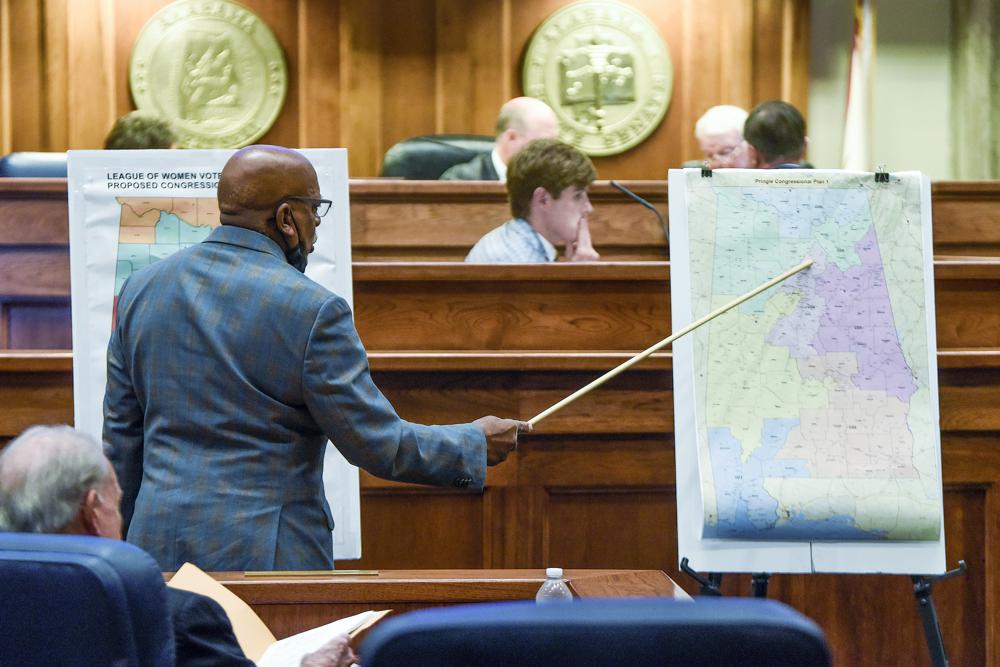
The U.S. Supreme Court is weighing Alabama’s request to freeze a court order requiring the state to draw new congressional lines and create a second district with a significant number of Black voters. Alabama has asked the court to halt an injunction issued by a three-judge panel blocking the use of the current map after the panel found it likely violates the Voting Rights Act. The Alabama attorney general argued the ruling will throw 2022 elections into chaos and require the state to put race above other redistricting criteria. But lawyers for people and organizations that brought the initial lawsuit dispute that and argue the current lines — similar to those in use since the 1990s — do not reflect a state that has grown more racially diverse. “This is very much a textbook case of a Voting Rights Act violation,” said NAACP Legal Defense Fund senior counsel Deuel Ross, whose organization represented the plaintiffs in the case. The three-judge panel last month found Alabama’s map, drawn by the GOP-dominated Alabama Legislature, likely violates the Voting Rights Act because, “Black voters have less opportunity than other Alabamians to elect candidates of their choice to Congress.” The decision cited Section 2 of the Voting Rights Act which prohibits racial discrimination in election procedures. Alabama’s congressional delegation has for years consisted of one Black representative elected from a heavily Black district and six white representatives elected from heavily white districts. The judges added that any “remedial plan will need to include two districts in which Black voters either comprise a voting-age majority or something quite close to it.” U.S. Census numbers show the state has grown racially more diverse since 1990. Black people make up about 27% of the state’s population while white people make up 63% of the population. “We think that Alabama has an obligation to draw fair maps that are reflective of the state’s very rich history of diversity, not just racial diversity, but diversity in terms of representation for everyone,” Ross said. The Alabama attorney general argues the ruling will improperly require states to prioritize race over other redistricting criteria. “The court-ordered redraw marks a radical change from decades of Alabama’s congressional plans. It will result in a map that can be drawn only by placing race first above race-neutral districting criteria, sorting and splitting voters across the State on the basis of race alone,” Alabama Attorney General Steve Marshall wrote in the state’s appeal to the U.S. Supreme Court. Fourteen conservative-led states signed on to a brief in support of Alabama, arguing that the ruling and “absence of clarity no doubt means litigation will ensue across the country over new maps.” Louisiana Attorney General Jeff Landry filed a brief along with attorneys general from Arizona, Arkansas, Georgia, Indiana, Kentucky, Mississippi, Missouri, Montana, Oklahoma, South Carolina, Texas, Utah, and West Virginia. Lawyers for plaintiffs argued Alabama is misrepresenting the ruling as prioritizing race instead of assessing whether an additional majority-Black district could be created consistent with compactness and traditional districting principles. It is unclear when the court will rule but Alabama faces a looming deadline to get new maps in place unless justices intervene. The three-judge panel pushed back the congressional candidate qualification deadline with political parties from Friday until February 11 to allow the Legislature the opportunity to enact a remedial plan. Alabama lawmakers appear to be waiting on the U.S. Supreme Court’s decision. The legislative reapportionment committee has not met since the ruling of the three-judge panel, some members said. “The attorney general has filed motions of stay and of appeal with the Supreme Court and we’re just going to need to see what the outcomes are, Senate President Pro Tem Greg Reed said. The three judges that issued the unanimous ruling consisted of one judge appointed by former President Bill Clinton — Senior U.S. Circuit Judge Stanley Marcus — and two judges appointed by former President Donald Trump — U.S. District Judge Anna Manasco and U.S. District Judge Terry Moorer. Evan Milligan, a Montgomery resident and the lead plaintiff in the lawsuit, said Alabama likely would have lost a congressional seat if not for the population growth of minority groups, including people born in other countries. “To produce maps that undercount the voting strength of the very population that’s contributing to the ability of the state to even have seven congressional districts is even more indefensible to me,” Milligan said. Republished with the permission of the Associated Press.
Lawsuit: Alabama congressional map ‘racially gerrymandered’

A lawsuit filed Tuesday as lawmakers get set to draw Alabama’s new congressional map is challenging the state’s current congressional districts, saying they are “racially gerrymandered” and limit Black voters’ influence in all but one congressional district. Alabama currently has one majority-minority district represented by U.S. Rep. Terri Sewell, the lone Democrat and only Black member of Alabama’s congressional district. The lawsuit argues Alabama should have a congressional map that would “afford African Americans an opportunity to elect candidates of their choice in at least two districts.” The lawsuit by two state senators and four voters was filed ahead of an expected special session on redistricting in which lawmakers will draw new congressional districts based on the latest U.S. Census numbers. No date has been set so far for such a session. “Alabama’s current Congressional redistricting plan, enacted in 2011 is malapportioned and racially gerrymandered, packing black voters in a single majority-black Congressional district,” the lawsuit states. The lawsuit argues that legislators packed as “many minorities as possible” into the congressional district that stretches from Birmingham through west Alabama and into Montgomery — “thereby weakening minorities’ voting influence throughout the state.” The suit seeks to avoid splitting counties and return to the “redistricting principle of drawing its Congressional districts with whole counties.” “By returning to Alabama’s traditional redistricting principle of aggregating whole counties, Alabama can remedy the existing racial gerrymander, restore a measure of rationality and fairness to Alabama’s Congressional redistricting process, and afford African Americans an opportunity to elect candidates of their choice in at least two districts,” the lawsuit states. State Sen. Rodger Smitherman, Sen. Bobby Singleton, and four voters filed the lawsuit. Secretary of State John Merrill is the defendant in the lawsuit because of his position. “We just want to make sure there is fair representation, equal representation,” Singleton said in a telephone interview. While the population of Alabama is 25% Black— and elected bodies such as the Legislature mirror that representation— the congressional delegation is 14% Black. Merrill said Tuesday that he had not been served with the lawsuit and could not comment on pending litigation. Alabama showed an increase in racial and ethnic diversity in the new Census numbers. The percentage of people who identify as white dropped while the state saw an increase in the Hispanic population and a doubling of the percentage of people who identify as multiracial. Whites continue to be the largest racial group in Alabama, but the percentage of people in Alabama who identify as white shrunk from 68.5% in 2010 to 64.1% in 2020. There was the slightest decrease in percentage of people who identify as Black falling from 26% to 25.6. Alabama officials earlier this year were relieved to learn that the state would maintain the seven congressional districts, instead of dropping to six. Republished with the permission of the Associated Press.
Texts: US census manager told counters to use fake answers
The texts from an Alabama census supervisor had an urgent tone. “THIS JUST IN …,” one of them began. It then laid out how census takers should fake data to mark households as having only one resident even if they had no idea how many people actually lived there. The goal of the texts from October, obtained by The Associated Press, was to check off as many households as possible on the list of homes census takers were supposed to visit because residents never had filled out census questionnaires. The supervisor wanted the census takers to finalize cases — without interviewing households — as the Trump administration waged a legal battle to end the once-a-decade headcount early. The texts are the latest evidence suggesting census accuracy was sacrificed for speed as census takers and supervisors rushed to complete a headcount last month. Critics contend the schedule was shortened by two weeks so the Trump administration could enforce a presidential order excluding people in the country illegally from the numbers used for apportionment of congressional districts. The texted instructions said that if two failed attempts were made to interview members of the households, along with two unsuccessful tries to interview landlords or neighbors about the homes’ residents, then the census takers should mark that a single person lived there. “You are to clear the case indicating occupied by 1,” said the text from the census supervisor in the small city of Dothan, Alabama. The texts were shared with the AP by a census taker from Florida who traveled to Alabama among groups of enumerators dispatched to areas lagging behind in the count. The existence of the texts suggests that falsification of census data may be more widespread than previously known. The census taker who provided the texts asked for anonymity because of privacy concerns and said she refused to follow the texted guidance because she felt doing so would falsify data. She declined to name the supervisor, who was identified only by her first name in screenshots of the texts seen by the AP. The U.S. Census Bureau has denied any attempts to systemically falsify information during the 2020 census, which is vital to determining the allocation of congressional seats and federal spending. But the AP has chronicled similar instructions sent to census takers in other U.S. regions. Census Bureau spokesman Michael Cook said the agency is investigating the Alabama case and has not identified any data irregularities. When there appear to be problems with data collection, the bureau can take steps such as revisiting households to improve accuracy, he said. “We take falsification allegations very seriously,” Cook said. More than two dozen census takers and supervisors have contacted the AP since the beginning of the month, telling similar stories about corners cut in the rush to close cases as the Trump administration sought to end the census before the Oct. 31 deadline set in response to the pandemic. The most recent cases also include a census supervisor in Baltimore who said that thousands of addresses were manually marked completed without evidence that residents had been interviewed. The Alabama supervisor in her text included a photo of her hand-written instructions listing the 15 steps she said would allow the census takers to mark in their bureau-issued iPhones that only one person lived in a home without interviewing anyone about the household’s demographic makeup or the number of people living there. The supervisor also recommended performing the steps two to three hours after trying to interview members of a household to avoid arousing suspicions from higher-ups who could track where census takers had been through their iPhones. The instructions for the census takers in Alabama were sent a week before the Supreme Court made a ruling that allowed the Trump administration to end field operations for the 2020 census on Oct. 15 instead of Oct 31. The Census Bureau has said it compiled information for about 99.9% of U.S. households in the U.S. during field operations. At the height of the door-knocking phase of the census in mid-August, there were more than 285,000 temporary census takers on the bureau’s payroll. In Baltimore, census supervisor Amanda Colianni said she believes 5,300 cases in neighborhoods she managed were closed prematurely and removed from the door-knocking effort after only one attempt by census takers to interview members of households in mid-to-late September. The Census Bureau was working toward what officials believed at the time would be an Oct. 5 early finish for the count. Colianni said she does not know why the cases were removed or how they were resolved, though she says it’s possible that government administrative records were used to fill in the information gaps when detailed records from the IRS, the Social Security Administration, or other agencies existed for the households. An outside census advisory group warned this month that filling in large numbers of households with administrative data late in the census process suggests no high-quality data existed for the addresses. If that had been the case, the group said, it would have been used earlier to save census takers time. “I know the management level in Baltimore was trying to push, push, push to get everything done,” Colianni said. “There was no possible way we could have any semblance of a reasonable completion rate by Oct. 5.” Colianni filed statements with the Commerce Department’s Office of Inspector General, the U.S. Office of Special Counsel, and a coalition of local governments and advocacy groups that have sued the Trump administration over its attempts to shorten the 2020 census schedule. The coalition’s case led to the Supreme Court decision allowing the Trump administration to end the headcount. The coalition’s lawsuit in San Jose, California said the deadline for finishing the count was changed from the end of October to the end of September to ensure that number-crunching for the census would take place while President Donald Trump was still in office, no matter the outcome of the presidential race. That could guarantee the enforcement of an order
Russell Bedsole: Census officials need more time to get rural counts right
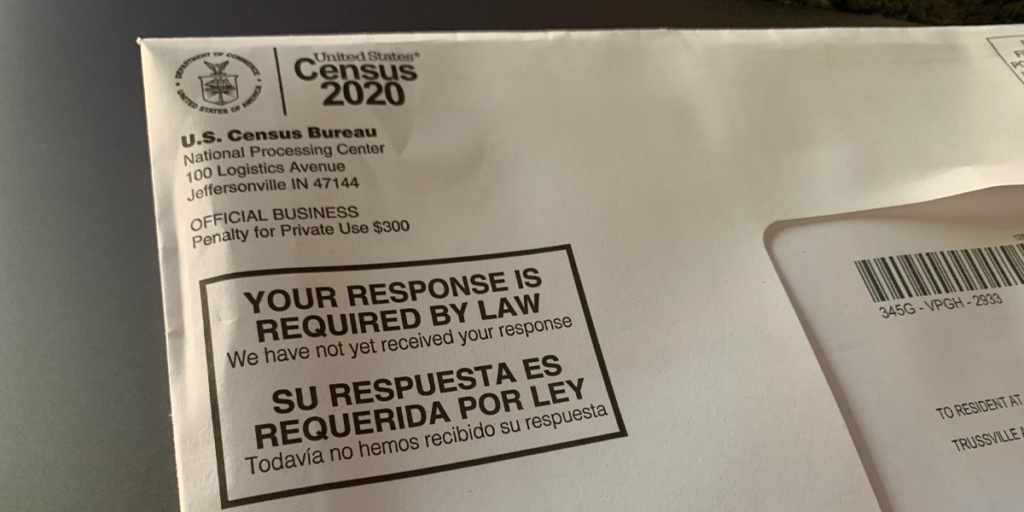
As we approach the end of a year filled with an unprecedented global pandemic and seemingly ceaseless campaign coverage, it is more important than ever that Congress closes this session strong and puts our nation in a stable position to handle the coming year. However, as it stands, many rural states like Alabama may be looking at a long road ahead. While television and phone screens across the nation have been flooded with real-time updates on COVID-19 and this year’s election, another major development that has a direct impact on all of us, the U.S. Census, has been mostly overlooked. With lawmakers finding their way back to Washington for the next few weeks, though, addressing issues with this year’s Census needs to be among their top priorities. That is because, when a court ruling brought the Census counting process to an abrupt end in October, those responsible for checking and verifying the data were only given until December 31 to report their findings, despite the fact that this process normally takes about five months. Of course, verifying that the results are accurate is especially difficult this year, given the challenges that Census officials faced in collecting responses due to the pandemic and harsh coastal weather conditions. In cases when a person or a household does not fill out a response form for the Census, officials normally go to visit them to ask questions in-person. This year, however, opportunities for in-person discussions were limited due to concerns about COVID-19, and these workers were instead forced to fall back on information contained in government documents and administrative records, which are less reliable and could very well be out-of-date, especially in more rural states like Alabama where communities can be harder to reach. Alabama, for example, had more than 35 percent of its responses enumerated in these types of “Nonresponse Follow-up.” With these challenges, Census officials have now publicly recognized that it is unlikely the current reporting deadline is feasible to meet. As they close out the year, lawmakers should heed the words of these Census workers, and pass legislation giving them more time to report their findings. If they do not pass a bill extending the deadline for reporting Census results, there is a significant chance that rural and agricultural states like ours could be undercounted. Given that the Census directs billions in federal dollars each year, the potential ramifications are enormous. For example, research indicates that if Alabama’s population is undercounted by even one percent, we will lose almost $40 million in just jobs programs, healthcare, and education funding. The total costs would no doubt go even well beyond that though, as Alabama received a total of more than $13 billion in Census funding in 2016 alone. That is money we’ve been paying through our taxes, and we deserve for it to help our communities, not some large coastal state that had a more accurate Census tally. Some lawmakers have recognized how serious this issue is for rural Americans, and are working to help. Senator Dan Sullivan (R-AK) has introduced a bill called the 2020 Census Deadline Extensions Act to push back the Census reporting deadline and has since gained support from other prominent Senate Republicans like Senators David Perdue (R-GA) and Steve Daines (R-MT). Now, I hope Senator Richard Shelby joins them in making sure our state does not miss out on important federal funding. It may not have received the same level of attention as the other major stories this year, but the 2020 Census is a vital process for ensuring good governance is possible, and those who have been working on it deserve the opportunity to do it right. As of now, the best way to guarantee that is by extending the reporting deadline past the end of the year. Russell Bedsole recently won the special election for Alabama State House District 49.
Court challenge ahead for Donald Trump’s district drawing order
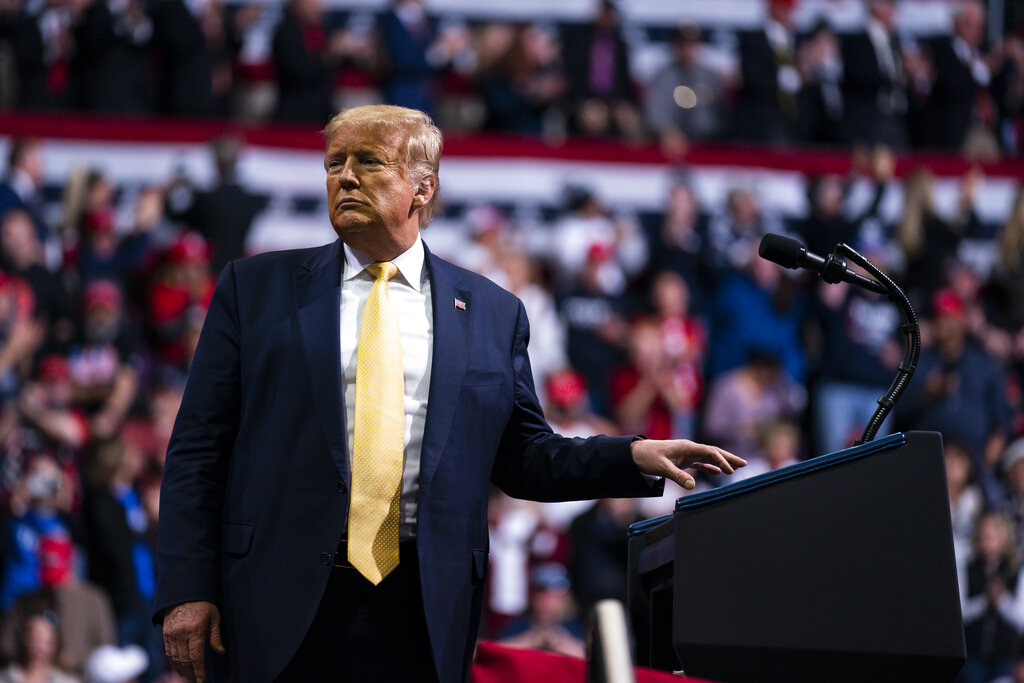
Civil rights groups on Wednesday gave notice in court of their intent to squelch an effort by President Donald Trump to bar people in the U.S. illegally from being included in the head count when congressional districts are redrawn. Civil rights groups already challenging an order Trump issued last year directing the U.S. Census Bureau to gather citizenship data from administrative records made a request in federal court to expand their complaint to include the new directive Trump issued Tuesday. A federal judge in Maryland granted the civil rights groups’ request during a hearing held by telephone Wednesday. “Just when you thought everything was settled yesterday, a new order comes out that makes things unsettled,” U.S. District Judge Paula Xinis said. The civil rights groups’ original lawsuit challenged an administrative order that Trump issued last year after the Supreme Court blocked his administration’s effort to add a citizenship question to the 2020 census form. Opponents feared a citizenship question would suppress participation by undocumented immigrants and minorities. Trump’s order last year directed the Census Bureau to gather citizenship data from the administrative records of federal and state agencies. Gathering the citizenship data would give the states the option to design districts using voter-age citizen numbers instead of the total population, Trump said in the order. The lawsuit filed in Maryland by civil rights groups claimed the citizenship data gathering was motivated by “a racially discriminatory scheme” to reduce the political power of Latinos and increase the representation of non-Latino whites. The administrative data also was often inaccurate, they said. Attorneys for the U.S. government had asked the judge to dismiss the Maryland lawsuit. Xinis said Wednesday that she had been inclined to do so because there was no way of knowing whether state legislatures would use the citizenship data when redrawing legislative districts, which would raise questions about whether the plaintiffs had what is known as “standing” to make their challenge, and some states would have to change their laws to do so. But Trump’s newest order “really changes the landscape,” she said. “The first executive order is tied to the second executive order,” Xinis said. “The second executive order is buttoning up some of the concerns we all had as far as standing.” Civil rights groups on Tuesday denounced Trump’s new order as unconstitutional, though it isn’t the only effort to exclude undocumented immigrants from the apportionment process. In Alabama, state officials and Republican U.S. Rep. Mo Brooks are suing the Census Bureau to exclude people in the country illegally from being counted when determining congressional seats for each state. A federal judge in that case on Tuesday asked attorneys to file briefs on the impact that Trump’s new order would have on the case. The Census Bureau currently is in the middle of its once-a-decade head count that determines the distribution of $1.5 trillion in federal spending and how many congressional seats each state gets in a process known as apportionment. More than 62% of the nation’s households have already responded, and census takers last week started knocking on the doors of homes whose residents haven’t yet responded. The bureau this week mailed out 34.3 million postcards to households reminding them to answer the census questionnaire. The House Committee on Oversight and Reform on Wednesday asked Commerce Department Secretary Wilbur Ross, Census Bureau Director Steven Dillingham and Census Bureau chief scientist John Abowd to testify about Trump’s new order next week at an emergency hearing. “This action directly violates the Constitution and the laws passed by Congress, and it appears to be a blatant attempt to politicize the 2020 Census, depress participation, and undermine its accuracy,” Democratic U.S. Rep. Carolyn Maloney, who chairs the committee, said in invitation letters to the officials. Republished with the permission of the Associated Press.
