
US, South Korea work to keep North Korea summit on track
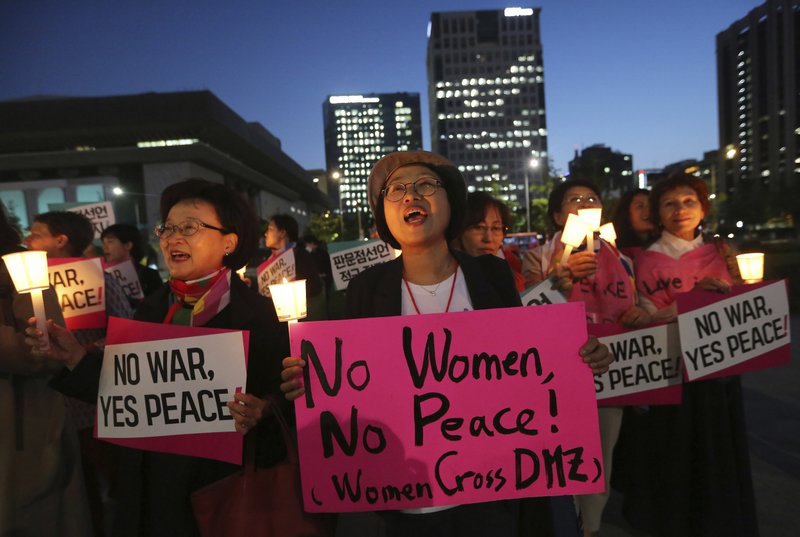
The United States and South Korea are laboring to keep the U.S. summit with North Korea on track even after President Donald Trump abruptly said “there’s a very substantial chance” it won’t go off as planned. “The fate and the future of the Korean Peninsula hinge” on the meeting, South Korea’s president told Trump in an Oval Office meeting Tuesday. The summit, scheduled for June 12 in Singapore, would offer a historic chance for peace. But there also is the risk of a diplomatic failure that would allow the North to revive and advance its nuclear weapons program. U.S. officials say preparations are still underway. “We’re driving on,” said Secretary of State Mike Pompeo, who was to testify before the House Foreign Affairs Committee on Wednesday. Trump’s newfound hesitation appeared to reflect recent setbacks in efforts to bring about reconciliation between the two Koreas, as well as concern whether the self-proclaimed deal-maker can deliver a nuclear accord with the North’s Kim Jong Un. Trump said Kim had not met unspecified “conditions” for the summit. But Trump also said he believed Kim was “serious” about negotiations, and South Korean leader Moon Jae-in expressed “every confidence” in Trump’s ability to hold the summit and bring about peace. “I have no doubt that you will be able to … accomplish a historic feat that no one had been able to achieve in the decades past,” Moon said. Trump said he didn’t want to “totally commit” himself on whether North Korea should denuclearize all at once or in phases. “It would certainly be better if it were all in one,” Trump said, before adding, “You do have some physical reasons that it may not be able to do exactly that.” Trump suggested the summit could be delayed rather than canceled: “It may not work out for June 12, but there is a good chance that we’ll have the meeting.” He did not detail the conditions he had laid out for Kim but said if they aren’t met, “we won’t have the meeting.” His spokeswoman, Sarah Huckabee Sanders, said Trump was referring to a commitment to seriously discuss denuclearization. Skepticism about the North’s intentions have mounted in recent weeks after Kim’s government pulled out of planned peace talks with the South last week, objecting to long-scheduled joint military exercises between U.S. and South Korean forces. The North also threatened to abandon the planned Trump-Kim meeting over U.S. insistence on rapidly denuclearizing the peninsula, issuing a harshly worded statement that the White House dismissed as a negotiating ploy. Trump expressed suspicion that the North’s recent aggressive barbs were influenced by Kim’s unannounced trip to China two weeks ago — his second in as many months. Trump said he’d noticed “a little change” in Kim’s attitude after the trip. “I don’t like that,” he said. The president said he hoped Chinese President Xi Jinping was actually committed to the goal of denuclearizing the Korean Peninsula, calling him a “world-class poker player.” Trump said he was displeased by China’s softening of border enforcement measures against North Korea. Trump encouraged Kim to focus on the opportunities offered by the meeting and to make a deal to abandon his nuclear program, pledging not only to guarantee Kim’s personal security but also predicting an economic revitalization for the North. “I will guarantee his safety, yes,” Trump said, noting that promise was conditioned on an agreement to complete, verifiable and irreversible denuclearization. Trump said if such an agreement is reached, China, Japan and South Korea would invest large sums to “make North Korea great.” Republished with permission from the Associated Press.
US has a daunting to-do list to get ready for NKorea summit
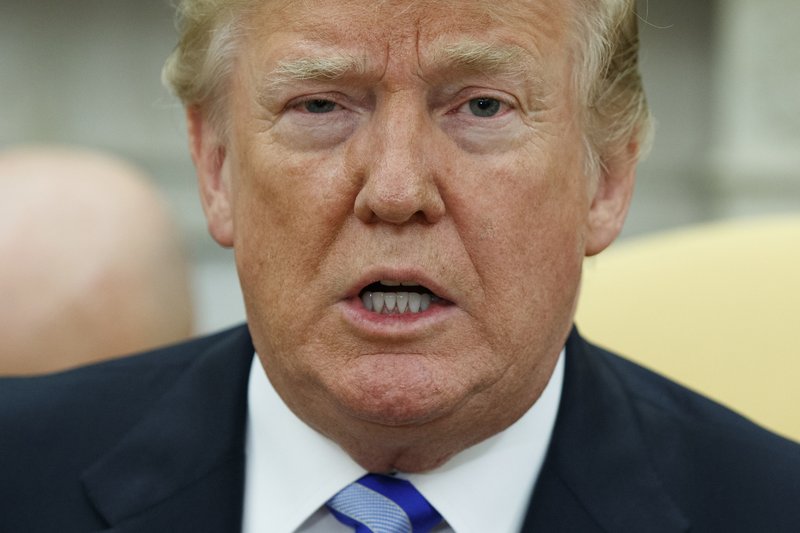
Who sits where? What’s on the agenda? Will they eat together? What’s the security plan? President Donald Trump and his team have a daunting to-do list to work through as they prepare for next month’s expected summit with North Korean leader Kim Jong Un. Trump’s plan to meet with Kim may have come as a surprise decision, but his team hopes to leave nothing to chance when they come together in Singapore. They’re gaming out policy plans, negotiating tactics, even menu items. “We’re working on the details, the actual blocking and tackling at the meeting,” Secretary of State Mike Pompeo said last Sunday on CBS’ “Face the Nation.” ″We have been working on them for weeks.” With two unpredictable leaders, it’s hard to anticipate every possibility. But White House aides are expecting hard-ball negotiating tactics — already in evidence this week as the North Koreans cast fresh doubt on the sit-down. Leader summits on this level are a massive undertaking. Much like icebergs, only a small fraction of the work is visible above the waterline. And when the meeting involves the heads of two technically still-warring states, the list of logistical concerns expands, including sensitive items like the number and deployment of security officers. Officials on both sides are still determining the format for the meeting or meetings, whether Trump and Kim will share a meal, and the extent of any one-on-one interactions. All of that comes as the U.S. formulates its strategies for the talks, including what the U.S. is prepared to give up and how precisely to define “denuclearization” on the Korean Peninsula — Trump’s stated goal. “I would say there are hundreds if not thousands of hours put into summit preparations,” said Patrick McEachern, a public policy fellow at the Woodrow Wilson Center and a former State Department official. Scott Mulhauser, a former chief of staff at the U.S. Embassy in Beijing, said that in the leadup to summit meetings, staffs try to anticipate the various negotiating positions their counterparts might take, adding that “if you’re not gaming that out, you’re not preparing adequately.” Trump is relying heavily on his top diplomat, Mike Pompeo, in preparing for the summit. Pompeo has met with Kim twice in Pyongyang, once as secretary of state and once as CIA chief, and has spent more time with the reclusive leader than any other American official. The amount of face time Pompeo has had with Kim rivals even that of most Asian leaders, apart from the Chinese. Pompeo assembled a working group to handle negotiations with North Korea led by a retired senior CIA official with deep experience in the region. That team, based at CIA headquarters in Langley, Virginia, remains the center of the administration’s North Korea expertise. Planning for the summit started quickly after Trump announced on Twitter his plans to meet with Kim, but kicked into higher gear after John Bolton became Trump’s national security adviser last month. In addition to Pompeo’s two trips to Pyongyang, U.S. officials have also been coordinating with the North Koreans through what’s known as the “New York channel” — North Korean diplomats posted to their country’s mission to the United Nations. A key question is the format for the meeting if the two countries are able to proceed to full-fledged nuclear negotiations, U.S. officials have said. That includes decisions about whether to keep the talks limited to the U.S. and North Korea or whether to bring other governments into the process, such as South Korea, China, Russia and Japan. Also key is what the U.S. will negotiate away. “One thing that is unclear to us is what the U.S. is willing to negotiate in exchange for North Korea’s promises on denuclearization,” said Jean Lee, director of the North Korea program at the Woodrow Wilson Center and a former Associated Press bureau chief in Pyongyang. “The North Koreans are going to be armed and very ready to negotiate. The Trump administration needs to be ready as well.” One initial hurdle that Pompeo managed to clear during his second visit to Pyongyang was the venue for the summit. North Korea was adamant that Kim not be put in any kind of situation where his security could be at risk, U.S. officials said. North Korean officials pushed very hard for the meeting to be in Pyongyang, so Kim would not have to leave the country and they could have 100 percent control over access and communications, according to the officials. When North Korea objected to Trump’s preferred choice of the demilitarized zone on the border between North and South Korea, the U.S. countered with Singapore. Some White House officials also opposed the DMZ choice, believing the optics on Korean rapprochement would distract from the focus on denuclearization. U.S. officials said they believed one reason the North Koreans agreed to Singapore was that Kim had just returned from a successful trip to China the day before Pompeo arrived for his second visit. Many analysts, including U.S. officials, believe that Kim’s flight to the Chinese port of Dalian — the first trip abroad by aircraft by a North Korean leader in decades — was likely a test of the country’s ability to safely transport Kim by air. Kim’s previous trips to China had all been by train, as was the custom of his father. The North formally signed off on Singapore while Pompeo was in Pyongyang. Even before Trump announced the summit site by tweet a day after Pompeo’s return, White House officials who traveled with Pompeo to Pyongyang were already on the ground in Singapore to begin working out summit logistics. Very few people have had much direct contact with the North Koreans, so there are few people for the Trump administration to check with for guidance. Bill Richardson, the former New Mexico governor and U.N. ambassador who has negotiated with the North Koreans, had one suggestion. He said that in the meeting setting, the North Koreans will be very formal, so building a rapport between
Donald Trump: Good chance NKorean leader will do ‘what is right’
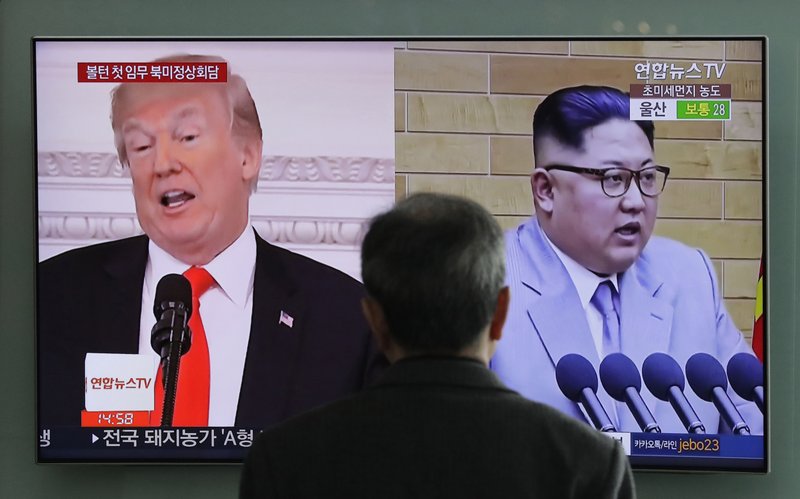
President Donald Trump said Wednesday there’s “a good chance” that North Korean leader Kim Jong Un will “do what is right for his people and for humanity” and make moves toward peace. In a pair of morning tweets, Trump says he received a message from Chinese President Xi Jinping that a meeting Xi had with Kim this week “went very well.” Trump says that according to Xi, the North Korean leader “looks forward” to meeting the American president. The White House has said Trump plans to meet Kim by May amid nuclear tensions between the two nations. Trump has agreed to historic talks after South Korean officials relayed that Kim was committed to ridding the Korean Peninsula of nuclear weapons and was willing to halt nuclear and missile tests. In the meanwhile, Trump says, “unfortunately, maximum sanctions and pressure must be maintained at all cost!” The Trump administration has slapped sanctions on companies across the globe to punish illicit trade with North Korea. Received message last night from XI JINPING of China that his meeting with KIM JONG UN went very well and that KIM looks forward to his meeting with me. In the meantime, and unfortunately, maximum sanctions and pressure must be maintained at all cost! — Donald J. Trump (@realDonaldTrump) March 28, 2018 “For years and through many administrations, everyone said that peace and the denuclearization of the Korean Peninsula was not even a small possibility,” Trump tweeted Wednesday. “Now there is a good chance that Kim Jong Un will do what is right for his people and for humanity. Look forward to our meeting!” State Department spokeswoman Heather Nauert said that Kim’s visit to China “was an unprecedented, historic step in the right direction.” For years and through many administrations, everyone said that peace and the denuclearization of the Korean Peninsula was not even a small possibility. Now there is a good chance that Kim Jong Un will do what is right for his people and for humanity. Look forward to our meeting! — Donald J. Trump (@realDonaldTrump) March 28, 2018 “It is also evidence that @POTUS’ maximum pressure campaign is working. We look forward to sitting down with Kim Jong Un to talk about a better future for his people,” Nauert said in a tweet. However, it remains unclear if there has been direct communication between Washington and Pyongyang on the planned Trump-Kim summit that is slated for May, and under what conditions North Korea would agree to give up the nuclear arsenal it has spent decades building. According to the Chinese state news agency Xinhua, Kim told China’s Xi that North Korea is willing to have dialogue with the United States and hold a summit of the two countries. Kim also said the issue of denuclearization can be resolved if South Korea and the U.S. take “progressive and synchronous measures for the realization of peace.” Republished with permission from the Associated Press.
Will Davis: AMEXIT — It’s time to ditch the U.N.
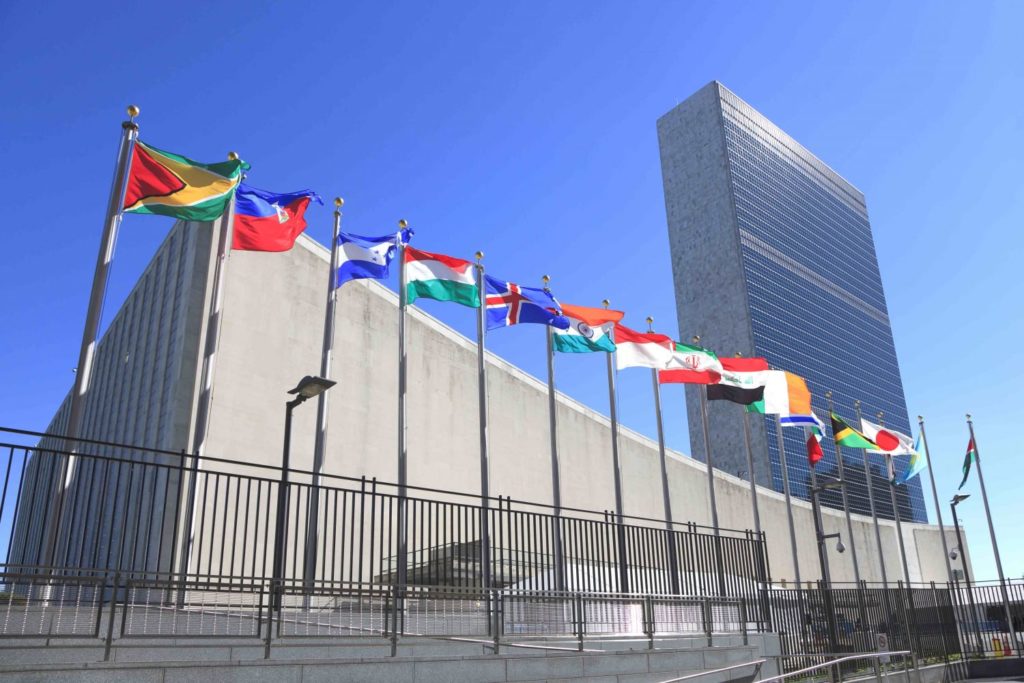
“A forum for anti-semitism & anti-americanism.” Florida Senator Marco Rubio, a former presidential candidate, and one of the country’s leading voices on foreign policy had these harsh words for the United Nations in a Tweet back in February. Rubio also questioned the continued funding for an organization that treats America and her allies with such hostility. This followed a general assembly vote 128-9 to condemn the U.S. decision to recognize Jerusalem as the capital of Israel. Now it’s time for Rubio and his GOP colleagues to put their money where there mouth is and cease funds to this wretched organization. Make no mistake, I am not an advocate of isolationism, and alliances with countries that we can count on are of the upmost important. But, it is now clear that the United Nations has outlived it’s purpose. Today, the institution that was created to prevent war has done more to inspire it. The institution that was created to promote freedom and democracy now promotes tyranny and authoritarianism. Nearly half of the security council’s recent condemnations have focused on Israel, while ripping the U.S’s relationship with them. Since Israel was officially recognized as a state in 1948, the security council has issued 225 resolutions against the democratic state, while by comparison, ignoring the theocratic, terror-supporting states that surround them. This is the exact opposite of what the U.N. was created to do. It is time for the U.S. to ditch this failed institution and form coalitions with countries that we can count on. Countries that share our values. The communist, socialist, and radical islamic states that dominate the discourse at the U.N. can find a forum elsewhere, but there is no reason that forum should be on our soil. Last year, the people of Great Britain stood up for their sovereignty and against unaccountable Bureaucracy, leaving the corrupt European Union. This year, it’s time for the United States to do the same. It’s time for our own Brexit. Our Amexit. ••• William Davis is a sophomore at the University of Alabama. There he is involved in various conservative groups and organizations.
Americans offer hope, prayer in assessing Donald Trump’s 100 days

They are young and old: a high school student who can’t yet vote, a Vietnam vet who did so proudly. They hail from all corners of the United States and very different walks of life: a “downhome boy” from Kentucky, a third-generation Mexican-American from Texas, a stay-at-home mom in Pennsylvania, an Iranian immigrant in Los Angeles. Some oppose Donald Trump and all that he stands for, while others voted enthusiastically for him. Now, they are critiquing him. One hundred days into Trump’s presidency, The Associated Press returned to some of the everyday people interviewed these past months to ask them to write a letter to the president, evaluating the job he’s done so far and looking ahead to the months to come. One supporter tells the president he “might have fallen a little short” — on Obamacare, in particular — but he signs off “with hope.” A refugee implores Trump to “make America more friendly,” but finds optimism in the president’s reaction to this month’s chemical attack in Syria: “I hope this is a turning point.” A Trump objector calls his biggest accomplishment “waking up the public to fight.” She offers this advice: “Make decisions with your heart. It will give you wisdom.” ___ FROM RURAL AMERICA, A SUPPORTER SEES HOPE IN TRUMP’S PRESIDENCY Alan Halsey, 31, is a self-described “downhome boy” from Campton, Kentucky, who along with his wife owns and operates The Swift Creek Courier, a weekly newspaper, and Halsey’s Country Store, “a small business that is a chunk of 1950 set down in 2017.” He says he works seven days a week to try to provide for his family, but is struggling and tired of government regulation and red tape. He wrote: ” … I supported you quite strongly in the 2016 election, even to the point of hanging one of your signs on the front door of my business. I particularly related to your foreign policy of ‘America First,’ and your promise to bring business back to the United States. So far, I believe you’re heading in the right direction on that front, and I find a glimmer of hope in the future of the American economy. “Overall, I think you might have fallen a little short on your first 100 days, but I don’t put a lot of weight into a time frame that small. Provided you serve two terms, 100 days is about 4 percent of that. I still feel that something needs to be done with the Affordable Care Act, although I’m not certain exactly what. … I know many ACA recipients that visit a doctor more than once a week, while those that purchase their own insurance wait until a visit to a doctor is imperative to their survival. There must be a middle to that scenario. …” He signed his letter: “With Hope.” ___ CANCER SURVIVOR WORRIES OVER TRUMP’S PROPOSED BUDGET CUTS, BUT PRAYS FOR HIM Rebecca Esparza, 45, is a freelance writer in Corpus Christi, Texas, who didn’t vote for Trump. A cancer survivor, Esparza fears proposed budget cuts targeting the nation’s premier medical research institution, the National Institutes of Health, will hurt Americans who battle illness. She wrote: “. I cannot say I’m proud of your work so far. However, I have respect for the Office of the President, even if I disagree with your political aspirations. … I could write a dissertation on the many ways I disagree with your political ideals. I’m a third-generation Mexican-American, born and raised in South Texas. Your disdain for Mexico, its descendants and immigrants in general troubles me. Your plan to dismantle the Affordable Care Act, leaving millions of Americans with no other health insurance options, leaves me anguished. “But what distresses me most is your plan to cut nearly $6 billion in funding from the National Institutes of Health (NIH). On Thanksgiving Day in 2001, at age 30, I was diagnosed with ovarian cancer. … Cancer research saved my life. … The cuts you are proposing are disconcerting not only for cancer survivors, but for millions of Americans suffering from many types of chronic and rare diseases. … “I’ll be praying for you, President Trump. … I pray you will carefully consider how your decisions have life or death consequences for hard-working Americans.” Read more about Esparza. ___ ONE-TIME OBAMA VOTER FEELS PRIDE IN TRUMP’S WORK Laverne Jones Gore, 60, owns an executive leadership development company in Cleveland and voted for Trump after previously supporting Barack Obama. Gore calls herself a “middle-class American who happens to be black” and says she felt uncomfortable voicing her opinion during the Obama years, but Trump has “made me proud to be an American again.” Part of a military family — her deceased husband was a Marine and a son graduated from West Point — Gore’s one hesitation these past 100 days is over Trump’s airstrike in Syria. She wrote: ” … Mr. President you have absolutely met my expectations. I actually believe you have shown a strength that I had not given to you, and I am surprised by your willingness to meet head on the challenges and resistance within your governing bodies. I don’t believe you have been afforded an opportunity to really show us what you have to offer in the form of leadership of our nation. “I have no issue with you as it relates to ‘Russians.’ I personally believe most of it was contrived. I have no issue with you as it relates to immigration. I think the issues were in need of control. … I have some reservations about your use of Twitter, but I understand the difficulty you have getting your intended message out. “Yes, you surprised me with the Syria strike and I am not certain how I feel about another war or thought of war. I am still contemplating your action and observing the responses to come from the world theatre as they absorb your full intent.” ___ ‘YOUR SIGNATURE CRUSHED MY FAMILY’ Marjan Vayghan, 32, an artist and writer
Senate confirms Alex Acosta as Donald Trump’s secretary of labor
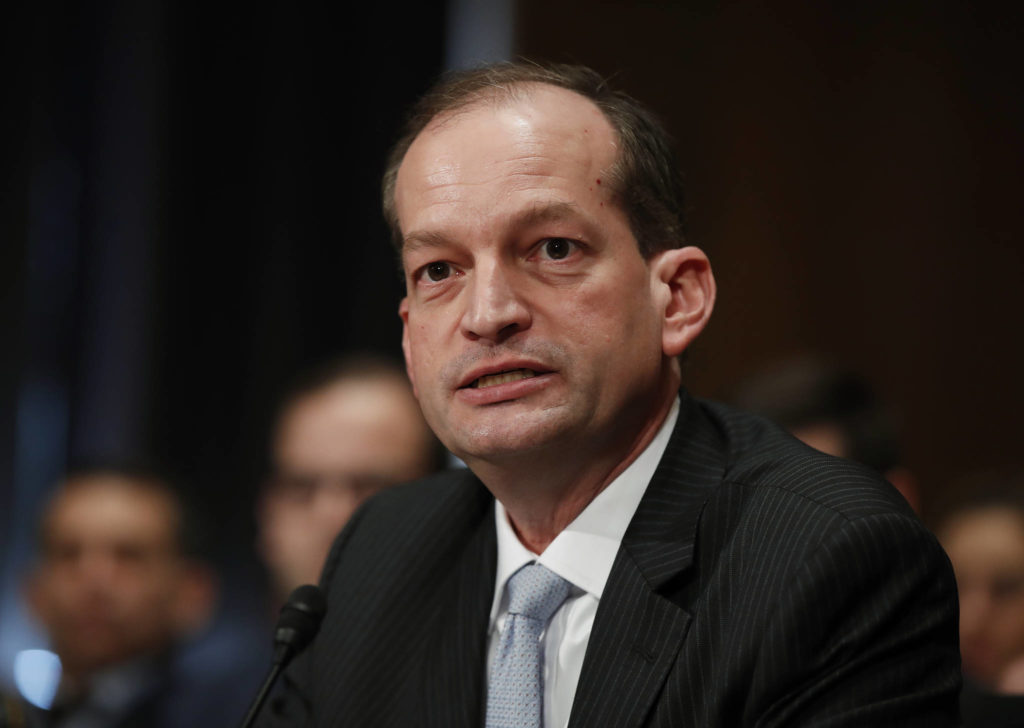
The Senate on Thursday confirmed Alex Acosta as Labor secretary, filling out President Donald Trump‘s Cabinet as he approaches his 100th day in office. The 60-38 vote confirms Acosta to the post. Once sworn as the nation’s 27th Labor secretary, the son of Cuban immigrants will lead a sprawling agency that enforces more than 180 federal laws covering about 10 million employers and 125 million workers. Sen. Tim Scott, R-S.C., spoke for many Republicans with a statement issued just after the vote saying he hopes Acosta’s focus will be “promoting labor policies that are free of unnecessarily burdensome federal regulations.” Scott said he wants Acosta to permanently revoke rules governing financial advisers and adding Americans eligible for overtime pay. Democrats said any Labor secretary should advocate for the American workers to whom Trump promised so much during his upstart presidential campaign. They said Acosta has given no such commitment. “Acosta failed this basic test,” tweeted Sen. Elizabeth Warren, D-Mass. Acosta has been a federal prosecutor, a civil rights chief at the Justice Department and a member of the National Labor Relations Board. He will arrive at the top post with relatively little clear record on some of the top issues facing the administration over key pocketbook issues, such as whether to expand the pool of American workers eligible for overtime pay. Acosta wasn’t Trump’s first choice for the job. Former fast food CEO Andrew Puzder withdrew his name from consideration last month, on the eve of his confirmation vote, after becoming a political headache for the new administration. Puzder acknowledged having hired a housekeeper not authorized to work in the U.S. and paying the related taxes years later — after Trump nominated him — and came under fire from Democrats for other issues related to his company and his private life. Acosta’s ascension would come at a key moment for Trump, just two days before he reaches the symbolic, 100-day marker. The White House has sought to cross the threshold with its own list of Trump’s accomplishments. Trump can say the Acosta vote was bipartisan, because eight Democrats and one independent voted yes. Joining the Republicans in his favor were Democratic Sens. Catherine Cortez Masto of Nevada, Heidi Heitkamp of North Dakota, Joe Manchin of West Virginia, Claire McCaskill of Missouri, Bob Menendez of New Jersey, Bill Nelson of Florida, Jon Tester of Montana and Mark Warner of Virginia. Independent Sen. Angus King of Maine also voted for Acosta. Labor secretary is the last Cabinet post for Trump to fill. Trump’s choice for U.S. trade representative, a job considered Cabinet-level, is awaiting a Senate vote. From the beginning, Acosta’s was a quiet march to confirmation that stood out because it didn’t attract the deep partisan battles faced by some of Trump’s other nominees, including Education Secretary Betsy DeVos and Secretary of State Rex Tillerson. Justice Neil Gorsuch‘s nomination provoked such a fight that majority Senate Republicans used the “nuclear option” to remove the 60-vote filibuster barrier for Supreme Court picks. Thursday’s vote marks the fourth time Acosta has been confirmed for the Senate. Democrats and most labor groups were mostly muted in their response to Acosta’s nomination. At his confirmation hearing, Democratic Sens. Patty Murray of Washington and Warren hammered Acosta for answers on a selection of issues important to labor and whether Acosta would cave to political pressure from Trump. Acosta refused to answer the policy questions until he’s confirmed, and he vowed to be an independent and fair voice for workers. Both senators said they had great concerns, and both voted no. Our standard can’t be ‘not Puzder,’” Murray said Wednesday on the Senate floor. But tellingly, even as Acosta’s nomination wound through the Senate, Democrats and their allies also tried to move on to other, labor-related issues — namely, a minimum wage hike to $15 an hour, which Trump opposes. Meanwhile, the Labor Department’s online landing page bears a glimpse of Acosta’s policy priorities: “Buy American, Hire American.” That’s the title of Trump’s executive order this week directing the secretaries of labor and other agencies to issue guidance within 60 days on policies that would “ensure that, to the extent permitted by law” federal aid “maximize the use of materials produced in the United States, including manufactured products; components of manufactured products; and materials such as steel, iron, aluminum, and cement.” Republished with permission of The Associated Press.
Donald Trump tax cut: Huge, vague and likely mild boost for economy

President Donald Trump‘s team boasted Wednesday that its tax-cut plan would lighten Americans’ financial burdens, ignite economic growth and vastly simplify tax filing. Yet the proposal so far remains short of vital details, including how it would be paid for. And based on the few specifics spelled out so far, most experts suggest that it would add little to growth while swelling the budget deficit and potentially handing large windfalls to wealthier taxpayers. Trump’s plan would replace the current seven income tax brackets with three, and the top bracket would drop from 39.6 percent to 35 percent. It would also slash the corporate rate from 35 percent all the way to 15 percent, a boon to most companies even though many don’t pay the full tax now. With tax credits and other loopholes, most corporations pay closer to 20 percent, according to calculations by JPMorgan. Perhaps the most contentious plank would enable taxpayers with business income — including those wealthy enough to pay the top tax rate — to instead pay the new 15 percent corporate rate. That’s because Trump would apply the corporate rate to “pass through” businesses. Pass-throughs include partnerships such as law firms and hedge funds as well as most small businesses — from the local florist to the family-owned restaurant on Main Street. What’s more, some privately held large companies — including Trump’s own real estate empire — are structured as pass-throughs and would benefit, too. Here’s a closer look at Trump’s proposal and its likely impact: ___ WHO BENEFITS? It’s hard to say because the administration has released so few details. The three new income tax rates would be 10 percent, 25 percent and 35 percent. But Trump’s top economic adviser, Gary Cohn, and Treasury Secretary Steven Mnuchin, weren’t ready Wednesday to say at what income levels these new rates would kick in. Tax experts said far more details were needed to determine how average Americans would be affected. “The impact on Joe Taxpayer is unknown,” said Marc Gerson, vice chair of the tax department of law firm Miller & Chevalier in Washington. “There’s not enough specificity. It’s hard for taxpayers to determine where they’ll come out.” Cohn asserted that the plan would cut taxes “especially for low and middle income families.” It purports to do so in part by doubling the standard deduction, which is used by taxpayers who don’t itemize their tax deductions. At the same time, the Trump plan would eliminate the estate tax and the alternative minimum tax, thereby benefiting some of the richest taxpayers. And that’s on top of shrinking the corporate tax rate that many affluent individuals could likely capitalize on. ___ WHY CUT CORPORATE TAXES? By making corporations more profitable, the Trump administration hopes to encourage more business spending on equipment — from computers to factories and machinery. Doing so, in turn, could make the economy more efficient and accelerate growth and hiring. Economic growth has been stuck at about 2 percent a year since the recession ended in 2009. Mnuchin says the administration wants to accelerate it above 3 percent, a pace it hasn’t touched since 2005. The corporate tax cuts are also intended to encourage more businesses to stay in the United States, which now has the highest corporate rate among advanced economies. Many large corporations are enthusiastic about lower rates and say they support the elimination of loopholes, which both reduce revenue and make taxes more complicated. ___ WHO’D BENEFIT FROM THE CORPORATE RATE CUT? Aside from most large companies, many partnerships and small businesses would benefit because they’re structured as pass-throughs, which derives from the fact that they pass on their profits to their owners. Those owners now pay individual income tax rates, which top out at 39.6 percent. With the pass-through rate dropped to 15 percent, those taxpayers could enjoy an enormous tax cut. The Trump team stressed the benefits that might flow to small businesses. But the richest windfalls would flow to the wealthy — lawyers, hedge fund managers, consultants and other big earners. Nearly 75 percent of pass-through income flows to the 10 percent wealthiest taxpayers, according to the liberal Center on Budget and Policy Priorities. “It would tremendously help high earners,” says Brian Thompson, a certified public accountant in Chicago. In Kansas, Gov. Sam Brownback eliminated state taxes on pass-throughs, which turned out to be a boon for Bill Self, the coach of the University of Kansas’ men’s basketball team. He had previously set up his own company, according to state media reports. As a result, he paid little state income tax despite earning nearly $3 million a year. Many people, particularly wealthy Americans, could set up companies and reclassify their paychecks as “business income” and have it taxed at 15 percent, experts say. In Kansas, the number of pass-through businesses jumped to more than double the level the state expected, according to the nonpartisan Tax Policy Center. That cost the state revenue without spurring more job creation. Mnuchin said the Treasury would issue rules to prevent wealthy people from capitalizing on the lower rate. But many experts are skeptical. “Good luck with that,” said Mark Mazur, director of the nonpartisan Tax Policy Center and a former Treasury official under President Barack Obama. “The tax agencies tend to be at least a couple of steps behind the businesses.” ___ HOW ELSE WOULD BIG BUSINESSES BENEFIT? The administration is also proposing to tax only corporate income earned in the United States. This is known as a “territorial” system. It would replace the current worldwide system, under which corporations pay tax on income earned in the U.S. and overseas. Yet companies can avoid the tax if they keep their foreign earnings overseas. Many businesses have kept hundreds of billions of dollars outside the United States. Mnuchin said Trump’s plan would encourage corporations to return the money to the United States and invest it in plants and equipment. Some analysts counter that corporations might instead use the money to pay dividends to
Marco Rubio says next step in Syria is negotiating regime change

Sen. Marco Rubio says the next step in Syria should be to work with Sunni governments to discuss “an alternative” government in Syria. Rubio is a Florida Republican and onetime rival of President Donald Trump. The conservative tells NBC’s “Today” show that Trump should reach out to Saudi Arabia and the United Arab Emirates, as well as Turkey, to discuss ways to get Syrian President Bashar Assad to step down and create a new regime. Assad has not responded to diplomatic pressure in the past, but Rubio says the military strikes could change that. He says, “We need to now move forward through a combination of diplomacy and, quite frankly, the support of groups on ground, particularly non-jihadist Sunni groups, to create alternatives to the Assad regime.” Republished with permission of The Associated Press.
Analysis: For Donald Trump, the weight of world’s problems sink in
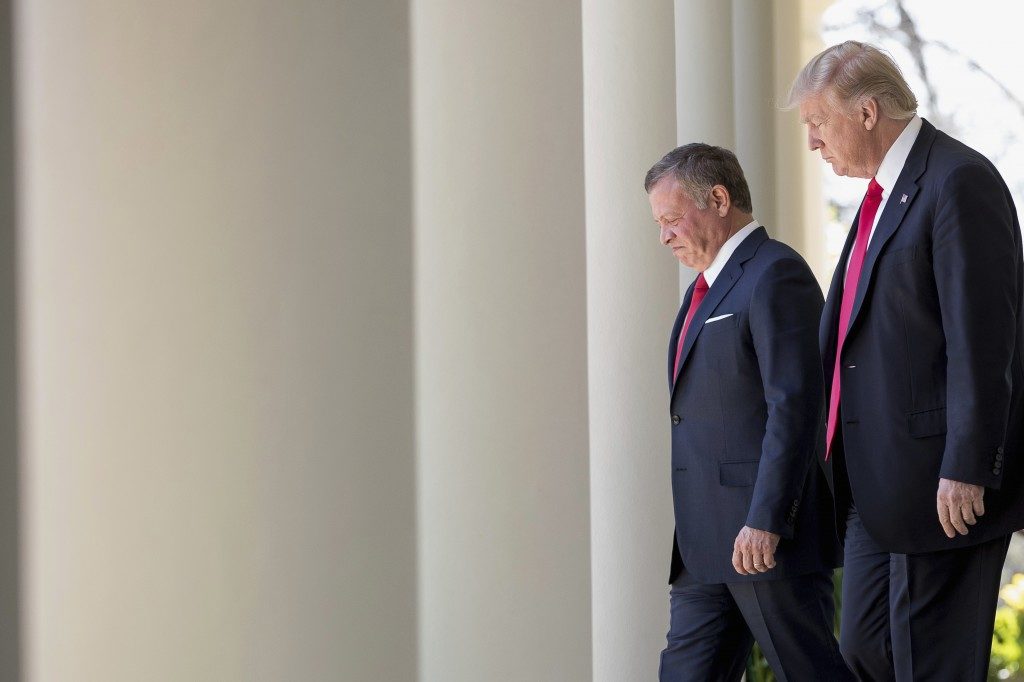
For Donald Trump, the reality of the world’s problems may be starting to sink in. Standing in the sunny White House Rose Garden, the president said Wednesday that the gruesome chemical weapons attack in Syria had changed his views on the quagmire of a conflict that he’d previously indicated he wanted to steer clear of. He mourned the deaths of the youngest victims — “innocent children, innocent babies” — and said brutality had “crossed a lot of lines for me.” “It is now my responsibility,” he declared. The president’s words were far from a declaration that he intends to act, and he notably avoided discussing what retaliatory options he would be willing to consider. Ultimately, his rhetoric may well land among the litany of harsh condemnations of Syrian President Bashar Assad by Barack Obama and other world leaders that did little to quell the six-year civil war. Yet Trump’s willingness to accept that he now bears some responsibility for a far-away conflict marked a significant moment for an “America First” president who has vowed to focus narrowly on U.S. interests. His comments also suggested a growing awareness that an American president — even an unconventional one like him — is looked to as defender of human rights and a barometer of when nations have violated international norms. The bloodshed in Syria is just one of the intractable international problems piling up around Trump. North Korea appears intent on building up its nuclear program, despite vague threats from his administration. The Islamic State group is still wreaking havoc in Iraq and Syria, while a Pentagon review of U.S. strategy sits on his desk. Trump conceded Wednesday that of all the world’s problems, the Middle East is one area he would rather avoid. His decision to at least rhetorically take a measure of responsibility was all the more striking given his frequent shoveling of blame for problems big and small onto anyone but himself. In public, he faults Obama for leaving him “a mess” and says his campaign opponent Hillary Clinton is behind the flood of revelations possibly linking his campaign to Russia. In private, he berates his staff for failing to fix the self-made crises that have battered the White House, including his pair of travel bans blocked by the courts and the failure to pass health care legislation. Trump initially took the same blame-shifting approach in addressing the deadly attack in Syria. In a short written statement Tuesday, he said the carnage was “a consequence of the past administration’s weakness and irresolution.” In 2013, Obama pulled back from planned airstrikes against Syria following a chemical weapons attack, despite having declared that the deployment of deadly gases would cross a “red line” for him. Obama’s decision was widely criticized in the U.S. and by Middle Eastern allies, and undermined later attempts to compel Assad to leave office. “The regrettable failure to take military action in 2013 to prevent Assad’s use of chemical weapons remains a blight on the Western world,” said Sen. Bob Corker, R-Tenn., the chairman of the Senate Foreign Relations Committee. Still, foreign policy officials within the Trump administration were irritated by the president’s eagerness to focus on his predecessor in his first reaction. Some wanted him to focus more on condemning Assad and highlighting U.S. resolve. Their objections did little to sway the president at the time. But just a day later, Trump appeared more willing to embrace the gravity of the situation and his new role in it. His posture may well have been impacted by the fact that his remarks in the Rose Garden came after meeting with Jordan’s King Abdullah, whose country has borne the brunt of the refugee crisis spurred by the Syrian war. Jordan is among Washington’s most important partners in the region and is significantly dependent on the United States. Abdullah, who worked closely with Obama, enthusiastically embraced Trump’s condemnation of the chemical weapons attack. During a joint news conference, he said to Trump, “I believe under your leadership we will be able to unravel this very complicated situation.” Eliot Cohen, a Trump critic who served in the State Department under President George W. Bush, said that whether Trump intended to or not, he now has put himself in the same position as Obama, raising the stakes for action in Syria, perhaps without having thought out whether he plans to follow through. “The deep irony here is you may see a lot of the same failures that the Obama administration had except delivered with a different style,” Cohen said. Republished with permission of The Associated Press.
Donald Trump steps up effort to dispute and distract on Russia

After weeks on the defensive, President Donald Trump has stepped up his efforts to dispute, downplay and distract from revelations stemming from the investigations into the Kremlin’s interference in last year’s election and possible Russian ties to his campaign associates. The White House says the real story is not about Russia — it’s about how Obama administration officials allegedly leaked and mishandled classified material about Americans. Trump and his aides have accused former officials of inappropriately disclosing — or “unmasking” — the names of Trump associates whose conversations were picked up by U.S. intelligences agencies. “Such amazing reporting on unmasking and the crooked scheme against us by @foxandfriends,” Trump tweeted Monday. ‘Spied on before nomination.’ The real story.” The White House has not pointed to any hard evidence to support such allegations, and instead has relied on media reports from some of the same publications Trump derides as “fake news.” The truth is buried somewhere in classified material that is illegal to disclose. Here’s a look at what the White House believes is the real story. __ THE FLYNN AFFAIR Trump fired national security adviser Michael Flynn following news reports that Flynn misled the White House about his contacts with Russia’s ambassador to the U.S. But the White House says the problem is that Flynn’s conversations were in the news at all. “The real story here is why are there so many illegal leaks coming out of Washington?” Trump tweeted after firing Flynn in February. The White House has called for investigations into the disclosure of multiple intercepted conversations that Flynn had with Ambassador Sergey Kislyak before the inauguration. The government routinely monitors the communications of foreign officials in the U.S. It’s illegal to publicly disclose such classified information. Officially, the White House said Flynn was forced to resign because he had given inaccurate descriptions of the discussions to Vice President Mike Pence and others in the White House. But Trump has continued to defend Flynn, suggesting he was only fired because information about his contacts came out in the media. “Michael Flynn, Gen. Flynn is a wonderful man,” Trump said. “I think he’s been treated very, very unfairly by the media.” ___ THE OBAMA ADMINISTRATION White House officials say some Obama holdovers are part of a so-called deep state out to tear Trump down. Last week, the White House latched onto a month-old television interview from an Obama administration official who said she encouraged congressional aides to gather as much information on Russia as possible before the inauguration. Evelyn Farkas, the former deputy assistant secretary of defense, said she feared that information “would disappear” after President Barack Obama left office. She was no longer in government at the time, having left the Pentagon about a year before the election. White House spokesman Sean Spicer called Farkas’ comments “devastating” and said they “raised serious concerns on whether or not there was an organized and widespread effort by the Obama administration to use and leak highly sensitive intelligence information for political purposes.” On Monday, Spicer suggested there should be more interest in a Bloomberg report in which anonymous U.S. officials said that Susan Rice, Obama’s national security adviser, asked for the identities of people related to Trump’s campaign and transition dozens of times. Spicer remarked that he was “somewhat intrigued by the lack of interest” in the Rice revelations. But he added: “I do think that it’s interesting, the level, or lack thereof, of interest in this subject.” As national security adviser, Rice would have regularly received intelligence reports and been able to request the identities of Americans whose communications were intercepted. ___ THE HILL WEIGHS IN The White House has embraced a top Republican’s assertion that information about Trump associates were improperly spread around the government in the final days of the Obama administration. It appears the White House played a role in helping House intelligence committee Chairman Devin Nunes, R-Calif., acquire some of that information. Nunes announced last week that he had seen intelligence reports showing that Trump aides’ communications were picked up through routine surveillance. But he said their identities may have been improperly revealed. The California congressman later said he viewed the reports at the White House. The White House contends that Nunes’ information — which has not been made public — validates Trump’s explosive claim that his predecessor wiretapped his New York skyscraper. Nunes has disputed that but still says he found the reports “troubling.” The White House’s apparent involvement in helping Nunes access the information has overshadowed what Trump officials contend are real concerns about how much information about Americans is disseminated in intelligence reports. Trump has asked the House and Senate intelligence committees to include the matter in their Russia investigations. ___ CAMPAIGN MODE Trump won the election, but thinks it’s his vanquished opponent whose ties to Russia should be investigated. Some of the White House’s allegations against Clinton stem from her four years as secretary of state, a role that gave her ample reasons to have frequent contacts with Russia. To deflect questions about Trump’s friendly rhetoric toward Russia, the White House points to the fact that Clinton was a central figure in the Obama administration’s attempt to “reset” relations with Moscow — an effort that crumbled after Vladimir Putin took back the presidency. “When you compare the two sides in terms of who’s actually engaging with Russia, trying to strengthen them, trying to act with them, trying to interact with them, it is night and day between our actions and her actions,” Spicer said. Rex Tillerson, Trump’s secretary of state, has deep ties to Russia from his time running ExxonMobil and cutting oil deals with Moscow. The White House has also tried to link Clinton to Russia’s purchase of a controlling stake in a mining company with operations in the U.S., arguing that she was responsible for “selling off one-fifth of our country’s uranium.” The Clinton-led State Department was among nine U.S. government agencies that had to approve the purchase of
Congress seen as not likely to pass tax overhaul quickly

After their humiliating loss on health care, Republicans in Congress could use a quick victory on a big issue. It won’t be an overhaul of the tax code. Overhauling the tax code could prove harder to accomplish than repealing and replacing Barack Obama‘s health law. Congressional Republicans are divided on significant issues, especially a new tax on imports embraced by House Speaker Paul Ryan. And the White House is sending contradicting signals on the new tax, adding to the uncertainty. House Republicans also can’t decide whether to move on from health care. Ryan canceled a scheduled vote on a House GOP plan after it became obvious that Republicans didn’t have the votes. He said he will continue to work on the issue but one of his top lieutenants on health care, Rep. Kevin Brady, R-Texas, says he is now “100 percent” focused on a tax overhaul. Ryan says Congress can work on both at the same time. It won’t be easy. Here’s why: ___ REPUBLICAN DIVIDE House and Senate Republicans largely agree on the broad outlines of a tax overhaul. They want to lower tax rates for individuals and corporations, and make up the lost revenue by scaling back tax breaks. But they are sharply divided on a key tenet of the House Republican plan. The new “border adjustment tax” would be applied to profits from goods and services consumed in the U.S., whether they are domestically produced or imported. Exports would be exempt. House GOP leaders say the tax is key to lowering the top corporate income tax rate from 35 percent to 20 percent. But good luck finding a single Republican senator who will publicly support the tax. Sen. Rob Portman, R-Ohio, is the latest in a long line of Republican senators to come out against the tax. ___ ABSENT DEMOCRATS Senate Finance Committee Chairman Orrin Hatch, R-Utah, says he wants to work with Democrats to overhaul the tax code. “A bipartisan bill would allow us to put in place more lasting reforms and give the overall effort additional credibility,” Hatch said. Majority Leader Mitch McConnell, R-Ky., has said it is bad policy to pass major legislation without bipartisan support. “Without some meaningful buy-in, you guarantee a food fight,” McConnell wrote in his memoir last year. “You guarantee instability and strife.” But in the House, Republicans haven’t reached out to Democrats in any meaningful way. ___ WHERE’S THE WHITE HOUSE? “Obviously we’re driving the train on this,” White House press secretary Sean Spicer said. But President Donald Trump‘s administration has been all over the map on tax reform. Trump at one point said the House border tax is too complicated, then said it’s in the mix. Treasury Secretary Steven Mnuchin told a Senate panel that “there would be no absolute tax cut for the upper class” in Trump’s tax plan. However, the plan Trump unveiled during his presidential campaign would provide big tax breaks to high-income households. Since taking office, Trump has promised “massive” tax cuts for the middle class. A former Treasury official under President Barack Obama says the White House needs to stake out clear goals on tax overhaul to guide the debate in Congress. “I think it’s important for the administration to signal early the general shape” of what they would like to accomplish so that there are fewer proposals vying for attention, said Michael Mundaca, a former assistant Treasury secretary now at Ernst & Young. ___ TAX CHANGE IS DIFFICULT There is a reason it’s been 31 years since the last time Congress rewrote the tax code. Since then, the number of exemptions, deductions and credits has mushroomed. Taxpayers enjoyed $1.6 trillion in tax breaks in 2016 — more than the federal government collected in individual income taxes. That huge number could provide plenty of tax breaks that lawmakers can scale back so they can lower tax rates significantly. There is just one problem — all of the biggest tax breaks are very popular and have powerful constituencies. Nearly 34 million families claimed the mortgage interest deduction in 2016. That same year more than 43 million families took advantage of a deduction of state and local taxes. The House Republicans’ tax plan would retain the mortgage deduction and eliminate the deduction for state and local taxes. ___ HEALTH CARE Both Trump and Republicans in Congress made big campaign promises to repeal and replace Obama’s health law, so the issue won’t go away. However, several players say negotiations on a way forward are non-existent. In the meantime, Trump is stoking animosity among a key voting bloc by criticizing them on Twitter. Two factions in the House GOP had members oppose the health plan: the hard-right Freedom Caucus and the moderate Tuesday Group. Ryan has suggested that they get together to sort out their differences, but it’s not happening, according to one key lawmaker. “We are not currently negotiating with the Freedom Caucus. There was never a meeting scheduled with the Freedom Caucus. We will never meet with the Freedom Caucus,” said Rep. Chris Collins, R-N.Y., a member of the Tuesday Group. Trump tweeted: “The Freedom Caucus will hurt the entire Republican agenda if they don’t get on the team, & fast. We must fight them, & Dems, in 2018!” To quote a favorite saying of the president, Not nice. Republished with permission of The Associated Press.
House Freedom Caucus chairman says there’s ‘no deal’ on the GOP health care legislation after White House meeting

The Latest on the upcoming health care vote in the House (all times local): 1:35 p.m. The chairman of the conservative House Freedom Caucus says there’s “no deal” on the GOP health care legislation after a meeting at the White House with President Donald Trump. The assertion from Congressman Mark Meadows of North Carolina throws plans for a vote on the bill later Thursday into doubt. Two dozen or so Freedom Caucus members have opposed the legislation pushed by GOP leaders, saying it doesn’t go far enough to repeal “Obamacare.” But the group had been negotiating directly with the White House in hopes of reaching agreement to eliminate additional requirements on insurers. Without a deal with the Freedom Caucus, and with moderate-leaning members defecting, it seems unlikely GOP leaders will have the votes they need to go forward with a vote later Thursday as they had planned. ___ 10:06 a.m. Former President Barack Obama is celebrating the seventh anniversary of his landmark health care law, saying in a statement on Thursday that “America is stronger because of the Affordable Care Act.” Obama does not directly address GOP efforts to repeal his law, which are coming to a head Thursday as House leaders push toward a vote on their repeal legislation. Republicans remain short of votes. The former president does say that if Republicans are serious about lowering costs and expanding coverage, and are prepared to work with Democrats, “That’s something we all should welcome.” But, Obama says, “we should start from the baseline that any changes will make our health care system better, not worse for hardworking Americans.” He notes 20 million Americans gained coverage under his law. ___ 9:40 a.m. President Donald Trump is urging people to call their lawmakers to express support for the Republican legislation to repeal and replace “Obamacare.” Trump posted a video on Twitter Thursday asking people to get behind the plan. He says that people were “given many lies” about the Affordable Care Act. Trump added that the legislation was “terrific” and “you’re going to be very, very happy.” The GOP legislation was on the brink hours before Republican leaders planned to put it on the House floor for a showdown vote. Trump was spending the final hours trying to close the deal with conservatives who have opposed the plan. ___ 9:00 a.m. The GOP’s long-promised legislation to repeal and replace “Obamacare” stands on the brink, just hours before Republican leaders planned to put it on the House floor for a showdown vote. The stakes are high, and Republicans are staring at the possibility of a failure that would throw prospects for their other legislative goals into uncertainty. Speaking to members of the conservative Freedom Caucus mid-day Thursday, Trump is pitching concessions to representatives who want to limit the requirement for health plans to include benefits including substance abuse and maternity care. But those changes appear to be scaring off at least some moderate Republicans. In a count by The Associated Press, at least 26 Republicans say they opposed the bill, enough to narrowly defeat the measure. Republished with permission of The Associated Press.
