
Paul Manafort had plan to benefit Vladamir Putin government

President Donald Trump‘s former campaign chairman, Paul Manafort, secretly worked for a Russian billionaire to advance the interests of Russian President Vladimir Putin a decade ago and proposed an ambitious political strategy to undermine anti-Russian opposition across former Soviet republics, The Associated Press has learned. The work appears to contradict assertions by the Trump administration and Manafort himself that he never worked for Russian interests. Manafort proposed in a confidential strategy plan as early as June 2005 that he would influence politics, business dealings and news coverage inside the United States, Europe and the former Soviet republics to benefit the Putin government, even as U.S.-Russia relations under Republican President George W. Bush grew worse. Manafort pitched the plans to Russian aluminum magnate Oleg Deripaska, a close Putin ally with whom Manafort eventually signed a $10 million annual contract beginning in 2006, according to interviews with several people familiar with payments to Manafort and business records obtained by the AP. Manafort and Deripaska maintained a business relationship until at least 2009, according to one person familiar with the work. “We are now of the belief that this model can greatly benefit the Putin Government if employed at the correct levels with the appropriate commitment to success,” Manafort wrote in the 2005 memo to Deripaska. The effort, Manafort wrote, “will be offering a great service that can re-focus, both internally and externally, the policies of the Putin government.” Manafort’s plans were laid out in documents obtained by the AP that included strategy memoranda and records showing international wire transfers for millions of dollars. How much work Manafort performed under the contract was unclear. The disclosure comes as Trump campaign advisers are the subject of an FBI probe and two congressional investigations. Investigators are reviewing whether the Trump campaign and its associates coordinated with Moscow to meddle in the 2016 campaign. Manafort has dismissed the investigations as politically motivated and misguided, and said he never worked for Russian interests. The documents obtained by AP show Manafort’s ties to Russia were closer than previously revealed. In a statement to the AP, Manafort confirmed that he worked for Deripaska in various countries but said the work was being unfairly cast as “inappropriate or nefarious” as part of a “smear campaign.” “I worked with Oleg Deripaska almost a decade ago representing him on business and personal matters in countries where he had investments,” Manafort said. “My work for Mr. Deripaska did not involve representing Russia’s political interests.” Deripaska became one of Russia’s wealthiest men under Putin, buying assets abroad in ways widely perceived to benefit the Kremlin’s interests. U.S. diplomatic cables from 2006 described Deripaska as “among the 2-3 oligarchs Putin turns to on a regular basis” and “a more-or-less permanent fixture on Putin’s trips abroad.” In response to questions about Manafort’s consulting firm, a spokesman for Deripaska in 2008 — at least three years after they began working together — said Deripaska had never hired the firm. Another Deripaska spokesman in Moscow last week declined to answer AP’s questions. Manafort worked as Trump’s unpaid campaign chairman last year from March until August. Trump asked Manafort to resign after AP revealed that Manafort had orchestrated a covert Washington lobbying operation until 2014 on behalf of Ukraine’s ruling pro-Russian political party. The newly obtained business records link Manafort more directly to Putin’s interests in the region. According to those records and people with direct knowledge of Manafort’s work for Deripaska, Manafort made plans to open an office in Moscow, and at least some of Manafort’s work in Ukraine was directed by Deripaska, not local political interests there. The Moscow office never opened. Manafort has been a leading focus of the U.S. intelligence investigation of Trump’s associates and Russia, according to a U.S. official. The person spoke on condition of anonymity because details of the investigation were confidential. Meanwhile, federal criminal prosecutors became interested in Manafort’s activities years ago as part of a broad investigation to recover stolen Ukraine assets after the ouster of pro-Russian President Viktor Yanukovych there in early 2014. No U.S. criminal charges have ever been filed in the case. FBI Director James Comey, in confirming to Congress the federal intelligence investigation this week, declined to say whether Manafort was a target. Manafort’s name was mentioned 28 times during the hearing of the House Intelligence Committee, mostly about his work in Ukraine. No one mentioned Deripaska. White House spokesman Sean Spicer said Monday that Manafort “played a very limited role for a very limited amount of time” in the campaign, even though as Trump’s presidential campaign chairman he led it during the crucial run-up to the Republican National Convention. Manafort and his associates remain in Trump’s orbit. Manafort told a colleague this year that he continues to speak with Trump by telephone. Manafort’s former business partner in eastern Europe, Rick Gates, has been seen inside the White House on a number of occasions. Gates has since helped plan Trump’s inauguration and now runs a nonprofit organization, America First Policies, to back the White House agenda. Gates, whose name does not appear in the documents, told the AP that he joined Manafort’s firm in 2006 and was aware Manafort had a relationship with Deripaska, but he was not aware of the work described in the memos. Gates said his work was focused on domestic U.S. lobbying and political consulting in Ukraine at the time. He said he stopped working for Manafort’s firm in March 2016 when he joined Trump’s presidential campaign. Manafort told Deripaska in 2005 that he was pushing policies as part of his work in Ukraine “at the highest levels of the U.S. government — the White House, Capitol Hill and the State Department,” according to the documents. He also said he had hired a “leading international law firm with close ties to President Bush to support our client’s interests,” but he did not identify the firm. Manafort also said he was employing unidentified legal experts for the effort at leading universities and
Winners and losers in Donald Trump’s first budget plan

Military spending would get the biggest boost in President Donald Trump‘s proposed budget. Environmental programs, medical research, Amtrak and an array of international and cultural programs — from Africa to Appalachia — would take big hits, among the many parts of the government he’d put on a crash diet. The budget proposal out Thursday is a White House wish list; it’ll be up to Congress to decide where money goes. If Trump gets his way, there will be more losers than winners among government departments and programs. Some programs would tread water: WIC grants — money to states for health care and nutrition for low-income women, infants and children — are one example. Monday for states grants for water infrastructure projects would be held level as well. Some others would lose everything: Trump proposes to eliminate money for the Corporation for Public Broadcasting, the national endowments for the arts and the humanities and more than a dozen other independent agencies financed by the government. A sampling: WINNERS —The Pentagon. Trump proposes a 10 percent increase in the massive defense budget, adding $52 billion in military spending in one year top expand personnel, equipment and capability. Another $2 billion would go to nuclear weapons. —Veterans Affairs. Up 5.9 percent. That’s an additional $4.4 billion, driven by ever-growing health care costs. —Homeland Security. Up 6.8 percent. That’s $2.8 billion more. Most of the increase, $2.6 billion, would be to help kick-start Trump’s promised border wall. The president has repeatedly said Mexico would pay for the wall; Mexican officials are adamant that they won’t. Trump also wants an extra $1.5 billion for more immigration jails and deportations, and $314 million to hire 1,500 immigration enforcement and border patrol agents. —The National Nuclear Security Administration, which oversees the maintenance and safety of the nuclear arsenal and its research labs. The agency would grow by 11.3 percent, or $1.4 billion, so that it takes up more than half the Energy Department’s budget, which would shrink overall. —Opioid prevention and treatment: a proposed $500 million increase in the Health and Human Services Department to counter the epidemic and more money for the Justice Department to combat the problem. —School choice: $1.4 billion more to expand school choice programs, bringing spending in that area to $20 billion, even as the Education Department’s overall budget would be cut by $9 billion, or 13 percent. LOSERS: —EPA, facing a 31.4 percent cut, or $2.6 billion. The plan would cut 3,200 jobs at the agency, eliminate a new plan for tighter regulations on power plants, and “zero out” programs to clean up the Great Lakes and the Chesapeake Bay. —Health and Human Services, facing the largest cut in dollar terms: $12.6 billion, or 16.2 percent. The plan would cut $5.8 billion from the nearly $32 billion National Institutes of Health, the nation’s premier medical research agency, bringing its total to $25.9 billion. It’s not clear what research on diseases or disorders would lose the most money, although the budget plan specifically calls for elimination of a division that focuses on global health. Already, the NIH’s budget hasn’t kept pace with inflation over the last decade, making it dramatically harder for scientists around the country to win money for research projects into potential new treatments or better understanding of disease. —State Department and U.S. Agency for International Development. Down 28 percent, or $10 billion. Foreign aid would be reduced, as would money to the U.N. and to multilateral development banks including the World Bank. Some foreign military grants would be shifted to loans. —Labor Department. A more than 20 percent cut, or $2.5 billion. To be eliminated: a $434 million program that has helped more than 1 million people 55 and older find jobs, according to the department. The blueprint says the Senior Community Service Employment Program is inefficient and unproven. —Agriculture Department. A nearly 21 percent cut, or $4.7 billion, achieved in part by cutting land acquisition in the National Forest System, rural water infrastructure and statistical capabilities at the department. Trump also proposes reduced staff in county USDA offices, an idea that fell flat in Congress when President Barack Obama proposed a similar reduction. —Transportation Department. Trump proposes a cut of nearly 13 percent, or $2.4 billion. Amtrak, local transit agencies, and rural communities that depend on federal subsidies to obtain scheduled airline service would take the brunt. Trump would eliminate subsidies for Amtrak long-distance train routes, which would most likely mean the end of those routes since they are generally not profitable. Money for the Federal Transit Administration grant program for new light rail and subway construction would be eliminated except for multi-year projects the government has already committed to help fund. —Internal Revenue Service: After years of cuts, the IRS budget would be cut again — by $239 million from this year’s spending levels. The IRS budget is down about $1 billion from its height in 2010. Since then, the agency has lost more than 17,000 employees. As a result, the chances of getting audited have rarely been so low. —Commerce Department. A 16 percent or $1.5 billion cut. The plan would eliminate more than $250 million in National Oceanic and Atmospheric Administration grants, including a program that helps coastal communities adapt to climate change, deal with invasive species and maintain healthy water and fisheries. Also on the chopping block: the Economic Development Administration, which provides federal dollars to foster job creation and attract private investment; and the Minority Business Development Agency, which is dedicated to helping minority-owned business get off the ground and grow. The Trump administration says the two agencies duplicate work done elsewhere. —School programs: The plan would eliminate a $1.2 billion initiative that supports before- and after-school programs as well as summer programs. —Independent agencies supported by tax dollars. If Trump prevails, a hefty contingent of entities would lose all federal money and be shut. Among them, the public broadcasting corporation, the Appalachian Regional Commission, the Chemical Safety Board, the United States
House GOP health bill facing fresh House committee test

The White House and Republican leaders are talking to rank-and-file lawmakers about revising the GOP health care overhaul, hoping to keep a rebellion by conservatives and moderates from snowballing and imperiling the party’s showpiece legislation. Four days after a congressional report projected the bill would pry coverage from millions of voters, signs of fraying GOP support for the legislation were showing. The measure would strike down much of former President Barack Obama‘s 2010 overhaul and reduce the federal role, including financing, for health care consumers and is opposed uniformly by Democrats. In a fresh test of Republicans’ willingness to embrace the legislation, the House Budget Committee was considering the measure Thursday. Republicans expressed confidence the bill would be approved, but the vote could be tight. The panel can’t make significant changes but was expected to endorse non-binding, suggested changes to nail down votes. The bill would eliminate the tax penalty that pressures people to buy coverage and the federal subsidies that let millions afford it, replacing them with tax credits that are bigger for older people. It would cut Medicaid, repeal the law’s tax increases on higher earning Americans and require 30 percent higher premiums for consumers who let coverage lapse. Overt GOP opposition grew after the nonpartisan Congressional Budget Office projected Monday that the legislation would push 24 million Americans off coverage in a decade and shift out-of-pocket costs toward lower income, older people. Obama’s law has provided coverage to around 20 million additional people House Speaker Paul Ryan, R-Wis., told reporters Wednesday that leaders could now make “some necessary improvements and refinements” to the legislation. But he declined to commit to bringing the measure to the House floor next week, a schedule Republican leaders have repeatedly said they intended to keep. At a late rally in Nashville Wednesday, President Donald Trump said: “We’re going to arbitrate, we’re all going to get together, we’re going to get something done.” Vice President Mike Pence met with House GOP lawmakers and pressed them to unite behind the legislation. “‘It’s our job to get it out of here and get it to the Senate,’” Pence told Republicans, according to Rep. Dennis Ross, R-Fla. That would let Trump pressure “Democrats in these red states to come on board,’” Ross said, referring to Republican-leaning states where Democratic senators face re-election next year. But insurgents still abound. Conservatives want to end Obama’s expansion of Medicaid to 11 million additional low-income people next year, not 2020 as the bill proposes. They say a GOP proposed tax credit to help people pay medical costs is too generous, and they want to terminate all of Obama’s insurance requirements, including mandatory coverage of specified services like drug counseling. Rep. Mark Meadows, R-N.C., head of the hard-line conservative House Freedom Caucus, continued pushing for changes. He claimed at least 21 members of his group would oppose the measure as written; the bill would fail if 22 Republicans join all Democrats in opposing it. But underscoring the push-pull problem GOP leaders face in winning votes, moderates feel the tax credits are too stingy, especially for low earners and older people. They oppose accelerating the phase-out of the Medicaid expansion and are unhappy with long-term cuts the measure would inflict on the entire program. Terminating the Medicaid expansion in 2020 and not 2018 “is sacrosanct to me,” said moderate Rep. Tom MacArthur, R-N.J. In a new complication, Sen. Charles Grassley, R-Iowa, said the measure lacked the votes to pass in the Senate, where Republicans hold a precarious 52-48 majority. That left House members angry over being asked to take a politically risky vote for legislation likely to be altered. Moderates “don’t like the idea of taking a vote in the House that may go nowhere in the Senate,” said Rep. Charlie Dent, R-Pa. Amid the maneuvering, a federal report said more than 12 million people have signed up for coverage this year under the very statute that Republicans want to repeal. That figure underscored the potential political impact of the GOP’s next move. Republished with permission of The Associated Press.
Donald Trump embraces legacy of Andrew Jackson

It was an ugly, highly personal presidential election. An unvarnished celebrity outsider who pledged to represent the forgotten laborer took on an intellectual member of the Washington establishment looking to extend a political dynasty in the White House. Andrew Jackson‘s triumph in 1828 over President John Quincy Adams bears striking similarities to Donald Trump‘s victory over Hillary Clinton last year, and some of those most eager to point that out are in the Trump White House. Trump’s team has seized upon the parallels between the current president and the long-dead Tennessee war hero. Trump has hung a portrait of Jackson in the Oval Office and Trump’s chief strategist, Stephen Bannon, who has pushed the comparison, told reporters after Trump’s inaugural address that “I don’t think we’ve had a speech like that since Andrew Jackson came to the White House.” Trump himself mused during his first days in Washington that “there hasn’t been anything like this since Andrew Jackson.” It’s a remarkable moment of rehabilitation for a figure whose populist credentials and anti-establishment streak has been tempered by harsher elements of his legacy, chiefly his forced removal of Native Americans that caused disease and the death of thousands. “Both were elected presidents as a national celebrity; Jackson due to prowess on battlefield and Trump from making billions in his business empire,” said Douglas Brinkley, a professor of history at Rice University. “And it’s a conscious move for Trump to embrace Jackson. In American political lore, Jackson represents the forgotten rural America while Trump won by bringing out that rural vote and the blue collar vote.” The seventh president, known as “Old Hickory” for his toughness on the battlefield, gained fame when he led American forces to a victory in the Battle of New Orleans in the final throes of the War of 1812. He did serve a term representing Tennessee in the Senate, but he has long been imagined as a rough and tumble American folk hero, an anti-intellectual who believed in settling scores against political opponents and even killed a man in a duel for insulting the honor of Jackson’s wife. Jackson also raged against what he deemed “a corrupt bargain” that prevented him from winning the 1824 election against Adams when the race was thrown to the House of Representatives after no candidate received a majority in the Electoral College. Even before the vote in November, Trump railed against a “rigged” election and has repeatedly asserted, without evidence, widespread voter fraud prevented his own popular vote triumph. Jackson’s ascension came at a time when the right to vote was expanded to all white men — and not just property-owners — and he fashioned himself into a populist, bringing new groups of voters into the electoral system. Remarkably, the popular vote tripled between Jackson’s loss in 1824 and his victory four years later, and he used the nation’s growing newspaper industry — like Trump on social media — to spread his message. Many of those new voters descended on Washington for Jackson’s 1829 inauguration and the crowd of thousands that mobbed the Capitol and the White House forced Jackson to spend his first night as president in a hotel. Once in office, he continued his crusade as a champion for the common man by opposing the Second Bank of the United States, which he declared to be a symptom of a political system that favored the rich and ignored “the humble members of society — the farmers, mechanics, and laborers — who have neither the time nor the means of securing like favors to themselves.” Jackson, as Trump hopes to do, expanded the powers of the presidency, and a new political party, the new Democratic party, coalesced around him in the 1820s. He was the first non-Virginia wealthy farmer or member of the Adams dynasty in Massachusetts to be elected president. “The American public wanted a different kind of president. And there’s no question Donald Trump is a different kind of president,” Sen. Majority Leader Mitch McConnell, R-Ky., said this past week. “He’s now comparing himself to Andrew Jackson. I think it’s a pretty good, a pretty good comparison. That’s how big a change Jackson was from the Virginia and Massachusetts gentlemen who had been president of the United States for the first 40 years.” But there are also limits to the comparison, historians say. Unlike Jackson, who won in 1828 in a landslide, Trump lost the popular vote by nearly 3 million ballots. Jon Meacham, who wrote a 2008 biography of Jackson, “American Lion,” said Jackson was “an outsider in style but not in substance” and his outlandish public pronouncements would often be followed by hours of deep conversations and letter-writing hashing out political calculations. “He was a wild man during the day but a careful diplomat at night,” said Meacham, who said it was too early to know whether Trump, like Jackson, “had a strategy behind his theatrics,” and whether Trump had the ability to harness the wave of populism that has swept the globe as it did in the 1820s. “The moment is Jacksoninan but do we have a Jackson in the Oval Office?” Meacham asked. Trump’s appropriation of Jackson came after his victory. Trump never mentioned Jackson during the campaign or discussed Jackson during a series of conversations with Meacham last spring But it is hardly unique for a president to adopt a previous one as a historical role model. Barack Obama frequently invoked Abraham Lincoln. Dwight Eisenhower venerated George Washington. Jackson himself had been claimed by Franklin Roosevelt and his successor, Harry Truman, both of whom — unlike Trump — interpreted Jackson’s populism as a call for expanded government, in part to help the working class. There could be other comparisons for Trump. A favorable one would be Eisenhower, also a nonpolitician who governed like a hands-off CEO. A less favorable one would be Andrew Johnson, a tool of his party whose erratic behavior helped bring about his impeachment. Trump’s embrace could signal an
Donald Trump nominee decried criticism of judges, senators agree
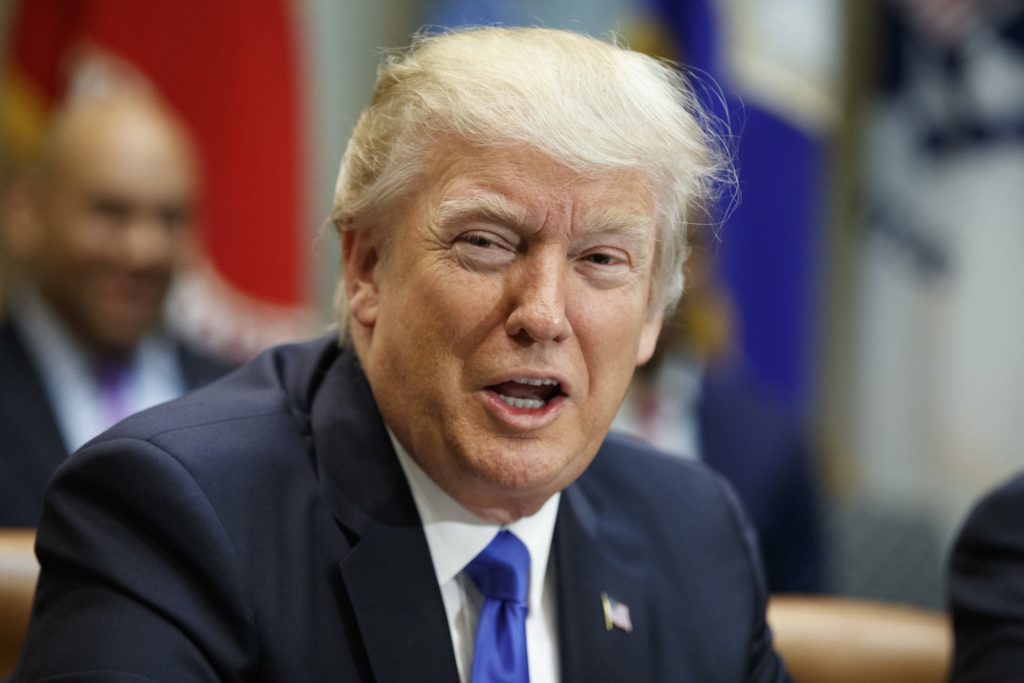
President Donald Trump insisted Thursday that comments by his Supreme Court nominee criticizing his own attacks on the judiciary were “misrepresented,” even as Republican and Democratic lawmakers vouched for the veracity of the remarks. Trump responded after private rebukes from Judge Neil Gorsuch, who said in meetings with lawmakers on Wednesday that the president’s comments about federal judges were “disheartening.” Gorsuch, who was nominated by Trump last week to the nation’s highest court, made the comments in meetings with senators after Trump accused an appeals court panel considering his immigration and refugee executive order of being “so political.” Over the weekend, he labeled a judge who ruled on his executive order a “so-called judge” and referred to the ruling as “ridiculous.” Democratic Sen. Richard Blumenthal of Connecticut first relayed Gorsuch’s remarks on Wednesday following a meeting with him. Trump’s own confirmation team for Gorsuch later confirmed he had made the remarks. But Trump said during a Thursday luncheon with senators that Blumenthal had misrepresented Gorsuch. “His comments were misrepresented. And what you should do is ask Senator Blumenthal about his Vietnam record that didn’t exist after years of saying it did,” he said. Blumenthal, who served in the Marine Corps Reserves during Vietnam, apologized in 2010 for saying he had served in Vietnam. The president made the comments while making the case for Gorsuch during a luncheon with 10 senators, including six of Blumenthal’s fellow Democrats. Blumenthal, a former state attorney general, argued Thursday that Gorsuch would need to go further to publicly denounce Trump’s verbal assault on judicial independence. “He needs to condemn Donald Trump’s attacks publicly and it needs to be much stronger, more explicit and direct than has been done so far,” Blumenthal said. “Unless it is done publicly in a clear condemnation, it will not establish his independence.” Lawmakers from both parties quickly vouched for the veracity of the remarks the senator said Gorsuch made. GOP former Sen. Kelly Ayotte, who is helping with Gorsuch’s confirmation and was at the meeting, issued a statement saying Gorsuch made clear he was not referring to any specific case. But she said the nominee said he finds any criticism of a judge’s integrity and independence to be “disheartening and demoralizing.” Senate Minority Leader Chuck Schumer, D-N.Y., and Sen. Ben Sasse, R-Neb., each confirmed that Gorsuch made the same comments to them. Sasse told MSNBC’s “Morning Joe,” ”Frankly, he got pretty passionate about it.” He added that Gorsuch said any attack on the “‘brothers or sisters of the robe is an attack on all judges’.” Fellow Connecticut Democratic Sen. Chris Murphy came to Blumenthal’s defense Thursday, lashing out in a tweet directed at Trump: “Ha! As a prosecutor, Dick used to put guys like u in jail. Now, u use your position to mock vets, he uses his to make their lives better.” Gorsuch’s comments came at the end of a week of meetings with members of the Senate, which is considering his nomination. His response may have been aimed at drawing a line of separation with the new president. The 9th U.S. Circuit Court of Appeals is weighing the appeal of Trump’s executive order on immigration, which included a temporary travel ban on people from seven Muslim-majority countries. In a hearing Tuesday, judges on the appeals court challenged the administration’s claim that the ban was motivated by terrorism fears, but they also questioned an attorney’s argument that it unconstitutionally targeted Muslims. Trump told visiting police chiefs Wednesday that a portion of the immigration law gives him the power to enact the ban, calling it “beautifully written” and saying, “A bad high school student would understand this.” “Courts seem to be so political and it would be so great for our justice system if they would be able to read a statement and do what’s right,” Trump added. “And that has to do with the security of our country, which is so important.” Since a lower-court judge blocked the order last week, Trump has assailed the decision, leading legal experts, Democrats and some Republicans to question whether his remarks might jeopardize the independence of the judiciary. Others have expressed fears he may be attempting to use political influence to sway the courts. The president has repeatedly said foreigners are “pouring in” since the ban was put on hold and suggested that blocking the order would be dangerous for U.S. citizens. On Wednesday he tweeted, “Big increase in traffic into our country from certain areas, while our people are far more vulnerable, as we wait for what should be EASY D!” The administration has not provided any information to support his claims. Republished with permission of The Associated Press.
Dems force delays in votes on Jeff Sessions, Steve Mnuchin, Tom Price
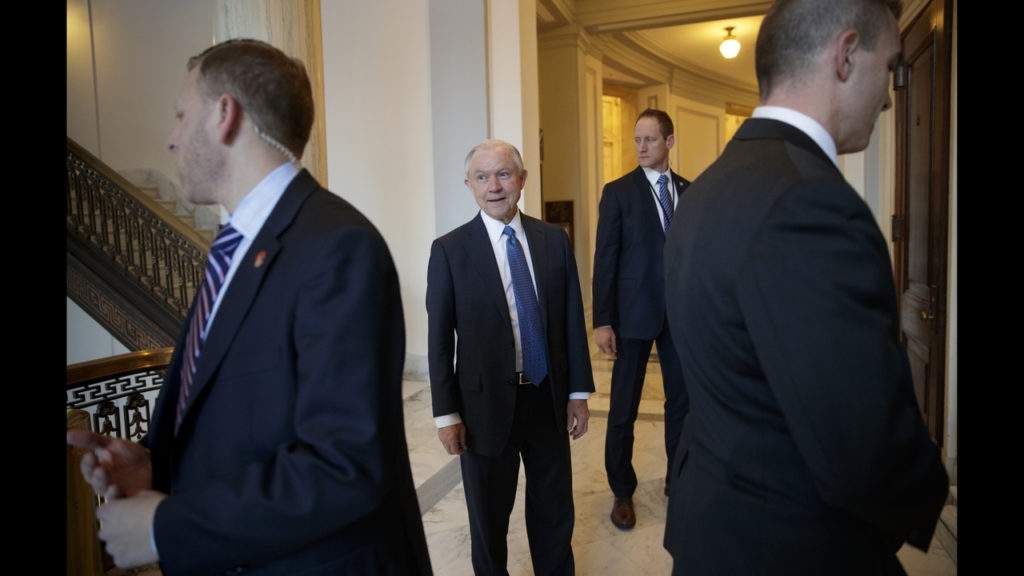
Democrats forced delays Tuesday in planned Senate committee votes on President Donald Trump‘s picks for Health and Treasury secretaries and attorney general, amid growing Democratic surliness over the administration’s aggressive early moves against refugees and an expected bitter battle over filling the Supreme Court vacancy. Democrats abruptly boycotted a Senate Finance Committee meeting called to vote on Rep. Tom Price, R-Ga., the Health nominee and Steve Mnuchin, Trump’s Treasury selection, saying both had misled Congress about their financial backgrounds. The Democrats’ action prevented the Finance panel from acting because under committee rules, 13 of its members — including at least one Democrat — must be present for votes. It was unclear when the panel would reschedule to votes. At the Senate Judiciary Committee, a meeting considering Sen. Jeff Sessions, R-Ala., to be attorney general lasted so long — chiefly because of lengthy Democratic speeches — that Chairman Charles Grassley, R-Iowa, said the panel would meet again Wednesday. The meeting on Sessions’ nomination was coming with Democrats and demonstrators around the country in an uproar over Trump’s executive order temporarily blocking refugees. Even some Republicans were warning it could hinder anti-terrorism efforts. Not everything ground to a halt. The Senate education committee voted 12-11 to send Trump’s pick to head the Education Department, Betsy DeVos, to the full Senate for a confirmation vote. The Senate Energy and Natural Resources Committee quickly approved former Texas Gov. Rick Perry as Energy secretary by 16-7, and Rep. Ryan Zinke, R-Mont., to head Interior by 16-6. And the full Senate easily confirmed Elaine Chao to become transportation secretary by a 93-6 vote. Chao was labor secretary under President George W. Bush, and is wife of Senate Majority Leader Mitch McConnell, R-Ky. Just before the Finance committee was scheduled to vote on Price and Mnuchin, Democrats called a briefing for reporters and announced their plan to force a delay. Sen. Debbie Stabenow, D-Mich., said Price and Mnuchin would hold positions “that directly affect peoples’ lives every day. The truth matters.” Finance Committee Chairman Orrin Hatch, R-Utah, accused Democrats of “a lack of desire to fulfill their constitutional responsibilities.” “They ought to stop posturing and acting like idiots,” he said. In 2013 when Democrats controlled the Senate, Republicans boycotted a committee vote on Gina McCarthy to head the Environmental Protection Agency, temporarily stalling it. Democrats cited one report in The Wall Street Journal that Price received a special, discounted offer to buy stock in a biomedical company, which contradicted his testimony to Congress. They said another report in The Columbus Dispatch showed documents revealing that Mnuchin had not been truthful with the Senate in the confirmation process in comments about how his bank OneWest had handled home foreclosures. Republicans have supported both men, and both have strongly defended their actions. Democrats have opposed Price, a seven-term congressional veteran, for his staunch backing of his party’s drive to scuttle Obama’s health care law and to reshape Medicare and Medicaid, which help older and low-income people afford medical care. They’ve also assailed Price for buying stocks of health care firms, accusing him of using insider information and conflicts of interest for backing legislation that could help his investments. Price says his trades were largely managed by brokers and that he’s followed congressional ethics rules. Democrats have criticized Mnuchin for not initially revealing nearly $100 million in assets, and were expected to vote against both nominees. They’ve also accused him of failing to protect homeowners from foreclosures and criticized him for not initially disclosing all his assets. DeVos, a wealthy GOP donor and conservative activist, has long supported charter schools and allowing school choice. That’s prompted opposition from Democrats and teachers’ unions who view her stance as a threat to federal dollars that support public education. Critics have also mocked her for suggesting that guns could be justified in schools to protect students from grizzly bears. Two prominent Republicans on the education committee, Sens. Susan Collins of Maine and Lisa Murkowski of Alaska, said they remained uncertain if they will vote for her on the Senate floor. Murkowski said DeVos has yet to prove that she deeply cares about America’s struggling schools and its children. Republished with permission of the Associated Press.
Promises, pomp and protests as Donald Trump sworn in
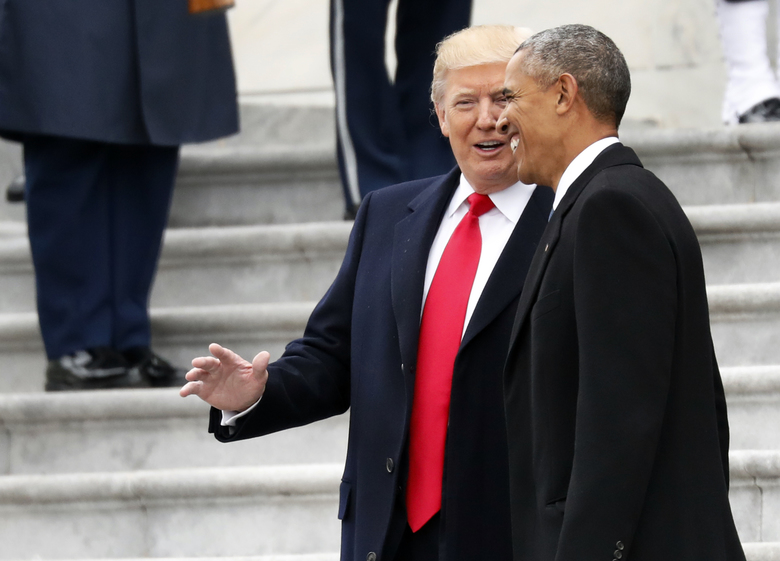
Pledging to empower America’s “forgotten men and women,” Donald Trump was sworn in as the 45th president of the United States Friday, taking command of a deeply divided nation and ushering in an unpredictable era in Washington. His victory gives Republicans control of the White House for the first time in eight years. Looking out over the crowd sprawled across the National Mall, Trump painted a bleak picture of the nation he now leads, lamenting “American carnage,” shuttered factories and depleted U.S. leadership. President Barack Obama, the man he replaced, sat behind him stoically. Trump’s address lasted just 16 minutes. While his inauguration did draw crowds to the nation’s capital, the numbers appeared smaller than for past celebrations. Demonstrations unfolded at various security checkpoints near the Capitol as police helped ticket-holders get through. After the swearing-in, more protesters registered their rage in the streets of Washington. Police in riot gear deployed pepper spray and made numerous arrests after protesters smashed the windows of downtown businesses, denouncing capitalism and Trump. The new president’s first words as commander in chief were an unapologetic reprisal of the economic populism and nationalism that fueled his improbable campaign. He vowed to stir “new national pride,” bring jobs back to the United States, and “eradicate completely” Islamic terrorism. “From this day forward, a new vision will govern our land. From this day forward, it’s going to be only, ‘America First,’” Trump said. His address lasted just 16 minutes. While Trump’s inauguration did draw crowds to the nation’s capital, the numbers appeared smaller than for past celebrations. In a remarkable scene, Trump ripped into Washington’s longtime leaders as he stood among them at the U.S. Capitol. For too long, he said, “a small group in our nation’s capital has reaped the rewards of government while the people have borne the cost.” For Republicans eager to be back in the White House, there was little mention of the party’s bedrock principles: small government, social conservativism and robust American leadership around the world. Trump, who is taking office as one of the most unpopular incoming presidents in modern history, made only oblique references to those who may be infuriated and fearful of his presidency. “To all Americans in every city near and far, small and large from mountain to mountain, from ocean to ocean, hear these words: You will never be ignored again,” he said. The new president was sworn in by Chief Justice John Roberts, reciting the 35-word oath with his hand placed upon two Bibles, one used by his family and another during President Abraham Lincoln’s inauguration. Trump and wife, Melania, bid Obama and outgoing first lady Michelle Obama farewell as they departed the Capitol grounds in a government helicopter. Trump and Obama’s political paths have been linked in remarkable ways. Before running for the White House, the billionaire businessman led efforts to promote falsehoods about the 44th president’s citizenship and claim on the office. Obama addressed a staff gathering at Joint Base Andrews before departing for a vacation in California. “You proved the power of hope,” he said. Trump’s journey to the inauguration was as unlikely as any in recent American history. He defied his party’s establishment, befuddled the media and toppled two political dynasties on his way to victory. His message, calling for a resurgence of white, working-class corners of America, was packaged in defiant stump speeches railing against political correctness. He used social media to dominate the national conversation and challenge conventions about political discourse. After years of Democratic control of the White House and deadlock in Washington, his was a blast of fresh air for millions. But Trump’s call for restrictive immigration measures and his caustic campaign rhetoric about women and minorities angered millions. And Trump’s swearing-in was shadowed by questions about his ties to Russia, which U.S. intelligence agencies have determined worked to tip the 2016 election in his favor. More than 60 House Democrats refused to attend his swearing in ceremony in the shadow of the Capitol dome. One Democrat who did sit among the dignitaries was Hillary Clinton, Trump’s vanquished campaign rival who was widely expected by both parties to be the one taking the oath of office. At a post-ceremony luncheon at the Capitol, Trump asked the Republicans and Democrats present to recognize her, and those in the room rose and applauded. At 70, Trump is the oldest person to be sworn in as president, marking a generational step backward after two terms for Obama, one of the youngest presidents to serve as commander in chief. Trump takes charge of an economy that has recovered from the Great Recession but has nonetheless left millions of Americans feeling left behind. The nation’s longest war is still being waged in Afghanistan and U.S. troops are battling the Islamic State in Iraq and Syria. The American health care system was expanded to reach millions more Americans during Obama’s tenure, but at considerable financial costs. Trump has vowed to dismantle and rebuild it. Trump faces challenges as the first president to take office without ever having held a political position or served in the military. He has stacked his Cabinet with established Washington figures and wealthy business leaders. Though his team’s conservative bent has been cheered by many Republicans, the overwhelmingly white and male Cabinet has been criticized for a lack of diversity. Before attending an inaugural luncheon, Trump signed his first series of orders, including the official nominations for his Cabinet. He joked with lawmakers, including House Democratic leader Nancy Pelosi, and handed out presidential pens. In a show of solidarity, all of the living American presidents attended Trump’s inaugural, except for 92-year-old George H.W. Bush, who was hospitalized this week with pneumonia. His wife, Barbara, was also admitted to the hospital after falling ill. Republished with permission of The Associated Press.
Revelers bid adieu to a year of conflicts, celebrity deaths

As 2016 draws to a close, revelers around the world are bidding a weary adieu to a year filled with political surprises, prolonged conflicts and deaths of legendary celebrities. How people are ushering in the new year: AUSTRALIA Sydney sent up a dazzling tribute to 2016’s fallen icons with a New Year’s Eve fireworks display honoring the late singer David Bowie and late actor Gene Wilder, becoming the first major city to bid a bittersweet adieu to a turbulent year. The glittering display over Sydney’s famed harbor and bridge featured Saturn and star-shaped fireworks set to “Space Oddity,” the classic song by Bowie — one of the seemingly endless parade of beloved entertainers who died in 2016. Wilder was also honored as the bridge lit up in a rainbow of colors while a song from Wilder’s famed film “Willy Wonka and the Chocolate Factory” played. “This year, sadly, we saw the loss of many music and entertainment legends around the world,” fireworks show co-producer Catherine Flanagan said. “So celebrating their music as part of Sydney New Year’s Eve fireworks displays is an opportunity to reflect on the year that has been and what the future may hold.” ___ LAS VEGAS More than 300,000 visitors are expected to descend on Las Vegas for an extravagant New Year’s Eve celebration. Nightclubs are pulling out all the stops with performances from DJ Calvin Harris, rappers T-Pain and Kendrick Lamar and artists Drake and Bruno Mars. The city’s celebrity chefs have crafted elaborate prix fixe menus complete with caviar and champagne toasts. An eight-minute fireworks show will kick off at the stroke of midnight, with rockets launching from the tops of half a dozen casinos. Federal officials have ranked the celebration just below the Super Bowl and on par with the festivities in Times Square. FBI and Secret Service agents will work alongside local police departments that are putting all hands on deck for the big night. ___ GERMANY In Berlin the mood was more somber than celebratory. “I don’t like the way politics is going,” said Daniel Brandt. “Fears are being fanned and people are so angry with each other.” The tone of public debate in Germany has become shriller over the past two years with the influx of hundreds of thousands of migrants. Some Germans blame Chancellor Angela Merkel for attacks such as the recent rampage in Berlin, where a failed asylum-seeker from Tunisia rammed a truck into a crowded Christmas market, killing 12 people and injuring dozens more. As the country heads for a general election in which the anti-immigration Alternative for Germany party is expected to poll strongly, Brandt said he was hoping for “proper solutions to our problems.” Two Israeli tourists, on a visit to the German capital, seemed at a loss when asked about their wishes for 2017. “Peace on Earth. Just happiness, really,” said Nathan and Libat, declining to give their last names. Walking by the Reichstag, Germany’s Parliament building, Hamed Noori said 2016 had been a good year. “I came to Germany from Afghanistan,” he said. “Life is better here.” Birgitta Bergquist, a recent retiree visiting Berlin from Sweden, said she looked forward to spending more time with her 3-year-old granddaughter. “And we hope the family stays healthy.” Nicole Durand-Nusser, originally from France but living in Berlin for almost 50 years, said 2016 had been a difficult year: “Brexit, Trump, Erdogan — it’s all getting worse. “I’m a convinced European and I hope Europe doesn’t collapse in 2017,” she said. ___ TURKEY Neslihan Dogruol, a restaurant owner in a chic Istanbul neighborhood, said she hopes for peace in 2017 following a year filled with “unrest and death.” “2016 affected everyone badly,” she said, referring to major attacks that hit Turkey in the past year. The restaurant, adorned with snowflakes and tiny decorative lights for the evening, will have fewer people for dinner. “There is a serious gap between 2015 and 2016 in terms of business, people are going out less,” Dogruol said, adding that she expects more people to come for drinks. Security measures were heightened in major Turkish cities. Traffic leading up to key squares in Istanbul and the capital, Ankara, will be closed, police said. In Istanbul, 17,000 police officers have been put on duty, some camouflaged as Santa Claus and others as street vendors, Turkey’s state-run Anadolu news agency reported on Friday. Ankara and Istanbul were targeted by bomb attacks in 2016, killing more than 180 people. Turkey has been in the throes of violence, combatting the Islamic State group, Kurdish militants and a coup attempt blamed on the U.S.-based cleric Fethullah Gulen. ___ RUSSIA President Vladimir Putin invoked a bit of seasonal enchantment in his New Year’s Eve remarks to the nation. “Each of us may become something of a magician on the night of the New Year,” Putin said in a short televised address broadcast in the closing minutes of 2016 in each of Russia’s 11 time zones. “To do this we simply need to treat our parents with love and gratitude, take care of our children and families, respect our colleagues at work, nurture our friendships, defend truth and justice, be merciful and help those who are in need of support. This is the whole secret,” he said. New Year’s Eve is Russia’s major gift-giving holiday, and big Russian cities were awash in festive lights and decorations. The Moscow subway offered a special holiday train, festooned with lights and artificial greenery. “I wish for the next year to better than this,” said rider Alexander Pisaryev. “We are waiting for good, for peace and order,” said another, Valentina Daineka. ___ THE VATICAN Pope Francis has called on the faithful to help young people find a place in society, noting the paradox of “a culture that idolizes youth” and yet has made no place for the young. Francis said during vespers marking New Year’s Eve that young people have been “pushed to the margins of public life, forcing them to migrate
Cuba’s Fidel Castro, who defied U.S. for 50 years, dies at 90

Former President Fidel Castro, who led a rebel army to improbable victory in Cuba, embraced Soviet-style communism and defied the power of 10 U.S. presidents during his half-century rule, has died at age 90. With a shaking voice, President Raul Castro said on state television that his older brother died at 10:29 p.m. Friday. He ended the announcement by shouting the revolutionary slogan: “Toward victory, always!” Castro’s reign over the island-nation 90 miles (145 kilometers) from Florida was marked by the U.S.-backed Bay of Pigs invasion in 1961 and the Cuban Missile Crisis a year later that brought the world to the brink of nuclear war. The bearded revolutionary, who survived a crippling U.S. trade embargo as well as dozens, possibly hundreds, of assassination plots, died 10 years after ill health forced him to hand power over to Raul. Castro overcame imprisonment at the hands of dictator Fulgencio Batista, exile in Mexico and a disastrous start to his rebellion before triumphantly riding into Havana in January 1959 to become, at age 32, the youngest leader in Latin America. For decades, he served as an inspiration and source of support to revolutionaries from Latin America to Africa. His commitment to socialism was unwavering, though his power finally began to fade in mid-2006 when a gastrointestinal ailment forced him to hand over the presidency to Raul in 2008, provisionally at first and then permanently. His defiant image lingered long after he gave up his trademark Cohiba cigars for health reasons and his tall frame grew stooped. “Socialism or death” remained Castro’s rallying cry even as Western-style democracy swept the globe and other communist regimes in China and Vietnam embraced capitalism, leaving this island of 11 million people an economically crippled Marxist curiosity. He survived long enough to see Raul Castro negotiate an opening with U.S. President Barack Obama on Dec. 17, 2014, when Washington and Havana announced they would move to restore diplomatic ties for the first time since they were severed in 1961. He cautiously blessed the historic deal with his lifelong enemy in a letter published after a month-long silence. Obama made a historic visit to Havana in March 2016. Carlos Rodriguez, 15, was sitting in Havana’s Miramar neighborhood when he heard that Fidel Castro had died. “Fidel? Fidel?” he said, slapping his head in shock. “That’s not what I was expecting. One always thought that he would last forever. It doesn’t seem true.” “It’s a tragedy,” said 22-year-old nurse Dayan Montalvo. “We all grew up with him. I feel really hurt by the news that we just heard.” Fidel Castro Ruz was born Aug. 13, 1926, in eastern Cuba’s sugar country, where his Spanish immigrant father worked first recruiting labor for U.S. sugar companies and later built up a prosperous plantation of his own. Castro attended Jesuit schools, then the University of Havana, where he received law and social science degrees. His life as a rebel began in 1953 with a reckless attack on the Moncada military barracks in the eastern city of Santiago. Most of his comrades were killed and Fidel and his brother Raul went to prison. Fidel turned his trial defense into a manifesto that he smuggled out of jail, famously declaring, “History will absolve me.” Freed under a pardon, Castro fled to Mexico and organized a rebel band that returned in 1956, sailing across the Gulf of Mexico to Cuba on a yacht named Granma. After losing most of his group in a bungled landing, he rallied support in Cuba’s eastern Sierra Maestra mountains. Three years later, tens of thousands spilled into the streets of Havana to celebrate Batista’s downfall and catch a glimpse of Castro as his rebel caravan arrived in the capital on Jan. 8, 1959. The U.S. was among the first to formally recognize his government, cautiously trusting Castro’s early assurances he merely wanted to restore democracy, not install socialism. Within months, Castro was imposing radical economic reforms. Members of the old government went before summary courts, and at least 582 were shot by firing squads over two years. Independent newspapers were closed and in the early years, homosexuals were herded into camps for “re-education.” In 1964, Castro acknowledged holding 15,000 political prisoners. Hundreds of thousands of Cubans fled, including Castro’s daughter Alina Fernandez Revuelta and his younger sister Juana. Still, the revolution thrilled millions in Cuba and across Latin America who saw it as an example of how the seemingly arrogant Yankees could be defied. And many on the island were happy to see the seizure of property of the landed class, the expulsion of American gangsters and the closure of their casinos. Castro’s speeches, lasting up to six hours, became the soundtrack of Cuban life and his 269-minute speech to the U.N. General Assembly in 1960 set the world body’s record for length that still stood more than five decades later. As Castro moved into the Soviet bloc, Washington began working to oust him, cutting U.S. purchases of sugar, the island’s economic mainstay. Castro, in turn, confiscated $1 billion in U.S. assets. The American government imposed a trade embargo, banning virtually all U.S. exports to the island except for food and medicine, and it severed diplomatic ties on Jan. 3, 1961. On April 16 of that year, Castro declared his revolution to be socialist, and the next day, about 1,400 Cuban exiles stormed the beach at the Bay of Pigs on Cuba’s south coast. But the CIA-backed invasion failed. The debacle forced the U.S. to give up on the idea of invading Cuba, but that didn’t stop Washington and Castro’s exiled enemies from trying to do him in. By Cuban count, he was the target of more than 630 assassination plots by militant Cuban exiles or the U.S. government. The biggest crisis of the Cold War between Washington and Moscow exploded on Oct. 22, 1962, when President John F. Kennedy announced there were Soviet nuclear missiles in Cuba and imposed a naval blockade of the island. Humankind held its
The Donald Trump-Hillary Clinton Twitter war: Bludgeon vs. stiletto
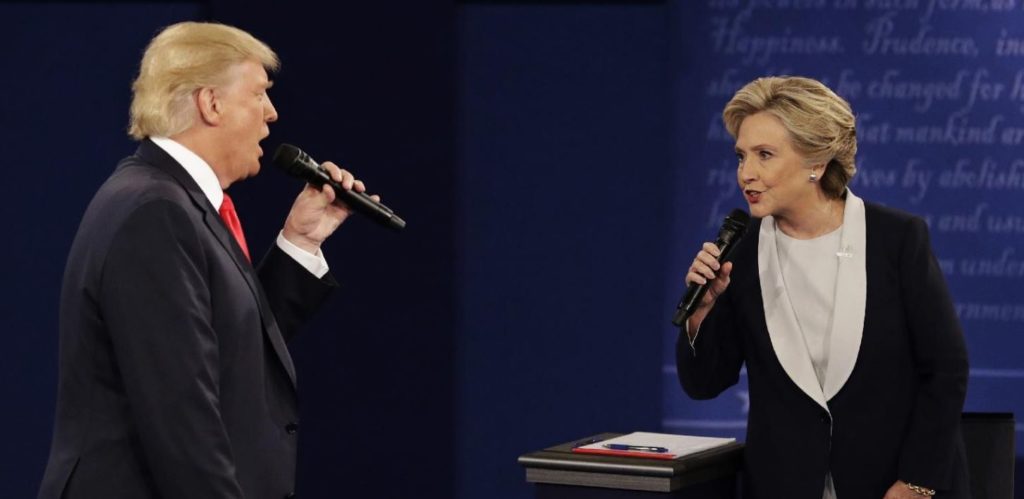
Back in June, when Donald Trump slammed President Barack Obama‘s endorsement of Hillary Clinton on Twitter, the Democrat’s campaign was quick to tweet back a chilly three-word response: “Delete your account.” It was a telling exchange, and not just because it set the stage for what has become the country’s first nationwide Twitter election. It also highlighted the striking, and very different, ways both presidential hopefuls have used the service to hone their messages, hurl accusations at one another and speak directly to voters — in effect, bypassing traditional media while also relying on it to amplify their retorts. So entrenched has Twitter become in the 2016 election that it can be difficult to remember just how new it is in this context. Four years ago, candidates Obama and Mitt Romney were just testing the waters with social media. This year, it’s a major source of information — political and otherwise — for a huge number of Americans. In a Pew Research Center poll last January, 44 percent of adults said they had learned about the election in the previous week from social media, more than cited print newspapers. “People are using Twitter to connect more directly to the live events, moments and candidates of this campaign in a way that voters have never been able to do before,” says Adam Sharp, Twitter’s head of news, government and elections. STILETTO VS. BLUDGEON The candidates are certainly making the most of it. While Trump says he writes many of his tweets himself, especially at night, Clinton’s staff acknowledges producing the vast majority of hers. And Trump is definitely ahead by one crude measure: His followers outnumber Clinton’s, 12.7 million to 10 million. The former reality-TV star and GOP presidential nominee draws outsized attention for what he’s tweeting and retweeting on a near-daily basis, most recently for his attacks on fellow Republicans and unsupported claims that the Nov. 8 election will be “rigged.” During his primary campaign, Trump drew regular news coverage for Twitter assaults that bludgeoned opponents with insults and sometimes baseless charges. Trump’s approach hasn’t changed much in the general election, although his focus on his political opponent sometimes wavers. While he constantly refers to Clinton as “Crooked Hillary” and has continued to criticize the media for reporting that he is falling behind in the polls, he’s also launched long, and sometimes late-night, Twitter broadsides on a beauty queen, the Muslim family of a slain U.S. soldier and a federal judge. The Trump campaign didn’t respond to requests for comment. When the Clinton camp goes on the attack, by contrast, it uses Twitter more as a stiletto than a club. “Delete your account” is a popular internet meme, an arch putdown that suggests someone just said something so embarrassingly stupid that they should just slink away and disappear. The response was an immediate hit that ricocheted around blogs and news sites for days; it’s been retweeted more than half a million times. Trump is “that rough individual who will say anything,” a stance that his supporters find “very refreshing,” says Ian Bogost, a communications professor at Georgia Tech. Clinton’s tweet, by contrast, “signals to her base that she’s with-it on the internet,” he noted in an earlier piece in the Atlantic. In his first debate with Clinton on Sept. 26, Trump denied saying that climate change was a hoax perpetrated by the Chinese. Clinton’s social media team immediately pounced, retweeting Trump’s own 2013 tweet in which he said just that. After Clinton referred to a large fraction of Trump supporters as a “basket of deplorables ” for their sexism and racism, Trump retweeted a 2012 Obama tweet that argued the country doesn’t need a president “who writes off nearly half the country.” But Trump has also drawn fire for repeatedly retweeting white nationalists and promulgating at least one image condemned as anti-Semitic, an association Trump denied. SEIZING THE WHEEL Unsurprisingly, the two campaigns have very different social media goals. Trump, who joined Twitter in 2009, has long used the medium as a direct channel to the public for promoting himself and testing the political waters — for instance, by fueling the lie that Obama wasn’t born in the U.S. Trump’s campaign staffers do sometimes seize the wheel, as when the account tweeted “thoughts and prayers ” for NBA star Dwayne Wade following the shooting death of his cousin in August. Trump’s first tweet on the subject 82 minutes earlier had noted the shooting and crowed, “Just what I have been saying. African-Americans will VOTE TRUMP!” Some analysts have noticed that most Trump-y tweets from Trump’s account originate from a different mobile device than ones that could have come from any traditional politician. That has spawned endless jokes — mainly on Twitter, naturally — along the lines of how his campaign staff fails to take away Trump’s phone during his tirades. The Clinton campaign takes a more traditional approach, operating as its own massive brand rather than as a singular, fly-by-the-seat-of-his-pants candidate. (Rare tweets directly from the candidate are signed “-H.”) Many of the campaign’s tweets are the typical boilerplate of politics — thanks to supporters, reiterations of the candidate’s positions, forwarding news of endorsements and other developments. Clinton’s approach hasn’t always fared well; an early tweet asking people to share how student debt makes them feel in “3 emojis or less ” quickly backfired. Responses on Twitter included, “This is like when your mom tries to be hip in front of your friends and totally fails at it.” THE DIGITAL 100 Twitter is just part of a much larger Clinton digital presence run by a 100-person “digital team” that extends from Twitter to Snapchat to Quora to YouTube to Pinterest. It’s designed to draw in a broad range of voters, from young, social media savvy fans to Pinterest moms, while also working to undercut her rival on some of his favorite stomping grounds. Clinton’s digital team offered Snapchat filters during the GOP convention that let people paste old Trump
Updates from the 1st presidential debate

The Latest on the first of three presidential debates between Democrat Hillary Clinton and Republican Donald Trump (all times EDT): 10:45 p.m. Both candidates concluded the first presidential debate by saying they will accept the outcome if the other wins. Hillary Clinton spoke directly to viewers and said, “It’s not about us, it’s about you.” Donald Trump initially dodged the same question, saying he would make a “seriously troubled” America “great again.” He added: “I’m going to be able to do it. I don’t believe Hillary Clinton will.” But Trump finished his answer by saying that if Clinton wins, “I will absolutely support her.” ___ 10:43 p.m. Hillary Clinton is punching back at Donald Trump’s assertions that she doesn’t have the “stamina” to be president. Trump has questioned whether Clinton has the physical fitness to be president and he repeated the criticism to her directly during the debate. Clinton’s response? Trump shouldn’t talk about stamina until he’s tried out the busy schedule she kept up as secretary of state. Trump didn’t answer moderator Lester Holt’s original question about his past comments that Clinton doesn’t have the “presidential look.” Clinton suggested the remarks were about gender, and she reminded the crowd of Trump’s past comments calling women “pigs” and other derogatory names. ___ 10:42 p.m. Donald Trump says NATO needs to “go into the Middle East with us” to combat the Islamic State group. And he is taking credit for NATO focusing resources on combating terrorism. In fact, the alliance agreed in July to contribute aircraft and conduct training in Iraq and has increased intelligence coordination there. And NATO set up an anti-terrorism program in 2004 — years before Trump criticized them as a presidential candidate. Earlier this year, Trump criticized NATO for not focusing on terrorism. He said that afterward, he saw an article reporting that NATO was opening a new, major anti-terrorism division. He said Tuesday that NATO’s action was “largely because of what I was saying, and my criticism of NATO.” ___ 10:40 p.m. Donald Trump is avoiding a specific declaration on how he would use nuclear weapons if he’s elected president. The Republican nominee said during the first presidential debate that he “would not do first strike” because “once the nuclear alternative happens, it’s over.” That statement suggests he would not authorize a nuclear attack unless the U.S. was struck first. But in the same answer Trump said he “can’t take anything off the table.” He mentioned adversary nations such as North Korea and Iran. President Barack Obama has considered changing existing policy to state clearly that the United States would not deploy nuclear weapons without first being attacked by nuclear weapons. But he met resistance and has elected not to make such a shift. ___ 10:38 p.m. Hillary Clinton is accusing Donald Trump of being too easily provoked to keep the United States from going to war — perhaps even one involving nuclear weapons. Trump says: “I have much better judgment than she does. I have much better temperament.” That drew laughs from some in the debate crowd, and prompted Clinton to exclaim: “Woo! OK!” Clinton then pivoted to policy, defending the U.S.-led war in Afghanistan. Clinton said Iran was “weeks away” from a nuclear bomb when she became secretary of state — and says the Obama administration thwarted that progress. She continued that Trump didn’t have “good judgment or the right temperament” because he could take the country to war over small issues, like being mocked on Twitter. ___ 10:35 p.m. Donald Trump is continuing to insist he opposed the Iraq War before the U.S. invasion despite evidence to the contrary. Trump says during the debate that he “did not support the war in Iraq,” calling that charge “mainstream media nonsense.” But there is no evidence Trump expressed public opposition to the war before the U.S. invaded. Trump was asked in September 2002 whether he supported a potential Iraq invasion in an interview with Howard Stern. Trump briefly hesitated, then responded: “Yeah, I guess so.” Presented with the comment during the debate, Trump responds: “I said very lightly, I don’t know, maybe, who knows.” He’s also telling reporters to call Fox News host Sean Hannity to confirm private conversations he said they had about the war. Hannity is a top Trump supporter. Clinton voted in favor of the invasion in 2002 while she was a New York senator. She has since said it was a mistake. ___ 10:27 p.m. Donald Trump is interrupting the moderator of the first presidential debate to insist he has the best temperament for the office. Trump repeatedly made the assertion after clashing with moderator Lester Holt over his early support for the Iraq War. Then he segued to his temperament. “I think my strongest asset by far is my temperament,” Trump said. “I know how to win.” Clinton and her allies have repeatedly hit Trump over his temper and inability to take criticism. ___ 10:23 p.m. Hillary Clinton says one key to fighting terrorism in the United States is working closely with Muslims living here. Clinton says Donald Trump has “consistently insulted Muslims abroad, Muslims at home.” She says Muslim people can provide information that law enforcement may not be able to obtain anyplace else. Both candidates were asked to explain how they would combat terrorism in the U.S. Clinton says her plan includes an intelligence surge to obtain “every scrap of information” and to “do everything we can to vacuum up intelligence from Europe, from the Middle East.” ___ 10:20 p.m. Hillary Clinton says defeating the Islamic State group and taking out its leaders would be a top priority as president. Clinton says she’s hopeful the Islamic State group would be pushed out of Iraq by the end of the year. She says the U.S. could then help its allies “squeeze” the terrorist group in Syria. Clinton says she would do everything possible to take out the group’s leaders, and make that one of her administration’s organizing principles
Hillary Clinton, Donald Trump buff foreign policy bona fides on debate eve
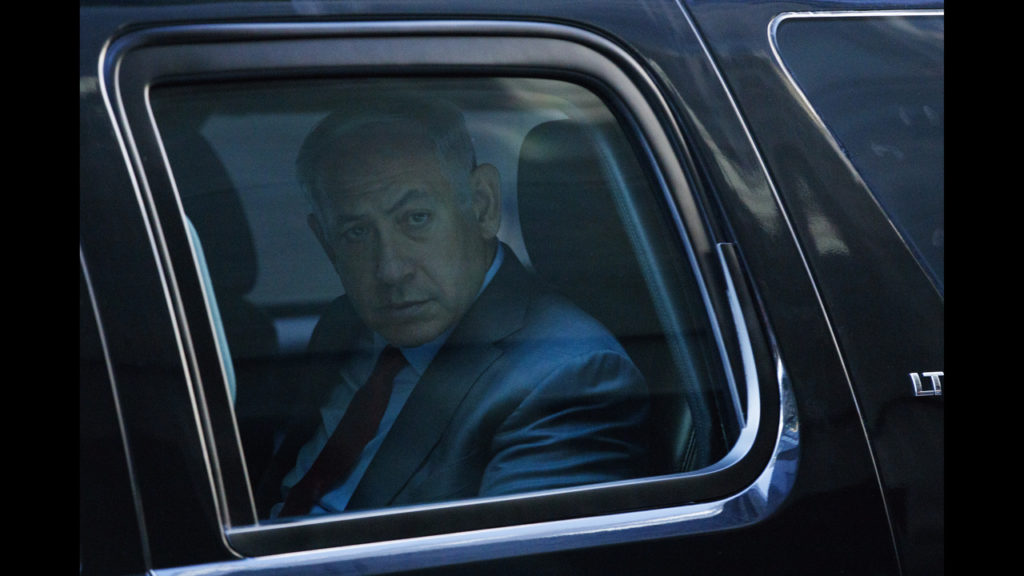
Hillary Clinton and Donald Trump were meeting separately with Israeli Prime Minister Benjamin Netanyahu Sunday, giving the each candidate fresh bragging rights about their knowledge of foreign policy and readiness to lead the nation on the eve of their first presidential debate. Trump and Netanyahu discussed “at length” Israel’s use of a fence to help secure its borders, an example Trump frequently cites when he’s talking about the wall he wants to build between the U.S. and Mexico. “Trump recognized that Israel and its citizens have suffered far too long on the front lines of Islamic terrorism,” the campaign said in a statement. “He agreed with Prime Minister Netanyahu that the Israeli people want a just and lasting peace with their neighbors, but that peace will only come when the Palestinians renounce hatred and violence and accept Israel as a Jewish State.” Clinton was expected to meet with the prime minister later in the day, also in New York. The meeting was designed to put Israel on good footing with the next U.S. president. But it also served to showcase the candidates’ expertise in foreign policy in the shadow of their first debate Monday, six weeks before Election Day. Clinton, a former senator and secretary of state, often says that Trump does not know enough about the world and lacks the temperament to be president. Trump has argued that he has extensive experience with foreign policy through his career as a business executive and blames Clinton for many of the nation’s stumbles in foreign policy. Meanwhile, the candidates deployed their top supporters to the Sunday shows to take early jabs at their opponents and lower expectations for a showdown expected to draw 75 million viewers — many of them disenchanted with both candidates, the least-popular presidential hopefuls in history. Facts and who will determine them during the 90-minute debate seemed to be a top concern of the campaigns’ strategists given Trump’s habit of saying things that are untrue and the public’s general distrust of Clinton. Robby Mook, Clinton’s campaign manager, told ABC’s “This Week” that he is concerned Trump will continue his habit of sometimes saying things that aren’t true and still get a passing grade. He called on moderator Lester Holt to correct any inaccuracies made by the candidates. But Trump’s campaign manager, Kellyanne Conway, said it’s not the job of debate moderators to fact check. Trump’s vice presidential running mate, Mike Pence, meanwhile, said that Gennifer Flowers will not attend the debate. Trump had tweeted that if frequent Trump critic Mark Cuban attended the showdown, he’d put Flowers, allegedly the former mistress of Clinton’s husband Bill, in the audience too. Conway said that Flowers had a right to be there if “somebody else gives her a ticket.” But Pence drew a harder line. “Gennifer Flowers will not be attending the debate tomorrow night,” Pence said on “Fox News Sunday.” The candidates were focused on other matters Sunday. Trump’s campaign said that during his meeting with Netanyahu, the Republican presidential nominee promised, “extraordinary strategic, technological, military and intelligence cooperation between the two countries” if he’s elected. The press was barred from covering the meeting between Netanyahu and Trump, but Trump’s campaign said in a statement that the men, who have known each other for years, discussed “many topics important to both countries,” including “the special relationship between America and Israel and the unbreakable bond between the two countries.” Among those topics: the nuclear deal with Iran, the battle against Islamic State militants, military assistance provided by the U.S. to Israel and other security issues. Republished with permission of the Associated Press.
