
Alabama legislature approves Rural Hospital Resource Center
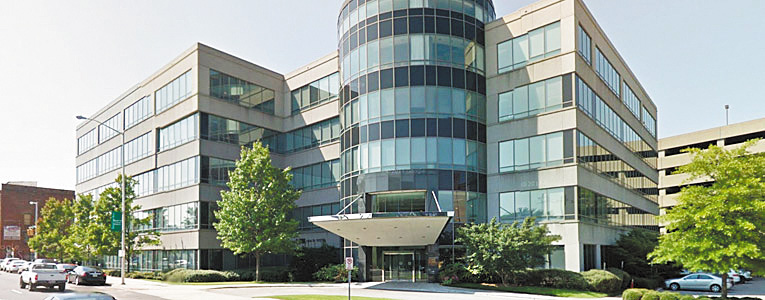
The Alabama Legislature has approved a bill to create a resource center housed at the University of Alabama at Birmingham (UAB) Health System to provide support for nonprofit, rural, public hospitals in the state that are facing economic pressures. SB351, sponsored by Jasper-Republican state Sen. Greg Reed and it’s House companion bill HB446 sponsored by Cullman-Republican Randall Shedd, would create the Alabama Rural Hospital Resource Center, staffed and managed by the UAB Health System. It would assist rural public hospitals in areas including purchasing and supply chain, strategic planning, insurance and cost reporting, coding, recruitment, and compliance. “I believe that increasing access to quality health care for Alabamians in rural areas is essential,” Reed said. “The physicians and researchers at UAB are among the best in the world, and this new center will give Alabama’s rural hospitals direct access to game-changing innovations in medicine and health care management.” Shedd said the bill will help ensure appropriate health care is available to all Alabamians. “This is a concept that provides benefit to all parties involved, but most of all to the residents of rural Alabama who have seen their local hospital close or be forced to cut services,” Shedd added. “This can help ensure that appropriate health care is available to all Alabamians where they live and work.” The plan would call for the UAB Health System to add staff to provide expertise, advice and resources to hospitals that request assistance. “As the flagship health enterprise in the state, UAB has robust systems in place in the areas where a rural hospital might have needs — areas including coding, supply chain or regulatory compliance,” weighed-in Will Ferniany, Ph.D., CEO of the UAB Health System. “We can offer our knowledge, insights, and support as a means of helping rural hospitals across the state remain viable and open.” Ferniany says the resource center is one part of a larger effort by the UAB Health System to help stabilize small, rural hospitals and improve access to needed medical care for all residents of Alabama. That effort gained steam following a 2016 law enabling universities with medical schools to create University Health Authorities. “Many rural hospitals are in crisis,” Ferniany explained. “The resource center is designed to help keep those nonprofit, public hospitals operational so that Alabamians can get medical care close to home when appropriate. That helps ensure that a tertiary care facility like UAB Hospital will have available resources for the situations for which we are uniquely positioned to provide care — including Level 1 trauma, transplantation, and advanced cancer care, for example.” Hospitals that are eligible to request assistance from the center would be located in areas that meet federal designations of rural areas or have a shortage of health care resources under federal guidelines. More than 30 public hospitals in Alabama meet those criteria. The bill now goes to Gov. Kay Ivey for her signature, and the center will need approval from the University of Alabama System Board of Trustees.
Birmingham wins 2018 Smart Cities Readiness Challenge Grant
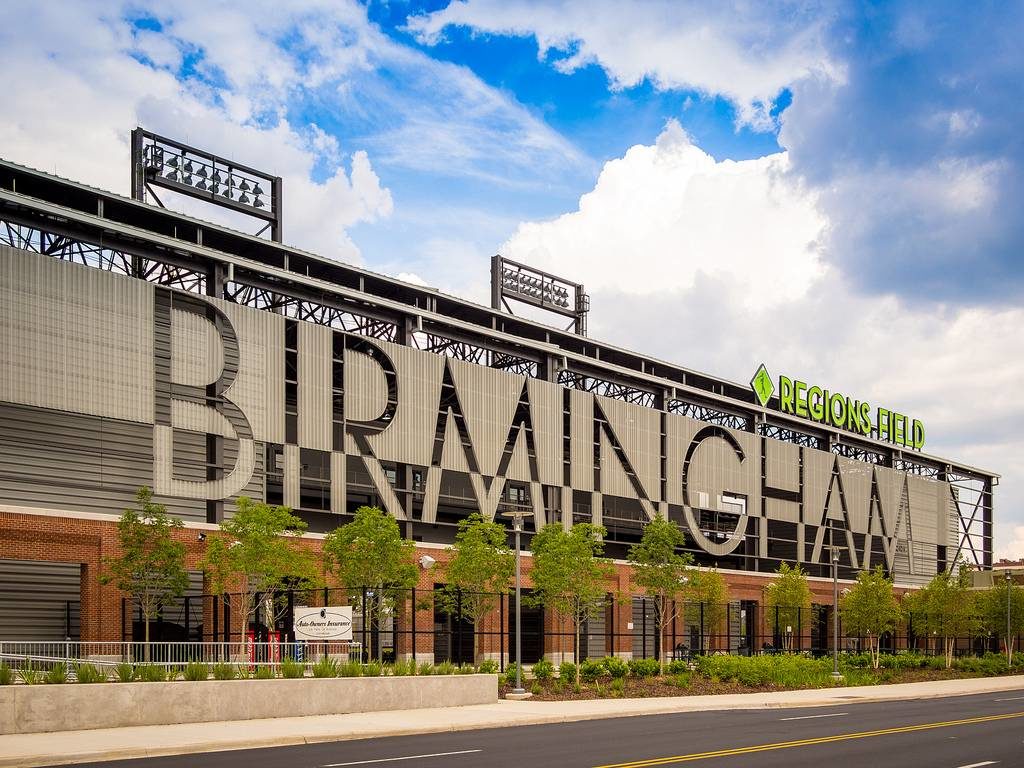
The City of Birmingham has been selected as one of five winners in the 2018 Smart Cities Readiness Challenge Grant competition. Announcement of the grant award came Thursday. In awarding the grant, the Smart Cities Council called Birmingham “an inspiring example of how a mid-size city can lead the way toward livability, workability and sustainability,” and said that the city “works diligently to ensure that its initiatives benefit multiple departments and multiple populations.” The council also noted that Birmingham will use the grant to provide a collaborative framework for projects under way including an open data portal, smart street lighting, community Wi-Fi, bus rapid transit and the city’s recently announced crime reduction initiative Operation Step Up. “It’s important to acknowledge the good work that’s already being done as it relates to having an inclusive economy and government that infuses technology and innovation to provide better and more effective and efficient services to our citizens and small business owners throughout the city,” said Birmingham Mayor Randall Woodfin. “This grant shows that we are a city not only on the move, but making the right investments.” Woodfin reacts to the Magic City winning a Smart Cities Readiness Challenge from Alabama NewsCenter on Vimeo. The Readiness Challenge Grant is intended to help cities use technology and data to tackle local challenges, and improve services and connectivity. Winners will receive on-site Readiness Workshops provided by the Smart Cities Council. In addition, to help accelerate the initiatives funded by the grant, Birmingham and the other winners will receive mentoring, and tailored products and services from the council’s technology partners. The Council will also bring to each winning city some of the world’s experts from the private, philanthropic, academic and research sectors to offer advice to advance smart city initiatives. Birmingham’s winning application emphasized the city’s plans for accelerating ongoing progress in advancing innovation, particularly in the areas of public safety, energy and transportation. Alabama Power, the University of Alabama at Birmingham, the Birmingham-Jefferson County Transit Authority, Jefferson County and the City of Hoover all provided input and support for the strategies outlined in the successful submission. “Awarding this grant to Birmingham demonstrates the growing national awareness of the progress our city is making,” said John O. Hudson III, senior vice president for marketing and business development for Alabama Power. “And that progress is gaining momentum every day. We look forward to continuing to work with the collaborators for this successful grant application and others to make Birmingham a national leader in creating the jobs and opportunities of the future. The Readiness Challenge Grant will boost those efforts.” In addition to Birmingham, 2018 Readiness Challenge Grants were awarded to Cary, N.C.; Las Vegas, Nev. ; Louisville-Jefferson County, Ky.; and the Commonwealth of Virginia. Birmingham also was a finalist in last year’s inaugural competition, in which grants were awarded to Austin, TX.; Indianapolis Ind.; Miami and Orlando Fla.; and Philadelphia, Pa. The Smart Cities Council is an industry coalition formed to accelerate the move to smart, sustainable cities. The council seeks to lower the barriers to adoption of technology and data as tools for enhancing livability, workability and the expansion of economic opportunity. Comprising more than 120 partners and advisers around the world, the council has contributed money and resources to more than 11,000 projects that incorporate smart cities principles. “The five winners had three important things in common, including a focus on uncovering synergies and cost-efficiencies between departments,” Smart Cities Council Chairman Jesse Berst said of the 2018 winners in a news release. “They also fostered coordinated collaboration between internal departments, external stakeholders and nearby regions. Finally, they exhibited a determination to include underserved and vulnerable populations.” This story originally appeared on Alabama News Center.
New study finds First Class Pre-K attendees more advanced than peers

A new study released on Tuesday, on behalf of the Alabama Department of Early Childhood Education found children in Alabama who voluntarily participated in the First Class Pre-K program are more likely to be competent in reading and math than their peers. “These findings prove that what we are doing in Alabama is working. Our First Class Pre-K program is second to none and our students are benefitting,” said Gov. Kay Ivey. “Now we must work to take the methods of instruction in Pre-K and implement them into kindergarten, first, second and third grade classrooms. Success breeds success and a strong educational foundation is the basis for the success of all Alabamians in the future.” The study also concluded that the program was notably effective with minority students and students from low-income families. “The latest analysis of the First Class Pre-K program provides the clearest evidence to-date that participation in Alabama’s high-quality, voluntary First Class Pre-K program is helping students succeed throughout their time in school, what is most exciting about this report is how the lessons learned in Alabama’s First Class Pre-K are persistent in every grade and in every race and ethnic group, with the most profound impact demonstrated by some of the state’s most vulnerable children,” added secretary of the Alabama Department of Early Childhood Education, Jeana Ross. The study, titled “Achievement Gap Closure and Gains Associated with Alabama’s First Class Pre-K,” was conducted by the University of Alabama at Birmingham and the Public Affairs Research Council of Alabama. The research team also observed that attendance in Alabama’s First Class Pre-K program: Narrowed the gap in reading proficiency by 28 percent for all children in poverty; 32 percent for White children in poverty; 31 percent for Hispanic children in poverty; and, 26 percent for Black children in poverty. Narrowed the gap in math proficiency by 57 percent for all children in poverty; 71 percent for Hispanic children in poverty; and, 37 percent for Black children in poverty. Increased reading proficiency for children in poverty by 12 percent overall; 25 percent for Hispanic children in poverty; 23 percent for Black children in poverty; and, 3 percent for White children in poverty. Increased math proficiency for children in poverty by 13 percent overall; 17 percent for Hispanic children in poverty; 16 percent for Black children in poverty; and, 10 percent for White children in poverty. The Alabama First Class Pre-K program is located in 941 classrooms across the state. The National Institute for Early Education Research has named the program the nation’s highest quality pre-k program for the past eleven years.
Personnel note: Alabama appoints Dr. Scott Harris state health officer
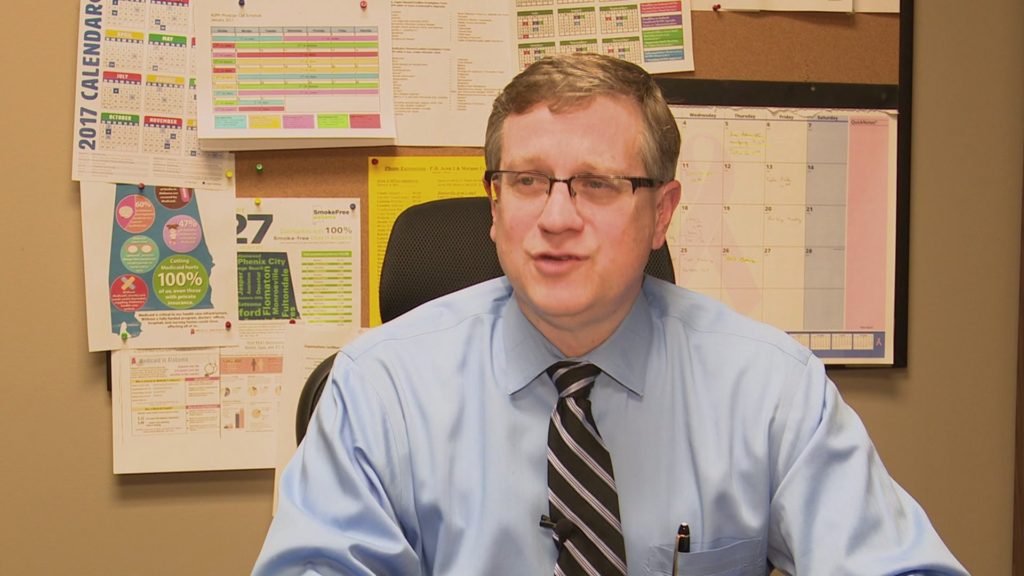
Alabama has appointed Dr. Scott Harris as the state’s twelfth state health officer, effective February 21. The position looks over 65 local health departments throughout the state. “I feel honored and privileged that the State Committee of Public Health granted me this opportunity to address the state’s health care needs and challenges,” said Dr. Harris. Dr. Harris has served residents of Alabama for 19 years, and brings with him the wide range of knowledge and extensive experience that come with that caliber of practice. He graduated from Harding University in Arkansas, and then attended medical school at the University of Alabama at Birmingham (UAB) School of Medicine, serving his residency at Carraway Methodist Medical Center. He later returned to UAB to complete a fellowship in infectious diseases, and in 2017 was awarded a master’s degree in public health from the UAB School of Public Health with a concentration in health policy. He also practiced infectious disease medicine at Decatur General Hospital and Parkway Medical Center. “I care a lot about public health, which I think is true for anybody in the job, but what I’d like to bring to it is the perspective of somebody that’s born and raised here, who spent a couple of decades working in private practice and seeing how that works” Dr. Harris told WHNT. In 2005, he became medical director at the Decatur-Morgan Community Free Clinic — the non-profit clinic offers health care and dental care at no charge to low income, medically uninsured local residents. Dr. Harris has also served on many international medical missions to Central America, South America and Africa. He joined the Alabama Department of Public Health (ADPH) as area health officer for seven North Alabama counties in 2015 where has served as acting state health officer for the last six months and currently co-chairs the Alabama Opioid Overdose and Addiction Council. The Talladega native is a fellow of the American College of Physicians (FACP), Infectious Disease Society of America (FIDSA), and a credentialed HIV specialist, American Academy of HIV Medicine. He also served on the Medical Executive Committee, as medicine department chairman and director of multiple committees including infection control, pharmacy and therapeutics, and the surgical care improvement project at Decatur General Hospital and Parkway Medical Center. He is past chairman and current member of the Decatur Morgan Hospital Foundation.
Antarctica marine biology explorers embark on 2018 journey
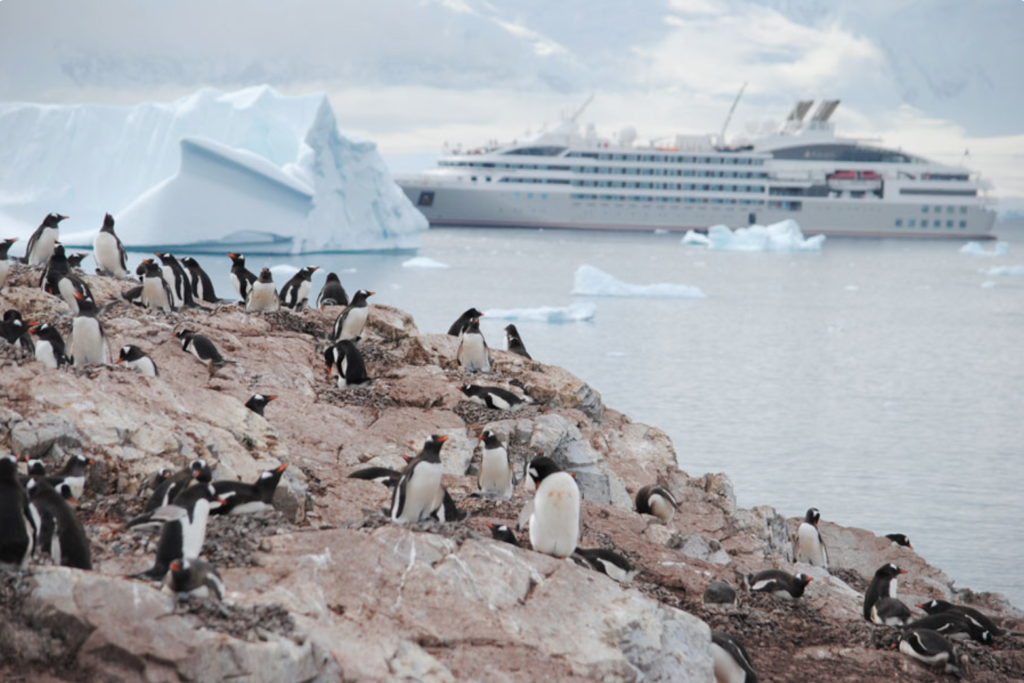
By: Alicia Rohan | University of Alabama at Birmingham Marine biologists from the University of Alabama at Birmingham landed on the White Continent by way of Punta Arenas, Chile, for a research expedition. Over the next 16 weeks, the team of six explorers will spend the 2018 field season at Palmer Station researching the ecology of the very rich Antarctic seafloor communities and how important ecological interactions in those communities are structured through the production of chemical defenses against predation. In previous and planned research, the group also studies dramatic ecological effects of climate change on marine life of the Antarctic Peninsula. “The seafloor communities we study are exceptionally rich with lush beds of large seaweeds, which support very dense assemblages of invertebrate animals,” said Chuck Amsler, Ph.D., professor in the UAB College of Arts and Sciences Department of Biology and co-leader of the expedition. “There are many experiments that can only be conducted in Antarctica. Our research is important to understanding these vibrant communities, and we use unique features of Antarctica as tools that allow us to learn things that are applicable worldwide but can best be studied there.” The long-running team, which has been traveling on research expeditions to Palmer Station for 18 years, will focus their research on the continuation studies of the National Science Foundation-funded research program on the chemical ecology of Antarctic marine algae and invertebrates. Updates on their discoveries and life on Earth’s southernmost continent can be found on the UAB in Antarctica blog a few times each week. “Marine research in Antarctica is both intellectually challenging and physically demanding,” said James McClintock, Ph.D., UAB Polar and Marine Biology Endowed Professor, also a co-leader of the expedition. “Our research continues to reveal the potential impacts of rapid climate warming on Antarctic marine organisms, as well as organismal responses to predicted near-future increases in carbon atmospheric dioxide absorbed by seawater, a process known as ocean acidification.” The team will welcome North Carolina high school teacher Keith Smith to Antarctica for the last month of the trip. Smith, a science teacher at Freedom High School, will be traveling to Anvers Island, Antarctica, as part of the PolarTREC program that recruits teachers to participate in “hands-on field research experiences in the polar regions.” Smith will be able to take his knowledge learned in the research field back to his students and apply it to his work in the classroom. Eighty-seven percent of the glaciers on the western Antarctic Peninsula are in rapid retreat. In recognition of the retreat of these glaciers, an Explorers Club Flag Expedition will be led by McClintock, a 2016 elected Fellow of the Explorers Club. These expeditions are a fundamental component of the Explorer Club mission to engage in scientific exploration and broadly share the results. The flag will be planted on Amsler Island to celebrate Charles and Maggie Amsler’s contributions to science, but also to bring attention to the fact that Amsler Island emerged from under the Marr Glacier in the geological equivalent of ‘the blink of an eye’ due to unprecedented climate warming. Members of the 2018 expedition team include James McClintock; Chuck Amsler; Maggie Amsler, a research associate in the UAB Department of Biology; Michelle Curtis, a graduate research assistant from UAB; Sabrina Heiser, a graduate research assistant from UAB; and Cecilia Brothers, Ph.D., collaborating researcher and UAB alumna. Unique facts about the team traveling on the journey include: 76 previous trips to Antarctica collective on the team, with Curtis serving as the rookie this time around. A total of 1,440 frigid research scuba dives in previous Antarctic expeditions (C. Amsler 848, M. Amsler 411, S. Heiser 181). McClintock’s work in Antarctica in previous years earned him a distinction that few living people in the world have: a spot on the coast of Antarctica named McClintock Point in his honor by the U.S. Board of Geographic Names. Maggie Amsler was on one of the first-ever manned submarine cruises to document the sea floor communities in Antarctica and is likely the first woman to make a submersible dive in Antarctica. Her deepest dive reached 1,001 meters depth, 25 times deeper than the deepest scuba dives the team routinely makes. Maggie and Chuck Amsler were honored by the U.S. Board of Geographic names with the designation of Amsler Island, which is approximately half a mile from Palmer Station. Travel companion Henry the teddy bear will take his farthest trip yet. Henry is part of Gardendale Elementary’s second-grade class project to see where his travels take him. Originally published on the University of Alabama at Birmingham website.
UAB provides top genetic counseling in Southeast

Many doctors treat patients under the belief “You are your genes,” meaning that every person is a product of his or her own unique heredity. The statement is true to some degree, said Dr. Anna Hurst, a medical geneticist and pediatrician in the Department of Genetics at the University of Alabama at Birmingham (UAB). That is because hereditary factors predispose every person to myriad characteristics including hair, eye and skin color, as well as height, physical conditions and diseases. Recently, there has been a huge increase in awareness about genetic predisposition following actress Angelina Jolie’s announcement that she carries a faulty copy of the BRCA1 gene, indicating that she has a strong hereditary tendency toward breast and/or ovarian cancers. Jolie elected to undergo preventative surgery to ensure she would not develop the cancer that killed her mother. Most cases are not so clear cut, said Dr. Anna Hurst, a medical geneticist and pediatrician at UAB Hospital. In her role, Hurst trains pediatrics and genetics residents at Children’s of Alabama in Birmingham. She and a genetic counselor often see patients together, screening family history forms and meeting as a team to discuss their findings with the patients and medical providers. “I’ve always been fascinated by the subject of genetics and how it affects people’s lives. It’s a complicated science topic, with implications for an entire family,” said Hurst, who trained in pediatrics at Wake Forest Baptist Medical Center and studied medical genetics at UAB. She earned a master’s degree in genetic counseling at the University of South Carolina and an M.D. at the Medical University of South Carolina. A tough discussion Hurst works in UAB’s Genetics Clinic, which assists with gathering patient information. She performs patients’ physical exams and prepares parents for the possible results. “Up to 15 to 20 percent of the time, there can be an inconclusive result,” Hurst said. “There can also be unexpected familial news, and you must prepare the patient and family for the psychosocial results. It is definitely difficult to discuss potential genetic conditions. But, by offering these results, we empower people about how they can use the results to better their health care. “We treat the patient first, not their genotype, or genetic information,” Hurst said. “With patients who are in our Neonatal Intensive Care Unit or in prenatal, it’s really difficult to discuss. The defect can be part of a larger picture. We try to be supportive throughout that time.” Working with families, Hurst said that it’s the counseling team’s role to determine whether there is a genetic reason behind the occurrence of a health condition, or whether the difference occurred spontaneously. Many conditions happen unexpectedly. “Many conditions are sporadic and aren’t preventable,” she said. On the cutting edge The counseling team – comprising a consulting physician, a genetic counselor and other staff – directs families and patients to support groups as needed. UAB sees patients from throughout the Southeast. Hurst noted that insurance companies cover most genetic counseling and some lab testing. The UAB Genetics Clinic accepts referrals and sees patients at the UAB Kirklin Clinic and Children’s of Alabama. Prenatal genetic counseling appointments can be scheduled through the Women & Infants, and Children’s Center. The department also participates in ongoing research opportunities such as the Alabama Genomic Health Initiative. The AGHI allows Alabama residents to take part in a biobank – a type of biorepository that stores human biological samples – for use in research. UAB performs initial genotyping, checking 59 actionable genes. Hurst works on the Pediatric Genomic Sequencing Project funded by HudsonAlpha Institute for Biotechnology and Children’s of Alabama, seeking to identify genetic diagnoses for children with intellectual disabilities and developmental delays. The goal is to see whether earlier diagnoses help in treating individuals. “UAB really is on the cutting edge for genetic testing,” Hurst said. “Genomic medicine has real, practical implications for individuals and patients. UAB has an Undiagnosed Diseases Program for individuals with severe chronic medical conditions who are undiagnosed. We try to find opportunities for people to get genetic testing. We are very fortunate to have programs for neonatal and pediatric patients and adults.” Team approach Genetic counselor Alicia Gomes, a UAB employee since 2010, works in laboratory genetic counseling and pediatric genetic counseling. Gomes meets with patients and families to determine whether they have a personal or family history concerning a genetic disorder, so she can inform the physician. Gomes and Hurst often work as a team in checking for characteristics that may point to a genetic syndrome. Genetic conditions such as Down syndrome or Noonan syndrome often display common facial features or physical conditions that may make a condition diagnosable without requiring genetic testing. “Subtle physical characteristics can sometimes point to one condition over another,” she said. Gomes’ first task is to make patients feel comfortable. “I give the patient the set-up of how the appointment will go,” said Gomes, who graduated in genetic counseling from the University of South Carolina. During the follow-up visit, Gomes meets with the patient and the geneticist, who conducts a physical exam to look for characteristics of genetic conditions. In pediatric genetic counseling, Gomes and physicians often take a “tag-team approach.” Together, they see the patient and address the family’s concerns about the patient’s condition and the reason for testing. If the genetic counselor and doctor determine that genetic testing is necessary to confirm a diagnosis, in most cases, a sample can be taken during the visit and shipped to the necessary laboratory. For some conditions or scenarios, Gomes and the physician may follow up with the patient annually or biannually to help in the management or surveillance of the disorder. In addition, Gomes works as a laboratory genetic counselor to serve as the bridge between clinicians and the lab: “I follow the sample through the testing process to communicate any information between both parties that may be needed to ensure that we can provide a quality test for the patient,” she said. UAB’s molecular testing lab is world-renowned for its work in specific subsets of genetic disorders such as neurofibromatosis, Rasopathies and tuberous sclerosis. Physicians from countries as far away as Australia, Japan, India, China and Singapore have submitted patient
Birmingham named one of Livability.com’s best places to retire, 2017
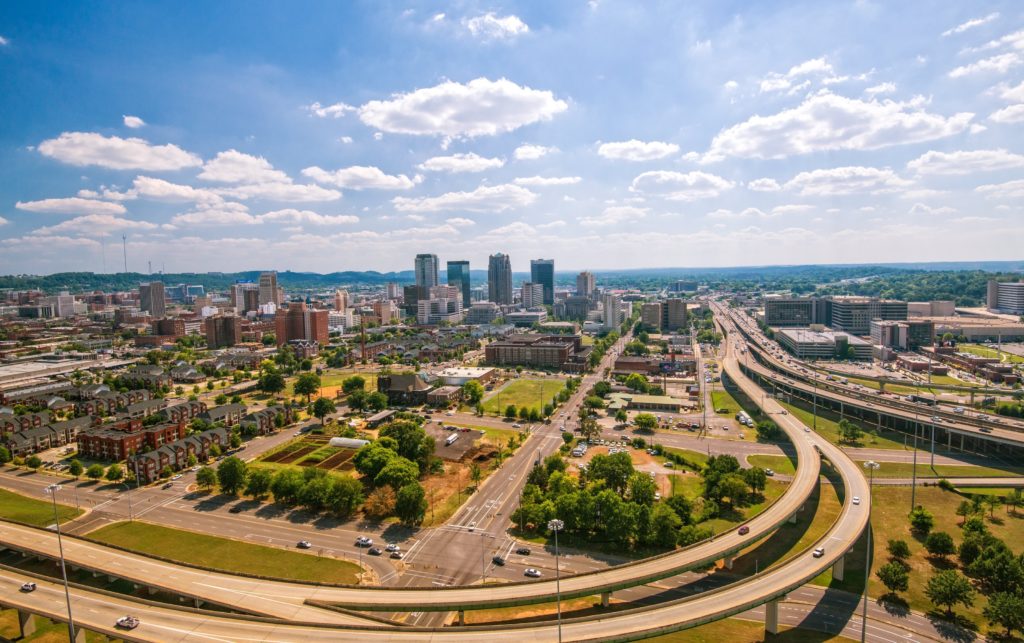
Today’s seniors are in search of a lifestyle as diverse and dynamic as they are. While many folks will choose to remain where they’ve spent most of their lives and built their communities, others will look for new adventures in a different location — and deciding where that place will be is an extremely important choice. With that in mind, Livability.com, a site focused on exploring what makes small-to-medium sized cities great places to live, has just released its Top 10 Best Places to Retire, 2017. Coming in at no. 7 on this year’s list is Birmingham, Ala. The Magic City has evolved dramatically over the years. The former steel town is now one of the leaders in the health care industry, with more than a dozen hospitals, as well as a premier medical school and research facility in the University of Alabama at Birmingham. The city center has been revitalized, earning accolades as one of the nation’s 10 Best Downtowns and one of the top Spring Break Destinations for Families. “This year’s retirement cities list perfectly reflects the diverse, dynamic lifestyles of today’s retirees,” says Winona Dimeo-Ediger, managing editor of Livability.com. “Some of these cities might surprise you, which is a good thing, because retirement looks very different in 2017 than it has in the past.” The full list of best retirement cities was determined by analyzing a range living characteristics including health care, climate, crime rates, cost of living, housing costs and access to recreational activities. Here are all top 10 places to retire in the U.S: Walnut Creek, Calif. Reno, Nev. Boca Raton, Fla. Plano, Texas Sioux Falls, S.D. Vancouver, Wash. Birmingham, Ala. Littleton, Colo. Bismarck, N.D. Salt Lake City, Utah To determine these rankings, Livability.com experts examined surveys and data from the U.S. Census Bureau, Medicare, Esri, NOAA, Walk Score, the EPA and other sources, and crunched the numbers to determine the best U.S. cities for retirees. Research shows that seniors care most about health care, climate, crime rates, cost of living, housing costs and access to recreational activities — the site found 10 cities that deliver on all counts, each offering a completely different lifestyle to fit a wide range of tastes and interests.
UAB urges public to protect eyes from long-term damage while viewing the eclipse

Watching the captivating sight of the moon’s passing between the sun and Earth, where the moon fully or partially covers the sun, could cause serious and potentially long-term harm to the eyes if not viewed properly. Eye specialists from the University of Alabama at Birmingham offer tips on eye safety during the eclipse to avoid post-exposure symptoms like pain, red eyes, light sensitivity, tearing or watery eyes, blurry vision and many others. “It is never safe to stare directly into the sun, and that includes during the eclipse,” said Tamara Oechslin, O.D., Ph.D., assistant professor in the UAB School of Optometry. To protect your eye health, wear NASA-approved solar eclipse glasses. (UAB) “Parts of the country will see partial coverage, while others will see full coverage. It will never be safe to view the eclipse without eye protection unless you are in a zone with complete coverage and, then, only during those two minutes of complete coverage, or totality.” According to NASA, all of North America will be treated to an eclipse of the sun today. This is the first of its kind in the United States since 1979. Anyone within the path of totality can see a total solar eclipse, and observers outside this path will see a partial solar eclipse. NASA released the 2017 total solar eclipse path map to help viewers identify the amount of coverage that will be seen in their area. Viewers can also use the interactive solar eclipse Google map to find the type of eclipse that will be seen in a particular region. “The best option to view an eclipse safely is to wear solar eclipse glasses approved by the International Organization for Standardization,” said Tyler A. Hall, M.D., assistant professor from the UAB School of Medicine’s Department of Ophthalmology. Standard sunglasses, regardless of ultraviolet markings, including UVA and UVB, will not provide enough protection for eclipse viewing due to the intensity of the rays. The sun’s rays may be partly blocked during an eclipse, but the remaining visible rays are still intense enough to cause serious eye damage or even loss of vision. Protective eyewear should have an ISO 12312-2 marking on them to be considered safe for looking at the sun. When a viewer is in the total coverage zone and during the brief two-minute period of total coverage, the solar eclipse can be viewed without wearing the approved eclipse glasses. The sun’s rays are blocked in this zone, allowing viewers to remove the glasses for a brief time to see the total eclipse. Viewers in the partial eclipse zones should wear protective eyewear the entire time. “The only exception to the rule of strictly wearing solar eclipse glasses while viewing the eclipse is that you can remove your eclipse glasses if you are viewing a total eclipse when all the sun’s rays become blocked,” Hall said. “Most people, however, will be viewing a partial eclipse, which should be seen only through solar eclipse glasses.” Oechslin suggests the only safe way to look directly at the uneclipsed or partially eclipsed sun is through special-purpose solar filters, such as eclipse glasses or hand-held solar viewers. She suggests certain filters to view the solar eclipse, including specialty eclipse glasses or a welder’s helmet. An educational activity she recommends for children is to make pinhole cameras for viewing the shadow of the moon’s path across the sun. These cameras are not to look through, but to watch the small shadow on the ground. Directions for making a pinhole camera and its use can be found online. Oechslin highly recommends NASA’s do’s and don’ts while viewing the solar eclipse: Always inspect your solar filter before use; if scratched or damaged, discard it. Read and follow any instructions printed on or packaged with the filter. Always supervise children using solar filters. Stand still and cover your eyes with your eclipse glasses or solar viewer before looking up at the bright sun. After glancing at the sun, turn away and remove your filter – do not remove it while looking at the sun. Do not look at the uneclipsed or partially eclipsed sun through an unfiltered camera, telescope, binoculars or other optical device. Similarly, do not look at the sun through a camera, a telescope, binoculars or any other optical device while using your eclipse glasses or hand-held solar viewer — the concentrated solar rays will damage the filter and enter your eye(s), causing serious injury. Seek expert advice from an astronomer before using a solar filter with a camera, telescope, binoculars or any other optical device. If you are within the path of totality and only during the brief two-minute period of totality, remove your solar filter only when the moon completely covers the sun’s bright face and it suddenly gets quite dark. Experience totality; then, as soon as the bright sun begins to reappear, replace your solar viewer to glance at the remaining partial phases. There are no specific alerts to stop someone from looking directly at an eclipse in order to avoid damage, regardless of whether they are wearing appropriate eclipse glasses. Hall recommends limiting viewing the solar eclipse to three minutes or less, even with approved solar eclipse glasses. “If the essential guidelines are adhered to, eye damage is extremely unlikely to occur,” Hall said. “Should damage occur, it typically takes the form of blurred vision or blind spots that develop several hours after the viewing occurred.” Ocular damage from the sun can be rather serious and can severely damage the front surface and inside of the eye. Two types of eye damage can occur from overexposure to the sun: photokeratitis, damage to the front surface; and solar retinopathy, damage to the inside or back of the eye. “Persons should seek medical attention immediately if experiencing any post-exposure symptoms, especially if the condition is worsening with time,” Oechslin said. “Just as with a sunburn, delayed symptoms can also occur several hours after overexposure.” Symptoms of photokeratitis include eye pain, burning or red eyes, light sensitivity, blurred vision, watery eyes, and/or swelling around the eye or eyelid.
UAB students’ research work takes flight with drone technology
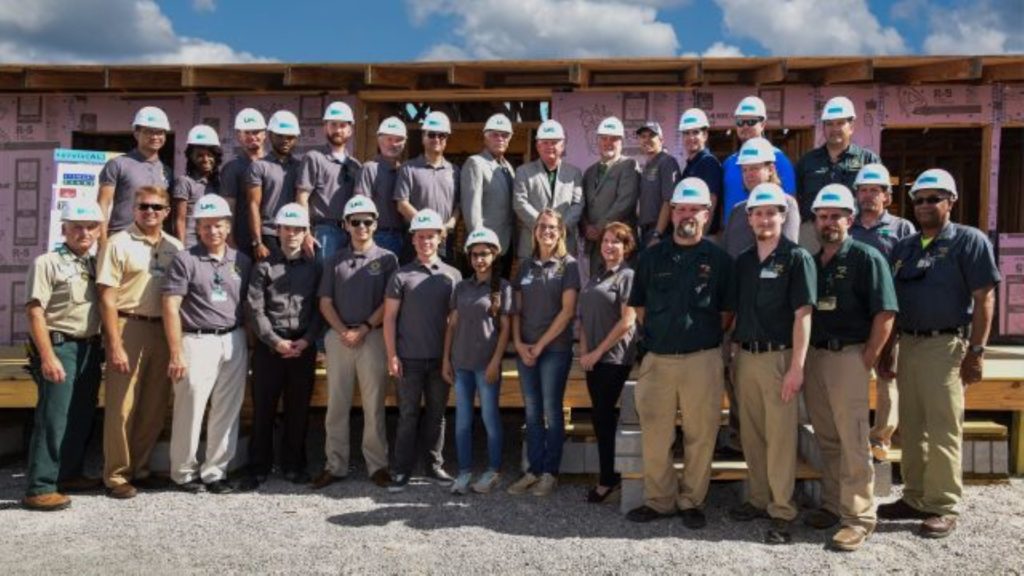
Drones are quickly becoming a prolific part of modern society, and students at the University of Alabama at Birmingham are doing cutting-edge research involving the flying machines. Elizabeth Bevan, a doctoral student in the Department of Biology, is using drones in her thesis project that studies the effects of climate change on the endangered Kemp’s ridley sea turtle in the Gulf of Mexico. Her focus is understanding the courtship and mating behaviors of the turtles, and drones have given her an up-close view into their previously unknown habitat. They do so without interfering with the animals. In 2013, Bevan and her mentor, biology professor Dr. Thane Wibbels, started using a basic drone with a GoPro camera attached. They sent it out over the water to film hatchings they had been monitoring on the beach, and they were floored by the potential. They followed up with a more sophisticated drone and camera. “The next season we were awestruck,” she said. “The newer model had a communication system between the aircraft and the remote control, and we could see in real time what the camera saw. It was the first time we’ve ever seen this kind of glimpse into this habitat.” Revolutionary technology Elizabeth Bevan pilots the UAB team’s DJI Inspire drone. (UAB) Bevan and Wibbels have documented eight types of courtship and mating behavior among the turtles in the Gulf. They’re now exploring with new cameras, including a thermal imager that lets them track turtles in the ocean and on their nesting beaches through body heat. Bevan said drone technology is revolutionizing the way researchers conduct biological studies of sea turtles and wildlife in general. “Without drones, we wouldn’t have been able to get this kind of information,” she said. “It’s not just opening a new door; it’s like blowing open a whole new wall.” Bevan has received a fellowship through the National Science Foundation’s East Asia and Pacific Summer Institute Program. This summer, she will spend three months in Australia, where researchers are doing advanced work involving drone technology and wildlife habitat exploration. Limitless potential Meanwhile, Ali Darwish, a UAB doctoral student in the Department of Electrical and Computer Engineering, has been building drones since 2009 and says they have unlimited applications. He is developing a software that will allow drones to track other drones. He was also part of a team that developed a small, waterproof quadcopter drone for dam inspections; another project is looking at potential applications for agriculture. UAB professor Dr. Arie Nakhmani and graduate student Ali Darwish hold a quadcopter drone in the School of Engineering laboratory. (UAB) “By placing infrared sensors and thermal sensors on drones, we can enable farmers to see plants, see diseases and see whether plants are irrigated,” he said. Darwish, who grew up in Dubai, has always had a fascination with flying machines. A native of Syria, he and students from other schools were involved in a project that sought to deliver humanitarian aid by drones to his war-torn home country. Their work was stymied by the political climate, but that hasn’t stopped Darwish’s interest in drones. He will soon start a job in Washington, D.C., with a company that specializes in artificial intelligence. He continues to work on his dissertation, and his work with drones – flying them, testing them, developing new uses and abilities for them – will continue. Not too long ago, drone technology was a military secret, Darwish said. But now, it’s showing up in all types of commercial applications. “People shouldn’t be afraid of drones. They’re coming anyway, because the technology is evolving, so let’s get used to living with them,” he said. This story originally appeared on the Alabama Department of Commerce’s Made in Alabama website. Republished with permission of Alabama NewsCenter.
UAB unveils first look at completely net-positive solar house headed for competition
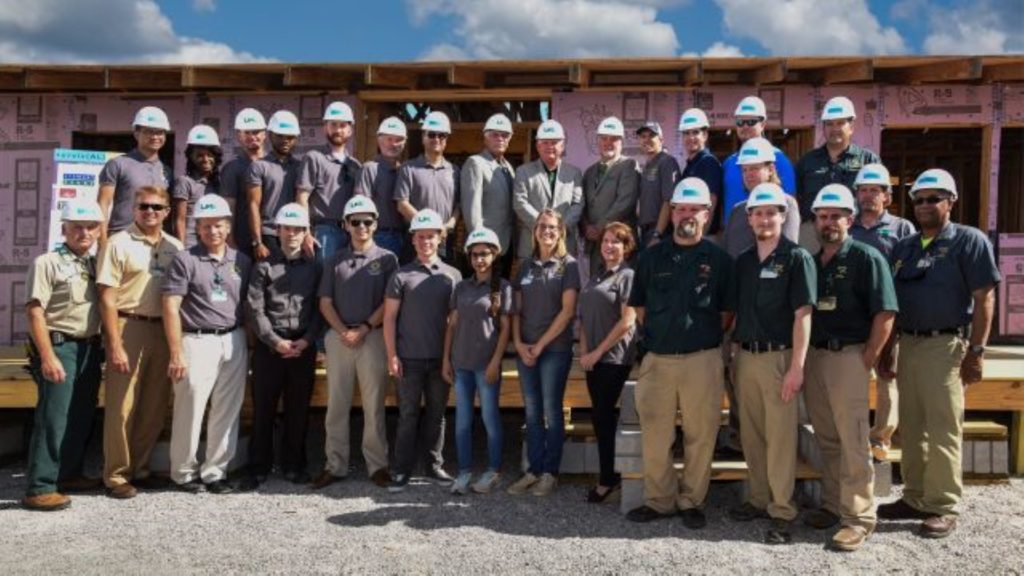
A team of University of Alabama at Birmingham students are building a house powered completely by solar energy in a competition against 11 other colleges from around the world. The UAB team unveiled the beginning stages of the house in a ceremony at the construction site recently. UAB is among an elite group of collegiate teams selected for the U.S. Department of Energy Solar Decathlon 2017 competition. UAB’s team is made up of students from a variety of disciplines across the university who have begun working on the house, along with students from neighboring Calhoun Community College. The team is working toward completing the design, construction and testing of what they dub the surviv(AL) house. Once the house is completed and tested on the UAB campus, it will be disassembled and transported to the Denver competition site, where it will be reassembled in October along with the 11 other solar houses. “The Solar Decathlon attracted more than 60,000 visitors last year, so this is an incredible opportunity for UAB students to showcase their talent and capacity to the world in 2017,” said Bambi Ingram, UAB Sustainability program administrator. Team Alabama is preparing to showcase the net-positive solar home. (UAB) The team’s solar house must be equipped to run all the appliances and accouterments at the same level of a comparable house on a conventional power grid, but with the only source of energy coming from what the house is able to harness itself. The efficiency of the house will allow it to produce more energy than it consumes, leaving the homeowners or users of the structure with extra energy to use in other ways. “The U.S., and particularly Alabama, lags behind the rest of the world in the number of net-zero, and especially net-positive, energy buildings built,” said Hessam Taherian, assistant professor in the UAB School of Engineering, and an adviser for the project. “By searching for innovative ways of harnessing and conserving energy, UAB students will have opportunities to develop technology that will be customized to meet the particular challenges of the local environment — from seasonal heat and humidity to surprise tornadoes and thunderstorms.” Because the houses must be suited to their local climate, the Alabama house will be designed with tornadoes in mind. The house will include at least one room with tornado-resistant walls, incorporating panels designed by engineers in the UAB Materials Processing and Applications Development Center. The design will allow for the house to be efficiently reassembled surrounding that tornado room, should a natural disaster occur. The house will also be built to beat the Alabama heat. A UAB-developed solar collector system helps cool the house by taking water out of the air and reducing energy costs. A device dehumidifies the air inside the home at night and recharges the material during the day, reducing the overall load on the home’s air conditioning system. The house will be tested in advance of the judging to ensure it produces enough energy to power all appliances. For example, students will be required to wash laundry, and clothes will be checked to make sure there is enough power for the dryer to fully dry the clothes. Other appliances will be checked to make sure they meet normal expectations, such as a water heater that can sustain hot water for the typical length of a shower. The house will have to provide sufficient energy to charge an electric car so that it can be driven 25 miles. The team will be required to prepare meals for two dinner parties at which they will host teams from other universities. They will also host a game night using the house audiovisual equipment, with snacks prepared in the kitchen. Bonus points will be awarded for any excess power generated by the house. “We want to fight the misconception that a house using renewable energy means compromising on comfort or performance,” Taherian said. Stringent criteria The teams will showcase the houses to the public and provide free tours of renewable energy systems and energy-efficient technologies, products and appliances. The houses will be judged according to strict criteria in 10 separate categories, ranging from architecture and engineering to the performance of the appliances. The winner will be the team that best blends affordability, consumer appeal and design excellence with optimal energy production and maximum efficiency. The Solar Decathlon village and competition houses will be open to the public at 61st & Peña Station near the University of Colorado. A free commuter train will be available: Thursday, Oct. 5-Sunday, Oct. 8: 11 a.m.-7 p.m. Monday, Oct. 9: 1-7 p.m. Thursday, Oct. 12-Sunday, Oct. 15: 11 a.m.-7 p.m. The Solar Decathlon 2017 teams will compete for a minimum of $100,000 and a maximum of $300,000 in prizes. Once the competition is over, the house will be returned to UAB as a permanent net-positive building on campus, where it will be available for sustainability research and other uses, while helping raise awareness and educating the public about renewable energy. UAB’s team of 60 students is guided by faculty in the School of Engineering, in partnership with UAB Sustainability and the Collat School of Business, as a component of the project includes marketing and communications activities. Industry partners have been equally important in the progress of the project. Williams Blackstock Architects, for instance, has offered its services in helping students, faculty and staff with the design. Additional industry partners will be key to the project’s success. A team effort Team Alabama’s Solar Decathlon effort so far has truly spanned across campuses and into the community. The UAB Facilities Division continues to be instrumental to the project through offsetting some costs, providing materials and the construction site, as well as offering construction expertise to the team. “This project is the perfect example of how we strive to integrate research and innovation processes to operate like a living lab,” said Mike Gebeke, assistant vice president of Facilities Management. “We are really happy to have the opportunity to partner with academic
The sweet life: How an Alabama baker and blogger connects with her family on Lake Martin

The aroma of hazelnut cinnamon rolls and the sound of carefree toddler giggles fill the room while Kate Wood and her 2-year-old daughter, Aimee, stir homemade icing together. It’s a happy childhood memory in the making – the familiar scent of a mother’s cooking and the comfort that comes from being together in the kitchen. For Wood, an avid baker and the brains behind the popular baking blog Wood and Spoon, this is exactly where she belongs. On a springlike day, Wood has opened up her family’s Lake Martin home that has become a retreat for family members from across the country to gather, reset and spend time with one another. See Wood’s recipe for Meyer Lemon Cheesecake Food is one of the many ways Wood connects with others. Growing up the oldest of three, Wood has fond memories of her family dining together and spending time over food. The Orlando native moved to Alabama to attend Samford University, where she majored in nutrition. She met her future husband, Brett, in the cafeteria at the University of Alabama at Birmingham, where she was earning a master’s degree in clinical nutrition and he was finishing his residency in orthodontics. While Wood says she started to develop her love for food and science in early college days, it wasn’t until her wedding that she discovered her passion for baking. Inspired by her mother, Wood set out to make her own wedding cake. “My mom and her friend had an old pasta maker and they made their own fondant. I thought, if she can do it, I can do it. I probably made 30 different vanilla cake recipes that year,” Wood said with a laugh. Making her wedding cake revealed that her love of food and science were a perfect pair when it came to baking. “Baking is really just one big science project,” she said. The recipe lab Wood and her husband now live in his hometown of Selma with their two children, Aimee and George. For the big-city transplant, Wood has taken to the closeness of a small town. “Life in a small town is so rich. People truly care about each other, we are all sewn together and you realize how your life affects others,” she said. After her wedding cake success, Wood has continued to bake and has a dream of creating a cookbook of her own. She started Wood and Spoon to document her recipes and journey through baking. “It was scary at first to put yourself out there and trust that what you have to say is meaningful. But this is a passion that God has put in my heart. We all have goals, and I want this to be full; it’s a labor of love.” See Wood’s recipe for Honey Oat Bread Inspiration for a new recipe seemingly waits at every corner for Wood. “I get ideas traveling, looking at a restaurant menu or even just seeing an item at the grocery store,” she said. “I keep a running list of ideas and just see where the inspiration strikes me when testing recipes.” Using her food science background, the recipe development process can take a few short days or can stretch weeks at a time. “I made easily 40 loaves of cinnamon bread before I was happy with it,” she recalled of a recent recipe. Love and baking More than her passion for nutrition and food, Wood embraces the opportunity baking offers to spend time with her family and to connect with her loved ones. “At the end of my life, I want my children to look back and know their mom loved them and loved baking. That they have memories of us being in the kitchen together and that this could create a special way for us to spend time together,” she said. As Aimee dips her fingers into the freshly iced cinnamon rolls she helped make, it’s obvious that she is developing a love for baking with her mom. “I think a love of food and sitting down to share a meal together will always be part of how our family connects,” Wood said. This love for food and connection stretches beyond sharing a meal with her family. “Most of the time, even I don’t get to eat the treats Kate has made for the blog,” her husband said with a laugh. Instead, Wood gives them to neighbors, friends and colleagues to share. “It’s a way to show people you love them. And it’s a joy to be able to do those things, to love people and show them you care,” Wood said. A restful place Lake Martin has become another way Wood and her family connect. When Wood was at Samford, her Florida-based parents bought a second home on the lake. “I loved Alabama, and once my parents came and saw Lake Martin, they decided to settle at the lake instead of in the mountains of North Carolina.” For their family, it’s a great way for family members from across the country to come together. Wood’s parents and younger siblings now spend their summers on Lake Martin. Her grandparents from Michigan have relocated permanently just down the street in a community on the lake. “Everyone found a home at the lake,” Wood said. “It’s our rest place.” See Wood’s recipe for Trail Mix Cookies At the lake, there is something for everyone. Wood’s grandfather, a carpenter, helped remodel the family lake house, building cabinets, doors and built-ins. Another shared passion of the women of the family is quilting, so much so that the lake home boasts its own quilting room. “We spend so much time quilting at the lake – my mom, my grandmother, my sister, the babies. There are quilts all over this house that we have made. It’s just another way that we are able to spend time together,” Wood said. As Aimee and George play on one of their many family quilts, Wood shares her dreams of the lake house
Terri Sewell applauds $6M UAB grant to train local young adults for 925 high-paying jobs
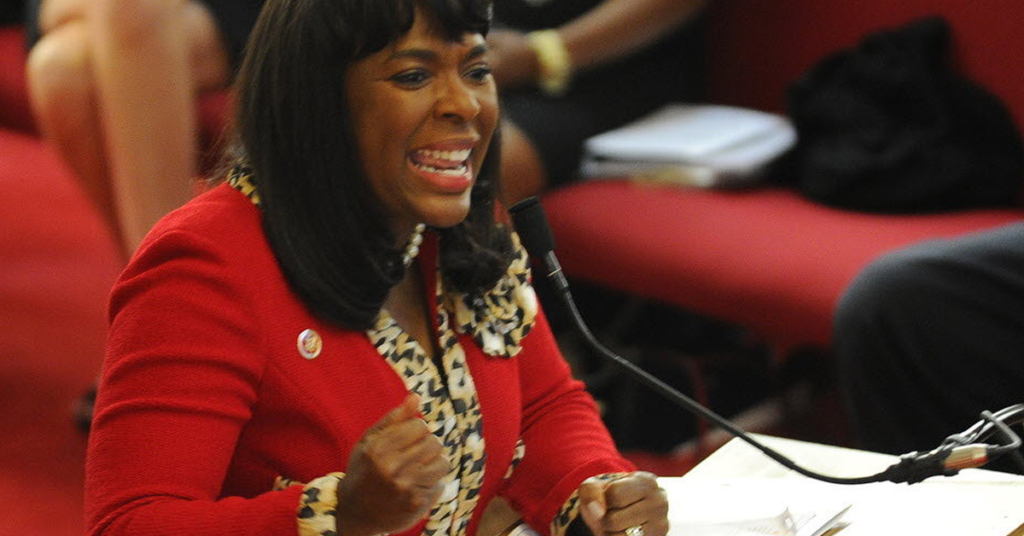
The University of Alabama at Birmingham (UAB) is getting $6 million in federal funding to help train students for in-demand jobs. UAB was one of 23 groups to receive the U.S. Department of Labor‘s America’s Promise grants, a federal program designed to accelerate the development and expansion of regional workforce partnerships committed to providing a pipeline of skilled workers in specific sectors. UAB was the only recipient in Alabama. Alabama 2nd District U.S. Rep. Terri Sewell helped UAB secure grant at the maximum allowed amount of nearly $6 million, which will fund Innovate Birmingham, a broad coalition led by UAB of public, community, business and education leaders committed to fostering economic growth for the region and offering better opportunities for young adults. “Innovate Birmingham’s consortium partners are among the most successful corporate, academic, and non-profit citizens in Alabama, all of whom realize that our national and global competitiveness is only as strong as our local workforce pipeline,” said Rep. Sewell. “With this vital funding from the Department of Labor, Innovate Birmingham will be able to meet the demand of the second fastest growing IT workforce in the country by educating and training 925 Birmingham-area disconnected youth for high-wage, high-demand jobs in the industry.” UAB President and Birmingham Business Alliance Board Chairman Ray Watts says UAB is excited to have the opportunity to help lead this important project that combines education, community service and economic development, touching several key priorities of the institution’s multifaceted mission. “The main focus of this effort is to offer new educational opportunities for the young adults in our community to provide them with training and expertise that will enable them to have prosperous, bright futures,” Watts said. “It will positively change their futures and the futures of their families and communities.” The Innovate Birmingham Regional Workforce Partnership’s program will fuel inclusive innovation for local employers by meeting workforce demand in information technology with sustainable, demand-driven education, training and employment opportunities for area young adults who are disconnected from the labor market. “This is a tremendous opportunity,” said Birmingham Mayor William Bell, “and the City of Birmingham leadership is proud to be among the dedicated team who combined their time, expertise and resources to make a compelling plan that truly embodies the spirit of America’s Promise and will have a great impact in our communities.”
