
Mo Brooks introduces legislation to reform TPS immigration program
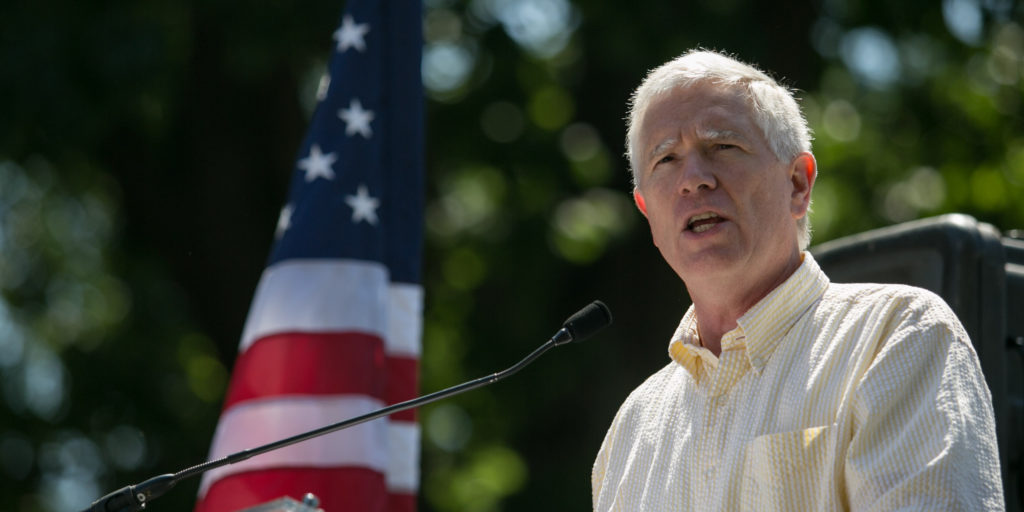
Congressman Mo Brooks this week introduced a bill that would tighten-up an oft “abused” immigration program that lends itself to de facto amnesty. Established in 1990 as a temporary immigration status — granted to eligible nationals of a country as a result of a natural disaster, civil violence, or other extraordinary conditions making the country “unable, temporarily, to adequately handle the return of its nationals” — the Temporary Protected Status (TPS) program is essentially a nascent green-card program of sorts providing recipients a work permit, Social Security number, driver’s license, and access to certain welfare benefits. While it’s not an immediate path to citizenship, under current law “Temporary” Protected Status is de facto permanent and is often renewed time and again, permanently extending the TPS status. Meaning hundreds of thousands of illegal aliens from countries across the globe, who would otherwise be deported, spend years, even decades, enjoying the protections and benefits of the program, even well-past the time the extraordinary conditions which qualified them for it had dissipated due to this never-ending “temporary” measure. Which is why Brooks introduced H.R. 2604: the Temporary Protected Status Reform Act of 2017. The TPS Reform Act would shift authority from the Executive and empower Congress to designate a nation’s participation in the TPS program. Further, it would set strict, clear time limitations for TPS duration, aiming to make the law, which was designed to be inherently temporary, temporary once more. “The United States provides Temporary Protected Status (TPS) to more than 300,000 foreign residents. As the name implies, the TPS statute purports to provide temporary relief to foreign residents for a period of 6 to 18 months. However, the Executive repeatedly renews protected status, effectively providing a free and permanent pass into America – including all the benefits that come with it,” said Brooks. “My bill, the TPS Reform Act would ensure that ‘temporary’ means temporary by establishing clear time limitations and creating statutory tests that must be met to grant the TPS designation. This legislation provides the needed reform for what has become a long-running amnesty program.” Among the supporters of the bill is the Federation for American Immigration Reform (FAIR), a non-profit that advocates for immigration reform based out of Washington, DC, who claim TPS is “misnamed.” “By now, we should have learned from experience that TPS is misnamed—what we offer as ‘temporary’ protection is rarely, if ever, temporary,” Federation for American Immigration Reform Executive Director, Dan Stein noted. “Most often, unfortunately, it’s used by aliens residing in the United States as a foot in the door to permanent residence. They are certainly happy to receive TPS because it apparently never expires. The true test of TPS as a policy tool is if it ever is, truly temporary. Our laws should not reward illegal immigrants to the United States regardless of the political or natural upheavals in their homelands. Otherwise, experience shows that we will encourage further illegal immigration.” The Executive Director of the Center for Immigration Studies, Mark Krikorian, agreed. “It’s long past time to fix the TPS statute so that ‘temporary’ no longer means permanent,” said Krikorian. “Past administrations have been abusing this temporary, humanitarian program for 27 years, using it as a de facto amnesty program,” Rosemary Jenks, Director of Government Relations at NumbersUSA added. “This bill would restore critical oversight by Congress.” Original cosponsors of the TPS Reform Act include: Texas-Republicans Louie Gohmert and Michael McCaul, and Iowa-Republican Steve King. NumbersUSA and FAIR both endorsed the bill.
Donald Trump says Border Patrol ordered to let immigrants illegally cross border to vote in election
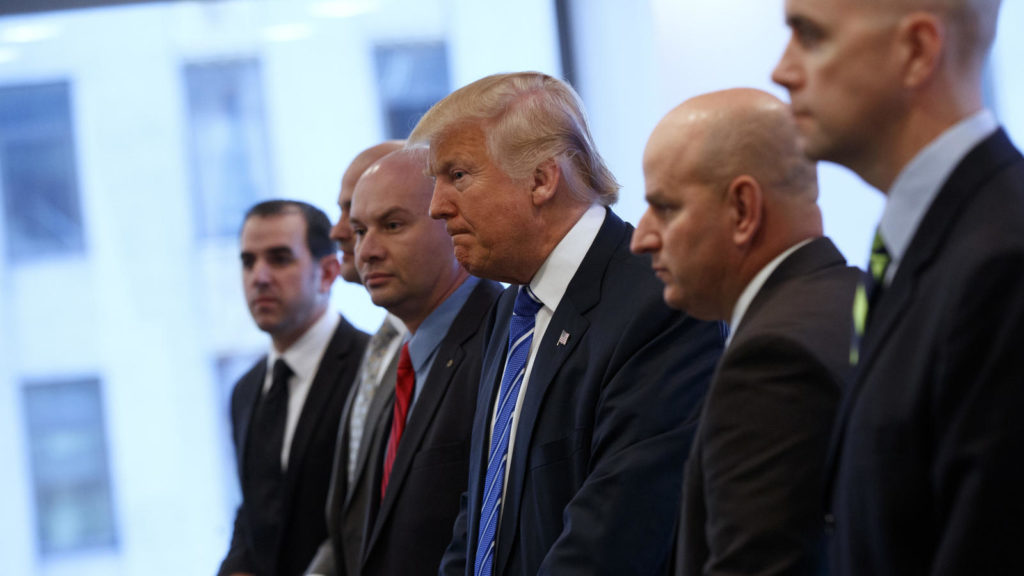
Citing a Border Patrol union leader, Donald Trump said Friday that agents have been told to allow immigrants into the United States illegally “so they can vote in the election.” But he offered no evidence to support his most recent claim that presidential voting may be tainted by fraud. In an immigration roundtable with Trump, Art Del Cueto, a vice president for the National Border Patrol Council, told the candidate Friday officials in the U.S. are being directed to ignore criminal histories of immigrants and speed up citizenship applications. “That’s a massive story,” Trump responded, saying it would be ignored by the media. “They are letting people pour into the country so they can go ahead and vote.” However, union spokesman Shawn Moran, who was in New York with Del Cueto, said later in a telephone interview that several issues were conflated during the roundtable discussion. Border Patrol agents have indeed seen an increase in attempts to cross the U.S.-Mexico border illegally, Moran said. But Moran did not say any border agents had been ordered to let those immigrants in so they could vote in November. The two issues are sometimes linked in a misleading fashion, and the brief exchange between Del Cueto and Trump underscored that. Neither Del Cueto nor Trump offered evidence to back up the idea immigration officials are taking action to allow people who have recently crossed the border to cast ballots on Election Day. Newly admitted immigrants are not permitted to vote, a right that is reserved for citizens. The process of achieving citizenship takes years. Citizenship applications are handled by U.S. Citizenship and Immigration Services, not the Border Patrol. There is no evidence that USCIS officials have been directed to quickly approve citizenship applications, though some lawmakers have asked the agency to address such reports. Trump has repeatedly said he fears the election will be rigged and has made a hard-line stance on immigration a centerpiece of his campaign. His latest provocative claim comes as Trump and Clinton are preparing for their second debate, a town-hall style confrontation Sunday night. It’s a critical moment for Trump, who after a rough performance in last week’s debate, is tasked with showing he can stick to his campaign message and steer clear of comments likely to alienate moderate voters. Trump and Clinton have been treading somewhat lightly on the campaign trail in recent days, as Hurricane Matthew barreled down on swing state Florida. The pause was a reminder of the possibilities and perils of campaigning during a crisis. Plenty of presidents and presidential hopefuls before them have used similar natural disasters to showcase their leadership — or their shortcomings — in ways that can change the trajectory of the race. Both Clinton and Trump appear to be moving carefully, for now. The campaigns spent Thursday moving staff and volunteers, closing offices and canceling events in the path of the storm, as many Floridians heeded calls to evacuate. In Florida, the Clinton campaign pulled its ads from the Weather Channel, amid criticism about insensitivity, and the Trump team pulled its negative TV ads. “Even if you want to do politics, no one is there to listen,” said Steve Schale, a Democratic consultant who directed or advised Barack Obama‘s campaigns in the state in 2008 and 2012. Both the campaigns and state officials were watching closely how the storm might impact Florida votes. The storm arrived five days before the voter registration deadline, prompting the Clinton campaign to ask state officials for an extension. Florida Gov. Rick Scott, Republican who leads a super PAC working to defeat Clinton, refused. “Everyone has had a lot of time to register,” he said. Officials were also eyeing the vote-by-mail operation. Vote-by-mail ballots were due to be sent this week, leaving the potential for ballots to arrive just as voters evacuate their homes. At least half of Florida voters typically cast ballots early, either by mail or in person. Officials said they hope any disruption to voting would be less severe than with Superstorm Sandy, which struck New Jersey and New York just before the 2012 presidential election and kept many voters away from polls. Sandy’s greater political impact, however, may have been the way President Obama used the moment to his advantage. Obama quickly surveyed the aftermath, received a warm welcome from Gov. Chris Christie, a Republican, and promised millions in aid. Trump, who is trying to recapture momentum lost in a rocky first debate, practiced his skills in public Thursday night at a town hall in Sandown, New Hampshire. Although his aides called the event a dry run for Sunday, Trump dismissed the notion. “I said, ‘Forget debate prep.’ I mean, give me a break,” said Trump, who mocked Clinton for spending days preparing. “She’s resting. She wants to build up her energy for Sunday night. And you know what? That’s fine. But the narrative is so foolish.” Republished with permission of the Associated Press.
Gary Palmer introduces legislation to hold federal agencies accountable

An Alabama congressman introduced legislation Thursday requiring all fines, fees, penalties, and other unappropriated funds collected by federal agencies to be transferred to the Treasury, and subject to the appropriations process. Citing recent examples where government agencies lacked accountability, 6th District Congressman Gary Palmer pitched the Agency Accountability Act (AAA) as a way to allow Congress to effectively regain the power of the purse over the actions of federal agencies and bring more transparency and accountability to the federal government. “This legislation will bring transparency and oversight back to our government,” Palmer said in a news release. “Throughout the years, Congress has granted federal agencies the authority to collect fines, fees and other revenues outside of their appropriated funds, but Congress has had little or no say in the way a substantial portion of these monies are spent, which in some instances has led to agency abuse.” A sizable portion of the fines, fees and other revenues are used by agencies to self-fund programs or operations outside of the normal appropriations process. Entities such as the Consumer Financial Protection Bureau (CFPB) and Financial Stability Oversight Council (FSOC) receive no appropriated funds from Congress. According to the Office of Management and Budget (OMB), in 2015 the federal government collected $516 billion in user fees alone. Last year U.S. Citizenship and Immigration Services (USCIS) intended to fund President Barack Obama’s unconstitutional executive action on illegal immigration through fines and fees and circumvent the will of Congress. Palmer continued, “Congress must begin reclaiming our Article I authority through the power of the purse and put the money back under congressional oversight where it belongs. I look forward to the support of my colleagues from both sides of the aisle as we work to restore Article I appropriation and oversight authority to Congress.”
Know a vet getting the government run around?
Soon our nation will be celebrating Memorial Day. More than a three-day weekend marking the beginning of summer, Memorial Day is time to pay tribute to the soldiers who made the ultimate sacrifice for our nation. It’s also a time to say thank you to our nation’s many vets and our current service members who are still manning the front lines to protect this great nation. Often times our nation’s veterans and military have issues with the federal government and need help. Did you know that you your Congressman and Senators are often your best resource when you can’t get an answer from a federal agency in a timely fashion, or if you feel you have been treated unfairly. For those currently in the military, or their families, experiencing difficulties with the U.S. Department of Defense and/or any of its military branches (Army, Navy, Air Force, Marines, Coast Guard, and the U.S. Merchant Marines), TRICARE, or the Defense Finance and Accounting Service (DFAS) a Congressional office can often intervene and help you receive a fair and timely response to your problem. For veterans, a Congressional office can assist efforts to obtain military records and medals, in answering questions they have concerning eligibility for benefits provided by the U.S. Department of Veterans Affairs (VA), or those who might be having difficulties with the VA Health Care System or the VA claims and appeals process. Offices are also available to assist with a myriad of other constituent services areas that include, but are not limited to: Citizenship and Immigration Services: dealing with USCIS — relating to the process of becoming a U.S. Citizen, how to renew a Permanent Resident (Green) Card Consumer Complaints: complaints about a product or business General Financial and Emergency Assistance: facing financial difficulties and looking for temporary financial assistance Internal Revenue Service: federal tax-related problems, tax-fraud Medicare: problems with Medicare Part A, Medicare Part B, Medicare Part D Prescription Coverage, a Medicare Advantage Plan (also known as Medicare Part C) or CMS Passports: figuring out where you should submit your application, figuring out which application to use, and deciding when you need to submit application to ensure that you get your Passport prior to your travel date Preventing Identity Theft and Fraud: provide information about steps that individuals may take to as a way to proactively protect themselves from identity theft and what can be done to protect your credit information from use in fraudulent ways Small Business Administration: provide information on any available government financing, counseling, and training programs to individuals who are interested in starting or expanding Alabama-based business Social Security Administration: difficulties with the Social Security Administration with obtaining disability benefits, Supplemental Security Income (SSI), retirement or other Social Security-related benefits, or if you simply need some help in obtaining documents If you’re facing an issue with the federal government, don’t hesitate to reach out to your respective Representative or one the Senators for assistance. Alabama’s 1st Congressional District: Rep. Bradley Byrne Alabama’s 2nd Congressional District: Rep. Martha Roby Alabama’s 3rd Congressional District: Rep. Mike Rogers Alabama’s 4th Congressional District: Rep. Robert Aderholt Alabama’s 5th Congressional District: Rep. Mo Brooks Alabama’s 6th Congressional District: Rep. Gary Palmer Alabama’s 7th Congressional District: Rep. Terri Sewell Statewide: Sen. Jeff Sessions State-wide: Sen. Richard Shelby Not sure of your congressional district or who your member is? You can use this easy service to find out.
DHS, DOL refuse to investigate lawmaker claims of abuse in visa program for specialty workers
A second federal agency has refused to look into claims that companies are using a popular visa program to displace American workers with cheap labor, ALToday.com has learned. In early April, a bipartisan group of senators led by U.S. Sen. Jeff Sessions and Senate Minority Whip Dick Durbin had urged the departments of Justice, Labor, and Homeland Security to investigate alleged abuses of the H-1B visa program. On April 23, a DOL official responded stating that the agency “lacks a basis to initiate an investigation.” The Department of Homeland Security issued a response late last week saying that the agency would not be pursuing an investigation of the H-1B program. The H-1B program allows employers to hire immigrant workers with highly specialized knowledge or education. Information from the Department of Labor website says that the program is intended to help companies that can’t find American workers with needed skills. The senators claimed to have gotten reports that at least one large company, Southern California Edison, was using the program to replace and undercut wages for American workers. “The U.S. is graduating twice as many STEM students each year as find jobs in those fields, yet the H-1B program continues to provide IT companies with a large annual supply of lower-wage guest workers to hire in place of more qualified Americans,” Senators Session and Durbin said in a joint news release. “There is no ‘shortage’ of talented Americans, only a shortage of officials willing to protect them.” According to reports by the Los Angeles Times, Southern California Edison officials deny that they are seeking to displace U.S. workers, and have vowed to “cooperate with any investigation” initiated by the senators. The DHS response to the senators’ letter came from U.S. Citizenship and Immigration Services Director Leon Rodriguez. Rodriguez wrote, “… it would be premature for USCIS to speculate as to whether Southern California Edison’s participation in the H-1B program has violated any laws. If facts come to our attention that indicate violations have occurred, USCIS will take appropriate action to maintain the integrity of our programs.” In a prepared statement, the senators said they were “disappointed” with the DHS response. “We did not ask for speculation; we asked for an investigation, and an explanation of any legal obstacles to conducting such an investigation.” Meanwhile, applications for the temporary visa program reached their congressionally mandated limit for the third year in a row, CNBC reported. According to that same story, USCIS began accepting 2016 applications in early April and met the 65,000 cap in just one week.
