In order to advance their radical agenda, “woke” liberals have weaponized the national media, activist judges, special interest groups, and others against anyone who does not embrace the tenets of leftist dogma.
Their newest bludgeon against independent and conservative thinkers are politically correct corporations, hedge funds, and financial institutions that base their investments upon a strict policy known simply as ESG, which stands for Environmental, Social, and Governance.
Any investment opportunities whose policies do not check the appropriate ESG boxes according to liberal orthodoxy are deemed inappropriate for funding and are left to wither on the vine.
Does your company oppose the Paris Accords or reject the Chicken Little hokum known as climate change? You are denied investment.
Does your company donate to Republican candidates or support conservative causes? You are denied investment.
Does your company hire and promote the best and brightest rather than adhering to a strict diversity and inclusion quota system? You are denied investment.
In essence, ESG replaces free markets with a liberal mob mentality that seeks to force its values on companies through intimidation, coercion, and financial starvation.
Even worse, companies that simply chose to remain apolitical and avoid taking positions on controversial issues, initiatives, and causes labeled as vital by the radical left are also tossed aside like yesterday’s trash.
Who does ESG hurt? The simple one-word answer is “everyone” – customers, employees, employers, and those who hold shares in either the company being denied or the company doing the denying.
For all of these reasons and dozens more like them, I am sponsoring House Bill 188, which prohibits the consideration of ESG criteria when Alabama’s state government awards public contracts.
The legislation also prohibits companies that receive public contracts from subjecting their employees to personal ESG ratings for hiring, firing, or promotion purposes.
Alabama’s state government should only do business with companies that want to help Alabama prosper, not those that seek to impose their radical political views on others.
Nor should our state government engage with businesses that actively discriminate in hiring practices based upon the New Age gospel of ESG.
Under ESG policies, essential American industries are subjected to boycott, divestment, and punishment by large corporations and public and private institutional investors.
Among the industries targeted for attack and closure by ESG practices are fossil fuel production, firearms manufacturing, timber, and agriculture, all of which operate within Alabama and provide thousands of stable, well-paying jobs to the working families who live here.
ESG advocates often force companies to take positions in the political arena on issues that may have nothing to do with the company’s actual business activities – such as Alabama’s strongest-in-the-nation, pro-life law, our constitutional carry firearms act, or our efforts to discourage illegal immigration within the state.
Alabama’s challenges in constructing new prison facilities have been caused, in part, by the fact that ESG advocates oppose mass incarceration and intimidated financial institutions that could have provided long-term financing.
In reality, companies succumbing to ESG demands are signaling their dereliction of fiduciary duty to those who have invested in their companies, and if a company is not willing to serve its shareholders well, it is likely not willing to serve the state of Alabama well, either.
This inappropriate application of a political agenda should be met with a clear response by economic freedom-loving people in Alabama not to participate.
It is time for elected officials, shareholders, and average Alabamians in every city, town, and crossroad to unite against the undemocratic investment framework the ESG movement has weaponized against them, and passage of HB188 will begin that revolution.
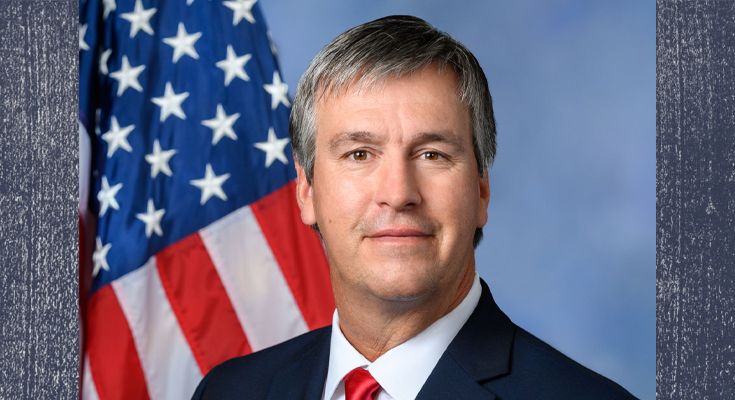
Chip Brown represents District 105. He was elected to the Alabama House of Representatives in 2018.
Related
Share via: