The Alabama House of Representatives passed the largest state general fund budget (SGF) in state history on Tuesday. The over three billion SGF has nearly doubled since 2015 when legislators had to raid the state’s savings account – the Alabama Trust Fund – to keep Medicaid afloat and most non-education state agencies operable. Mental Health was cut dramatically in that period, as was maintenance on Alabama’s aging prison infrastructure. Both of those decisions have come with consequences moving forward.
One area where those post-Great Recession general fund woes have had an enormous impact is on judges. The state’s population is now over five million. The state’s population has grown by over a million people since 1990, and the number of judges on the bench has not kept up. That growth has not been evenly distributed, however. Thirty-five years ago, Huntsville was a farming community with a military base and a NASA site. Today it is the largest city in the state.
Baldwin County has boomed. Elmore, Shelby, Lee, Limestone, St. Clair, Autauga, and Dekalb Counties have all grown in that period at a faster rate than the state as a whole. Subdivisions now stand where cows once grazed. In 2015 judges, especially in those fast-growing counties, struggled with large caseloads. The judiciary needed more judges then, but the general fund had seen revenues decline by over 20% since 2008, so there was no money to give to the court system. The Legislature responded to those concerns by passing reallocation. The Courts were ordered that when a judge retires in an area like the Black Belt, Jefferson County, Montgomery County, or West Alabama, that judgeship would be abolished and reallocated to a growing area like Baldwin or Madison County.
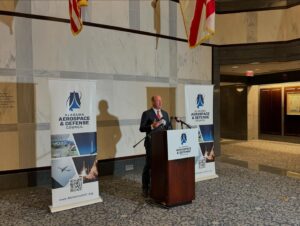
“That has not happened,” Speaker of the House Nathaniel Ledbetter told reporters on Tuesday. “Reallocation has not worked.”
“There have been two or three vacancies that should not have been filled,” Ledbetter said.
“My County (Dekalb) is 2.7 judges short,” Ledbetter said. “In 2015, we passed reallocation, and we were two judges short. Now we are almost three.”
Chief Justice Tom Parker said in 2021 that the Judiciary system had done a study that showed that the state need 21 additional judges.
While the general fund budget that passed out of the House on Tuesday had no funding for additional judges, House budget chair Rex Reynolds acknowledged that the state has an issue with growing case dockets and is working on the issue.
“I am going to meet with the judges tomorrow,” Reynolds said.
“There has to be something done,” Ledbetter said. “There is an appetite to fix it.”
Reynolds said three bills have been introduced, including one by Sen. Sam Givhan, to address the judge shortage issue.
“I am going to show them (the judges) the three bills and ask them which they like,” Reynolds said.
“It is something we have got to look at,” Reynolds said.
The state general fund budget passed on Tuesday includes a two percent pay raise for state employees and considerable increases in money for prisons and mental health.
“I was excited to see it pass today,” Ledbetter said. “Chairman Reynolds and that committee has worked really hard.”
Ledbetter acknowledged that even though the general fund is larger than ever,” It is hard to spread the money out and make everything happen.”
The budget, including a sizable supplemental appropriation for this year, now goes to the Senate Finance and Taxation General Fund Committee – chaired by Sen. Greg Albritton.
“Sen Albritton and he (Reynolds) have been working together since summer,” Ledbetter said.
Reynolds said that if the Senate makes major changes to the budget, he will ask that the House non-concur.
Ledbetter said that that would not be surprising.
“Most of the time, the General fund and education budget go to conference committee,” Ledbetter explained.
“Alabamians can be proud,” of the improvement in state budgets over the last several years, Ledbetter said. “When I first came in (2015), we could hardly pay the light bill.”
Ledbetter predicted that the education budget will be out of committee in the Senate next week.
“We will have it in the Senate next week,” Garrett said. “If not, then the following. Chairman (Danny) Garrett thinks it will be next week.”
Ledbetter is the former Mayor of Rainsville.
Alabama has an arcane budgeting system where over 90 percent of the money is earmarked. There are two separate budgets and billions of dollars outside of the two budgets making moving funds from where there is excess revenue to the greatest need difficult and sometimes constitutionally impossible.
Thursday will be day 15 of the 2023 Alabama Regular Session.
To connect with the author of this story or to comment, email brandonmreporter@gmail.com.
Related
Share via: