There is currently a temporary restraining order (TRO) on the Alabama Medical Cannabis Commission (AMCC) issuing medical cannabis licenses. However, that could change in the coming days for some license categories.
On Wednesday, Montgomery Circuit Judge James Anderson heard arguments from attorneys for both the AMCC and the plaintiffs suing the Commission over cannabis license awards made in August.
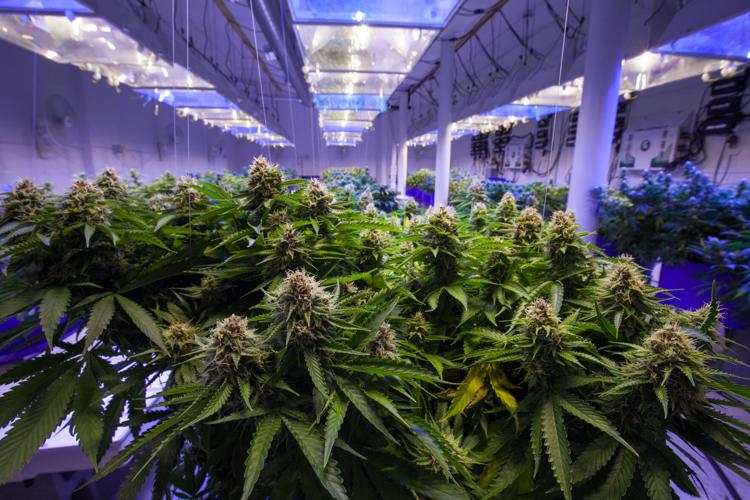
The state is issuing six categories of medical marijuana licenses: grower or cultivator (the term is used synonymously by parties involved), processor, transporter, laboratory, dispensary, and integrated facility. An integrator can grow, process, transport, and dispense cannabis.
Applicants who were denied permits for processor, dispensary, and integrator have all filed suit against the AMCC, arguing, for various reasons, that their application was wrongfully denied and the Commission violated the state open meetings law in its August awards meeting. Those lawsuits have all been consolidated into one case challenging those award results. Anderson placed a temporary restraining order on the AMCC issuing any licenses in August and a stay on further AMCC action while the court considers the plaintiffs’ arguments.
Under the AMCC’s current proposal before the court, the Commission will rescind the license awards for integrator, dispensary, and processor at its October 26 meeting. Meanwhile, the Commission would be free to issue the August awards for growers, transporters, and laboratories.
Alabama Today asked AMCC Executive Director John McMillan if there was a possibility that some of those growers could build their facility, plant their marijuana crop, harvest that first crop, and then have nowhere to legally process it and no market for it to sell it as a grower’s license does not allow the grower to sell it to the public.
“Hypothetically,” McMillan answered.
Alabama Always, the original plaintiff in this case, was denied an integrator permit in the June and August awards meetings.
Their attorney argued that the most important criteria for the award should have been how fast the applicant could get up and running with their first crop. Alabama Always began building a $7 million building a year ago, before the applications were even turned in.
“I know since that some people have said that nobody told Alabama Always to build a structure, but they did,” the attorney stated. “In the fall of 2022, my client already began construction.”
Alabama Always claims they began construction early to meet the AMCC requirement that an applicant must be able to start operating within 60 days of being issued a license.
“They don’t give you a single point (in the scoring) for being able to commence growing within 60 days,” the plaintiffs’ attorney argued.
“Some of these plaintiffs’ attorneys don’t know what they’re talking about,” McMillan told Alabama Today. “Getting started within 60 days is not that difficult. You could start a crop in here,” referring to the courtroom, by bringing in grow lights, irrigation, drainage, growing medium, and other greenhouse materials.
McMillan said if the court allows, the Commission could issue the grower, transporter, and laboratory licenses as early as November.
McMillan cautioned, “The Commission could do whatever it wants to do.”
On the advice of counsel, McMillan said he expects the Commission to rescind the awards for integrator, processor, and dispensary at its October 26 meeting.
Judge Anderson gave the applicants who were denied the grower, transporter, or laboratory licenses until October 26 to file a motion asking to extend the TRO on those three licenses beyond that date.
Anderson said, “If they want to file something before the 26th, we will deal with it. “
The most desired license is the integrated facility license, but the statute limits the number to a maximum of five licenses statewide. Approximately thirty business entities applied for that license, and it seems like most of the two dozen that were denied have hired an attorney and joined the consolidated case. Attorney Bill Espy announced that he had a client joining the case on Wednesday.
Anderson said the problem is the legislature did not allow enough licenses in the original statute.
“The legislature could fix this,” Anderson said. “They don’t want us legislating from the bench.”
The statute allowed the AMCC to award as many as twelve grower licenses. Only twelve applied, and of those, only seven were granted licenses.
Alabama Today spoke with Antoine Mordican at Native Black Cultivation, who was denied a grower permit.
Mordican said that, at this time, he is not interested in filing litigation.
Mordican said that he is working to address the issues in his application that the AMCC said were deficient and that he hopes to be awarded a license when the AMC makes a second round of grower awards.
“They are not following the statute,” Mordican, who is Black, said. “The statute requires that 25% of the licenses be awarded to minorities. Of the seven, only one is minority owned.”
One of the roughly 20 plaintiffs’ attorneys objected to the growers being issued licenses, arguing that it was unfair to the five integrators because they could potentially lose market share.
Several plaintiffs’ attorneys asked the court to bar the Commission from considering the scoring prepared by the University of South Alabama when considering the applications for integrator, processor, and dispensary.
“We have been waiting for four months to do something about the scores,” said the attorney for Alabama Always. “The grading of the scores is inconsistent with the statute. If they are allowed to consider the scores, we are going to be back here again. You can avoid that.”
“Unless the use of the scores is prohibited, we think that there will be a lot of tendency on the part of the commissioners to rely on the scores,” he added.
Michael Jackson is an attorney for the AMCC.
“They are not going to be happy with the scores unless they get an award,” Jackson said. “The Commission has absolute discretion on what they consider.”
“If there is a problem with the scoring, it doesn’t matter,” Jackson continued. “If the scoring is wrong, it doesn’t matter. If the scoring is bad, it doesn’t matter.”
“They are not articulating any grounds to issue a TRO,” Jackson said. “We are going to take every one of them (the Commissioners) and ask about the scoring in discovery,” Espy said.
Verano had the highest score in June, when they were granted an integrated facility license and again in August, when they were denied one. Their lawsuit, claiming that the AMCC had no power to rescind their license award, was dismissed by Judge Anderson earlier this month.
“The commission has the discretion to consider whatever criteria they want to use,” Anderson said. “Verano’s argument is they have the highest score.”
In the current proposal, every applicant for integrator, dispensary, and processor will be given up to 45 minutes to make a presentation, including a ten-minute video to the Commission in November.
An attorney for the AMCC said that they could be done “before Christmas.”
Anderson did not rescind his TRO but amended it to allow the Commission to proceed with their plan.
Chey Garrigan is the founder and President of the Alabama Cannabis Industry Association.
Garrigan expressed her frustration that the legalization of medical cannabis has turned so litigious.
“My desire is for licensees so we can move forward with patient outreach,” Garrigan told Alabama Today. “We have people dying every day from fentanyl in Alabama,” Garrigan told Alabama Today. “People endure suffering to the point of even planning their own death due to pain – that medical cannabis could possibly alleviate. Alabama cannot provide reliable treatment to patients with a qualified medical condition. While people are suffering, the Montgomery County Courthouse is full of attorneys representing clients that will NOT win.”
Garrigan blamed many of the issues in this litigation not on the AMCC or the court but on issues stemming from the 2021 statute establishing the AMCC and creating the application process, including the strict limits on the number of licenses issued.
“The legislature will have to step in, and new legislation is being drafted,” Garrigan said.
The Commission will meet next on October 26.
Judge Anderson set a tentative date for the next court hearing on Monday, October 30.
To connect with the author of this story or to comment, email brandonmreporter@gmail.com.
Related
Share via: