
2019 failing schools list: 76 Alabama schools don’t make the grade
A staggering 76 schools across the Yellowhammer State have been classified as “failing” according to a report by the Alabama State Department of Education (ALSDE) released Friday without comment or fanfare. The list is released under the state’s new Alabama Accountability Act, which requires the ALSDE to designate schools in the bottom 6 percent of standardized test scores in reading and math as failing. Last year there were 75 schools that were deemed “failing” but this year one more school has been added to the list. The new information is particularly important to parents as students in failing schools have the option to transfer to other public schools if those schools will accept them. Families are eligible for a tax credit, and taxpayer-backed scholarships, to help pay for private education as well. Families in the failing schools also have priority for the scholarships, but others may also obtain them. Below is the full list of the 2019 failing schools:
Alabama wants more money for school security, transportation, nurses
The Alabama Department of Education wants more money for school security and other programs next year. The Montgomery Advertiser reported that State Schools Superintendent Eric Mackey said Thursday he wants more money for reading and math programs, as well as for pre-kindergarten special education. Mackey said additional funding is also needed for transportation and school nurses. Mackey told the state board of education that the $30 million for school nurses would not add one nurse in Alabama. He said state funding for the nurses would free up local money for other programs. Mackey has not put together a formal budget request yet. He says the proposals came from priorities recommended by school board members and superintendents. The legislature reconvenes in March and will consider a new education budget. Republished with permission from the Associated Press.
You’re out! Alabama ‘inappropriate’ P.E. activities list resurfaces

A dubious list of activities for Alabama’s physical education (P.E.) classes resurfaced on Tuesday, in “normal” childhood games like duck duck goose, musical chairs and kickball were deemed inappropriate. The Alabama State Department of Education (ALSDE) said these types of games can physically harm students, and can lead to children playing favorites. The policies were implemented two years ago, but resurfaced this week after the Auburn University in Montgomery’s (AUM) Physical Education Program shared the list on their Facebook page. The list has since been removed from the ALSDE website, and the AUM Physical Education Program Facebook page. Director of Coaching for the Birmingham United Soccer Association, Ben Parks told WBMA-ABC 33/40 these games are useful in teaching children life lessons, social skills and perseverance. “It’s okay to have a winner and loser, it teachers you about life,” Parks told WBMA “You may not get the job interview, the best score on a test, make the sports team. That’s okay, you have to get better every time, right?” Newsweek reported that Alabama Education Superintendent Dr. Eric Mackey decided to pull the document offline on Tuesday after reading it. “I took it down because it didn’t go out through our normal school system’s process,” Mackey told Newsweek. He also told them the document had never actually earned a formal endorsement. “I completely disagree with it,” Mackey continued. “We are a state that firmly believes in local control. Local principals and superintendents should be permitted to determine how their physical education programs are run.” On Wednesday Mackey addressed the controversy with AL.com. “It is completely up to you which games you play. There is no directive about which games you can and cannot play,” Mackey said according to AL.com. “Go back, tell your principals to take care of their own P.E. problems, please… I can assure you that particular list is not going back up as long as I’m state superintendent.”
These 50 Alabama schools top the state in reading success, earn share of $1 million

Reading is a gateway to future success — in school and in life. It is critical to start early if children are to develop the skills they need to be successful. Which is part of the reason why the Alabama State Department of Education (ALSDE) is rewarding the top 50 Alabama schools who showed the most improvement in last year’s 3rd grade reading results money totaling a million dollars. Alabama lawmakers added an additional $1 million to the Alabama Reading Initiative (ARI) budget during the 2018 Legislative Session to be divided evenly among each school selected will receive a $20,000 check as a way of recognizing and incentivizing teachers and students who have worked hard to achieve proficiency in reading. “Reading is the cornerstone to all other learning. When we make sure our students can read and comprehend what they are reading at an early age, we prepare them for a greater possibility of academic success throughout their lives,” State Superintendent of Education, Dr. Eric Mackey previously said about the initiative. There will be a special recognition and awards ceremony on Thursday, September 13 at the ALSDE after the September Alabama State Board of Education meeting. Governor Kay Ivey, Alabama legislators, and other dignitaries will be on hand to personally congratulate all 50 schools. Below are the award recipients: State School Board District 1: Fairhope Elementary School-Baldwin County Silverhill School – Baldwin County Spanish Fort Elementary School – Baldwin County Swift Elementary School – Baldwin County Pleasant Home School – Covington County WS Harlan Elementary School – Covington County Eichold-Mertz School of Math and Science – Mobile County State School Board District 2: Cleburne County Elementary School – Cleburne County Kinston School – Coffee County Highlands Elementary School – Dothan City Geneva County Elementary School – Geneva County Samson Elementary School – Geneva County Slocomb Elementary School – Geneva County Abbeville Elementary School – Henry County Wedowee Elementary School – Randolph County State School Board District 3: Clanton Intermediate School – Chilton County Bluff Park Elementary School- Hoover City Deer Valley Elementary School – Hoover City Greystone Elementary School – Hoover City Mountain Brook Elementary School – Mountain Brook City Pelham Oaks Elementary School – Pelham City Mt. Laurel Elementary School – Shelby County State School Board District 4: Phillips Academy – Birmingham City State School Board District 5: Billingsley High School – Autauga County Pine Level Elementary School – Autauga County Southern Choctaw Elementary School – Choctaw County Sweet Water High School – Marengo County State School Board District 6: Randolph Park Elementary School – Anniston City Appalachian School – Blount County Cold Springs Elementary School – Cullman County Parkside Elementary School – Cullman County Chestnut Grove Elementary School – Decatur City F.E. Burleson Elementary School – Hartselle City Springville Elementary School – St. Clair County State School Board District 7: Hatton Elementary School – Colbert County Leighton Elementary School – Colbert County Berry Elementary School – Fayette County Mount Olive Elementary School – Jefferson County South Lamar School – Lamar County Central High School – Lauderdale County Underwood Elementary School – Lauderdale County Crestline Elementary School – Mountain Brook City Cahaba Elementary School – Trussville City Tuscaloosa Magnet School – Elementary – Tuscaloosa City Verner Elementary School – Tuscaloosa City State School Board District 8: Attalla Elementary School – Attalla City Fyffe High School – DeKalb County Henagar Junior High School – DeKalb County Sylvania School – DeKalb County Thurston T Nelson Elementary School – Scottsboro City
200 schools selected as official Alabama Bicentennial schools
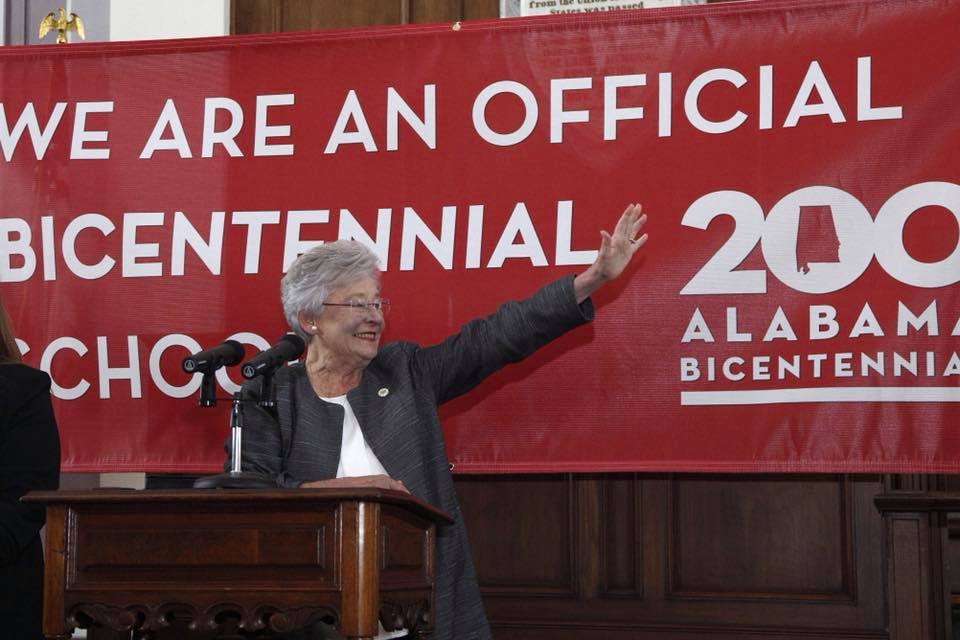
Governor Kay Ivey announced Friday the 200 schools selected as official Alabama Bicentennial Schools. Launched by Ivey in December 2017, the Alabama Bicentennial Schools Initiative encourages all public, private, and homeschool students and teachers to participate in the celebration of Alabama’s 200th anniversary of statehood in 2019. In early 2018, all K-12 schools in Alabama were invited to submit a proposal that engages in outreach and improvement projects to connect their classrooms with their local communities. From a competitive pool of nearly 400 proposals, 200 schools were selected to be official Alabama Bicentennial Schools and receive $2,000 grants to support the implementation of their projects. Additionally, 56 schools received honorable mentions and $500 grants. Schools were chosen through a review process involving committees of local educators, community leaders, and private citizens. “It makes me so proud to see such a strong showing of schools participating in the program. It is an honor to recognize these outstanding schools and their projects as we head into Alabama’s bicentennial year,” Ivey said. “The Alabama Bicentennial celebration is about bringing communities together and getting all of our citizens involved. The schools being honored are a great representation of that goal.” Representing all corners of the state, the selected schools have developed a wide variety of projects that will make meaningful contributions to their local communities. Ranging from oral history projects to community gardens to mentorship programs, these projects will foster new relationships between schools, students, and local citizens, extending well beyond Alabama’s bicentennial celebration. “One of the core objectives of the bicentennial is to get Alabamians thinking about what makes our state special, and what they want it to be,” said Steve Murray, co-chair of the Bicentennial Commission’s Education Committee. “The terrific projects developed by the Alabama Bicentennial Schools will create opportunities for students to learn about the importance of community, and to discover the ability they have to shape the future of their corner of the state.” The Alabama Bicentennial Schools Initiative is presented in partnership by Alabama 200, the Alabama Department of Archives and History (ADAH), and the Alabama State Department of Education (ALSDE).
Alabama awards $1 million to 50 elementary schools for reading success
Hoping to breathe new life into a once-thriving program, Alabama lawmakers added an additional $1 million to the Alabama Reading Initiative (ARI) budget during the 2018 Legislative Session in order to recognize Alabama elementary schools showing the most improvement in last year’s 3rd grade reading results. Divided evenly, each school selected will receive a $20,000 check from the Alabama State Department of Education (ALSDE) as a way of recognizing and incentivizing teachers and students who have worked hard to achieve proficiency in reading by the 3rd grade in last year’s statewide Scantron reading assessment. State Superintendent of Education, Dr. Eric Mackey, said the work educators across the state do every day is invaluable, however this monetary donation is another way of distinguishing the state’s top performers in the important category of 3rd grade reading. “Reading is the cornerstone to all other learning. When we make sure our students can read and comprehend what they are reading at an early age, we prepare them for a greater possibility of academic success throughout their lives,” Mackey said. “I commend the Alabama legislature for being good stewards of the limited funds we have in public education, and for recognizing the importance of reading for our youngest students.” The ALSDE will determine which 50 schools will receive the $20,000 award by measuring the percentage of third grade students that met their growth targets as measured by improvement between the initial test taken in the fall of 2017 and the final test taken in the spring of 2018 on the Scantron Performance Series Reading Assessment. All Alabama public schools with a third grade, of which there are approximately 1,071, will be included. In addition to public recognition by the Alabama State Board of Education, selected schools will be able to determine how to use their *$20,000. Karen Porter, program coordinator for ARI, said schools all across the state are working hard and showing significant growth in their reading performance. She said while student achievement is the ultimate reward, the ability to recognize the top 50 performing schools is a great additional incentive. “We are thrilled to see our schools rewarded for their hard work. Every day in Alabama educators are working diligently to provide students with a solid academic foundation,” Porter said. “These awards show that regardless of a student’s zip code, with hard-working educators and students, growth is not only possible, it should be expected.” The announcement of which schools have been selected will occur on Tuesday, August 21, 2018. Selected schools will be acknowledged during a recognition ceremony in Montgomery on Thursday, September 13, 2018 at the ALSDE.
Alabama school superintendent makes headlines asking for donations in exchange for early release
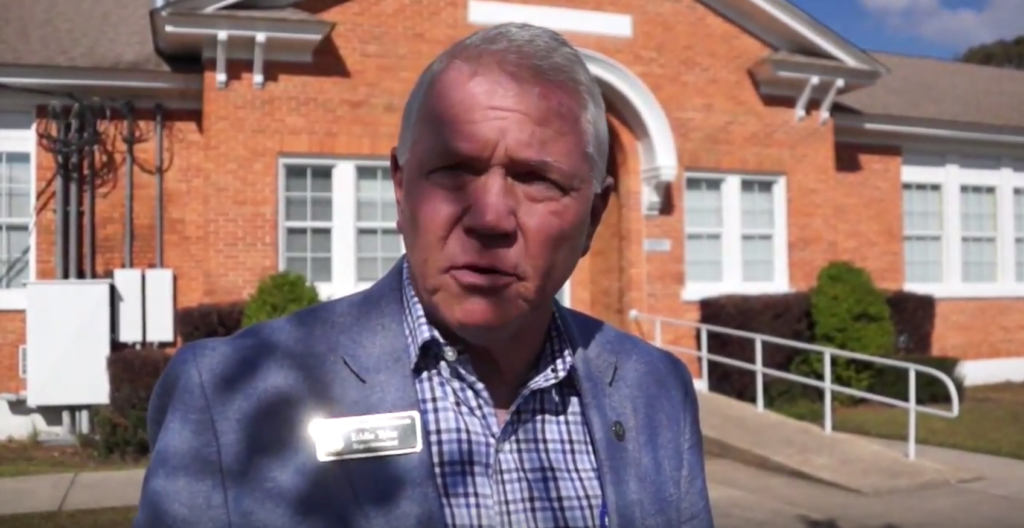
Eddie Tyler Superintendent of Baldwin County Public Schools has made headlines for a series of emails he sent last year to teachers and staff soliciting charity donations, and incentivizing contributions with early release from school. A series of Nov. 2017 emails were obtained by the Independent Press Journal (IPJ) from a source within Baldwin County Public Schools who wishes to remain anonymous. The emails were sent from Baldwin County Board of Education (BCBE) to all teachers and staff within their school district. According to IPJ, the emails begin with Executive Director of the United Way of Baldwin County, Inc. (UWBC) Marina Simpson pressing Tyler for more donations. On Nov. 27, Simpson said: “Unfortunately, the campaign dropped this year to 78,448.92… this number includes a combination payroll deduction, one-time donations made by BCBE employees, and any student campaigns that were held (we only have a few schools that do student campaigns).” Two days later, Tyler emailed all teachers and staff within the Baldwin County school district requesting donations to the UWBC, all the while incentivizing donations with early release from school: “we value our continuing partnership with Marina Simpson …. If our contributions meet or exceed $90K, the system will release students at 11:30 and ALL teachers at 1:00 the Friday before Christmas holidays 12/15/2017. If we as a system reach or exceed $100K, we will have a second early release day the Friday before Mardi Gras.” Tyler requested donations again on Dec. 6. “Time is running out. To make a decision about the early release, giving will be tallied at the end of the school day this coming Friday.” Tyler’s quid pro quo requests are nothing new While news of Tyler’s requests have just surfaced, he’s apparently made a practice of collecting funds on behalf of the UWBC and “rewarding” schools with early release for years. A youtube video from Nov. 2016 shows Tyler introducing Simpson who announced the school system has reached their goal of $75,000 donations, and thus have been “awarded” early release. Ethical issues According to IPJ, many Baldwin County teachers feel pressured to give, or else risk their reputation. A teacher told IPJ that BCBE officials place pledge cards and donation information in their mailboxes, and if staff don’t fill it out, then they are treated differently. “We’re pressured until we finally just do it to get them off our backs,” said a teacher. Sources also report that when teachers have not donated or filled-out their pledge cards for UWBC in the past, school officials have allowed a UWBC representative named Lana Mummah to come into the school and talk those teachers into donating. Lana Mummah is married to Ken Mummah, who is a former BCBE official. The Alabama State Department of Education (ALSDE) has yet to respond to Alabama Today’s request for comment.
State Dept. of Education seeks testing waivers to aid students with cognitive disabilities

The Alabama State Department of Education (ALSDE) will be seeking waivers from the Secretary of the U.S. Department of Education to allow students with cognitive disabilities to take the Alabama Alternate Assessment (AAA). The test — a performance task assessment administered as an alternate to the general education state assessment. It is administered to students with significant cognitive disabilities working on the Alabama Extended Standards, and is a paper-based multiple choice assessment administered in the areas of reading and mathematics in Grades 3-8 and 10 and science in Grades 5,7, and 10 — is part of the Every Student Succeeds Act (ESSA), signed into law in 2015 by then President Barack Obama. The program was intended to replace the No Child Left Behind Act; and ensures that students in the U.S. with a significant cognitive disability, are not excluded from learning beside their peers. Former-Gov. Robert Bentley then created an implementation task force in 2016 to assure the law’s success. The ESSA, “shifts the power of education from the federal government and returns power and control to the states.” Under ESSA, states are able to decide for themselves what is best for their students in regard to the “implementation of academic standards, testing, accountability, school improvement and teacher quality,” but also requires states to ensure that the number of students assessed using an alternate assessment does not exceed one percent of the students in the state who are assessed using Alabama statewide assessments. State is seeking a waiver as the ESSA places a 1 percent cap on the participation rate for each subject on the AAA. If a state anticipates it will exceed the 1 percent cap, it must seek a waiver. During the 2016-2017 school year, Alabama’s participation rate on the AAA was: 1.21 percent for reading, 1.21 percent for math, and 1.23 percent for science. Since Alabama exceeded the 1 percent cap for the 2016-2017 school year, it is anticipating exceeding the 1 percent cap for 2017-2018 school year. Thus, the ALSDE will be requesting a waiver for reading, math, and science from the Secretary of the U.S. Department of Education. The ALSDE is seeking public comment as part of this process. According to the ALDSE: You may send written comments on the request for a waiver to: Student Assessment, Alabama State Department of Education, P.O. Box 302101, Montgomery, AL 36130-2101. Mrs. Nannette Pence or Mrs. Maggie Hicks may be reached by phone at 334-242-8038, by fax at 334-242-7341, or through email at studentassessment@alsde.edu. Written comments will be accepted until June 15, 2018.
Montgomery’s Zestlan Simmons named 2018 Alabama Teacher of the Year
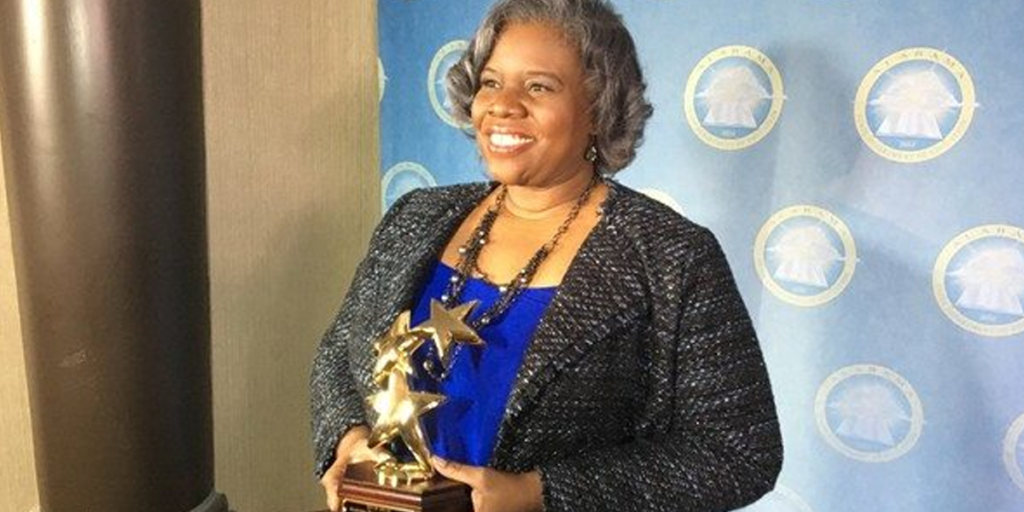
The Alabama State Department of Education (ALSDE) has named a Montgomery County school teacher who makes it her personal mission to engage and efficiently develop daily the academic skills of all students as its 2018 Teacher of the Year. Zestlan Simmons, who teaches English at Booker T. Washington Magnet High School will serve as the state’s ambassador for public education and the teaching profession. Simmons, who was recognized by the National Math and Science Initiative as the AP English Teacher of the Year, automatically becomes Alabama’s nominee for National Teacher of the Year. “This is truly a great honor and I am thankful for this wonderful opportunity to represent our Great State as the 2018-2019 Alabama Teacher of the Year,” said Simmons. “Students must have supportive learning environments and they must be encouraged to achieve at all levels – utilizing their local communities and digital learning opportunities to connect to the world.” Simmons was announced as Teacher of the Year during a celebration honoring the 12 semi-finalists and 4 finalists who were nominated for the coveted title at the RSA Plaza Terrace in Montgomery, Ala. Interim State Superintendent of Education Ed Richardson said it is an honor to join in the recognition of exemplary educators who transform classrooms and our society. “Teachers of the Year are world changers – they ensure the future prosperity of our great nation,” Richardson said. “These educators have shown our students a brilliant example of excellence.”
Here are the 16 finalists for 2018-19 Alabama Teacher of the Year

“Highly-skilled, dedicated, and caring teachers are essential to achieving excellence and in preparing our nation’s next generation of outstanding professionals.” According to a press release from the Alabama State Department of Education (ALSDE) 16 educators from across the Yellowhammer State have been selected as finalists for Alabama’s 2018-2019 Teacher of the Year for exemplifying these qualities and more. The finalists were selected from more than 140 educators who applied for the honor — one of the oldest and most prestigious state award programs for teachers “Each has accomplished great things with the students they mentor, teach, and inspire daily. They exemplify teaching at its best,” said the ALSDE of the finalists. Alabama State Department of Education: 2018-2019 District Teachers of the Year Nadine Lynch: St. Elmo Elementary School, Mobile County School System (District I Elementary Teacher of the Year) Janice D. Kinard: Fairhope Middle School, Baldwin County School System (District I Secondary Teacher of the Year) Dr. Brittney Duncan: Wrights Mill Road Elementary School, Auburn City School System(District II Elementary Teacher of the Year) Dr. Blake Busbin: Auburn High School, Auburn City School System (District II Secondary Teacher of the Year) Carol McLaughlin: Greystone Elementary School, Hoover City School System (District III Elementary Teacher of the Year) Lincoln Clark: Berry Middle School, Hoover City School System (District III Secondary Teacher of the Year) Meghan Allen: Minor Community School, Jefferson County School System (District IV Elementary Teacher of the Year) Lisa Gaines: Homewood Middle School, Homewood City School System (District IV Secondary Teacher of the Year) Jennifer J. Parten: Thomasville Elementary School, Thomasville City School System (District V Elementary Teacher of the Year) Zestlan Simmons: Booker T. Washington Magnet High School, Montgomery County School System(District V Secondary Teacher of the Year) Dr. James Tarlton Wilder, III: Odenville Middle School, St. Clair County School System (District VI Elementary Teacher of the Year) Ashley Nicole Holmes: Falkville High School, Morgan County School System (District VI Secondary Teacher of the Year) Rachel Pucko: Northport Elementary School, Tuscaloosa County School System (District VII Elementary Teacher of the Year) Robin M. Thompson: Florence High School, Florence City School System (District VII Secondary Teacher of the Year) Donna Holderfield: John S. Jones Elementary School, Etowah County School System (District VIII Elementary Teacher of the Year) Stephenie T. Smith: Buckhorn Middle School, Madison County School System (District VIII Secondary Teacher of the Year) The pool of finalists will soon be narrowed down to four, and the 2018-2019 Teacher of the Year will be announced at a ceremony on Wednesday, May 9, at 6 p.m. at the RSA Plaza Terrace in Montgomery, Ala.
Alabama schools get their own report cards
Thursday, the Alabama State Department of Education (ALSDE) released the Alabama State Report card. This is the first time a report of this caliber has been made available to Alabamians. Each school is given a letter-grade based on the results of several academic measures determined by local school leaders, local superintendents and ALSDE. The report draws attention to what schools are doing correctly, and which areas need more improvement. Letter grades are determined by several factors including; state test scores, graduation rates, absenteeism, and college or career-readiness. High schools without a 12th grade used adjusted formulas to account for the lack of graduation rates. “Although a lot of attention has been given to what grade schools are receiving, when reviewed holistically, the Alabama State Report Card shares a great deal of detail about what our schools are doing well and where they can improve,” said Caroline Novak, president of A+ Education Partnership. “Every school in Alabama is faced with different challenges and each has different strengths and weaknesses. The release of the Alabama State Report Card is an opportunity to learn more about the programs, initiatives and other areas where school leaders want to invest and how they can collectively improve student achievement. By looking at the measurements highlighted in the Alabama State Report Card overtime, communities can work together to ensure all students are on track for success in school and after they graduate.” Novak wants parents and educators to use the letter grades as a conversation starter on how to enhance learning environments for students across Alabama. The report card was developed to satisfy Alabama Act 2012-402 and the Federal Every Student Succeeds Act passed in 2015.
Alabama Board of Education cancels special meeting to discuss superintendent’s contract
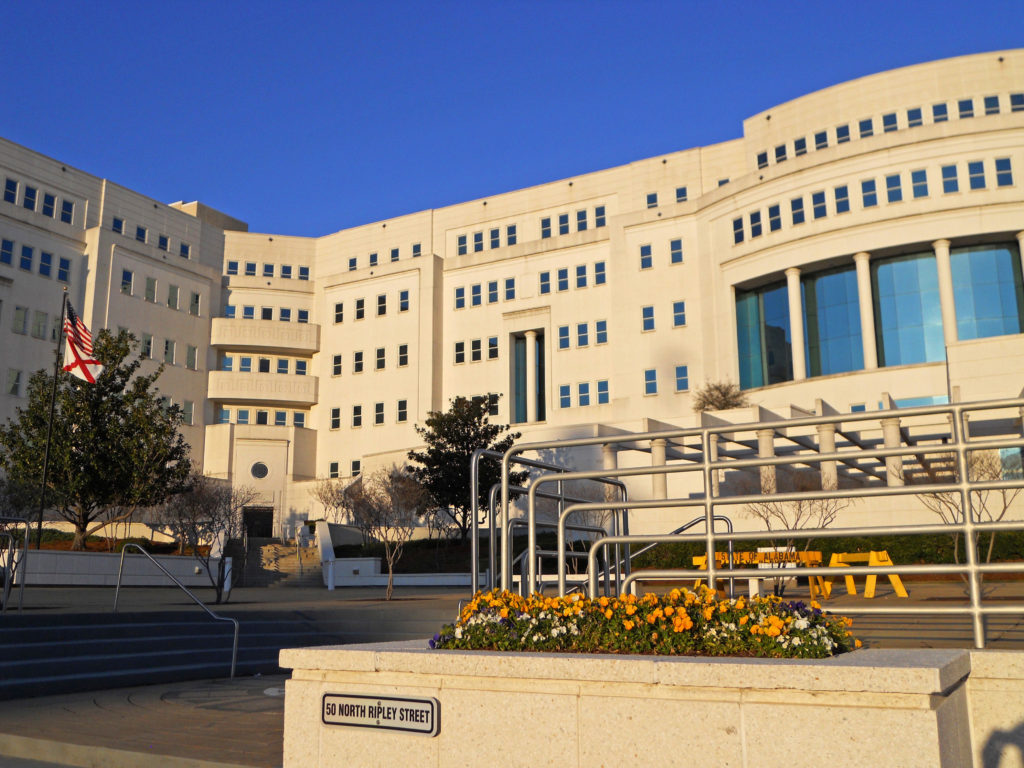
The Alabama Board of Education has canceled its Wednesday meeting where board members were scheduled to discuss State Superintendent Michael Sentance‘s contract after board members gave him a low marks during a performance review. The Alabama State Department of Education (ALSDE) announced Tuesday the specially called meeting was cancelled. Instead the board will hold a work session on Wednesday, which board Vice-President Stephanie Bell said will focus on the state budget and compliance with the federal Every Student Succeeds Act (ESSA).
