
Robert Aderholt introduces bill to keep federal government from using lease agreements to punish pro-life states
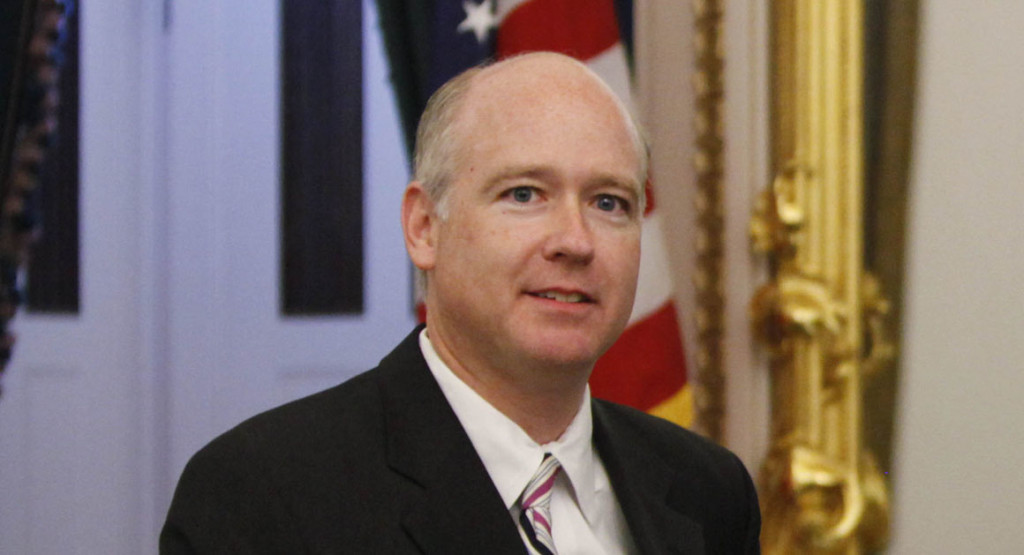
Congressman Robert Aderholt introduced a bill last week to prohibit the Administrator of General Services from constructing or acquiring buildings or entering into leases based on the legality or availability of abortions in the respective state. “The Biden Administration continues to inject abortion politics into otherwise non-partisan areas of the federal government, such as locations of federal offices,” Aderholt said in a statement. “This blatantly partisan practice threatens, and insults, states’ rights in protecting the unborn. That is not a precedent I want to see set in this country.” “President Biden cannot be permitted to punish states for enacting laws the Supreme Court has clearly ruled are within the rights of the states,” said Aderholt. The bill has so far garnered the support of 14 original co-sponsors, including Congressmen Dale Strong (R-AL05), Jerry Carl (R-AL01), and Barry Moore (R-AL02). “I am proud to join Congressman Aderholt’s bill preventing the Biden Administration from punishing states that do not adhere to its radical abortion agenda,” said Rep. Carl. “Abortion politics should play no role in the placement of federal buildings across the country.” “Decisions like this have historically been non-partisan and should have nothing to do with laws that states legally decide to enact,” said Rep. Moore. “The Biden Administration’s dangerous partisanship has been clear as they work to deny Space Command to the state that came in first place during a rigorous, merit-based process. I thank Rep. Aderholt for his work on legislation to ensure attacks on states’ rights such as this one cannot happen again.” “Threats from the Biden Administration to punish states who protect life create an incredibly dangerous precedent,” said Rep. Strong. “I am proud to co-sponsor this bill, which sends a clear message to the Biden administration: the protection of unborn life is not up for negotiation in states like Alabama.” “The Biden Administration is undermining the rule of law by doing an end-run of the SCOTUS ruling that empowers states to make their own laws surrounding abortion policy,” said House Budget Committee Chair Jodey Arrington (R-Texas). “This political gamesmanship has no place in strategic military decisions, including attempts to hold up SPACECOM’s relocation to Alabama.” “The Supreme Court ruled that abortion is a state issue,” said Rep. Doug LaMalfa (R-California). “President Biden is wrong to try and arbitrarily punish states that don’t surrender to his policy wishes. These kinds of polarizing issues should not be decided by executive fiat at the national level. Let the individual states in the Union chart their own courses and decide their own abortion laws with the input of their voters. That’s how federalism works.” “The Biden Administration has continuously proven that it will put its radical agenda above states’ rights, the rule of law, and our Constitution,” said Rep. Debbie Lesko (R-Arizona). “I’m proud to join Congressman Aderholt on his bill that would prevent the federal government from using a state’s pro-life laws against them when executing leases.” The General Services Administration (GSA) is the executive agency responsible for real estate and facility procurement, leasing, and development for the federal government. Since the Dobbs v. Jackson Women’s Health Organization decision last year, the Biden Administration has prioritized the federalization of abortion access, as well as penalized states that have enacted laws to protect the unborn. There are reports that the Biden Administration intends to halt plans to move the U.S. Space Command headquarters to Alabama due to “the state’s restrictive abortion laws.” The bill’s intent is consistent with a Senate companion bill introduced by Sen. Roger Marshall (R-Kansas). President Joe Biden, meanwhile, has not loosened his staunchly pro-abortion stance. “The stakes could not be higher for women across America,” Biden said. “I will continue to fight politically-driven attacks on women’s health. But let’s be clear – the American people must continue to use their vote as their voice, and elect a Congress who will pass a law restoring the protections of Roe v Wade.” Robert Aderholt has represented Alabama’s Fourth Congressional District since he was first elected in 1996. To connect with the author of this story or to comment, email brandonmreporter@gmail.com.
Will Ainsworth: Alabama congressional delegation fights Joe Biden’s efforts to corrupt Space Command HQ selection
31 That is the number of months that have elapsed since Alabama was officially announced as the location for U.S. Space Command headquarters. 3 That is the number of independent studies conducted by the Department of Defense Inspector General and the Government Accounting Office that rate Huntsville’s Redstone Arsenal as the best place for U.S. Space Command headquarters. 5 That is where President Joe Biden’s preferred state of Colorado ranks on the list of states qualified to house U.S. Space Command. 31…3…5 Those three simple numbers are all the evidence you need to demonstrate that the Biden administration has fully politicized the most important long-term strategic decision that Pentagon officials have made in decades. During his more lucid moments, Biden has made no secret that he prefers to place U.S. Space Command in a blue state like Colorado, which aligns more closely with his own ultra-liberal views, rather than a red state like Alabama that fiercely embraces conservative principles and strongly supported President Donald Trump’s candidacy in both 2016 and 2020. But with space serving as the newest battlefield in potential conflicts with hostile nations like Russia, China, and North Korea, politicizing what should be a decision based solely upon military advantage harms our defensive posture and puts the lives of roughly 335 million residents of the United States at risk. The members of Alabama’s congressional delegation, even those whose districts are located at the opposite extreme of the Tennessee Valley, are currently fighting a tremendous battle against Biden’s politicization in the corridors, committee rooms, and chambers of the U.S. Capitol building. Both U.S. Senator Tommy Tuberville and Senator Katie Britt recently met with General James Dickinson, the commanding general of U.S. Space Command, and publicly reported they received his assurance that Alabama remains the unequivocal choice for the agency’s headquarters among members of the nation’s military leadership. Congressman Dale Strong, whose district includes Huntsville, received the same affirmation from Dickinson. House Armed Services Committee Chairman Mike Rogers, a veteran congressman from the Anniston area with more than two decades of service, has inserted a provision in legislation that bans any construction related to Space Command headquarters from taking place until the Air Force confirms Alabama as the permanent location. The Rogers amendment also freezes half of the Air Force secretary’s travel budget until a permanent announcement is forthcoming. Likewise, Congressman Robert Aderholt of Haleyville and Congressman Jerry Carl of Mobile both serve on the House Appropriations Committee and have also inserted clauses pausing Space Command construction and other military development until an official announcement that is “in alignment” with the independent selection process is made. And after the Air Force leadership obliquely suggested that the criteria for locating Space Command may have secretly “changed” without public notice, Rogers opened an Armed Service Committee investigation into the delay surrounding the headquarters, and every email, memo, letter, note, and other material that touches upon the topic is becoming subject to congressional subpoena. Congressman Gary Palmer of Birmingham, Congressman Barry Moore of Enterprise, and even Congresswoman Terri Sewell of Birmingham, a fellow Democrat with Biden, have also communicated with the Air Force secretary and are equally committed to championing Redstone Arsenal’s cause. With the 2024 presidential election fast approaching, the stench of politics surrounding Space Command becomes exponentially stronger with each day that passes. A final, firm, and committed Pentagon announcement that Redstone Arsenal secured the selection was supposed to occur in December, but openness and accountability have been replaced with silence and stonewalling. Despite Biden’s ongoing efforts to corrupt a fair and independent process, Alabamians can remain secure in the knowledge that our congressional delegation is working hard every day to fight the smoke-and-mirrors approach being pushed by the White House and return honesty and fairness to the Space Command headquarters selection. For that, we can all be thankful. Will Ainsworth has served as lieutenant governor of Alabama since 2019.
Legislature passes Republican congressional redistricting plan
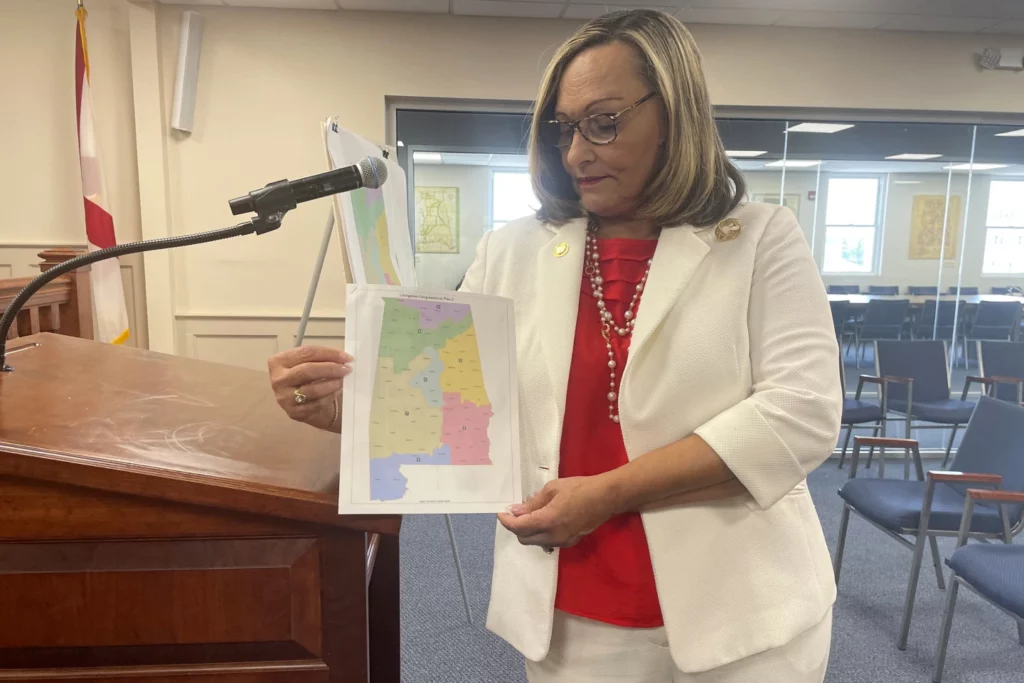
The Alabama Legislature passed a Republican congressional redistricting plan on Friday, setting up a battle in federal court that could either result in a federal court drawing Alabama’s congressional districts map or the most serious court challenge to the controversial Section 2 of the Voting Rights Act of 1965 in decades. In June, the U.S. Supreme Court ruled that the redistricting plan passed by the Legislature in 2021 likely violated the Voting Rights Act of 1965. A three-judge panel in Atlanta ordered the state to draw a map with two majority Black congressional districts “or something close to it.” The Legislature entered Friday with two Republican maps. One map increased Alabama’s Second Congressional District from 30% Black to over 42% Black. That plan was sponsored by State Representative Chris Pringle (D-Mobile). The other plan was sponsored by State Senator Steve Livingston (R-Scottsboro). The Livingston plan only increased the number of Black voters in CD2 from 30% to 38%. The House passed the Pringle plan while the Senate debated the Livingston plan. After the Senate voted to nonconcur with the Pringle plan, six legislators went into a six-member conference committee, and the four Republicans on the committee submitted a third plan. This map had previously been unseen by the press, the public, Democratic legislators, and presumably most Republican legislators. Both Houses of the Legislature then voted to adopt the conference committee plan. The conference committee map leaves the Seventh Congressional District as the state’s only majority Black congressional district. It did increase the percentage of Black voters in CD2 from 30% to 39.9%. CD2 is currently represented by Freedom Caucus Republican Barry Moore (R-Enterprise). Moore staffers were in the Statehouse on Frida meeting with legislators. Plaintiffs in the lawsuit have vowed to reject the Republican plan and adopt one of the Democratic plans that create two majority-minority districts or appoint a special master to draw Alabama’s congressional maps. Alabama Governor Kay Ivey released a statement saluting the Legislature for their hard work and bold stance. “Following the U.S. Supreme Court order, I called the Alabama Legislature into a special session to readdress our congressional map,” said Gov. Ivey. “The Legislature knows our state, our people, and our districts better than the federal courts or activist groups, and I am pleased that they answered the call, remained focused, and produced new districts ahead of the court deadline.” The Alabama House Democratic Caucus (AHDC) was not pleased with the plan that passed without Democratic support. “Once again, the Republican majority in Alabama is putting political ambition ahead of what is right and just,” the AHDC wrote. “And again, unfortunately, partisan politics is coming before Democratic rights, despite a decision upheld by the highest court in the land.” “The court ruled that our Black population is large enough and geographically compact enough to create a second district,” the AHDC continued. “And yet, the majority pushed through a map that blatantly fails to meet that standard.” “The House Democratic Caucus endorsed a map, supported by the plaintiffs, that satisfies that court’s ruling,” the AHDC added. “That majority has repeatedly ignored that option in an attempt to sidestep their duty to draw maps that represent all Alabama voters fairly and equitably.” Congresswoman Terri Sewell (D-AL07) released a statement expressing disappointment with the Legislature’s work. “Today, the State of Alabama has shamelessly chosen to ignore the Supreme Court,” Rep. Sewell said. “The map advanced by the state legislature includes only one majority-minority district and a second district where Black voters make up only 39.9 percent of the voting age population.” “This map does not comply with the Supreme Court’s order and is an insult to Black voters across our state,” Sewell added. “I fully expect that it will be rejected by the courts.” The Legislature has met the July 21 deadline set by the federal court in Atlanta. A hearing on Alabama’s congressional redistricting is scheduled for August. There is wide speculation that whatever happens in Atlanta with this redistricting, the loser will appeal to the U.S. Supreme Court. There is no guarantee that the Supreme Court will accept the case. To connect with the author of this story or to comment, email brandonmreporter@gmail.com
Redistricting plan goes to a conference committee
On Friday, the Alabama House of Representatives passed a Republican congressional redistricting plan that it hopes will comply with the Voting Rights Act of 1965. The Alabama Senate voted 30 to 0 to non-concur with the House plan. The redistricting plan has been referred to a conference committee to produce a compromise version that is acceptable to both Houses of the Legislature. For redistricting to pass out of the Legislature, the six-member conference committee has to reach a compromise. Then both Houses of the Legislature must vote to concur with the findings of the conference committee. Senate Bill 5 is sponsored by State Senator Steve Livingston (R-Scottsboro). The bill was carried in the House of Representatives by State Representative Chris Pringle (R-Mobile). Both Livingston and Pringle have introduced competing versions of the redistricting bill. The version of the bill that passed in the House is the Pringle version, the community of interest plan. Pringle’s plan would redraw Alabama’s Second Congressional District, currently represented by Congressman Barry Moore (R-AL02), to increase the Black voting age population in CD2 from 30% of the population to over 42%. Senate Democrats have introduced multiple plans that would produce two majority-minority districts. Livingston’s competing plan passed out of the Senate on Wednesday. Pringle says that his plan’s CD2 would meet the Supreme Court’s ruling that the state provides an opportunity for Blacks to pick a candidate of their choice. Democrats disagree. “You are giving me an opportunity to lose,” said Senate Minority Leader Bobby Singleton (D-Greensboro). “There ain’t no opportunity there for Blacks or Democrats in that district,” said Sen. Rodger Smitherman (D-Birmingham). Democrats maintain that it is necessary for there to be two majority-minority congressional districts for Black voters to have an opportunity to choose their own representation. They also maintain that that is what the court intended. Sen. Merika Coleman (D-Birmingham) said, “I contend that for African Americans to choose the candidate of their choice that we have to have a majority of African-Americans.” “It is irresponsible for the legislature to do what it is doing,” Coleman said. “The court ordered two districts that have 50% African Americans.” “The three-judge panel said that a proper remedy could consist of two majority-minority districts or quite close to it,” said Rep. Artis “A.J.” McCampbell (D-Livingston). The House of Representatives passed SB5 76 to 26. The Senate, in their own debate on redistricting, then voted 30 to 0 to concur with the House version of SB5 and go to a conference committee. Senate President Pro Tempore Greg Reed (R-Jasper) appointed Sens. Livingston, Smitherman, and Clay Scofield (R-Guntersville) to the conference committee. Speaker of the House Nathaniel Ledbetter (R-Rainsville) appointed Pringle, Chris England (D-Tuscaloosa), and Chris Sells (R-Greenville) to the conference committee. Both Houses of the Legislature will return on Friday afternoon, presumably to vote on the conference committee report. To connect with the author of this story or to comment, email brandonmreporter@gmail.com.
Legislature to finish redistricting today
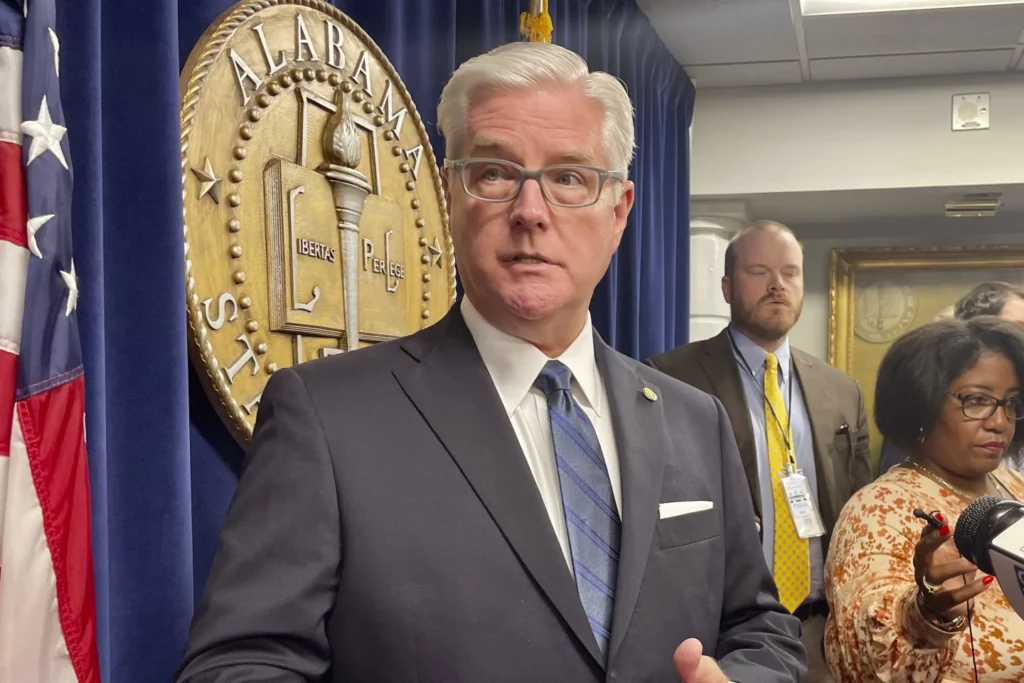
On Friday, both Houses of the Alabama Legislature will meet on redistricting. The federal appeals court in Atlanta has set Friday, July 21, as the deadline for the state to submit a new congressional redistricting for the court to consider in the state’s ongoing Voting Rights Act case concerning congressional redistricting. There are a lot of disagreements in the Legislature on what plan the legislators should pass. Legislative Democrats, the plaintiffs in the lawsuit against the state, and civil rights groups believe that to comply with the Voting Rights Act of 1965, the state should pass a plan with two majority-minority districts. This would almost certainly mean a pickup of one House of Representatives seat for Democrats in the U.S. Congress as Alabamians overwhelmingly vote along racial lines, with over 90% of Black Alabamians preferring Democrats and over 80% of White Alabamians preferring Republicans in recent elections. Alabama’s Legislative Republicans have rejected calls by Democrats to turn Alabama’s Second Congressional District into a majority-minority district. Congressional District 2 is currently represented by Congressman Barry Moore (R-Enterprise) – who served two terms in the Alabama House of Representatives from 2010 to 2018. Moore is a Republican, a member of the conservative Freedom Caucus, and an ardent Donald Trump supporter. Currently, 30% of the voters of CD2 are Black. State Senator Rodger Smitherman (D-Birmingham) has introduced a plan that would turn Congressional District 2 into a majority-minority district with over 50% of the voters in the district being Black. Republicans rejected that map as well as others introduced by Sen. Bobby Singleton (D-Greensboro) and other Democrats. Republicans maintain that the court has not ruled on Milligan v. Allen that the state is in violation of the Voting Rights Act. Democrats look at the same U.S. Supreme Court ruling and the recent order by a three-judge panel of the Eleventh Circuit Court of Appeals and say that the court did not provide the state with enough guidance to know what an “opportunity district” means. “That could be 42% (Black voters), that could be 38%, we just don’t know,” Senate President Pro Tempore Greg Reed (R-Jasper) told reporters. House Republicans have passed a plan by State Representative Chris Pringle (R-Mobile) they title the community of interest plan where Congressional District 2 is over 42% Black. Pringle maintains that that is close enough racially so that it is winnable by either party. Senate Republicans have passed a competing plan by State Sen. Steve Livingston (R-Scottsboro). The Livingston plan would only raise the Black voting age population of CD2 from 30% Black to 38% Black. Livingston said his plan kept communities of interest together and is the most compact while still providing an opportunity district for Black voters in Congressional District 2. More radical elements in the Legislature had called for turning Alabama’s Seventh Congressional District into an opportunity district that would be potentially winnable by Republicans. Congressional District 7 is represented by Terri Sewell – the only Democrat and the only Black representative in the congressional delegation. Both Pringle and Livingston, while deeply divided on the merits of their respective plans, did not go that far, and Congressional District 7 remains majority Black. Livingston said that his plan kept the Wiregrass whole and in the Second Congressional District, and it keeps the Gulf Coast and Mobile County whole. The House passed Pringle’s plan on Wednesday, but when he brought his bill to the Senate, Livingston motioned to substitute the Pringle plan for the Livingston plan. The Committee passed that motion. Pringle then stormed out of the room without continuing to present his bill. His bill, now the Livingston Bill, was passed by the Committee along party lines, with Democrats voting against it and Republicans voting for it. The one exception was State Senator Andrew Jones (D-Centre). His primary disagreement with the Livingston plan is that a small portion of northwest Etowah County would be in Congressional District 4, while 90% of Etowah County would switch to Congressional District 3. Jones told reporters he did not care whether Congressman Mike Rogers (R-AL03) or Robert Aderholt (R-AL04) represented Etowah County. “My issue is that historically Etowah County has not been divided,” Jones, who represents Etowah and Cherokee Counties, said. Smitherman told reporters that he and Sen. Singleton had brought their own federal lawsuit and joined Milligan and the other plaintiffs. Smitherman said that it is his understanding that the plaintiffs will be given the opportunity to tell the court whether the plan passed by the Legislature satisfies their concerns or not. “Right now, I can’t support either (Republican) plan,” Smitherman said. Smitherman has demanded that the Apportionment Committee prepare a report on the plans showing the likelihood of a Democrat or a Republican winning each of these. “They can get that, or they already know it and don’t want to release it,” Smitherman said, Since the GOP is wildly divided on which plan they will advance to federal court, there is uncertainty about what the Legislature will pass on Friday. “Obviously, there will be negotiations,” Reed said. A compromise plan can be substituted on the floor of either House. Failing that, any difference between the House and Senate plans would be settled by a conference committee. If that happens, then under the circumstances, both Houses will recess until the conference committee returns with a conference committee plan to vote on. If the state and the plaintiffs cannot agree on a redistricting plan that is acceptable to both sides, a trial will likely be held in the eleventh circuit. Whatever is ultimately decided by the federal appeals court in Atlanta will likely be appealed by whichever party is dissatisfied with the outcome meaning that the Milligan case could go back to the Supreme Court, where Justice Brett Kavanaugh appears to be the swing vote. There is even a possibility that this case may not be resolved until after the 2024 elections. To connect with the author of this story or to comment, email brandonmreporter@gmail.com.
Alabama House and Senate both advance GOP congressional redistricting plans
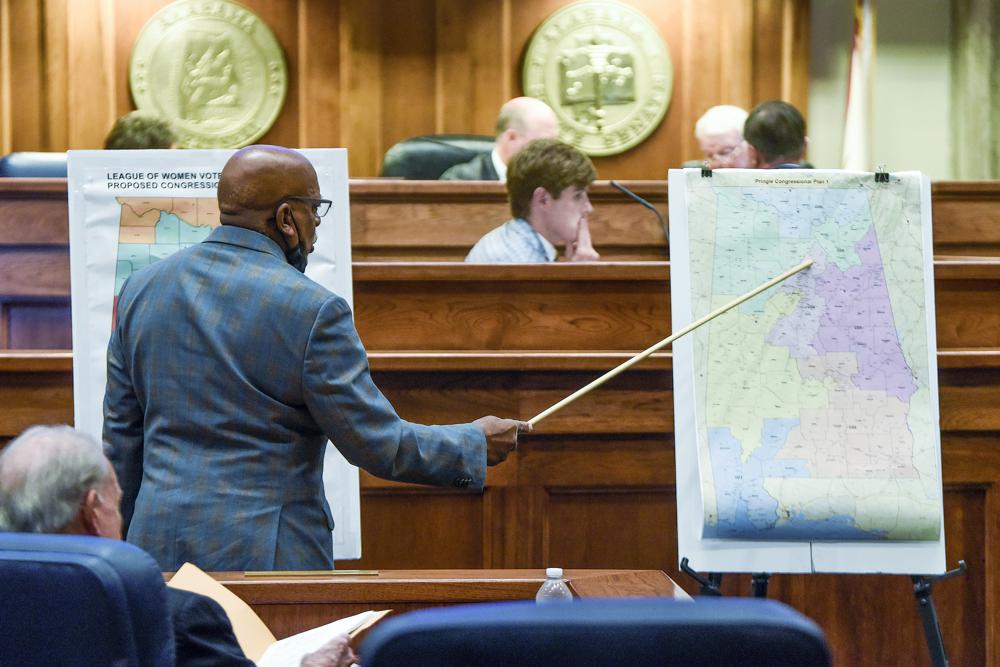
On Wednesday, the Alabama House of Representatives passed a controversial congressional redistricting plan along party lines that failed to create a second majority-minority district. Hours later, the Alabama Senate passed a similar plan that also failed to turn Alabama’s Second Congressional District into a majority-minority district. Civil rights groups are demanding that the Alabama Legislature create a second majority-minority district after the three-judge panel of the Eleventh Circuit Court of Appeals declared Alabama’s 2021 Congressional rezoning in violation of the Voting Rights Act of 1965. After initially staying the decision, the U.S. Supreme Court agreed that the Legislature’s 2021 plan denied Black Alabamians (27% of the population the ability to choose their own congressional representation). The court has ordered the state to present a new redistricting map by July 21. The National Redistricting Foundation (NRF) accused the Legislature of defying the court order by not preparing a plan with two majority-minority districts. The NRF is the 501(c)(3) affiliate of the National Democratic Redistricting Committee (NDRC), Marina Jenkins is the Executive Director of the NRF. “The maps passed by the Alabama House and Senate are in flagrant disregard of the Alabama district court’s order to enact a map with two districts in which Black Alabamians can elect a candidate of their choice, and the Supreme Court’s decision affirming the lower court,” said Executive Director Jenkins in a statement. “This shameful process, riddled with partisan schemes deployed at the expense of Black voters’ rights, has failed the voters of Alabama who deserve a fair and compliant congressional map. Time and time again, Republican legislators have shown their intentions lie solely in maintaining their own political power and silencing the constituents they are meant to represent. Neither the House nor Senate map meet the requirement of the court’s order, or the law, and will be challenged.” The plaintiffs in Milligan v. Allen that challenged the 2021 redistricting presented two maps to the court showing either two 51% Black districts or two districts that were 48% Black. The NRF has endorsed a heavily gerrymandered (along racial lines) plan that results in a 52.2% Black Second Congressional District and a 56.7% Black Seventh Congressional District. The NRF-supported plan achieved that by dividing Mobile County into a majority-Black section that would be in the new majority-minority district that would stretch from the Mississippi to Georgia state lines and an overwhelmingly White portion that would then be in the First Congressional District with nearby Baldwin County (which is overwhelmingly White and Republican). It similarly divides Jefferson and Tuscaloosa Counties along racial lines. The Seventh Congressional District is already a majority-minority district represented since 2011 by Rep. Terri Sewell – a Black Democrat. That plan also puts Congressman Jerry Carl (R-AL01) and Congressman Barry Moore (R-AL02) into the same district – the First. The Republicans in the Alabama Legislature have rejected any plan that divides Mobile County or splits Baldwin and Mobile into separate congressional districts. They argue that the Alabama Gulf Coast and the Wiregrass regions should not be divided. The Republican Legislators call their plan the Communities of Interest Plan. The House passed a version of that plan that keeps Mobile and Baldwin whole and in the First Congressional District but increases the number of Black voters in the Second Congressional District to 42.5%. The Seventh Congressional District would be 52.15% Black. The Legislative Committee on Reapportionment is chaired by State Rep. Chris Pringle – a Mobile Republican – and State Sen. Steve Livingston – a North Alabama Republican. Pringle sponsored the plan that the House of Representatives passed, while Livingston sponsored the plan that the Senate passed. Pringle insisted that even though there are more Whites than Blacks in his plan’s Second Congressional District, it would be a toss-up district that either party could win. Black legislators insisted that the only way a Black person could win a congressional race in Alabama is if the district is majority Black. In the Senate plan, the Second Congressional District would become 38.8% Black, and the Seventh Congressional District would remain majority Black. If either of the Republican plans passes the Legislature on Friday as drawn today, the plaintiffs are almost certain to reject that plan and ask the three-judge panel in Atlanta to reject the Alabama GOP plan and appoint a special master to draw the districts. To connect with the author of this story or to comment, email brandonmreporter@gmail.com.
Black lawmakers say Alabama GOP’s proposed new congressional map insults the Supreme Court
Alabama Republicans advanced new congressional lines Wednesday, a proposed map that Black lawmakers called an insult after the U.S. Supreme Court ordered the legislature to redraw districts to give Black voters a greater voice in elections. The House of Representatives voted 74-27 to approve the GOP plan, which does not establish the second majority-Black district sought by plaintiffs who won the Supreme Court case. Instead, the GOP would increase the percentage of Black voters to 42% in the district. That’s enough, GOP lawmakers said, to consider it a political swing district — where either a Republican or Democrat could get elected — in compliance with the court. The bill now moves to the Alabama Senate. “This is really a slap in the face, not only to Black Alabamians, but to the Supreme Court,” Rep. Barbara Drummond, D-Mobile, said during the floor debate. Rep. Prince Chestnut, a Democrat from Selma, said, “Once again, the state decided to be on the wrong side of history.” “We’re fighting the same battles that they were fighting 100 years ago, 50 years ago, 40 years ago, right here today,” Chestnut said. “Once again, the (Republican) super majority decided that the voting rights of Black people are nothing that this state is bound to respect. And it’s offensive. It’s wrong.” State lawmakers face a Friday deadline to adopt new lines after the U.S. Supreme Court in June upheld a finding that the current state map — with one majority-Black district out of seven in a state that is 27% Black — likely violates the federal Voting Rights Act. Republican House Speaker Pro Tempore Chris Pringle argued that the proposed lines satisfy the court requirement to provide greater “opportunity” to Black voters. The GOP-backed House plan would increase the percentage of Black voters in the 2nd Congressional District, now represented by Republican Barry Moore, from about 31% to 42.4%. “We’ve drawn a district that provides an opportunity for the minorities to elect a candidate of their choosing,” Pringle said. “The court said we had to provide an opportunity, and that’s what that district does.” A group of voters who challenged the existing congressional plan said white Republicans drew the map “to maintain power by packing one-third of Black Alabamians” into a single majority-Black district while leaving lopsided white majorities in every other district. Alabama now sends one Black congresswoman to Washington — Rep. Terri Sewell, whose 7th congressional district is majority Black — and six white Republicans. The appellate ruling that struck down the existing congressional map said Alabama should have “either an additional majority-Black congressional district, or an additional district in which Black voters otherwise have an opportunity to elect a representative of their choice.” The language reinforced by the Supreme Court specified that a new map should include two districts in which “Black voters either comprise a voting-age majority or something quite close to it.” Black lawmakers said Wednesday that history shows that Black candidates generally don’t win in Alabama unless they run in a majority-Black district. “We’ve been held back too long. We’re human beings. We’re Alabama citizens. We work. We do things, but we don’t have the representation that we need,” said Rep. Pebblin Warren, a Democratic lawmaker from Tuskegee. Republicans hold a lopsided majority in the Alabama Legislature and will control what ultimately passes. Representatives on Wednesday voted down an effort by Democrats to bring up a plan, backed by plaintiffs who won the Supreme Court case, that would create a second majority-Black district. The Alabama Senate planned to vote later Wednesday on a proposal that’s similar but would put even a lower percentage of Black voters in the 2nd congressional district — 38.31%. Once a new GOP map passes, the fight will shift quickly back to the courts. Republicans, who have been resistant to creating a Democratic district, are wagering that they’ll be successful in a second round of appeals. The three-judge panel could step in and draw up its own plan if they deem it unacceptable. “You can save your time. You can save your money because we’re going to have a special master drawing this map,” Rep. Chris England, D-Tuscaloosa, said. Republished with the permission of The Associated Press.
More than 5,000 veterans voice support for Tommy Tuberville’s hold on military promotions
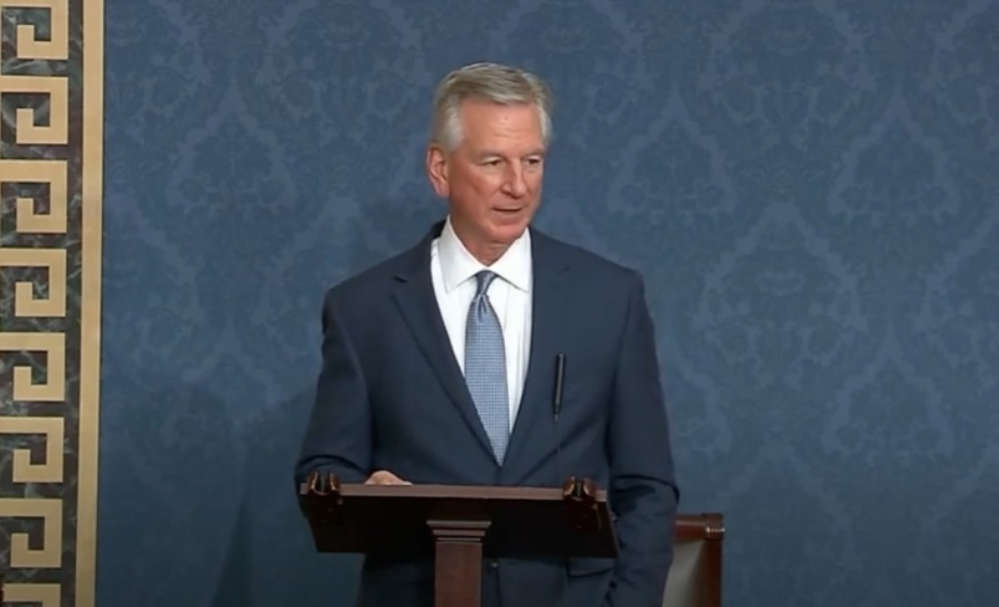
U.S. Senator Tommy Tuberville (R-Alabama) has been denounced by President Joe Biden, congressional Democrats, senior leaders at the Department of Defense (DoD), and the mainstream media for his refusal to give unanimous consent to senior military and DoD civilian promotions over his objection to Biden era rules on ensuring abortion access. Tuberville, however, says he is receiving strong veteran support for his standoff with President Biden and Defense Secretary Lloyd Austin over the department’s decision to pay for abortion-related expenses for servicemembers using taxpayer dollars. Tuberville announced on Tuesday that he had received more than 5,000 veterans expressing their support for Senator Tuberville’s decision to place a hold on Pentagon general and flag officer promotions, joining a growing army of those backing the senator. Tuberville recently forwarded a letter to Senate Majority Leader Chuck Schumer (D-New York) and Senate Minority Leader Mitch McConnell (R-Kentucky). The letter from the veterans outlined the need for a strong military that is focused on fighting to preserve life rather than end it. “As current and former service members of the United States Military, and organizations which support and advocate for the safety and well-being of our service members, we firmly support Senator Tuberville’s position of holding civilian, general, and flag officers from confirmation by unanimous consent until the DoD rescinds its recently instituted policy of subsidizing abortion,” the veterans wrote. “The undersigned stand united in condemning this policy. This policy is not just illegal, it shamefully politicizes the military, circumvents the authority of Congress, and exceeds the authority of the Department of Defense.” “While some claim that Sen. Tuberville’s position is negatively impacting military readiness, the Department of Defense has failed to present any evidence that substantiates this claim,” the veterans continued. “To the contrary, it appears true that the politicized agenda of Secretary Austin and the Biden administration are significantly diminishing military readiness. The American people, including its servicemembers, are disappointed by President Biden and Secretary Austin’s recent decisions to mandate receipt of the COVID-19 vaccines, promote the radical LGBT agenda, and now subsidize abortion. Because of these policies, the military now faces an unprecedented crisis of recruitment – missing its recruitment goal for the first time ever last year. The focus of our military must be on keeping the American people safe, not advancing the left-wing social agenda.” “There is no truth more profound than the fact that all human life is sacred,” the Veterans added.“The mission of the United States Military is to defend and protect all American lives – not subsidize the practice of destroying innocent and vulnerable American children via abortion with taxpayer dollars. By pledging to hold these nominations to the Department of Defense until administration officials reverse course, Senator Tuberville is doing a great service for the American people – including its service members.” Tuberville meanwhile cites what he says is growing support for his position among Republican members of Congress. Tuberville has 20 statements of support from members of Congress. “Thank you, Senator Tuberville, for standing up for American taxpayers, who are being forced to fund abortion through the DoD. As threats against our country continue to grow, the DoD should be focused on protecting Americans instead of being an abortion travel agency,” said U.S. Rep. Barry Moore (R-AL-02). “Senator Tuberville is not blocking them on the floor. He is just saying you can’t do them by unanimous consent because President Biden has created this new abortion policy out of whole cloth. This is a moment where Senator Schumer is just trying to embarrass Senator Tuberville. Senator Tuberville is strong and passionate about the value of children and sees this as important,” said U.S. Senator James Lankford (R-Oklahoma). Sen. Tuberville was elected to the Senate in 2020. To connect with the author of this story or to comment, email brandonmreporter@gmail.com.
Special Session to address congressional redistricting begins today
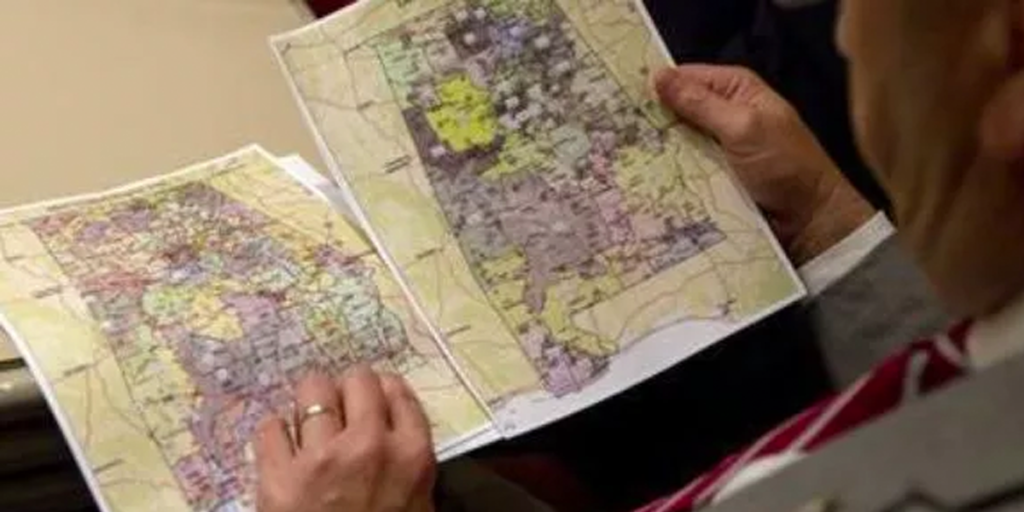
Both Houses of the Alabama Legislature will be in session Monday for the second special session of the year. Last month Alabama Governor Kay Ivey issued a proclamation to call the Legislature for a special session beginning at 2:00 p.m. Monday, July 17, 2023, to address congressional redistricting. “It is critical that Alabama be fairly and accurately represented in Washington,” said Gov. Ivey. “That is why I support the Alabama Legislature readdressing our congressional map in a special session beginning July 17. It is of the utmost importance that this special session only address the congressional map and nothing else. The task at hand is too urgent and too important. The Alabama Legislature has one chance to get this done before the July 21 court deadline. Our Legislature knows our state, our people, and our districts better than the federal courts or activist groups do.” The special session is necessary because a special three-judge panel at the Eleventh Circuit Court of Appeals ruled that the 2021 Congressional redistricting violated the Voting Rights Act of 1965 and illegally diluted the political power of African Americans. The Supreme Court had stayed that decision allowing the 2022 elections to proceed with the 2021 redistricting, but after reviewing the case themselves, ruled that the Eleventh Circuit ruling was correct in its initial ruling and referred the issue back to the Atlanta appellate court. The three-judge panel has ordered the state Legislature to prepare a new redistricting plan with two majority-minority districts or something as close to that as possible by July 21. Many questions are swirling around today’s session. The Legislature may advance a plan with two 47-48 percent minority districts, a plan with two 51% minority districts, or a plan with a 47% minority district and a 51% minority district. Congresswoman Terri Sewell (D-AL07), Alabama’s lone Democrat in the congressional delegation since 2011, has said that she will not be satisfied unless her district and the second Congressional District are both majority-minority. Alabama is currently represented in the U.S. House of Representatives by six Republican White men and one Democratic Black woman. The new redistricting will go into place for the 2024 congressional elections. Most observers believe that to achieve a second majority-minority district, the Legislature will have to put a large part of Mobile County into one of the majority-minority districts. How much of Mobile County will be left in Republican Jerry Carl’s First Congressional District, and will Carl find himself in the same district as fellow Republican Congressman Barry Moore? Could the Republican Legislature save both Republican congressmen and still be in compliance with the letter of the law in the Supreme Court decision, or does one of the two-term Republican Congressmen have to be sacrificed to satisfy the demands of the federal court? If the plaintiffs in the lawsuit Milligan v. Allen are not happy with the maps drawn by the Legislature, they likely will ask the three-judge panel in Atlanta to reject the second redistricting and order a special master be appointed to draw the districts. If the court complies with that request, this special session could effectively become a waste of time. The court has given the state until July 21 to present them with a map that the judges find acceptable. There were efforts by some to get additional issues, such as gambling or absentee ballot reform, placed in the call. However, Gov. Ivey rejected those efforts and has urged the Legislature to focus strictly on the issue of congressional redistricting. This is the fourth session that the Alabama Legislature has held in 2023. The Alabama Legislature is a part-time legislative body that meets once a year to consider changes to state laws and pass the annual budgets. This year they met for a brief organizational session and used all thirty days of their maximum allotted regular session days. There was also a first special session to appropriate $1,030,000,000 in American Rescue Plan Act funds. This is the second special session of 2023. A court case, Thomas v. Allen, challenging the Alabama Senate district maps under Section 2 of the Voting Rights Act and challenging both legislative chambers’ district maps under the Fourteenth Amendment, was filed on November 16, 2021. Litigation was paused pending the outcome of Milligan. Since civil rights groups were successful in their challenge of Milligan, there is a possibility that the State of Alabama could be forced by the federal courts to redraw legislative districts as well, which would result in at least one more special session before the end of the year. To connect with the author of this story or to comment, email brandonmreporter@gmail.com.
Barry Moore introduces resolution in support of checkoffs
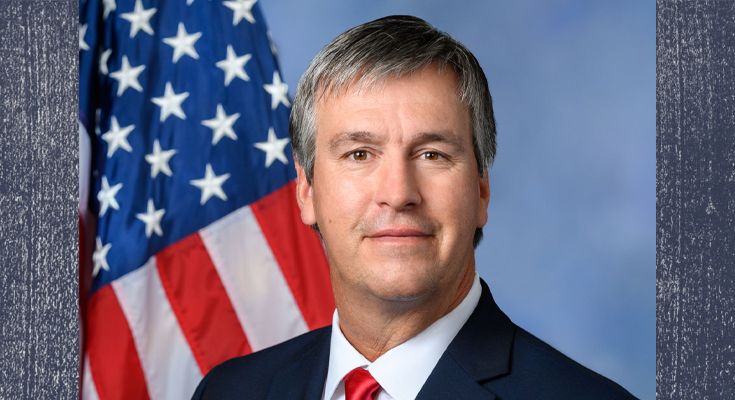
Om Thursday, Congressman Barry Moore (R-AL02) introduced a resolution expressing the sense of the House of Representatives that research and promotion boards, also known as “checkoffs,” support efforts to develop new markets while strengthening existing markets for specific agricultural commodities. “Checkoff programs have made significant, measurable strides in raising the level of demand and awareness for our farmers, ranchers and foresters’ products,” said Moore. “This resolution expresses Congressional support for checkoffs due to the research, education and promotion efforts they have provided to our producers.” Moore said that checkoffs have proven a return on investment and value through research findings for the producers supporting their programming. Through responsible stewardship and thorough producer-led, as well as Federal oversight of producer resources, these boards give producers across the industry access to robust marketplaces and cutting-edge research. The American Farm Bureau Federation, National Cotton Council, American Soybean Association, National Pork Producers Council, National Milk Producers Federation, National Cattlemen’s Beef Association, International Fresh Produce Association, American Mushroom Institute, American Sheep Industry Association, American Wood Council, National Christmas Tree Association, National Potato Council, National Pecan Federation, National Sorghum Producers, National Watermelon Association, North American Blueberry Council, U.S. Peanut Federation, Alabama Farmers Federation, Texas Farm Bureau, Texas Cattle Feeders Association, Texas Sheep & Goat Raisers Association and Texas & Southwestern Cattle Raisers Association have all endorsed the resolution. Checkoff programs promote and provide research and information for a particular agricultural commodity without reference to specific producers or brands. Currently, the USDA Agricultural Marketing Service (AMS) oversees twenty-one research and promotion boards at the federal level, which consist of large and small producers, importers, and other commodity stakeholders. These range from commodities like dairy, beef, and soybeans to honey, watermelons, softwood lumber, and potatoes. The number has been higher than twenty-one in the past and could increase in the future depending on whether new programs – hemp, for example – are approved by AMS or created via legislation. Checkoff programs have been challenged in courts and in USDA administrative proceedings in various ways on numerous occasions over the past decades by producers opposed to paying the mandatory assessments. In Johanns v. Livestock Mktg. Ass’n, 544 U.S. 550 (2005), the Supreme Court determined advertisements promoting beef as a generic commodity were government speech and thus not violative of the First Amendment. In 2016, new litigation was initiated in the United States District Court for the District of Montana — Ranchers Cattleman Action Legal Fund United Stockgrowers of America v. Perdue. In R-CALF, the plaintiffs primarily allege that the collection of a portion of the federally-mandated dollar-per head of cattle violates the First Amendment because the operation of several states’ Qualified State Beef Councils fall outside the government speech test set forth in Johanns. R-CALF argues that “The decades-old beef checkoff program is ill-suited to meet the needs of today’s cattle farmers and ranchers. In fact, the program promotes corporate control and globalization over the interests of America’s cattle producers.” Presently, checkoff programs collectively provide a billion dollars or more annually at the state and federal levels in funding to support research, education, and information activities. The programs have faced and survived numerous legal challenges over the past decades. The future of checkoff articles will likely be decided in the courts and through the lobbying efforts of the feuding ag—industry associations for and against the checkoff. Congressman Barry Moore is in his second term representing Alabama’s Second Congressional District. To connect with the author of this story or to comment, email brandonmreporter@gmail.com.
Alabama Democrats express frustration over redistricting; GOP proposal to get vote Monday
Majority Republican lawmakers have not released their ideas for redrawing Alabama’s congressional districts to comply with a Supreme Court ruling, leading Democrats on Thursday to accuse GOP lawmakers of shutting them, and the public, out of the process ahead of next week’s special session on redistricting. Alabama lawmakers begin the special session Monday to approve a redistricting plan that is being developed by Republicans but hasn’t been presented. “There hasn’t been any public scrutiny on it, and we’re just going to be handed that map at some point over the weekend, maybe even Monday, and say here, ‘Vote on it,’” Rep. Chris England, a Democrat from Tuscaloosa, said after a meeting of the legislature’s redistricting committee. England said he understands that the GOP majority will determine what passes, but said that “something with as much jeopardy attached to it as redrawing the congressional map to satisfy a Supreme Court decision” should be done “in the light of day.” A three-judge panel gave Alabama until July 21 to adopt a new congressional map after the U.S. Supreme Court upheld its ruling that the state likely violated the Voting Rights Act with its current plan that has only one congressional district with a substantial number of Black voters. The Alabama Permanent Legislative Committee on Reapportionment held a meeting Thursday to hear public comments and approve guidelines. House Speaker Pro Tempore Chris Pringle, who serves as co-chairman of the committee, said it will meet Monday to vote on the proposed map. While Democrats accused Republicans of keeping the process shrouded in secrecy, Pringle said they are proceeding as quickly as possible. He said the proposed map will be sent to committee members as soon as possible before the Monday meeting. “We are working on that as fast as we can,” Pringle said. Alabama now has only one majority-Black district out of seven in a state where more than one in four residents are Black. The three-judge panel said in its 2022 ruling that Alabama should have “two districts in which Black voters either comprise a voting-age majority or something quite close to it.” Republicans have the numbers to approve a plan without support from Democratic lawmakers. However, the plan must go back before the three-judge panel. GOP lawmakers risk the court stepping in and drawing its own plan if lawmakers stray too far from the court’s wishes. The group of Black voters that won the Supreme Court case urged committee members Thursday to adopt their proposed map. It would adjust the state’s 2nd Congressional District, now represented by Republican Rep. Barry Moore, to create what is described as an “opportunity” district because it would give Black voters, now making up 50% of the voting-age population, a greater opportunity to elect a candidate of their choice. The proposed district would encompass some Black Belt counties and parts of Mobile County. Some of the plaintiffs described how they joined the case after seeing their communities ignored by the white Republicans who represent their areas. “I want my community to have a seat at that table,” said Shalela Dowdy of Mobile. Some Democrats on the legislative committee disagreed on how to reconfigure the map. Sen. Vivian Davis Figures, D-Mobile, said she will introduce the plaintiffs’ map in next week’s session because it “complies with the court’s instruction.” Sen. Rodger Smitherman, D-Birmingham, favored a rival proposal that would alter the 6th Congressional District, now represented by Republican Rep. Gary Palmer, so it includes all of Jefferson County, which is home to Birmingham. Smitherman argued that a Democrat would have a good opportunity to be elected in the racially diverse district. “Jefferson County is the melting pot,” he said. Republished with the permission of The Associated Press.
Barry Moore counters President Joe Biden’s economics claims
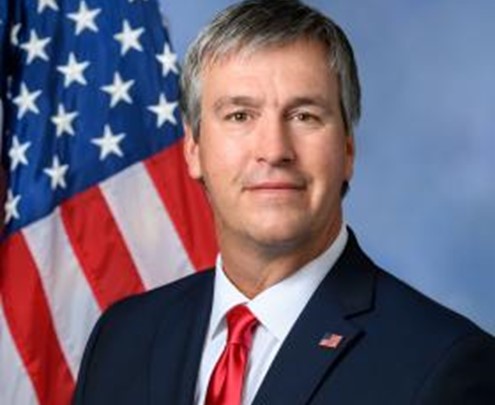
On Monday, Congressman Barry Moore wrote a column expressing his concerns that President Joe Biden’s economic policies are hurting middle-class American families. “Last week, President Biden gave a speech in Chicago touting the success of his “Bidenomics” plan,” Rep. Moore wrote. “He says his policies are helping the middle class – but statistics show that couldn’t be further from the truth. Biden’s new, woke government regulations have cost the average American household an extra $10,000 over the last two years. What could you have done with that money in your bank account?” “Thanks to “Bidenomics,” Americans have experienced doubled gas prices, more than $32 trillion in national debt, and the highest inflation in 40 years,” Moore continued. “Because inflation has exceeded wage growth, hourly compensation has fallen by 5 percent since Biden took office. His average inflation rate since taking office is 16.3 percent – only President Carter had a worse rate. No wonder 64 percent of Americans say they disapprove of his economic policies.” The voters’ perception of President Biden’s economic policies will likely be a major focus of the 2024 presidential elections. Moore continued, “Americans can’t afford another term of “Bidenomics.” The cornerstone of Biden’s economic plan was his student debt handout. I spoke out against this unconstitutional giveaway, and I’m grateful the Supreme Court struck it down. This was a massive victory for American taxpayers, who would have been forced to foot the bill of $400 billion over the next 30 years – even if they chose not to go to college or had no loan debt.” “Another key part of “Bidenomics” is the president’s new socialist rule that forces Americans with good credit ratings to pay higher fees to cover those with poor credit ratings,” Moore continued. “Biden calls this rule “equitable access to home ownership,” but I’m old fashioned – I just call it stealing. House Republicans recently passed H.R. 3564, the Middle-Class Borrower Protection Act, which would end this ridiculous rule that could cause mortgage fee increases of up to $3200 per year for those with good credit ratings.” President Biden defends his economics policy, which he says is responsible for record-strong job growth. “This is Bidenomics in action: Our economy added more than 200,000 jobs last month—for a total of 13.2 million jobs since I took office,” President Biden said on Friday. “That’s more jobs added in two and a half years than any president has ever created in a four-year term. The unemployment rate has now remained below 4 percent for 17 months in a row—the longest stretch since the 1960s. The share of working-age Americans who have jobs is at the highest level in over 20 years. Inflation has come down by more than half. We are seeing stable and steady growth. That’s Bidenomics—growing the economy by creating jobs, lowering costs for hardworking families, and making smart investments in America.” Barry Moore is serving in his second term representing Alabama’s Second Congressional District. Both Moore and Biden are up for reelection next year. To connect with the author of this story or to comment, email brandonmreporter@gmail.com.
