
Alabama says it has built method for nitrogen gas execution
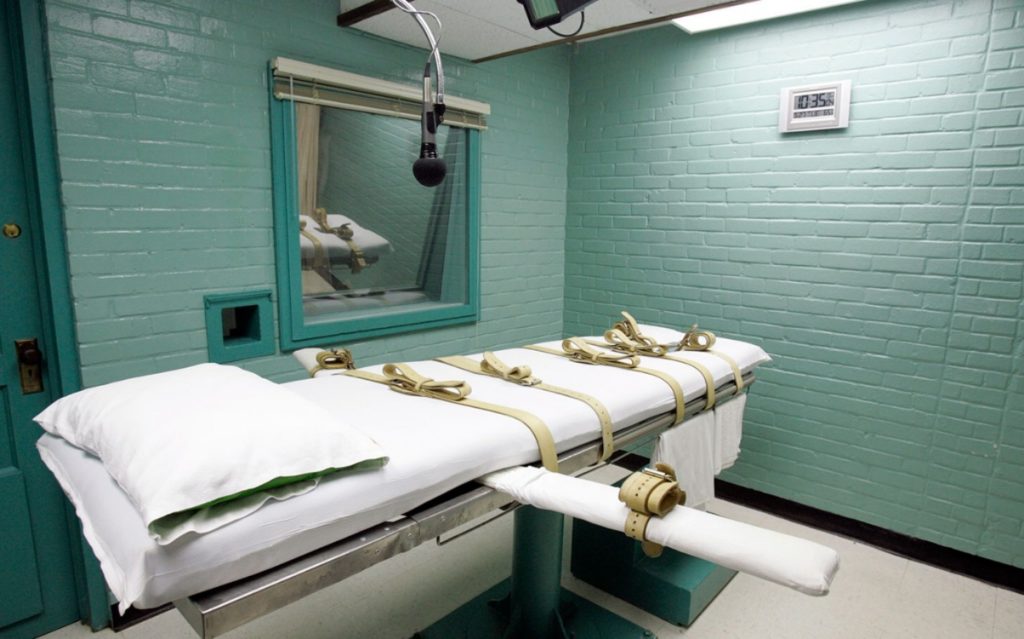
Alabama told a federal judge this week that it has finished the construction of a “system” to use nitrogen gas to carry out death sentences, an execution method authorized by state law but never put into use. The Alabama Department of Corrections indicated in an August 2 court filing that it is waiting to make sure the nitrogen hypoxia system is ready before writing procedures for how it will be used. The prison system did not describe how the system would work or give an estimate on when the state may try to use the new execution method. “The ADOC has completed the initial physical build on the nitrogen hypoxia system. A safety expert has made a site visit to evaluate the system. As a result of the visit, the ADOC is considering additional health and safety measures,” a lawyer for the state attorney general’s office wrote in the court filing. Alabama in 2018 became the third state — along with Oklahoma and Mississippi — to authorize the untested use of nitrogen gas to execute prisoners. Death would be caused by forcing the inmate to breathe only nitrogen, thereby depriving him or her of oxygen. Lawmakers theorized that death by nitrogen hypoxia could be a simpler and more humane execution method. But critics have likened the untested method to human experimentation. No state has used nitrogen hypoxia to carry out an execution, and no state has developed a protocol for its use, according to the Death Penalty Information Center. The information of the construction was disclosed in a court filing involving a lawsuit over the presence of spiritual advisers in the death chamber. State lawyers wrote that they did not yet know if spiritual advisers could safely be present during an execution via nitrogen hypoxia. A prison system spokesman did not immediately respond to an email seeking comment. The prison system has previously declined to describe the proposed system, citing security concerns. Alabama currently carries out lethal injections unless an inmate requests the electric chair. As lethal injection drugs become difficult to obtain, states have begun looking at alternative ideas for carrying out death sentences, including firing squads and gas. Republished with the permission of the Associated Press.
Alabama releases copy of execution procedures
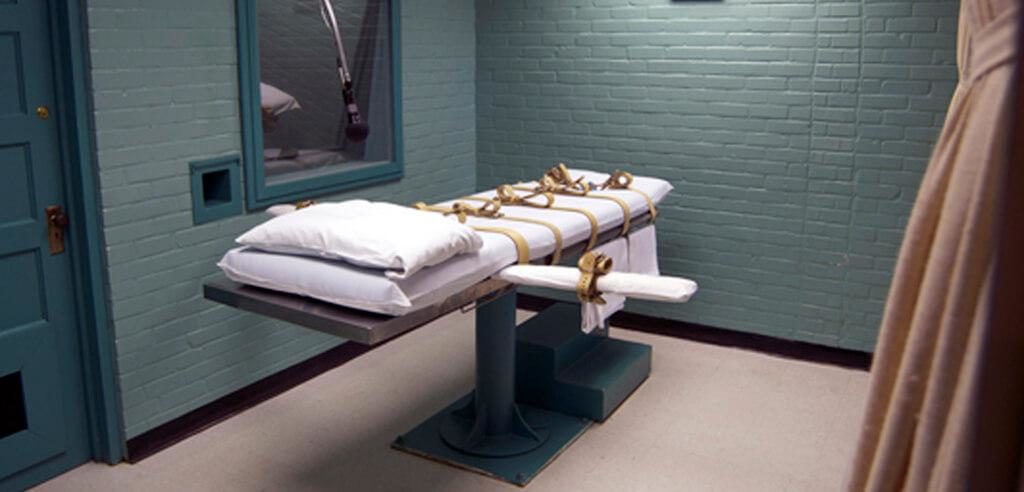
Alabama on Wednesday made its execution protocol public after being ordered to do so by a federal judge. The Alabama Department of Corrections filed a redacted copy of its execution procedure with the federal court following a legal fight with news outlets over the release of the information. A judge allowed the state to keep some of the information secret for security reasons. The 17-page document spells out procedures for before, during and after an execution. It includes information about the testing of equipment, inmate visitation, the consciousness test performed during lethal injections and a requirement to keep logs about each execution. Part of the released information was already known, such as the names of the drugs in the state’s lethal injection procedure, but the state had fought to keep the document secret.The document did not include information about where the state obtains lethal injection drugs or the job titles and training of people who connect the intravenous lines to deliver the drugs. Robert Dunham, executive director of the Death Penalty Information Center, said the document is more information than has been previously been released by Alabama. However, he said it does not tell the public some important details about how executions are carried out in the state. “It lacks critical information and redacts other important information that leaves Alabama executions secret and unaccountable,” Dunham said after briefly reviewing the document.Dunham noted that a section about execution logs was redacted and that it did not include information about the source of drugs. The Associated Press, The Montgomery Advertiser and the Alabama Media Group had asked the court last year to unseal the protocol and other records involved in a lawsuit brought by death row inmate whose execution was later halted because of problems. Alabama called off Doyle Lee Hamm’s execution last year after multiple failed attempts to insert a needle into his veins. A doctor hired by Hamm’s legal team wrote in a 2018 report that Hamm, who had damaged veins from illnesses and past drug use, had 11 puncture sites from the attempted execution. U.S. District Judge Karon Bowdre ruled the public has “a common law right of access” to the records. A federal appeals court agreed. “It may also help the public to understand how the same scenario might be repeated or avoided under the protocol as it currently stands,” Bowdre wrote of the release of the information. Alabama has also authorized execution with nitrogen gas, but has not announced the development of a protocol for using gas to carry out a death sentence. The state earlier this year cited security reasons for refusing to release a contract with an occupational safety firm. The head of the Alabama Legislature’s Contract Review Committee said the attorney general’s office indicated the contract was related to litigation over nitrogen gas as an execution method. Republished with the permission of the Associated Press.
Contract related to execution won’t be released

The Alabama attorney general’s office says it will not release to the news media a copy of a contract related to death penalty litigation. The attorney general’s office on Tuesday cited security reasons for refusing a records request from The Associated Press for a copy of a $25,000 contract with a Tennessee firm specializing in occupational safety. The state office declined to answer questions about the contract. State Sen. Greg Albritton said the attorney general’s office indicated the contract was related to litigation over nitrogen gas as an execution method. The state has authorized nitrogen hypoxia as an execution method but has not used it. A federal judge last year ruled Alabama must release its lethal injection protocol but can keRepublished with the permission of the Associated Press.ep some information secret, such as employee names. Republished with the permission of the Associated Press.
Supreme Court: Execution of Muslim inmate can proceed
he U.S. Supreme Court on Thursday rejected claims from a Muslim inmate who said his religious rights were being violated, clearing the way for the lethal injection to go forward Thursday night. In a 5-4 decision, justices vacated a stay issued by a lower court that had been blocking the execution of Dominique Ray, 42. Ray argued Alabama’s execution procedure favors Christian inmates because a Christian chaplain employed by the prison typically remains in the execution chamber during a lethal injection, but the state would not let his imam be present. Justice Elena Kagan wrote in a dissent that the dissenting justice considered the decision to let the execution go forward “profoundly wrong.” Attorneys for the state said Ray had ample opportunity to visit with his imam before his scheduled execution, that only prison employees are allowed in the chamber for security reasons, and that the imam can visit him before he’s led to the execution chamber and witness the execution from an adjoining room. Prison system spokesman Bob Horton said Ray was visited by his imam both Wednesday and Thursday and that Ray again renewed a request to have the adviser present — the request that has been denied. Other states generally allow spiritual advisers to accompany condemned inmates up to the execution chamber but not into it, said Robert Dunham, executive director of the Death Penalty Information Center, which studies capital punishment in the United States. Durham said did not know of any other state where the execution protocol calls for a Christian chaplain to be present in the execution chamber. Ray was sentenced to death for the slaying of 15-year-old Tiffany Harville. The girl disappeared from her Selma home in July 1995, and her decomposing body was found in a cotton field a month later. Ray was convicted in 1999 after another man, Marcus Owden, confessed to his role in the crime and implicated Ray. Owden told police that they had picked the girl up for a night out on the town and then raped her. Owden said that Ray cut the girl’s throat. Owden pleaded guilty to murder, testified against Ray and is serving a life sentence without parole. A jury recommended the death penalty for Ray by an 11-1 vote. Ray’s attorneys had also asked in legal filings to stay the execution on other grounds. Lawyers say it was not disclosed to the defense team that records from a state psychiatric facility suggested Owden suffered from schizophrenia and delusions. The Supreme Court also rejected that claim Thursday. Republished with permission from the Associated Press
Alabama appeals order to make execution information public
Alabama is appealing a federal judge’s order to make the state’s lethal injection procedures public and to unseal other court records about an aborted execution in the state. Chief District Judge Karon O. Bowdre on Thursday stayed her order to make the protocol and sealed hearing transcripts public as the Department of Corrections appeals. Bowdre had last week ordered the records unsealed, saying the public has a “great interest in understanding how the state carries out its punishment.” Lawyers for the state are appealing to the 11th U.S. Circuit Court of Appeals, arguing the state has an interest in keeping the information private. Media outlets had sought the information after a lethal injection was halted when the execution team had difficulty connecting the intravenous line to an ill inmate. Republished with the permission of the Associated Press.
Jim Zeigler: Executions of murderers take too long — waaaaay too long
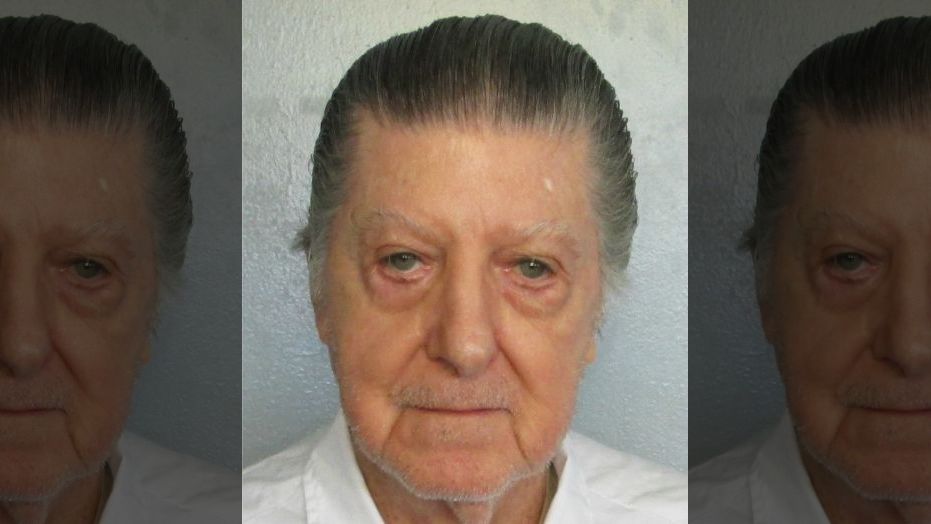
It now appears (8 p.m.Thursday) that the execution of Walter LeRoy Moody can go forward tonight in Alabama. He killed a federal judge over 30 years ago. Folks, 30 years is too long to carry out a sentence. Killers are not worried about what may happen 30 years from now. They think in terms of the next 30 minutes. It is very little deterrent to a would-be killer that he MIGHT be executed 30 years later. We have got to correct this problem and start carrying out swifter justice. The family of the victim has been suffering 30 years. We the taxpayers have been paying Moody’s room, board and medical expenses for 30 years. I am working on a plan that will greatly speed up executions without increasing the danger of executing the wrong person. I call the plan “Execution Delayed is Justice Denied.” When complete, I will release it and ask for your support. ••• Jim Zeigler is State Auditor of Alabama.
Alabama executes 83-year-old inmate Walter Leroy Moody
Alabama has executed the oldest U.S. inmate to be put to death in modern times, an 83-year-old man convicted of a federal judge’s mail-bomb slaying. Authorities say Walter Leroy Moody Jr. was pronounced dead at 8:42 p.m. CDT Thursday after a lethal injection. He made no final statement and did not respond when a prison official asked him if he had any last words. The non-profit Death Penalty Information Center says Moody became the oldest inmate put to death in the United States since the resumption of U.S. executions in the 1970s. Moody was convicted of killing U.S. Circuit Judge Robert S. Vance of Birmingham, who died when he opened a package mailed to his home in 1989. Prosecutors have described Moody as a meticulous planner who committed murder by mail because of his obsession with getting revenge on the legal system. He also was convicted in federal court for a bombing that killed Robert E. Robinson, a black civil rights attorney from Savannah, Georgia. Republished with permission from the Associated Press.
State House Committee approves nitrogen execution for death row inmates
A bill to allow death row inmates to be executed by nitrogen gas passed the Alabama House Judiciary Committee on Wednesday. Under existing law, a capital defendant may choose to be executed by means of lethal injection or electrocution. SB128, sponsored by Montrose-Republican State Sen. Tripp Pittman, would allow the condemned to choose execution by nitrogen hypoxia if lethal injection is unavailable, or if they so elect. The method, which the Death Penalty Information Center says never been used to execute someone, seals the inmate in an airtight chamber pumped full of nitrogen gas, causing death by a lack of oxygen. Many experts believe those who die by nitrogen asphyxiation usually never know what hit them. Pittman says it’s a more humane way to die. He also believes the state needs an alternative method of execution as lethal injection continues to face legal challenges. According to the Death Penalty Information Center two other states — Oklahoma and Mississippi — have also approved to the use of nitrogen gas as a back-up method of execution, but have yet to use it. The Senate voted in favor of the legislation, 29 to 0, in February. It now moves to the full House of consideration.
Alabama Sen. Trip Pittman files bill to allow execution by firing squad

An Alabama state senator wants to allow the state to carry out executions with firing squad. Montrose- Republican Sen. Trip Pittman said the firing squad should be an “option” for the Yellowhammer State during continued litigation over lethal injection. Pittman explained that he was prompted to introduce the bill in the wake of the U.S. Supreme Court‘s Thursday night decision to stay the execution of Alabama-death row inmate Tommy Arthur while deciding whether or not to hear Arthur’s appeal that challenges the state’s lethal injection procedure. Arthur was convicted of killing a man in a 1982 murder-for-hire. Thursday night was Arthur’s seventh scheduled execution date in 15 years. Ahead of it, he challenged the lethal injection procedure saying that it was cruel and unusual punishment. He suggested a firing squad as an alternative. By law, Alabama allows inmates to choose between lethal injection and the electric chair. However, the chair has not been chosen since lethal injection became an approved option. Pittman’s bill, SB 12, follows Arthur’s own suggestion and would allow inmates to allow choose death by a five-person firing squad comprised of law enforcement officers. The senator pre-filed the bill ahead of the legislative session, which is scheduled to begin February 7, 2017. Should the Alabama Legislature approve Pittman’s bill, the state would join Utah in allowing firing squads for executions.
