
Congress votes to avert rail strike amid dire warnings

Legislation to avert what could have been an economically ruinous freight rail strike won final approval in Congress on Thursday as lawmakers responded quickly to President Joe Biden’s call for federal intervention in a long-running labor dispute. The Senate passed a bill to bind rail companies and workers to a proposed settlement that was reached between the rail companies and union leaders in September. That settlement had been rejected by four of the 12 unions involved, creating the possibility of a strike beginning December 9. The Senate vote was 80-15. It came one day after the House voted to impose the agreement. The measure now goes to Biden’s desk for his signature. “Communities will maintain access to clean drinking water. Farmers and ranchers will continue to be able to bring food to market and feed their livestock. And hundreds of thousands of Americans in a number of industries will keep their jobs,” Biden said after the vote. “I will sign the bill into law as soon as Congress sends it to my desk.” The Senate voted shortly after Labor Secretary Marty Walsh and Transportation Secretary Pete Buttigieg emphasized to Democratic senators at a Capitol meeting that rail companies would begin shutting down operations well before a potential strike would begin. The administration wanted the bill on Biden’s desk by the weekend. Shortly before Thursday’s votes, Biden defended the contract that four of the unions had rejected, noting the wage increases it contains. “I negotiated a contract no one else could negotiate,” Biden said at a news briefing with French President Emmanuel Macron. “What was negotiated was so much better than anything they ever had.” Critics say the contract that did not receive backing from enough union members lacked sufficient levels of paid sick leave for rail workers. Biden said he wants paid leave for “everybody” so that it wouldn’t have to be negotiated in employment contracts, but Republican lawmakers have blocked measures to require time off work for medical and family reasons. The president said Congress should impose the contract now to avoid a strike that he said could cause 750,000 job losses and a recession. Railways say halting rail service would cause a devastating $2 billion-per-day hit to the economy. A freight rail strike also would have a big potential impact on passenger rail, with Amtrak and many commuter railroads relying on tracks owned by the freight railroads. The rail companies and unions have been engaged in high-stakes negotiations. The Biden administration helped broker deals between the railroads and union leaders in September, but four of the unions rejected the deals. Eight others approved five-year deals and are getting back pay for their workers for the 24% raises that are retroactive to 2020. With a strike looming, Biden called on Congress to impose the tentative agreement reached in September. Congress has the authority to do so and has enacted legislation in the past to delay or prohibit railway and airline strikes. But most lawmakers would prefer the parties work out their differences on their own. The Senate took a series of three votes. The first was on a measure by Sen. Dan Sullivan, R-Alaska, that would have sent both parties back to the negotiating table. But union groups opposed an extension, as did the Biden administration. The proposal was roundly rejected, with 25 senators in support and 70 opposed. “An extension would simply allow the railroads to maintain their status quo operations while prolonging the workforce’s suffering,” leaders of the Transportation Trades Department of the AFL-CIO said. The second vote the Senate took would have followed the path the House narrowly adopted the day before, which was to add seven days of paid sick leave to the tentative agreement. But that measure fell eight votes short of the 60-vote threshold needed for passage. The final vote was the measure binding the two parties to the September agreement. It passed with broad bipartisan support, as it had in the House. While lawmakers voiced consternation about having to weigh in, the economic stakes outweighed those concerns. “A strike of that magnitude would have a painful impact on our economy, and that is an unacceptable scenario as inflation continues to squeeze West Virginians and Americans heading into the holiday season,” said Sen. Joe Manchin, D-W.Va. Democrats have traditionally aligned themselves with the politically powerful labor unions that criticized Biden’s move to intervene and block a strike. House Speaker Nancy Pelosi told Democratic colleagues it was “with great reluctance” that Congress needed to bypass the standard ratification process for union contracts. She did, however, hold an additional vote that would have added the seven days of paid sick leave that union workers wanted. That gave Democratic lawmakers in both chambers the ability to show their support for paid sick leave for rail workers while also avoiding a crippling strike. The call for paid sick leave was a major sticking point in the talks, along with other quality-of-life concerns. The railroads say the unions have agreed in negotiations over the decades to forgo paid sick time in favor of higher wages and strong short-term disability benefits. The unions maintain that railroads can easily afford to add paid sick time when they are recording record profits. Several of the big railroads involved in these contract talks reported more than $1 billion profit in the third quarter. The Association of American Railroads trade group praised the Senate vote to impose the compromise deal that includes the biggest raises in more than four decades. Still, CEO Ian Jefferies acknowledged that many workers remain unhappy with working conditions. “Without a doubt, there is more to be done to further address our employees’ work-life balance concerns, but it is clear this agreement maintains rail’s place among the best jobs in our nation,” Jefferies said. Union groups were unhappy with the final result. “The Senate just failed to pass seven days of paid sick leave for rail workers. We are grateful to the 52 Senators who voted YES and stood with rail workers,” tweeted the Transportation Trades
Senate passes stopgap bill to avert shutdown, aid Ukraine
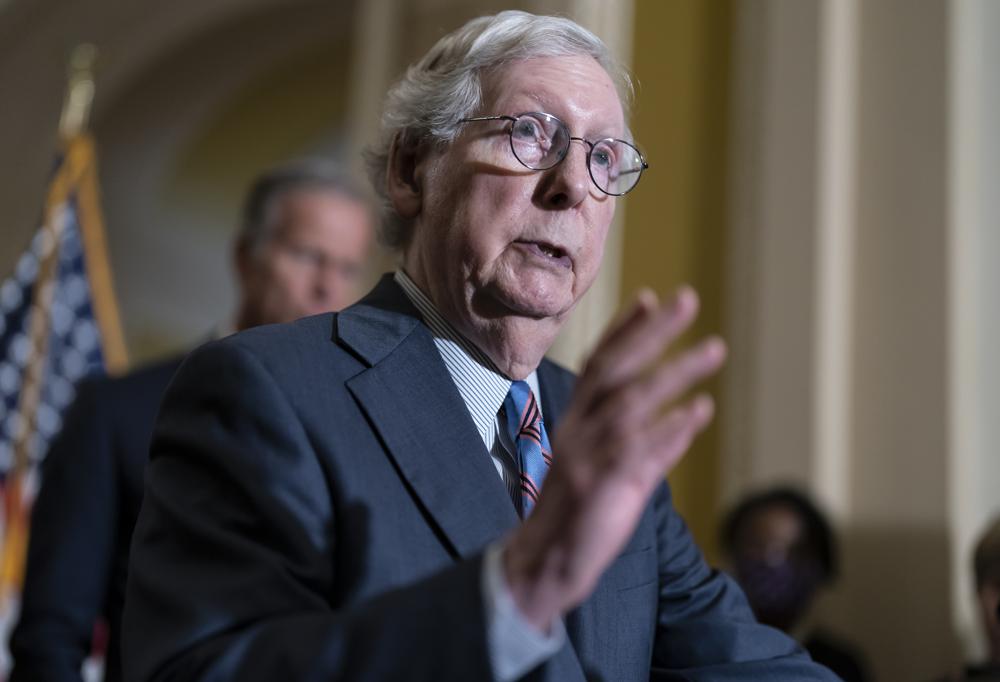
The Senate passed a short-term spending bill on Thursday that would avert a partial government shutdown when the current fiscal year ends at midnight Friday and provide another infusion of military and economic aid to Ukraine as it seeks to repel Russia’s brutal invasion. The bill finances the federal government through December 16 and buys lawmakers more time to agree on legislation setting spending levels for the 2023 fiscal year. It passed by a vote of 72-25 and now goes to the House for consideration. All of the no votes came from Republicans. As has become routine, lawmakers waited until the final hours before the shutdown deadline to act. But passage of a bill to fund the government was hardly in doubt, particularly after Democrat Sen. Joe Manchin agreed to drop provisions designed to streamline the permitting process for energy projects and greenlight the approval of a pipeline in his home state of West Virginia. Those provisions had drawn opposition from both sides of the political aisle. Still, the bill merely puts off for a few months the maneuvering that will be required after the midterm election to pass a massive government funding package, as negotiators will have to bridge their differences over spending on hot-button issues such as abortion, border security, and climate change. The bill approved Thursday, with some exceptions, keeps spending at federal agencies at current levels through mid-December. The most notable of those exceptions is the more than $12 billion that will be provided to aid Ukraine, on top of more than $50 billion provided in two previous bills. The money will go to provide training, equipment, and logistics support for the Ukraine military, help Ukraine’s government provide basic services to its citizens, and replenish U.S. weapons systems and munitions. “Seven months since the conflict began, it’s crystal clear that American assistance has gone a long way to helping the Ukrainian people resist (Russian President Vladimir) Putin’s evil, vicious aggression,” said Senate Majority Leader Chuck Schumer, D-N.Y. “But the fight is far from over.” Republican leader Mitch McConnell also voiced support for the Ukraine aid, while admonishing the Biden administration to get it out the door more quickly. “Assisting Ukraine is not some feel-good, symbolic gesture,” McConnell said. “It’s literally an investment in our own national security and that of our allies.” Disaster assistance was attached to the stopgap bill, including $2.5 billion to help New Mexico communities recover from the Hermit’s Peak/Calf Canyon Fire, the largest wildfire in the state’s history; $2 billion for a block grant program that aids the economic recovery of communities impacted by recent disasters and $20 million for water and wastewater infrastructure improvements previously authorized for Jackson, Mississippi. An additional $18.8 billion was included for the Federal Emergency Management Agency to respond to current and future disasters, such as Hurricane Ian, which hit Florida on Wednesday. The bill would provide an additional $1 billion for a program that helps low-income households heat their homes. And it would transfer $3 billion from a Pentagon aid program to the State Department for continued Afghan resettlement operations. Lawmakers also included a reauthorization of the Food and Drug Administration’s user fee agreements for five years, which ensures the agency can continue critical product safety reviews and won’t need to issue pink slips for thousands of employees working on drug and medical device applications. One thing missing from the bill is the billions of dollars in additional funding that President Joe Biden sought to aid the response to COVID-19 and monkeypox. Republicans criticized the health spending as unnecessary. The White House said the money would have been used to accelerate the research and development of vaccines and therapeutics, prepare for future COVID variants and support the global response. The bill’s passage is the last must-do item on lawmakers’ list before returning to their home states and districts to campaign before the mid-term elections that will determine which party controls the House and Senate over the next two years. Lawmakers were anxious to get out of Washington and focus on campaigning without the specter of a shutdown. “The last thing the American people need right now is a pointless government shutdown,” Schumer said. Republished with the permission of The Associated Press.
Group of state attorneys general say Senate energy bill could impose backdoor Clean Power Plan
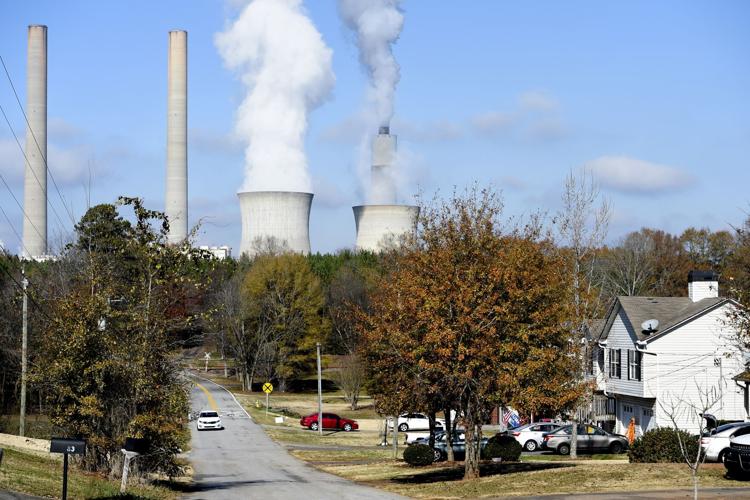
Louisiana Attorney General Jeff Landry is leading a coalition of 18 states in opposition to the Energy Independence and Security Act, which they claim is a backdoor attempt to impose the failed Clean Power Plan. “The Biden Administration and its allies in Congress are attempting to not only force unreliable renewables on hard-working Americans but also turn those consumers into bigger pawns of the green energy industry,” Landry said. “The DC elites, in a rushed process, want to restrict the electric power grid by repealing the traditional authority of the states to regulate their own resources and utility policies.” U.S. Sen. Joe Manchin, D-WV, introduced the Energy Independence and Security Act of 2022 last week, and the “comprehensive permitting reform” is included in a Continuing Resolution to avoid an Oct. 1 government shutdown. The bill is part of a deal between Manchin, Senate Leader Chuck Schumer, D-NY, House Speaker Nancy Pelosi, D-Calif., and President Joe Biden to gain Manchin’s support for the Inflation Reduction Act approved by Congress in August. Manchin contends the legislation is necessary to reduce costs for energy projects, though the legislation faces opposition from both Republicans and Democrats. In a letter to Schumer, the attorneys general argued three interrelated provisions in the bill “eviscerate states’ ability to chair their own land-use and energy policies.” “First, it would authorize private companies to use eminent domain against state land. Second, it would authorize (the Federal Energy Regulatory Commission) to command utilities to construct entirely new transmission facilities whenever and wherever FERC deems necessary. And third, it would authorize companies to spread costs of constructing new transmission facilities onto residents of other states, requiring citizens of one state to subsidize the agenda of citizens in other states,” the letter read. “These provisions eviscerate state sovereign authority, commandeer companies to carry out the will of a three-vote majority of FERC Commissioners, undermine the power of each citizen’s vote to decide policies at the state level, and inevitably force the citizens of our states to subsidize the costs of expensive energy policy preferences of California and New York.” The attorneys general also took issue with the short timeline for approving the legislation, which they argued “is completely unacceptable.” “If this sounds uncannily like the Clean Power Plan, the ultra vires [a legal term that means acting beyond one’s authority] 2015 EPA rule that would have effectively forced all states and regions to adopt the cap-and-trade, renewable-subsidizing policies that to date only some states and regions have chosen, that’s because it is in large part the same policy – but this time with no meaningful public notice, explanation, discussion, input, or legal recourse,” the attorneys general wrote. “As the Supreme Court held earlier this year, the Clean Power Plan was illegal – but at least it was openly proclaimed by President Obama, undertaken through public notice and comment and subject to full judicial review,” the letter read. “To attempt changes on this order without any notice and under rushed timing is completely unacceptable.” Landry was joined in the letter by attorneys generals from Alabama, Alaska, Arizona, Arkansas, Georgia, Indiana, Kansas, Kentucky, Mississippi, Missouri, Montana, Nebraska, South Carolina, Tennessee, Texas, Utah, and Virginia. Republished with the permission of The Center Square.
Tommy Tuberville and Joe Manchin ask sports collectives for feedback of Drive NIL Legislation
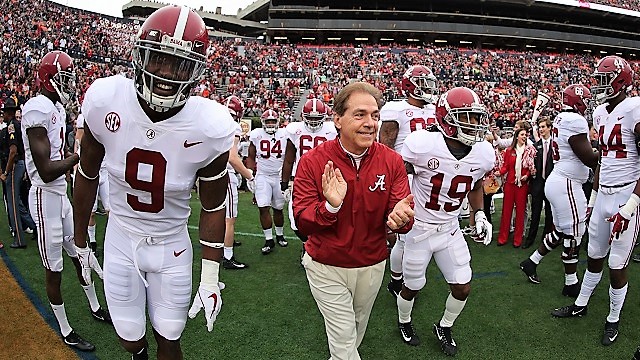
U.S. Senators Tommy Tuberville and Joe Manchin asked athletic collectives across the country to provide input to the Senators’ ongoing work to write a bipartisan name, image, and likeness (NIL) legislation that would be guided by stakeholder input and significant engagement with affected groups. The Senators have previously solicited feedback from a broad range of stakeholders, including university athletic directors, administrators, associations, and student-athlete groups. The new NIL collectives, though legally independent from the institutions they support, are entities designed to pool funds from private donors to maximize NIL’s impact on the recruitment and retention of college athletes for that institution of higher learning. Manchin and Tuberville are attempting to guide discussions on a legislative path forward addressing the NIL situation across the country. The Senators promise to combine the feedback received from collectives with the information already submitted by dozens of other leaders and groups. “Last month, our Senate offices solicited input and feedback from a broad range of interested stakeholders on priorities for potential federal NIL legislation,” the Senators wrote. “The response to our solicitation was robust, and we appreciate the respondents’ thoughtful submissions. Notably, more than seventy percent of the commenters recommended that any future legislation address the issue of whether and how to regulate, control, or ban collectives,” “In our August letter, we set forth our priorities for a legislative solution: to protect student-athletes, ensure fair competition and compensation, and preserve the time-honored traditions of college sports,” the Senators continued. “We welcome your input as to how your organization advances these goals and how any potential legislation could provide a regulatory structure for your organization.” For over a hundred years, it was illegal for coaches or boosters to give inducements to student-athletes to get them to go to a school or stay at a school and play sports for them. That all changed in 2021 when the NCAA passed a new rule allowing athletes to be compensated for the use of their name, image, and likeness. Now there are concerns by some that this has gone too far and that there needs to be some regulatory structure in place. “I don’t think NIL in its original form or what people wanted it to be is really an issue at all,” University of Alabama head football Coach Nick Saban said over the summer. “I think collectives are the issue, and I think one of the solutions would be if you have people that are representatives of your school that give money to a collective, then the collectives turns around and gives it to players on the team. Money.” “I’m not saying opportunities to represent. I’m saying money,” Saban said. “Then that collective should become a representative of the institution, right? And they should not be able to give money to a player just like an alumnus can’t give money to a player.” Both the University of Alabama and Auburn University have formed their own collectives. Hight Tide Traditions allows fans to donate to a fund that will make sure that Alabama players are compensated for their talents. According to their mission statement, “High Tide Traditions was established to harness the power of Name, Image, and Likeness with student-athletes to make and propel positive business relationships across the city, state, region, and nation. Through strategic partnerships utilizing data analytics, it is important to High Tide Traditions that student-athletes will be engaged in amplifying the exposure for our business partners through relatable and authentic content, appearances, and other mutually beneficial services.” On to Victory is the Auburn NIL collective. According to their website, “ON TO VICTORY exists solely to benefit Auburn student-athletes. Its directors will never receive compensation or profit from the collective. ON TO VICTORY is committed to efficient fiscal operations and rigorous compliance with all NIL regulations.” UAB has also started an NIL collective for its men’s basketball and football programs. Individual athletes, shoe companies, restaurants, car dealers, other businesses, etc. are legally allowed to pursue NIL deals within or outside of the collectives. Sen. Tuberville is a former Auburn University head football coach. To connect with the author of this story, or to comment, email brandonmreporter@gmail.com.
Joe Biden signs massive climate and health care legislation
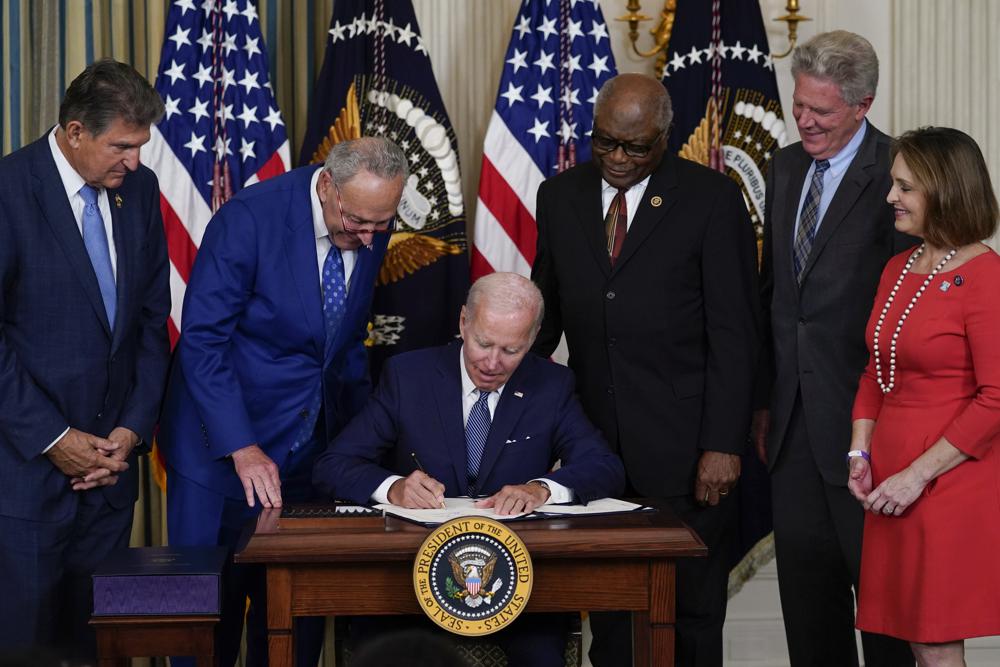
President Joe Biden signed Democrats’ landmark climate change and health care bill into law on Tuesday, delivering what he has called the “final piece” of his pared-down domestic agenda, as he aims to boost his party’s standing with voters less than three months before the midterm elections. The legislation includes the most substantial federal investment in history to fight climate change — some $375 billion over the decade — and would cap prescription drug costs at $2,000 out-of-pocket annually for Medicare recipients. It also would help an estimated 13 million Americans pay for health care insurance by extending subsidies provided during the coronavirus pandemic. The measure is paid for by new taxes on large companies and stepped-up IRS enforcement of wealthy individuals and entities, with additional funds going to reduce the federal deficit. In a triumphant signing event at the White House, Biden pointed to the law as proof that democracy — no matter how long or messy the process — can still deliver for voters in America as he road-tested a line he will likely repeat later this fall ahead of the midterms: “The American people won, and the special interests lost.” “In this historic moment, Democrats sided with the American people, and every single Republican in the Congress sided with the special interests in this vote,” Biden said, repeatedly seizing on the contrast between his party and the GOP. “Every single one.” The House on Friday approved the measure on a party-line 220-207 vote. It passed the Senate days earlier, with Vice President Kamala Harris breaking a 50-50 tie in that chamber. “In normal times, getting these bills done would be a huge achievement,” Senate Majority Leader Chuck Schumer, D-N.Y., said during the White House ceremony. “But to do it now, with only 50 Democratic votes in the Senate, over an intransigent Republican minority, is nothing short of amazing.” Biden signed the bill into law during a small ceremony in the State Dining Room of the White House, sandwiched between his return from a six-day beachside vacation in South Carolina and his departure for his home in Wilmington, Delaware. He plans to hold a larger “celebration” for the legislation on September 6 once lawmakers return to Washington. The signing caps a spurt of legislative productivity for Biden and Congress, who in three months have approved legislation on veterans’ benefits, the semiconductor industry, and gun checks for young buyers. The president and lawmakers have also responded to Russia’s invasion of Ukraine and overwhelmingly supported NATO membership for Sweden and Finland. With Biden’s approval rating lagging, Democrats are hoping that the string of successes will jump-start their chances of maintaining control in Washington in the November midterms. The 79-year-old president aims to restore his own standing with voters as he contemplates a reelection bid. The White House announced Monday that it was going to deploy Biden and members of his Cabinet on a “Building a Better America Tour” to promote the recent victories. One of Biden’s trips will be to Ohio, where he’ll view the groundbreaking of a semiconductor plant that will benefit from the recent law to bolster production of such computer chips. He will also stop in Pennsylvania to promote his administration’s plan for safer communities, a visit that had been planned the same day he tested positive for COVID-19 last month. Biden also plans to hold a Cabinet meeting to discuss how to implement the new climate and health care law. Republicans say the legislation’s new business taxes will increase prices, worsening the nation’s bout with its highest inflation since 1981. Though Democrats have labeled the measure the Inflation Reduction Act, nonpartisan analysts say it will have a barely perceptible impact on prices. Senate Minority Whip John Thune, R-S.D., on Tuesday continued those same criticisms, although he acknowledged there would be “benefit” through extensions on tax credits for renewable energy projects like solar and wind. “I think it’s too much spending, too much taxing, and in my view wrong priorities, and a super-charged, super-sized IRS that is going to be going after a lot of not just high-income taxpayers but a lot of mid-income taxpayers,” said Thune, speaking at a Chamber of Commerce event in Sioux Falls. The administration has disputed that anyone but high earners will face increased tax scrutiny, with Treasury Secretary Janet Yellen directing the tax agency to focus solely on businesses and people earning more than $400,000 per year for the new audits. The measure is a slimmed-down version of the more ambitious plan to supercharge environment and social programs that Biden and his party unveiled early last year. Biden’s initial 10-year, $3.5 trillion proposal also envisioned free prekindergarten, paid family and medical leave, expanded Medicare benefits, and eased immigration restrictions. That crashed after centrist Sen. Joe Manchin, D-W.Va., said it was too costly, using the leverage every Democrat has in the evenly divided Senate. During the signing event, Biden addressed Manchin, who struck the critical deal with Schumer on the package last month, saying, “Joe, I never had a doubt,” as the crowd chuckled. Later, outside the White House, Manchin said he has always maintained a “friendly relationship” with Biden, and it has “never been personal” between the two, despite Manchin breaking off his negotiations with the White House last year. “He’s a little bit more vintage than I am, but not much,” Manchin said of Biden. Though the law is considerably smaller than their initial ambitions, Biden and Democrats are hailing the legislation as a once-in-a-generation investment in addressing the long-term effects of climate change, as well as drought in the nation’s West. The bill will direct spending, tax credits, and loans to bolster technology like solar panels, consumer efforts to improve home energy efficiency, emission-reducing equipment for coal- and gas-powered power plants, and air pollution controls for farms, ports, and low-income communities. Another $64 billion would help 13 million people pay premiums over the next three years for privately bought health insurance under the Affordable Care Act. Medicare would gain the power to negotiate its costs for pharmaceuticals, initially in 2026, for only ten drugs. Medicare beneficiaries’ out-of-pocket prescription costs
Senate Democrats pass budget package, a victory for Joe Biden
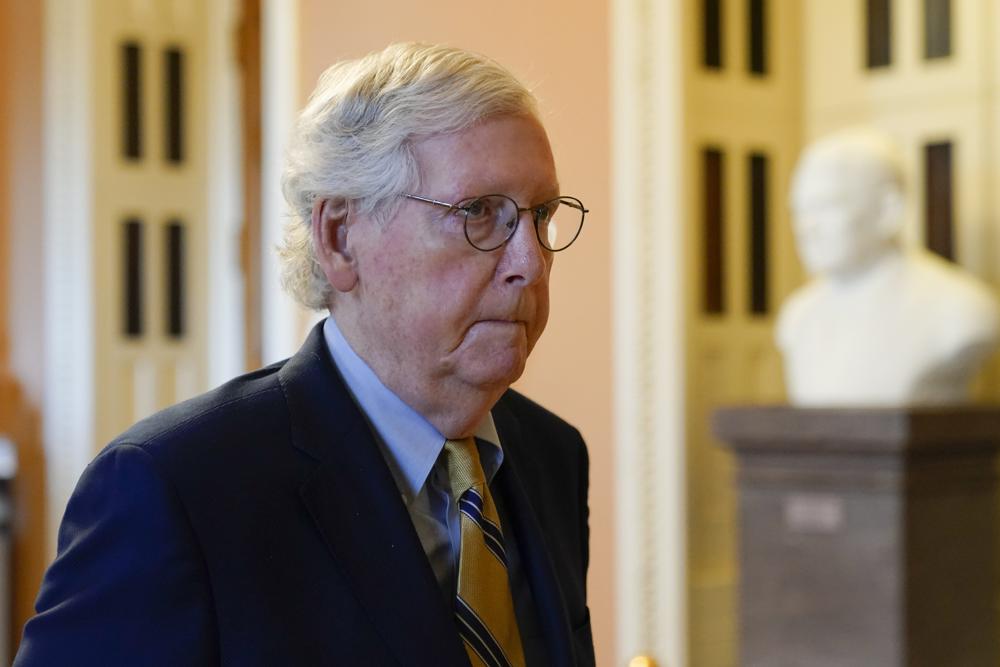
Democrats pushed their election-year economic package to Senate passage Sunday, a hard-fought compromise less ambitious than President Joe Biden’s original domestic vision but one that still meets deep-rooted party goals of slowing global warming, moderating pharmaceutical costs, and taxing immense corporations. The estimated $740 billion package heads next to the House, where lawmakers are poised to deliver on Biden’s priorities, a stunning turnaround of what had seemed a lost and doomed effort that suddenly roared back to political life. Cheers broke out as Senate Democrats held united, 51-50, with Vice President Kamala Harris casting the tie-breaking vote after an all-night session. “Today, Senate Democrats sided with American families over special interests,” President Joe Biden said in a statement from Rehoboth Beach, Delaware. “I ran for President promising to make government work for working families again, and that is what this bill does — period.” Biden, who had his share of long nights during his three decades as a senator, called into the Senate cloakroom during the vote on speakerphone to personally thank the staff for their hard work. The president urged the House to pass the bill as soon as possible. Speaker Nancy Pelosi said her chamber would “move swiftly to send this bill to the president’s desk.” House votes are expected Friday. “It’s been a long, tough, and winding road, but at last, at last we have arrived,” said Senate Majority Leader Chuck Schumer, D-N.Y., ahead of final votes. “The Senate is making history. I am confident the Inflation Reduction Act will endure as one of the defining legislative feats of the 21st century,” he said. Senators engaged in a round-the-clock marathon of voting that began Saturday and stretched late into Sunday afternoon. Democrats swatted down some three dozen Republican amendments designed to torpedo the legislation. Confronting unanimous GOP opposition, Democratic unity in the 50-50 chamber held, keeping the party on track for a morale-boosting victory three months from elections when congressional control is at stake. The bill ran into trouble midday over objections to the new 15% corporate minimum tax that private equity firms and other industries disliked, forcing last-minute changes. Despite the momentary setback, the “Inflation Reduction Act” gives Democrats a campaign-season showcase for action on coveted goals. It includes the largest-ever federal effort on climate change — close to $400 billion — caps out-of-pocket drug costs for seniors on Medicare to $2,000 a year and extends expiring subsidies that help 13 million people afford health insurance. By raising corporate taxes and reaping savings from the long-sought goal of allowing the government to negotiate drug prices for Medicare, the whole package is paid for, with some $300 billion extra revenue for deficit reduction. Barely more than one-tenth the size of Biden’s initial 10-year, $3.5 trillion Build Back Better initiative, the new package abandons earlier proposals for universal preschool, paid family leave, and expanded child care aid. That plan collapsed after conservative Sen. Joe Manchin, D-W.Va., opposed it, saying it was too costly and would fuel inflation. Nonpartisan analysts have said the 755-page “Inflation Reduction Act” would have a minor effect on surging consumer prices. Republicans said the new measure would undermine an economy that policymakers are struggling to keep from plummeting into recession. They said the bill’s business taxes would hurt job creation and force prices skyward, making it harder for people to cope with the nation’s worst inflation since the 1980s. “Democrats have already robbed American families once through inflation, and now their solution is to rob American families a second time,” Senate Minority Leader Mitch McConnell, R-Ky., argued. In an ordeal imposed on most budget bills like this one, the Senate had to endure an overnight “vote-a-rama” of rapid-fire amendments. Each tested Democrats’ ability to hold together the compromise bill negotiated by Schumer, progressives, Manchin, and the inscrutable centrist Sen. Kyrsten Sinema, D-Ariz. Progressive Sen. Bernie Sanders, I-Vt., criticized the bill’s shortcomings and offered amendments to further expand the legislation’s health benefits, but those efforts were defeated. Republicans forced their own votes designed to make Democrats look soft on U.S.-Mexico border security and gasoline and energy costs, and like bullies for wanting to strengthen IRS tax law enforcement. Before debate began, the bill’s prescription drug price curbs were diluted by the Senate’s nonpartisan parliamentarian, who said a provision should fall that would impose costly penalties on drug makers whose price increases for private insurers exceed inflation. It was the bill’s chief protection for the 180 million people with private health coverage they get through work or purchase themselves. Under special procedures that will let Democrats pass their bill by simple majority without the usual 60-vote margin, its provisions must be focused more on dollar-and-cents budget numbers than policy changes. But the thrust of Democrats’ pharmaceutical price language remained. That included letting Medicare negotiate what it pays for drugs for its 64 million elderly recipients, penalizing manufacturers for exceeding inflation for pharmaceuticals sold to Medicare, and limiting beneficiaries’ out-of-pocket drug costs to $2,000 annually. The bill also caps Medicare patients’ costs for insulin, the expensive diabetes medication, at $35 monthly. Democrats wanted to extend the $35 cap to private insurers, but it ran afoul of Senate rules. Most Republicans voted to strip it from the package, though in a sign of the political potency of health costs, seven GOP senators joined Democrats trying to preserve it. The measure’s final costs were being recalculated to reflect late changes, but overall it would raise more than $700 billion over a decade. The money would come from a 15% minimum tax on a handful of corporations with yearly profits above $1 billion, a 1% tax on companies that repurchase their own stock, bolstered IRS tax collections, and government savings from lower drug costs. Sinema forced Democrats to drop a plan to prevent wealthy hedge fund managers from paying less than individual income tax rates for their earnings. She also joined with other Western senators to win $4 billion to combat the region’s drought. Several Democratic senators joined the GOP-led effort to exclude some firms from the new corporate minimum tax. The package keeps to Biden’s pledge not to
GOP targets for Dem bill: Inflation, taxes, Joe Manchin, Kyrsten Sinema
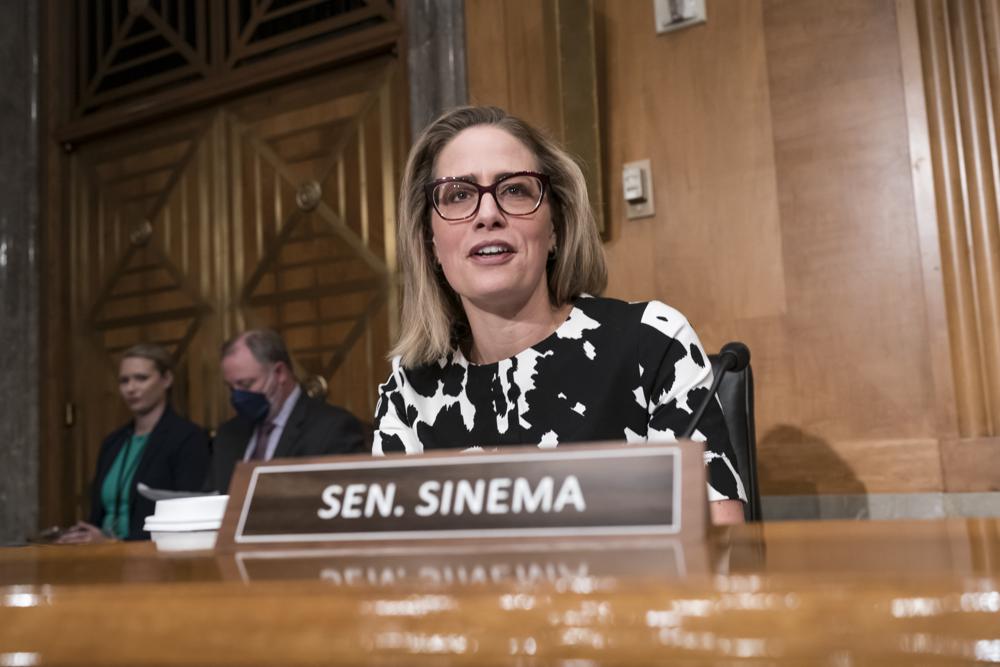
Republicans see inflation, taxes, and immigration as Democratic weak spots worth attacking, and two opposition senators as prime targets in the upcoming battle over an economic package the Democrats want to push through the Senate. The measure embodies some of the top environment, energy, health care, and tax policy aspirations that President Joe Biden and party leaders want to enact as voters start tuning in to this fall’s congressional elections. The GOP would like to derail or weaken the measure, or at least force Democrats to take votes that would be painful to defend in reelection campaigns. Republicans are already aiming fire at Sen. Joe Manchin, D-W.Va., who crafted the measure with Senate Majority Leader Chuck Schumer, D-N.Y., and unexpectedly pumped life into an effort most Democrats considered moribund. Manchin is a conservative Democrat from a deep red state who has scuttled his party’s priorities before, and Republicans have savaged him in recent days, an unsubtle signal that they’ll be coming for him should he seek reelection in 2024. “He made a terrible deal,” Senate Minority Leader Mitch McConnell, R-Ky., told reporters this week. “How he can defend this from a West Virginia point of view, or think of it as a centrist type of agreement, is astonishing. This is an agreement only Bernie Sanders would love.” Even Sen. Shelley Moore Capito, R-W.Va., who has a strong relationship with Manchin and seldom clashes with him publicly, lambasted the legislation for imposing a minimum tax on huge, profitable corporations that she said would hinder investments. “Like many West Virginians, I’m concerned that this tax increase will delay closing the digital divide” in rural communities, she said. Republicans are taking a softer approach with Sen. Kyrsten Sinema, D-Ariz., who has been coy about the legislation and has shown concerns about tax increases. She’s her party’s biggest question mark on this bill in the 50-50 chamber, where all Republicans seem certain to vote “no,” and she’s held several discussions with GOP senators during votes this week. Sinema has opposed past proposals to raise taxes on wealthy equity firm executives, which this time would raise around $14 billion of this legislation’s $739 billion in revenue. She met with Arizona manufacturers who oppose boosting the corporate minimum tax and thanked her afterward in a tweet for her “thoughtful approach & willingness to listen to AZ job creators.” “I don’t know what she thinks,” Idaho Sen. Mike Crapo, top Republican on the Senate Finance Committee, told reporters. “‘We are making our case’ is the best we can say.” The 10-year measure includes hundreds of billions in spending and tax breaks to encourage alternative energy production and to bolster fossil fuels with steps like tax breaks for technology that reduces carbon emissions. There’s also money to help people buy private health coverage and provisions giving Medicare the power to negotiate prices on some drugs with pharmaceutical makers. The bill “will lower costs, fight inflation, and secure historic wins in the fight against climate change,” Schumer said. The GOP seems certain to try stripping or toning down the corporate minimum tax and language raising taxes on wealthy equity firm executives as well and has hopes of winning over Sinema as the decisive vote for that. After she opposed Democrats’ proposed tax rate increases last year on corporations and high earners, they switched to a corporate minimum tax that she supported, but it is uncertain if she will do so now. Republicans could fashion amendments aimed at particular Democratic senators — such as one exempting coal producers from certain taxes in a play for Manchin. To buttress its argument, the GOP released an analysis by the nonpartisan Joint Committee on Taxation that Republicans said showed tax boosts for people earning below $400,000. That would violate Biden’s pledge to not boost levies on that income group. “Ordinary Americans would bear a substantial part of the burden of this tax increase,” said No. 2 Senate GOP leader John Thune of South Dakota. Democrats dismissed that attack, noting that the study omitted the effect of the bill’s health care and energy tax breaks for individuals. It also counted lower salaries, stock prices, and dividends it believes will occur as part of the effect the bill would have on people. Overall, the Congressional Budget Office said Wednesday the measure could trim federal deficits by around $305 billion. But $204 billion of that would come from improving IRS tax collections, which will be real if it occurs, but the nonpartisan agency does not count in its formal scoring of the bill’s impact. In a bow to dominant voter concerns about gasoline prices and overall consumer costs, Democrats call the bill the Inflation Reduction Act. Yet its impact on the nation’s worst bout with inflation in four decades seems likely to be limited. The University of Pennsylvania’s Penn Wharton Budget Model estimated the measure would “very slightly increase inflation until 2024 and decrease inflation thereafter,” though the changes would be “statistically indistinguishable from zero.” McConnell said that study showed the Democrats’ bill would “actually increase inflation in the short term and do nothing for inflation in the long term.” Democrats have cited a Moody’s Analytics report saying the bill would “nudge the economy and inflation in the right direction.” And they distributed a letter by five former Treasury secretaries, including Henry Paulson Jr., who served under GOP President George W. Bush, saying the measure would strengthen the economy, “lower costs for families, and fight inflation.” That battlefield suggests Republican amendments are likely on the subject of prices. One could imagine a proposal preventing the bill from taking effect unless inflation, or gasoline prices, fall to certain levels. Democratic leaders are trying this week to unify rank-and-file senators against such plans. The GOP could also try to renew immigration restrictions imposed by President Donald Trump that cited the pandemic as a reason to exclude migrants, an issue that sharply divides Democrats. And they might seek to delete tax credits aimed at encouraging alternative energy and that favor companies that pay union-scale wages. Republished with
Unexpected deal would boost Biden Administration pledge on climate change

An unexpected deal reached by Senate Democrats would be the most ambitious action ever taken by the United States to address global warming and could help President Joe Biden come close to meeting his pledge to cut greenhouse gas emissions in half by 2030, experts said Thursday, as they sifted through a massive bill that revives action on climate change weeks after the legislation appeared dead. The deal would spend nearly $370 billion over ten years to boost electric vehicles, jump-start renewable energy such as solar and wind power, and develop alternative energy sources like hydrogen. The deal stunned lawmakers and activists who had given up hope that legislation could be enacted after West Virginia Sen. Joe Manchin said he could not support the measure because of inflation concerns. While analysts were still studying the 725-page bill, the deal announced late Wednesday includes a long-term extension of clean energy tax credits that “could plausibly put the U.S. on track to reduce emissions by 40% in 2030,″ said Ben King, associate director of the Rhodium Group, an independent research firm. Additional action by the Biden administration and Democratic-controlled states could “help close the rest of the gap to the target of a 50-52% cut in emissions by 2030,″ King said. But approval of the bill is far from certain in a 50-50 Senate, where support from every Democrat will be needed to overcome unanimous Republican opposition. Sen. Kyrsten Sinema, D-Ariz., who forced changes in earlier versions of the plan, declined to reveal her stance Thursday. In the narrowly divided House, Democrats can lose no more than four votes and prevail on a possible party-line vote. Still, Biden called the bill “historic” and urged quick passage. “We will improve our energy security and tackle the climate crisis — by providing tax credits and investments for energy projects,″ he said in a statement, adding that the bill “will create thousands of new jobs and help lower energy costs in the future.″ Environmental groups and Democrats also hailed the legislation. “This is an 11th-hour reprieve for climate action and clean energy jobs, and America’s biggest legislative moment for climate and energy policy,″ said Heather Zichal, CEO of America’s Clean Power, a clean energy group. “Passing this bill sends a message to the world that America is leading on climate and sends a message at home that we will create more great jobs for Americans in this industry,″ added Zichal, a former energy adviser to President Barack Obama. Tiernan Sittenfeld, senior vice president of the League of Conservation Voters, summed up her reaction in a single word: “Wow!” Sen. Tina Smith, D-Minn., tweeted that she was “stunned, but in a good way.″ Manchin, who chairs the Senate energy panel, insisted that he had not changed his mind after he told Senate Majority Leader Chuck Schumer two weeks ago that he could not support the bill because of inflation concerns. “There should be no surprises. I’ve never walked away from anything in my life,″ he told reporters on a Zoom call from West Virginia, where he is recovering from COVID-19. Manchin called the bill an opportunity “to really give us an energy policy with security that we need for our nation” while also driving down inflation and high gasoline prices. The bill, which Manchin dubbed the “Inflation Reduction Act of 2022,” includes $300 billion for deficit reduction, as well as measures to lower prescription drug prices and extend subsidies to help Americans who buy health insurance on their own. Besides investments in renewable energy like wind and solar power, the bill includes incentives for consumers to buy energy-efficient appliances such as heat pumps and water heaters, electric vehicles, and rooftop solar panels. The bill creates a $4,000 tax credit for purchases of used electric vehicles and up to $7,500 for new EVs. The tax credit includes income limits for buyers and caps on sticker prices of new EVs — $80,000 for pickups, SUVs, and vans and $55,000 for smaller vehicles. A $25,000 limit would be set on used vehicles. Even with the restrictions, the credits should help stimulate already rising electric vehicle sales, said Jessica Caldwell, senior analyst for Edmunds.com. Electric vehicles accounted for about 5% of new vehicle sales in the U.S. in the first half of the year and are projected to reach up to 37% by 2030. The bill also invests over $60 billion in environmental justice priorities, including block grants to address disproportionate environmental and public health harms related to pollution and climate change in poor and disadvantaged communities. Beverly Wright, executive director of the Deep South Center for Environmental Justice, called the bill a step forward but said she was concerned about tax credits for “polluting industries” such as coal, oil, and gas. “We need bolder action to achieve environmental and climate justice for ourselves and future generations,″ she said. The bill would set a fee on excess methane emissions by oil and gas producers while offering up to $850 million in grants to industry to monitor and reduce methane. The bill’s mixture of tax incentives, grants, and other investments in clean energy, transportation, energy storage, home electrification, agriculture, and manufacturing “makes this a real climate bill,″ said Sen. Brian Schatz, D-Hawaii. “The planet is on fire. This is enormous progress. Let’s get it done.” But not all environmental groups were celebrating. The deal includes promises by Schumer and other Democratic leaders to pursue permitting reforms that Manchin called “essential to unlocking domestic energy and transmission projects,″ including a controversial natural gas pipeline planned in his home state and Virginia. More than 90% of the proposed Mountain Valley Pipeline has been completed, but the project has been delayed by court battles and other issues. The pipeline should be “at the top of the heap” for federal approval, Manchin said and is a good example of why permitting reform is needed to speed energy project approvals. Manchin, a longtime supporter of coal and other fossil fuels, said environmental reviews of such major projects should be concluded within two years instead of lasting up
Joe Manchin, Chuck Schumer report abrupt deal on health, energy, taxes
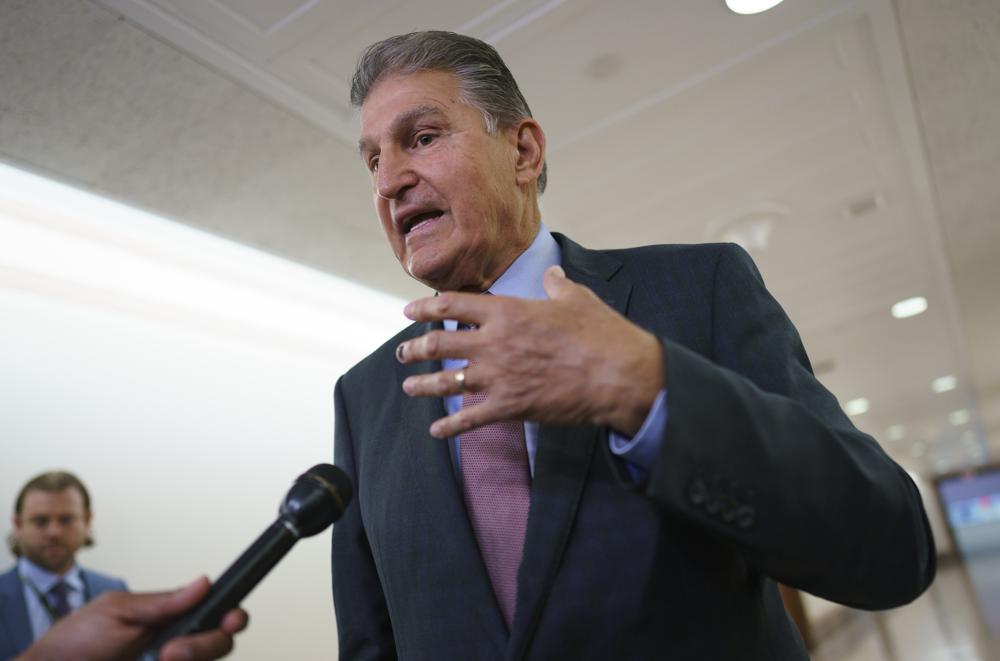
In a startling turnabout, Senate Majority Leader Chuck Schumer and Sen. Joe Manchin announced Wednesday they had reached an expansive agreement that had eluded them for months on health care, energy and climate issues, taxes on higher earners and corporations, and federal debt reduction. The two Democrats said the Senate would vote on the wide-ranging measure next week, setting up President Joe Biden and Democrats for an unexpected victory in the runup to November congressional elections in which their control of Congress is in peril. A House vote would come afterward, perhaps later in August. Unanimous Republican opposition in both chambers seems certain. Just hours earlier, the expectation was that Schumer, D-N.Y., and Manchin, D-W.Va., were at loggerheads and headed toward far narrower package that Manchin was insisting be limited to curbing pharmaceutical prices and extending federal health care subsidies. Earlier Wednesday, numerous Democratic senators had said they were all but resigned to the more modest legislation. The reversal was stunning, and there was no immediate explanation for Manchin’s abrupt willingness to back a bolder, broader measure. Since last year, the West Virginian had used his pivotal vote in the 50-50 Senate to force Biden and Democrats to abandon far more ambitious and expensive versions of the package. He dragged them through months of negotiations in which leaders’ concessions to shrink the legislation proved fruitless, antagonizing the White House and most congressional Democrats. “This is the action the American people have been waiting for. This addresses the problems of today — high health care costs and overall inflation — as well as investments in our energy security for the future,” Biden said in a statement. He added, “If enacted, this legislation will be historic, and I urge the Senate to move on this bill as soon as possible and for the House to follow as well.” Tellingly, Democrats were calling the measure “The Inflation Reduction Act of 2022” because of its provisions aimed at helping Americans cope with this year’s dramatically rising consumer costs. Polls show that inflation, embodied by gasoline prices that surpassed $5 per gallon before easing, has been voters’ chief concern. For months, Manchin’s opposition to proposed larger packages has been premised in part on his worry that they would fuel inflation. The measure also seemed to offer something for many Democratic constituencies. It dangled tax hikes on the wealthy and big corporations and environmental initiatives for progressives. And Manchin, an advocate for the fossil fuels his state produces, said the bill would invest in technologies for carbon-based and clean energy while also reducing methane and carbon emissions. Manchin said the new measure “would dedicate hundreds of billions of dollars to deficit reduction by adopting a tax policy that protects small businesses and working-class Americans while ensuring that large corporations and the ultra-wealthy pay their fair share in taxes.” The overall proposal is far more modest than the $3.5 trillion package Biden asked Democrats to push through Congress last year, and the pared-down, roughly $2 trillion version that the House approved last November after Manchin insisted on shrinking it. Even then, Manchin shot down that smaller measure in December, asserting it would fuel inflation and was loaded with budget gimmicks. In a summary that provided scant detail, Democrats said Wednesday their proposal would raise $739 billion over the decade in new revenue. That included $313 billion from a 15% corporate minimum tax that a Manchin statement suggested would affect only “billion-dollar companies or larger.” The agreement also contains $288 billion the government would save from curbing pharmaceutical prices, $124 billion from beefing up IRS tax enforcement, and $14 billion from taxing some “carried interest” profits earned by partners in entities like private equity or hedge funds. The measure would spend $369 billion on energy and climate change initiatives and $64 billion to extend federal subsidies for three more years for some people buying private health insurance. Those subsidies, which lower people’s premiums, would otherwise expire at the end of this year. That would leave $306 billion for debt reduction, an effort Manchin has been demanding. While a substantial sum, that’s a small fraction of the trillions in cumulative deficits the government is projected to amass over the coming decade. Sen. Kyrsten Sinema, D-Ariz., who backed Manchin last year in insisting on making the legislation less expensive but objected to proposals to raise tax rates, was still reviewing the agreement, said spokeswoman Hannah Hurley. The spokeswoman referred a reporter to Sinema comments last year supporting a corporate minimum tax. Sen. John Cornyn, R-Texas, said the Democratic agreement would be “devastating to American families and small businesses. Raising taxes on job creators, crushing energy producers with new regulations, and stifling innovators looking for new cures will only make this recession worse, not better.” But if Democrats can hold their troops together, GOP opposition would not stop them. The key is Democratic unity. They can prevail if they lose no more than four votes in the House and remain solidly united in the 50-50 Senate, where Vice President Kamala Harris can cast the tie-breaking vote. “Rather than risking more inflation with trillions in new spending, this bill will cut the inflation taxes Americans are paying, lower the cost of health insurance and prescription drugs, and ensure our country invests in the energy security and climate change solutions we need to remain a global superpower through innovation rather than elimination,” Manchin said. Schumer and Manchin said Democratic leaders’ proposals this fall to revamp permitting procedures would help infrastructure like pipelines and export facilities “be efficiently and responsibly built to deliver energy safely around the country and to our allies.” Collin O’Mara, president and CEO of the National Wildlife Federation, hailed Manchin’s announcement. “This agreement affirms that we can address the climate crisis, lower costs for consumers, lift up frontline and rural communities, and invest in made-in-America jobs and clean energy innovation,” O’Mara said. Sierra Club Legislative Director Melinda Pierce took a more cautious approach. “We are eager to see text
Senate passes bill to boost computer chip production in U.S.

A bill designed to encourage more semiconductor companies to build chip plants in the United States passed the Senate on Wednesday as lawmakers raced to finish work on a key priority of the Biden administration. The $280 billion measure, which awaits a House vote, includes federal grants and tax breaks for companies that construct their chip facilities in the U.S. The legislation also directs Congress to significantly increase spending on high-tech research programs that lawmakers say will help the country stay economically competitive in the decades ahead. Senate passage came by a 64-33 vote. The House vote is expected later this week as lawmakers try to wrap up business before returning to their home states and districts in August. House Speaker Nancy Pelosi, D-Calif., has said she is confident there is enough GOP support to overcome potential defections from Democrats who view the subsidy effort to boost semiconductor companies as a misplaced priority. Seventeen Republicans voted for the measure. Sen. Bernie Sanders, I-Vt., broke ranks with Democrats in voting against the bill. Proponents of the legislation say other countries are spending billions of dollars to lure chipmakers. Backers say the U.S. must do the same or risk losing a secure supply of the semiconductors that power automobiles, computers, appliances, and some of the military’s most advanced weapons systems. Senate Majority Leader Chuck Schumer, D-N.Y., said the bill represented one of the nation’s largest investments in science and manufacturing in decades and that with the Senate’s approval, “we say that America’s best years are yet to come.” Opponents have been critical of the bill’s price tag. It is projected to increase federal deficits by about $79 billion over ten years. President Joe Biden said the bill would create jobs and lower costs on a wide range of products from cars to dishwashers. “For decades, some ‘experts’ said we needed to give up on manufacturing in America. I never believed that. Manufacturing jobs are back,” Biden said. “Thanks to this bill, we are going to have even more of them. The House should promptly pass it and send this bill to my desk.” The bill has been in the works for years, starting with efforts by Schumer and Sen. Todd Young, R-Ind., to increase the government’s investment in high-tech research and development. While the bill has taken several twists and turns, one constant theme that lawmakers repeatedly emphasized during Wednesday’s debate was the need to keep up with China’s massive investments in cutting-edge technology. China’s government is planning on “winning the (artificial intelligence) race, winning future wars and winning the future,” Young said. “And the truth is, if we’re being honest with ourselves, Beijing is well on its way to accomplishing these goals.” Sen. Roger Wicker, R-Miss., said: “Regrettably, we are not in the driver’s seat on a range of important technologies. China is.” Congress, he said, now has “a chance to move us back in the right direction and put America back into a place to win the game.” The bill provides more than $52 billion in grants and other incentives for the semiconductor industry, as well as a 25% tax credit for those companies that invest in chip plants in the U.S. It calls for increased spending on various research programs that would total about $200 billion over ten years, though Congress will have to follow through by approving that money in future spending bills. Despite years of work, the bill’s future did not look so promising about a month ago. That’s when Senate Republican leader Mitch McConnell tweeted that there would be no chips legislation as long as Democrats pursued a party-line package of energy and economic initiatives. GOP support is critical in the Senate to get the 60 votes needed to overcome a filibuster. But when Sen. Joe Manchin of West Virginia quashed the idea of imposing higher taxes on the rich and corporations, key Republicans said that was an opening to go forward on semiconductors. Meanwhile, the Biden administration pushed to get a bill passed before the August recess, even if meant considerably narrowing the focus to just the $52 billion in semiconductor incentives. Commerce Secretary Gina Raimondo told lawmakers behind the scenes and publicly that semiconductor companies were making plans on how to meet the increased demand for chips. She said the growth in the industry would move forward with or without the United States and if lawmakers didn’t act quite soon, those companies would simply choose to build in other countries offering significant financial incentives. Schumer said that after McConnell’s statement, he called the CEOs of chipmakers and companies such as General Motors and Ford and reached out to “unlikely allies” like the U.S. Chamber of Commerce and the Business Roundtable. He urged them to reach out to Republican senators about the importance of the bill. “And they changed things,” Schumer told The Associated Press. “They really, for the first time, industry really helped a good government program.” The House could take up the bill as soon as Thursday. While most Republicans are expected to oppose it, some of the ranking Republicans on committees dealing with national security — Reps. Michael McCaul of Texas, Michael Turner of Ohio, and John Katko of New York — support the measure. So do many of the Republicans on a bipartisan group called the Problem Solvers Caucus, which is made up of moderates from both parties. Republished with the permission of The Associated Press.
Senators propose changes to electors law after Capitol riot

A bipartisan group of senators agreed Wednesday on proposed changes to the Electoral Count Act, the post-Civil War-era law for certifying presidential elections that came under intense scrutiny after the January 6 attack on the Capitol and Donald Trump’s effort to overturn the 2020 election. Long in the making, the package introduced by the group led by Sens. Susan Collins of Maine and Joe Manchin of West Virginia is made up of two separate proposals. One would clarify the way states submit electors and the vice president tallies the votes in Congress. The other would bolster security for state and local election officials who have faced violence and harassment. “From the beginning, our bipartisan group has shared a vision of drafting legislation to fix the flaws of the archaic and ambiguous Electoral Count Act of 1887,” Collins, Manchin, and the other 14 senators said in a joint statement. “We have developed legislation that establishes clear guidelines for our system of certifying and counting electoral votes,” the group wrote. “We urge our colleagues in both parties to support these simple, commonsense reforms.” Both Senate Majority Leader Chuck Schumer and Senate Republican leader Mitch McConnell have signaled support for the bipartisan group, but the final legislative package will undergo careful scrutiny. Votes are not likely before fall. But with broad support from the group of 16 senators, seven Democrats and nine Republicans, who have worked behind closed doors for months with the help of outside experts, serious consideration is assured. In a statement, Matthew Weil, executive director of the Democracy Program at the Bipartisan Policy Center, called the framework a “critical step” in shoring up ambiguities in the Electoral Count Act. After Trump lost the 2020 election, the defeated president orchestrated an unprecedented attempt to challenge the electors sent from battleground states to the joint session of Congress on January 6, when the vice president presides over certification. Under the proposed changes, the law would be updated to ensure the governor from each state is initially responsible for submitting electors, as a way to safeguard against states sending alternative or fake elector slates. Additionally, the law would spell out that the vice president presides over the joint session in a “solely ministerial” capacity, according to a summary page. It says the vice president “does not have any power to solely determine, accept, reject, or otherwise adjudicate disputes over electors.” That provision is a direct reaction to Trump’s relentless efforts to pressure then Vice President Mike Pence to reject the electors being sent from certain battleground states as a way to halt the certification or tip it away from Joe Biden’s victory. The bill also specifies the procedures around presidential transitions, including when the election outcome is disputed, to ensure the peaceful transfer of power from one administration to the next. That’s another pushback to the way Trump blocked Biden’s team from accessing some information for his transition to the White House. The second proposal, revolving around election security, would double the federal penalties to up to two years in prison for individuals who “threaten or intimidate election officials, poll watchers, voters or candidates,” according to the summary. It also would seek to improve the way the U.S. Postal Service handles election mail and “provide guidance to states to improve their mail-in ballot processes.” Mail-in ballots and the role of the Postal Service came under great scrutiny during the 2020 election. An Associated Press review of potential cases of voter fraud in six battleground states found no evidence of widespread fraud that could change the outcome of the election. A separate AP review of drop boxes used for mailed ballots also found no significant problems. The need for election worker protections was front and center at a separate hearing Wednesday of the House Committee on Homeland Security. Election officials and experts testified that a rise in threats of physical violence is contributing to staffing shortages across the country and a loss of experience at local boards of elections. “The impact is widespread,” said Neal Kelley, a former registrar of voters in Orange County, California, who now chairs the Committee for Safe and Secure Elections. “And, while the effects on individuals are devastating, the potential blow to democracy should not be dismissed.” Elizabeth Howard, senior counsel at the Brennan Center for Justice, told the committee that Congress needs to direct more money and support toward protecting election workers’ personal safety, including by funding local and federal training programs and providing grants to enhance security at election directors’ personal residences. Democratic New Mexico Secretary of State Maggie Toulouse Oliver, who recently reported a series of threats, told the panel the situation has become worse after former President Donald Trump’s attacks against the 2020 election result. “Unfortunately, we are still on a daily basis, in my state and across the country, living with the reverberating effects of the ‘Big Lie’ from 2020,” she said. “And, as we all know, when it comes to leadership, what you say from the very highest echelons of government power in this country do have those reverberating effects.” Some Republican members of the committee condemned violence against election workers — and also drew a parallel to recent threats and intimidation directed toward some Supreme Court justices after their decision to overturn constitutional protections for abortion. GOP Rep. Clay Higgins of Louisiana rejected the notion that Trump and other election skeptics were solely responsible for the “atmosphere of mistrust” that grew up around the 2020 election. Republished with the permission of The Associated Press.
Supreme Court limits EPA in curbing power plant emissions
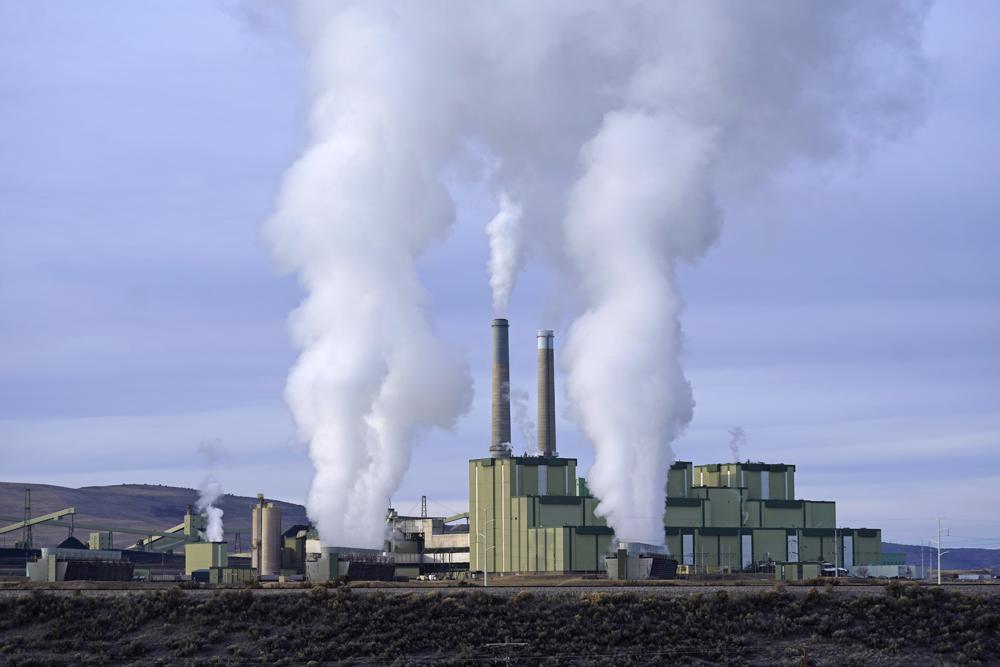
In a blow to the fight against climate change, the Supreme Court on Thursday limited how the nation’s main anti-air pollution law can be used to reduce carbon dioxide emissions from power plants. By a 6-3 vote, with conservatives in the majority, the court said that the Clean Air Act does not give the Environmental Protection Agency broad authority to regulate greenhouse gas emissions from power plants that contribute to global warming. The decision, said environmental advocates and dissenting liberal justices, was a major step in the wrong direction — “a gut punch,” one prominent meteorologist said — at a time of increasing environmental damage attributable to climate change amid dire warnings about the future. The court’s ruling could complicate the administration’s plans to combat climate change. Its detailed proposal to regulate power plant emissions is expected by the end of the year. Though the decision was specific to the EPA, it was in line with the conservative majority’s skepticism of the power of regulatory agencies, and it sent a message on possible future effects beyond climate change and air pollution. The decision put an exclamation point on a court term in which a conservative majority, bolstered by three appointees of former President Donald Trump, also overturned the nearly 50-year-old nationwide right to abortion, expanded gun rights, and issued major religious rights rulings, all over liberal dissents. President Joe Biden aims to cut the nation’s greenhouse gas emissions in half by the end of the decade and to have an emissions-free power sector by 2035. Power plants account for roughly 30% of carbon dioxide output. “Capping carbon dioxide emissions at a level that will force a nationwide transition away from the use of coal to generate electricity may be a sensible ‘solution to the crisis of the day,’” Chief Justice John Roberts wrote in his opinion for the court. But Roberts wrote that the Clean Air Act doesn’t give EPA the authority to do so and that Congress must speak clearly on this subject. “A decision of such magnitude and consequence rests with Congress itself, or an agency acting pursuant to a clear delegation from that representative body,” he wrote. In a dissent, Justice Elena Kagan wrote that the decision strips the EPA of the power Congress gave it to respond to “the most pressing environmental challenge of our time.” Kagan said the stakes in the case are high. She said, “The Court appoints itself—instead of Congress or the expert agency—the decisionmaker on climate policy. I cannot think of many things more frightening.” Biden, in a statement, called the ruling “another devastating decision that aims to take our country backwards.” He said he would “not relent in using my lawful authorities to protect public health and tackle the climate crisis.” And EPA head Michael Regan said his agency will move forward with a rule to impose environmental standards on the energy sector. West Virginia Attorney General Patrick Morrisey, who led the legal challenge to EPA authority, said the “EPA can no longer sidestep Congress to exercise broad regulatory power that would radically transform the nation’s energy grid and force states to fundamentally shift their energy portfolios away from coal-fired generation.” But University of Georgia meteorology professor Marshall Shepherd, a past president of the American Meteorological Society, said of the decision: “It feels like a gut punch to critical efforts to combat the climate crisis which has the potential to place lives at risk for decades to come.” Richard Revesz, an environmental expert at the New York University School of Law, called the decision “a significant setback for environmental protection and public health safeguards.” But he also said in a statement that EPA still has authority to address greenhouse gas emissions from the power sector. EPA Administrator Regan said the agency “will move forward with lawfully setting and implementing environmental standards that meet our obligation to protect all people and all communities from environmental harm.” Senate Democratic leader Chuck Schumer of New York said the consequences of Thursday’s decision “will ripple across the entire federal government, from the regulation of food and drugs to our nation’s health care system, all of which will put American lives at risk.” The court held that Congress must speak with specificity when it wants to give an agency authority to regulate on an issue of major national significance. Several conservative justices have criticized what they see as the unchecked power of federal agencies. Those concerns were evident in the court’s orders throwing out two Biden administration policies aimed at reducing the spread of COVID-19. Last summer, the court’s 6-3 conservative majority ended a pause on evictions over unpaid rent. In January, the same six justices blocked a requirement that workers at large employers be vaccinated or test regularly and wear a mask on the job. Underlying all these issues is a lack of action from Congress, reflecting bitter, partisan disagreements over the role of the federal government. On the environment, Biden’s signature plan to address climate, a sweeping social and environmental policy bill known as Build Back Better, is all but dead amid united opposition from congressional Republicans and conservative Democratic Sen. Joe Manchin from coal state West Virginia. Under a trimmed-down version, the legislation backed by Democrats would offer tax credits and spending to boost renewable power such as wind and solar and sharply increase the number of electric vehicles. The justices heard arguments in the case on the same day that a United Nations panel’s report warned that the effects of climate change are about to get much worse, likely making the world sicker, hungrier, poorer, and more dangerous in the coming years. The power plant case has a long and complicated history that begins with the Obama administration’s Clean Power Plan. That plan would have required states to reduce emissions from the generation of electricity, mainly by shifting away from coal-fired plants. But that plan never took effect. Acting in a lawsuit filed by West Virginia and others, the Supreme Court blocked it in 2016 by a 5-4 vote, with conservatives
