
Voting rights ruling increases pressure on Democrats to act
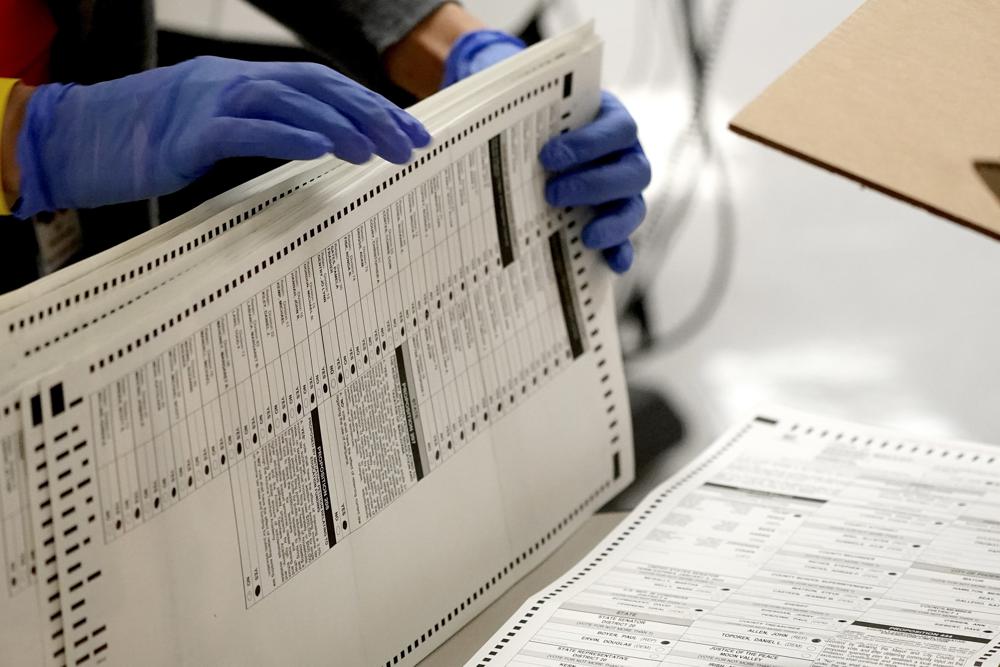
Congressional Democrats are facing renewed pressure to pass legislation that would protect voting rights after a Supreme Court ruling Thursday made it harder to challenge Republican efforts to limit ballot access in many states. The 6-3 ruling on a case out of Arizona was the second time in a decade that conservatives on the Supreme Court have weakened components of the Voting Rights Act of 1965, a landmark Civil Rights-era law. But this opinion was released in a much different political climate, in the aftermath of President Donald Trump’s lie that last year’s election was stolen. Trump’s fabrications spurred Republicans in states such as Georgia and Florida to pass tougher rules on voting under the cloak of election integrity. Democrats on Capitol Hill have already tried to respond with a sweeping voting and elections bill that Senate Republicans united to block last week. A separate bill, the John Lewis Voting Rights Advancement Act, which would restore sections of the Voting Rights Act that the Supreme Court previously weakened, has been similarly dismissed by most Republicans. Those setbacks, combined with the Supreme Court’s decision, have fueled a sense of urgency among Democrats to act while they still have narrow majorities in the House and Senate. But passing voting legislation at this point would almost certainly require changes to the filibuster, allowing Democrats to act without GOP support. “Absolutely this increases the pressure to take a very hard look at whether the Senate is an institution that will allow itself to be rendered powerless and dysfunctional,” said Rep. John Sarbanes, a Maryland Democrat who sponsored a voting bill that passed the House in March. Change won’t be easy. A group of moderate Democratic senators, including Sens. Joe Manchin of West Virginia and Kyrsten Sinema of Arizona, have ruled out revisions to the filibuster. In an evenly divided Senate, their rejection denies the votes needed to move forward with a procedural change. Thursday’s ruling was on a case in Sinema’s home state. In an opinion by Justice Samuel Alito, the court reversed an appellate ruling in deciding that Arizona’s regulations — on who can return early ballots for another person and on refusing to count ballots cast in the wrong precinct — are not racially discriminatory. Sinema assailed the decision in a statement, saying it would “hurt Arizonans’ ability to make their voices heard at the ballot box.” She reiterated her support for the bill yet said nothing about her opposition to the filibuster changes. That opposition stands in the way of the bill passing. Democrats, who say the issue is an existential one for democracy and who need the support of voters of color in next year’s midterms, quickly condemned the decision. “If you believe in open and fair democracy and the principle of one person, one vote, today is one of the darkest days in all of the Supreme Court’s history,” said Senate Majority Leader Chuck Schumer. House Speaker Nancy Pelosi called the ruling an “unprecedented assault” that “greenlights the brutal, accelerating campaign of voter suppression.” Speaking in Florida, President Joe Biden said he would have “much more to say” soon, but largely sidestepped comment. For their part, Republicans show no sign of willingness to engage with Democrats on the issue. “The states created the federal government, and it’s not up to Chuck or Nancy or anyone else in Washington, D.C., to tell Arizona or anyone else how they should conduct an election,” Arizona Attorney General Mark Brnovich, who was a party in the case, said on Fox News. Many Republicans other have dismissed a series of recent hearings on the John Lewis bill as “theater.” “They are using this issue because they see a political opportunity,” said Rep. Mike Johnson, a Louisiana Republican who sits on the House Judiciary Committee. “The more they advance this narrative that it’s us versus them, and oppressors versus the oppressed, and black versus white, it divides the country.” Questions hang over existing lawsuits challenging voting laws. While experts generally agree that Thursday’s decision will make legal challenges under Section 2 of the Voting Rights Act more difficult, many of the lawsuits pending against GOP-backed laws this year make separate, constitutional claims. So those lawsuits will proceed. The U.S. Justice Department’s recent lawsuit against Georgia’s new voting law does make a Section 2 challenge, although it was narrowly written and alleges an intent by Republican state lawmakers to discriminate against minority voters. In the Arizona case, the legal challenge centered on whether there was a discriminatory effect of the laws. Still, advocates of voting rights protections were surprised by the breadth of the ruling. “This ruling is much worse than we had anticipated,” said Wendy Weiser, an attorney for the Brennan Center for Justice. “This is going to put a lot of pressure on Congress and the White House to pass the voting bills.” And it could embolden more Republican-led states to pursue further restrictions. Judicial Watch President Tom Fitton, who supports the ruling, said: “States can be confident that they can go full speed ahead to strengthen elections and protect voting rights with security measures such as voter ID and other sensible measures to make it harder to steal elections.” Republished with the permission of the Associated Press.
‘We have a deal’: Joe Biden announces infrastructure agreement
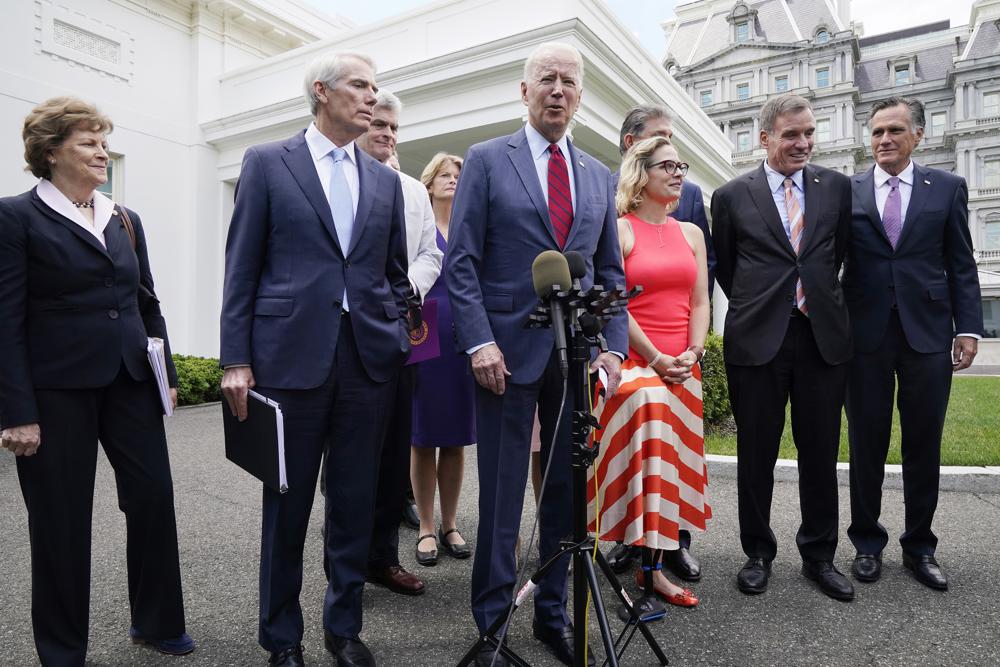
President Joe Biden announced on Thursday a hard-earned bipartisan agreement on a pared-down infrastructure plan that would make a start on his top legislative priority and validate his efforts to reach across the political aisle. He openly acknowledged that Democrats will likely have to tackle much of the rest on their own. The bill’s price tag at $973 billion over five years, or $1.2 trillion over eight years, is a scaled-back but still significant piece of Biden’s broader proposals. It includes more than a half-trillion dollars in new spending and could open the door to the president’s more sweeping $4 trillion proposals later on. “When we can find common ground, working across party lines, that is what I will seek to do,” said Biden, who deemed the deal “a true bipartisan effort, breaking the ice that too often has kept us frozen in place.” The president stressed that “neither side got everything they wanted in this deal; that’s what it means to compromise” and said that other White House priorities would be tackled separately in a congressional budget process known as reconciliation. He made clear that the two items would be done “in tandem” and that he would not sign the bipartisan deal without the other, bigger piece. Progressive members of Congress declared they would hold to the same approach. “This reminds me of the days when we used to get an awful lot done up in the United States Congress,” said Biden, a former Delaware senator, putting his hand on the shoulder of a stoic-looking Republican Sen. Rob Portman as the president made a surprise appearance with a bipartisan group of senators to announce the deal outside the White House. The deal was struck after months of partisan rancor that has consumed Washington while Biden has insisted that something could be done despite skepticism from many in his own party. Led by Republican Portman of Ohio and Democrat Kyrsten Sinema of Arizona, the group included some of the more independent lawmakers in the Senate, some known for bucking their parties. “You know there are many who say bipartisanship is dead in Washington,” said Sinema, “We can use bipartisanship to solve these challenges.” And Sen. Susan Collins, R-Maine, said, “It sends an important message to the world as well that America can function, can get things done.” The proposal includes both new and existing spending and highlights the struggle lawmakers faced in coming up with ways to pay for it. The investments include $109 billion on roads and highways, $15 billion on electric vehicle infrastructure and transit systems, and $65 billion toward broadband, among other expenditures on airports, drinking water systems, and resiliency efforts to tackle climate change. Rather than Biden’s proposed corporate tax hike that Republicans oppose or the gas tax increase that the president rejected, funds will be tapped from a range of sources — without a full tally yet, according to the White House document. Money will come from COVID-19 relief funds approved in 2020 but not yet spent, as well as untapped unemployment insurance funds that Democrats have been hesitant to poach. Other revenue is expected by going harder after tax cheats by beefing up Internal Revenue Service enforcement. The rest is a hodge-podge of asset sales and accounting tools, including funds coming from 5G telecommunication spectrum lease sales, strategic petroleum reserve, and an expectation that the sweeping investment will generate economic growth — what the White House calls the “macroeconomic impact of infrastructure investment.” The senators from both parties stressed that the deal will create jobs for the economy, a belief that clearly transcended the partisan interests and created a framework for the deal. “We’re going to keep working together–we’re not finished,” Sen. Mitt Romney said. “But America works, the Senate works.” For Biden, the deal was a welcome result. Though for far less than the approximately $2 trillion he originally sought, which is raising some ire on the left, Biden had bet his political capital that he could work with Republicans and showcase that “that American democracy can deliver” and be a counter-example to rising autocracies across the globe. Moreover, Biden and his aides believed that they needed a bipartisan deal on infrastructure to create a permission structure for more moderate Democrats — including Sinema and Joe Manchin of West Virginia — to then be willing to go for a party-line vote for the rest of the president’s agenda. There is still some skepticism on the left. Sen. Richard Blumenthal of Connecticut said the bipartisan agreement is “way too small –paltry, pathetic. I need a clear, ironclad assurance that there will be a really adequate robust package” that will follow the bipartisan agreement. House Speaker Nancy Pelosi, like Biden, warned that it must be paired with the president’s bigger goals now being prepared by Congress under a process that could push them through the Senate with only Democratic votes. “There ain’t going to be a bipartisan bill without a reconciliation bill,” Pelosi said. Portman had met privately ahead of the White House meeting with Senate Republican leader Mitch McConnell at the Capitol and said afterward that the Kentucky senator “remains open-minded and he’s listening still.” The announcement leaves unclear the fate of Biden’s promises of massive investment to slow climate change, which Biden this spring called “the existential crisis of our times.” Biden’s presidential campaign had helped win progressive backing with pledges of major spending on electric vehicles, charging stations, and research and funding for overhauling the U.S. economy to run on less oil, gas, and coal. The administration is expected to push for some of that in future legislation. But Sen. Bill Cassidy, R-La, stressed that there are billions of dollars for resiliency against extreme weather and the impacts of climate change and deemed Thursday’s deal a “beginning investment.” Biden has sought $1.7 trillion in his American Jobs Plan, part of nearly $4 trillion in broad infrastructure spending on roads, bridges, and broadband internet but also including the so-called care economy of child care centers,
GOP filibuster blocks Democrats’ big voting rights bill
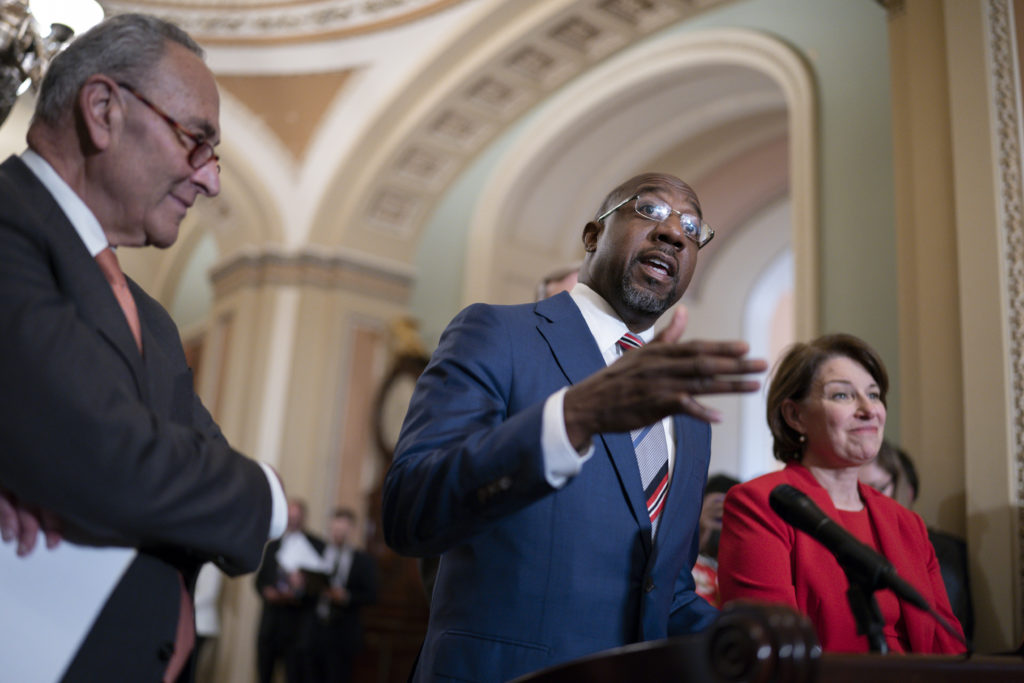
The Democrats’ sweeping attempt to rewrite U.S. election and voting law suffered a major setback in the Senate Tuesday, blocked by a filibuster wall of Republican opposition to what would be the largest overhaul of the electoral system in a generation. The vote leaves the Democrats with no clear path forward, though President Joe Biden declared, “This fight is far from over.” The bill, known as the For the People Act, would touch on virtually every aspect of how elections are conducted, striking down hurdles to voting that advocates view as the Civil Rights fight of the era, while also curbing the influence of money in politics and limiting partisan influence over the drawing of congressional districts. But many in the GOP say the measure represents instead a breathtaking federal infringement on states’ authority to conduct their own elections without fraud — and is meant to ultimately benefit Democrats. It failed on a 50-50 vote after Republicans, some of whom derided the bill as the “Screw the People Act,” denied Democrats the 60 votes needed to begin debate under Senate rules. Vice President Kamala Harris, the first Black woman to hold her office, presided over the chamber as the bill failed to break past that filibuster barrier. Biden praised Senate Democrats for standing together “against the ongoing assault of voter suppression that represents a Jim Crow era in the 21st Century.” In a statement from the White House, he said that in their actions, though unsuccessful on Tuesday, they “took the next step forward in this continuous struggle.” The rejection forces Democrats to reckon with what comes next for their top legislative priority in a narrowly divided Senate. They’ve touted the measure as a powerful counterweight to scores of proposals advancing in GOP-controlled statehouses making it more difficult to vote. “Once again, the Senate Republican minority has launched a partisan blockade of a pressing issue,” Senate Majority Leader Chuck Schumer said from the chamber floor. He vowed that the vote was the “starting gun” and not the last time voting rights would be up for debate. Whatever Democrats decide, they will likely be confronted with the same challenge they faced Tuesday when minority Republicans used the filibuster — the same tool that Democrats employed during Donald Trump’s presidency — to block consideration of the bill. Republicans showed no sign of yielding. Republican leader Mitch McConnell called the bill a “a solution looking for a problem” and vowed to “put an end to it.” Texas Sen. Ted Cruz dismissed it as “partisan legislation, written by elected Democrats, designed to keep elected Democrats in office.” And, more graphically, Sen. Shelley Moore Capito called the bill “a despicable, disingenuous attempt to strip states of their constitutional right to administer elections” that “should never come close to reaching the president’s desk.” Pressure has been mounting on Democrats to change Senate rules or watch their priorities languish. A group of moderate Democratic senators, however, including Sens. Joe Manchin and Kyrsten Sinema, have ruled that out, denying the votes needed to make a filibuster change. Biden has vowed what the White House calls the “fight of his presidency” over ensuring Americans’ access to voting. But without changes to Senate rules, key planks of his agenda, including the voting bill, appear stalled. Sen. Raphael Warnock, a Georgia Democrat and senior pastor at the Atlanta church Martin Luther King Jr. once led, called minority Republicans’ willingness to prevent debate on the voting bill a “dereliction” of duty. “What could be more hypocritical and cynical than invoking minority rights in the Senate as a pretext for preventing debate about how to preserve minority rights in the society,” Warnock said during a floor speech Tuesday. The changes being enacted in many Republican states are decried by voting rights advocates who argue the restrictions will make it more difficult for people to cast ballots, particularly minority residents who tend to support Democrats. Republicans, cheered on by Trump, talk instead about fighting potential voting fraud and say the Democrats’ concerns are wildly overblown. As the Senate discussion churns, more changes could be coming to the bill. Democrats want to protect against intimidation at the polls in the aftermath of the 2020 election. They propose enhancing penalties for those who would threaten or intimidate election workers and creating a “buffer zone” between election workers and poll watchers, among other possible changes. They also want to limit the ability of state officials to remove local election officials. Georgia Republicans passed a law earlier this year that gives the GOP-dominated Legislature greater influence over a state board that regulates elections and empowers it to remove local election officials deemed to be underperforming. But Democrats have divisions of their own. Until Tuesday, it wasn’t even clear that they would be united on the vote to bring the bill up for debate. Manchin, a moderate from West Virginia, announced earlier this month that he couldn’t support the bill because it lacked Republican support. Manchin flipped his vote to a “yes” after Democrats agreed to consider his revised version. His proposal was endorsed by former President Barack Obama and called a “step forward” by Biden’s administration. Manchin has proposed adding provisions for a national voter ID requirement, which is anathema to many Democrats, and dropping a proposed public financing of campaigns. Those changes did little, however, to garner the bipartisan support Manchin was hoping for. Senate Republicans said they would likely reject any legislation that expands the federal government’s role in elections. McConnell dismissed Manchin’s version as “equally unacceptable.” Sen. Lisa Murkowski, a moderate Alaska Republican, said some aspects of the Democratic bill were laudable and she supports other voting rights legislation, like a reinstatement of the Voting Rights Act struck down by the Supreme Court in 2013. But, ultimately, she said the “sprawling” bill amounted to “a one-size-fits-all mandate coming out of Washington D.C.” that “in many cases doesn’t work.” Months in the making, Tuesday’s showdown had taken on fresh urgency as Trump continues to challenge
Paid in full? Biden, GOP struggle over infrastructure costs
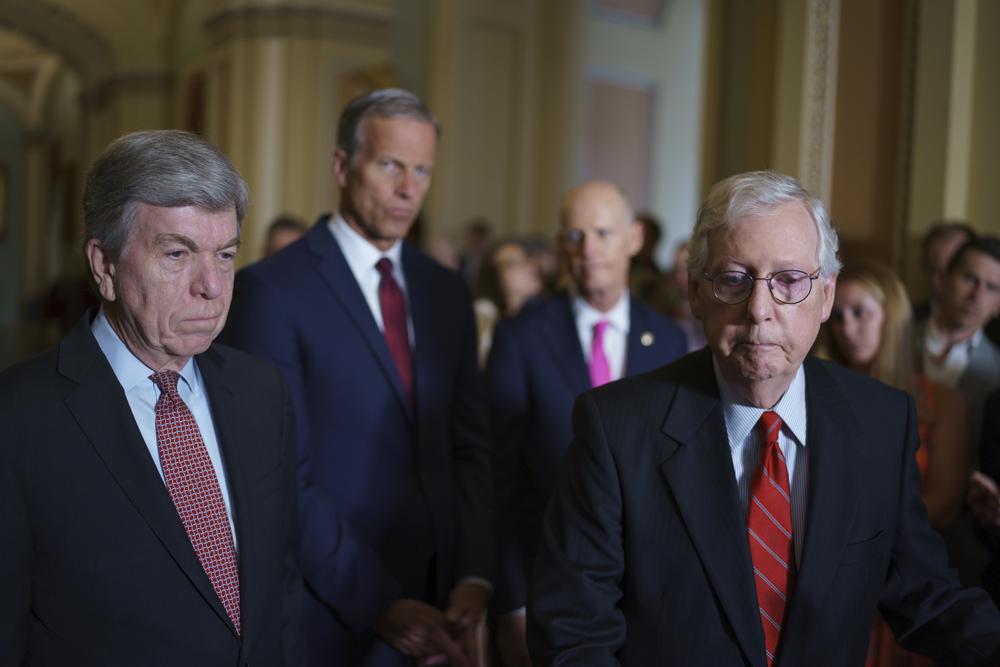
Congressional negotiators and the White House appear open to striking a roughly $1 trillion deal on infrastructure. But they are struggling with the hard part — how to pay for it. As President Joe Biden jumps back into the talks this week, the question of where the money will come from looms large. And time is running short to solve it. Biden wants to increase taxes for corporations and those households making more than $400,000 a year. Republicans have ruled that out, putting forward alternatives that Democrats find unacceptable. Both sides have said the infrastructure spending should be paid for and not add to the national debt. It’s a long-standing challenge with no easy solution, one that puts the bipartisan agreement around infrastructure in tension with the nettlesome realities of governing. It’s a problem that has thwarted previous attempts at an infrastructure bill, including during the Trump administration, and their ability to solve it now is likely to determine whether a bipartisan accord is possible. Senate Republican leader Mitch McConnell has said user fees are the way to go. But the White House and key Democratic lawmakers oppose increasing the user fee that has traditionally funded road and bridge construction, the federal gas tax, even if the increase is just allowing it to rise at the rate of inflation from its current level of 18.4 cents per gallon. The federal gas tax has not increased since 1993. “The president’s pledge was not to raise taxes on Americans making less than $400,000 a year, and the proposed gas tax or vehicle mileage tax would do exactly that,” said White House press secretary Jen Psaki. “So that is a nonstarter for him. I’d also note for the mathematicians in the room that only raises $40 billion, which is a fraction of what this proposal would cost.” Biden hosted two key Democratic senators, Joe Manchin of West Virginia and Kyrsten Sinema of Arizona, at the White House on Monday. He told them he was encouraged by the plans that were taking shape but still had questions about the policy and the financing for the proposal, a White House official said. Biden also said he was focused on budget resolution discussions. The two senators were among a group huddling late Monday at the Capitol, some emerging upbeat that a bipartisan deal was within reach. “Significant progress,” said Sen. Susan Collins, R-Maine. Sen. Jon Tester, D-Mont., said they were “very close” to having a full proposal from the bipartisan group as soon as Tuesday. One idea under consideration is reallocating money already approved as part of COVID-19 relief measures. Sen. Rob Portman, R-Ohio, said Sunday that they’re looking at repurposing more than $100 billion from COVID-19 relief to help pay for infrastructure. He put the onus on the White House to put forward other ideas since Democrats are balking at indexing the gas tax to inflation or creating a user fee for electric vehicles. “The administration, therefore, will need to come forward with some other ideas without raising taxes,” Portman said on NBC’s “Meet the Press.” “What we don’t want to do is hurt the economy right now as we’re coming out of this pandemic by raising taxes on working families.” With the gas tax likely out, other ideas include raising revenue from communication spectrum leases, and both parties are eyeing funds that could be raised by going after tax dodgers. The Republicans estimate about $63 billion could be raised by beefing up enforcement by the Internal Revenue Service. Democrats say the amount could be even higher. Another complication in the negotiations is that many Democrats question whether the size and scope of the infrastructure package being discussed by the White House and senators is adequate. Within the $1 trillion package, about $579 billion would be new spending, and the remainder would be a continuation of existing programs. Many Democrats are wary of a repeat of 2009 when Barack Obama was president, and they spent months negotiating the details of the Affordable Care Act with Republicans. Eventually, Democrats passed the package that became known as “Obamacare” on their own. “The amount of money that they are proposing is about one-quarter of what the president talked about in terms of new money. That’s not adequate,” said Sen. Bernie Sanders, I-Vt., on CNN’s “State of the Union.” Lawmakers are also hoping to influence more than the price tag of the infrastructure bill. One senator key to the talks, Manchin, unveiled his own draft proposal Monday for green energy infrastructure investments. The 423-page bill contains a wish list of energy-related proposals, and he’ll hold a hearing on the plan Thursday in the Senate Energy and Natural Resources Committee. Senate Majority Leader Chuck Schumer, D-N.Y., has described the infrastructure bill being negotiated as a good start. But he says most Democrats don’t believe it does enough on climate and also want it to address priorities like paid family leave. He is pushing a “two-track” approach that leaves open the possibility of a far larger bill without Republican votes. Using a special budget, the second infrastructure bill would only take a simple majority of 51 votes to pass. Such a measure could include more of the priorities laid out by Biden as part of his $1.8 trillion American Families Plan, such as paid family leave and universal pre-K for 3- and 4-year-olds. Sen. Lindsey Graham, R-S.C., warned the administration not to go that route. “I would just say to President Biden, you’ve got a party that’s divided. You’ve got a Republican Party that’s willing to meet you in the middle for a trillion dollars of infrastructure that could fundamentally change the way America does business in roads, ports, and bridges and accelerate electrical vehicles,” Graham said on “Fox News Sunday.” “You’ve got to decide what kind of president you are and what kind of presidency you want.” Republished with the permission of the Associated Press.
Joe Biden ends GOP infrastructure talks, starts new negotiations
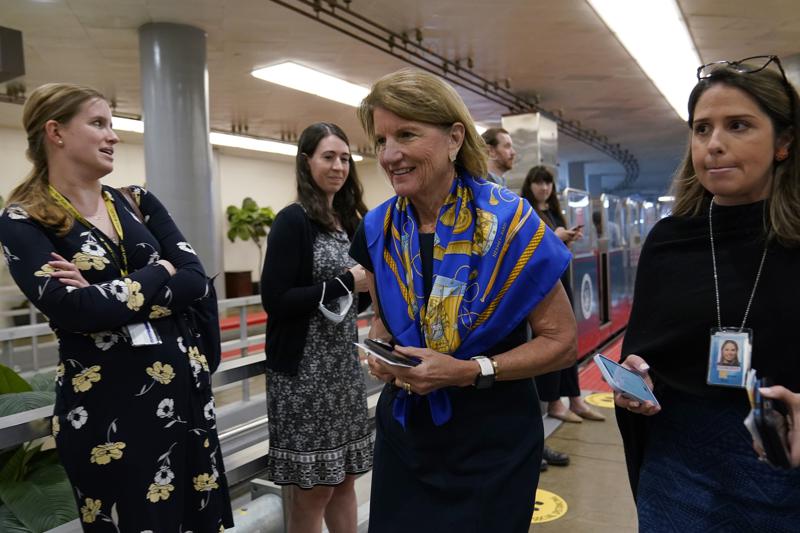
President Joe Biden ended talks with a group of Republican senators on a big infrastructure package on Tuesday and started reaching out to senators from both parties in a new effort toward bipartisan compromise, setting a summer deadline for Congress to pass his top legislative priority. The president is walking away from talks with lead Republican negotiator Sen. Shelley Moore Capito after the two spoke Tuesday, but would welcome her in the new bipartisan group, according to an administrative official who spoke on condition of anonymity to discuss the private negotiations. At the same time, with anxiety running high as time slips by, Democrats are laying the groundwork to pass some or all of the ambitious package on their own. Biden conferred Tuesday with House Speaker Nancy Pelosi and Senate Majority Leader Chuck Schumer about launching the budget resolution process for Senate votes in July, the White House said. “The President is committed to moving his economic legislation through Congress this summer, and is pursuing multiple paths to get this done,” White House press secretary Jen Psaki said in a statement. The breakdown comes after weeks of prolonged infrastructure talks between the president and Capito as the two sides failed to broker the divide over the scope of Biden’s sweeping infrastructure investment and how to pay for it. The Republican senators offered a $928 billion proposal, which included about $330 billion in new spending — but not as much as Biden’s $1.7 trillion investment proposal for rebuilding the nation’s roads, bridges, highways and other infrastructure, including Veterans Affairs hospitals and care centers. Biden has proposed raising the corporate tax rate from 21% to 28%, a nonstarter for Republicans, and rejected the GOP senators’ suggestion of tapping unspent COVID-19 aid money to fund the new infrastructure spending. In a statement, Capito said she was disappointed Biden ended the talks, but also expressed interest in ongoing bipartisan work. “While I appreciate President Biden’s willingness to devote so much time and effort to these negotiations, he ultimately chose not to accept the very robust and targeted infrastructure package, and instead, end our discussions,” she said. “However, this does not mean bipartisanship isn’t feasible.” As Biden aims for a compromise deal, he has begun reaching out to other senators, including Republican Sen. Bill Cassidy of Louisiana and two key centrist Democrats, Joe Manchin of West Virginia and Sen. Kyrsten Sinema of Arizona, whose votes will be crucial in the evenly split Senate. Those senators receiving phone calls from Biden are engaged in bipartisan talks, and a bipartisan group with Sen. Mitt Romney, R-Utah, was meeting later Tuesday at the Capitol to negotiate a fresh proposal. Psaki said the president urged the senators to continue their work “to develop a bipartisan proposal that he hopes will be more responsive to the country’s pressing infrastructure needs.” Biden tapped Cabinet and White House aides to meet with the senators in person. With the narrowly split House and the 50-50 Senate, the White House faces political challenges pushing its priorities through Congress with Democratic votes alone. Biden’s party holds a slight majority in the Senate because Vice President Kamala Harris can break a tie. The special budget rules could provide Biden with an alternative path, particularly in the Senate, because they allow legislation to be approved with a 51-vote threshold, rather than the 60 votes typically needed to advance a bill past a filibuster — in this case, led by Republicans against the Biden package. Democrats are watching warily as time passes and anxiety builds toward an agreement, with many lawmakers worried they are not fulfilling their campaign promises to voters who put the party in control of Congress and the White House. During a private discussion of Democratic senators at lunch Tuesday, there were differing views over whether they should keep talking with Republicans or pursue an approach that would allow them to pass a bill on their own, through the budget reconciliation process. Schumer told reporters afterward that Democrats are pursuing “a two-path approach.” The bipartisan talks led by Sinema with the other senators are underway, Schumer said, while the budget committee is preparing the legislation that would allow passage through the reconciliation process. “It may well be that part of the bill that is passed will be bipartisan, and part of it will be in reconciliation,” he said. “But we’re not going to sacrifice bigness and boldness.” The president is expected to engage with lawmakers while he sets out this week on his first foreign trip for an economic summit of the Group of Seven industrialized nations in Europe. Ahead of Biden’s announcement, the White House had also spoken to other lawmakers, including from the House. Rep. Josh Gottheimer, D-N.J., and Rep. Brian Fitzpatrick, R-Pa., the co-chairs of the bipartisan Problem Solvers Caucus, spoke late Monday with Brian Deese, director of the White House National Economic Council, about bipartisan efforts to reach an infrastructure deal, according to an aide who spoke on condition of anonymity to discuss the private conversations. Gottheimer is also working with Cassidy and Sinema from the senators’ group, the aide said. Republished with the permission of the Associated Press.
GOP poised to block bipartisan probe of January 6 insurrection
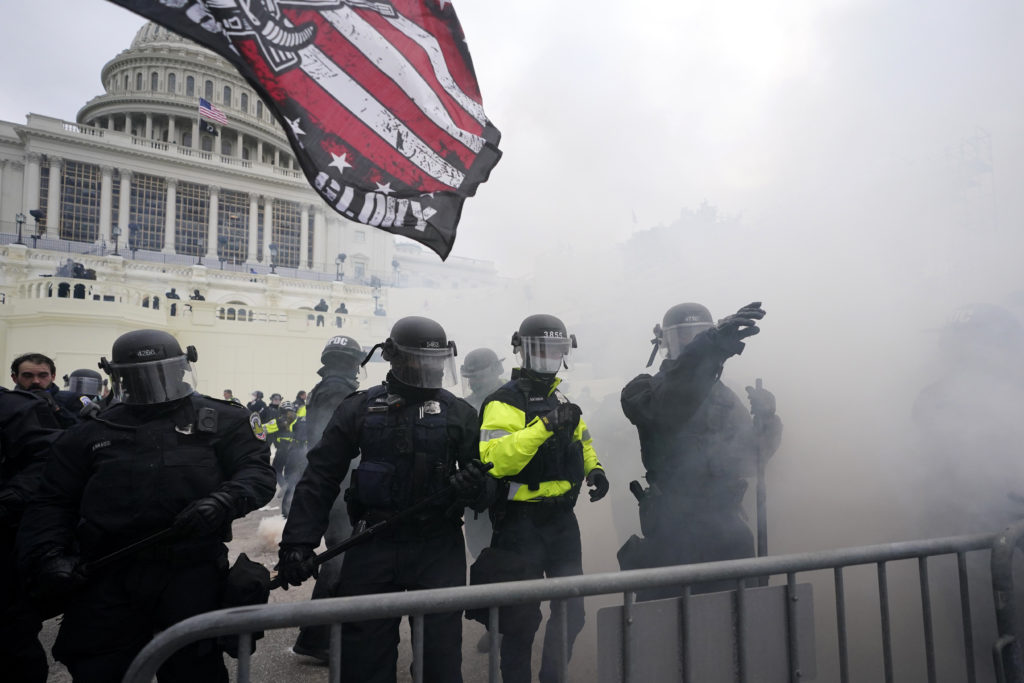
Senate Republicans are poised to block the creation of a special commission to study the deadly Jan. 6 attack on the Capitol, dashing hopes for a bipartisan panel amid a GOP push to put the violent insurrection by Donald Trump’s supporters behind them. Broad Republican opposition was expected in what would be the first successful Senate filibuster of the Biden presidency, even as the family of a Capitol Police officer who died that day and other officers who battled rioters went office to office asking GOP senators to support the commission. The siege was the worst attack on the Capitol in 200 years and interrupted the certification of Democrat Joe Biden’s win over Trump. Though the bill passed the House earlier this month with the support of almost three dozen Republicans, GOP senators said they believe the commission would eventually be used against them politically. And former President Trump, who still has a firm hold on the party, has called it a “Democrat trap.” The expected vote is emblematic of the profound mistrust between the two parties since the siege, which has sowed deeper divisions on Capitol Hill even though lawmakers in the two parties fled together from the rioters that day. The events of Jan. 6 have become an increasingly fraught topic among Republicans as some in the party have downplayed the violence and defended the rioters who supported Trump and his false insistence that the election was stolen from him. While initially saying he was open to the idea of the commission, which would be modeled after an investigation of the 9/11 terrorist attacks, Senate Republican leader Mitch McConnell turned firmly against it in recent days. He has said he believes the panel’s investigation would be partisan despite the even split among party members. McConnell, who once said Trump was responsible for “provoking” the mob attack on the Capitol, said of Democrats: “They’d like to continue to litigate the former president, into the future.” Biden, asked about the commission at a stop in Cleveland, said Thursday, “I can’t imagine anyone voting against” it. The Republican opposition to the bipartisan panel has revived Democratic pressure to do away with the filibuster, a time-honored Senate tradition that requires a vote by 60 of the 100 senators to cut off debate and advance a bill. With the Senate evenly split 50-50, Democrats need the support of 10 Republicans to move to the commission bill, sparking fresh debate over whether the time has come to change the rules and lower the threshold to 51 votes to take up legislation. The Republicans’ political arguments over the violent siege — which is still raw for many in the Capitol, almost five months later — have frustrated not only Democrats but also those who fought off the rioters. Michael Fanone, a Metropolitan Police Department officer who responded to the attack, said between meetings with Republican senators that a commission is “necessary for us to heal as a nation from the trauma that we all experienced that day.” Fanone has described being dragged down the Capitol steps by rioters who shocked him with a stun gun and beat him. Sandra Garza, the girlfriend of Capitol Police Officer Brian Sicknick, who collapsed and died after battling the rioters, said of the Republican senators: “You know they are here today and with their families and comfortable because of the actions of law enforcement that day.” “So I don’t understand why they would resist getting to the bottom of what happened that day and fully understanding how to prevent it. Just boggles my mind,” she said. Video of the rioting shows two men spraying Sicknick and another officer with a chemical, but the Washington medical examiner said he suffered a stroke and died from natural causes. Garza attended the meetings with Sicknick’s mother, Gladys Sicknick. In a statement on Wednesday, Mrs. Sicknick suggested the opponents of the commission “visit my son’s grave in Arlington National Cemetery and, while there, think about what their hurtful decisions will do to those officers who will be there for them going forward.” Dozens of other police officers were injured as the rioters pushed past them, breaking through windows and doors and hunting for lawmakers. The protesters constructed a mock gallows in front of the Capitol and called for the hanging of Vice President Mike Pence, who was overseeing the certification of the presidential vote. Four protesters died, including a woman who was shot and killed by police as she tried to break into the House chamber with lawmakers still inside. More than 400 people among the protesters have been arrested. “We have a mob overtake the Capitol, and we can’t get the Republicans to join us in making historic record of that event? That is sad,” said Sen. Dick Durbin of Illinois, the No. 2 Senate Democrat. “That tells you what’s wrong with the Senate and what’s wrong with the filibuster.” Many Democrats are warning that if Republicans are willing to use the filibuster to stop an arguably popular measure, it shows the limits of trying to broker compromises, particularly on bills related to election reforms or other aspects of the Democrats’ agenda. For now, though, Democrats don’t have the votes to change the rule. West Virginia Sen. Joe Manchin and Arizona Sen. Kyrsten Sinema, both moderate Democrats, have said they want to preserve the filibuster. Manchin said Thursday that there is “no excuse” for Republicans to vote against the commission, but that he is “not ready to destroy our government” by doing away with the procedural tactic. The commission has received support from government officials outside of Congress, as well. On Thursday, four former secretaries of Homeland Security who served under Presidents George W. Bush and Barack Obama — Tom Ridge, Michael Chertoff, Janet Napolitano, and Jeh Johnson — issued a statement saying a commission is necessary to “ensure the peaceful transfer of power in our country is never so threatened again.” In a last-ditch effort to convince some of her Republican colleagues to save
Rep. Terri Sewell joins other leaders to urge Joe Biden to fund semiconductor manufacturing
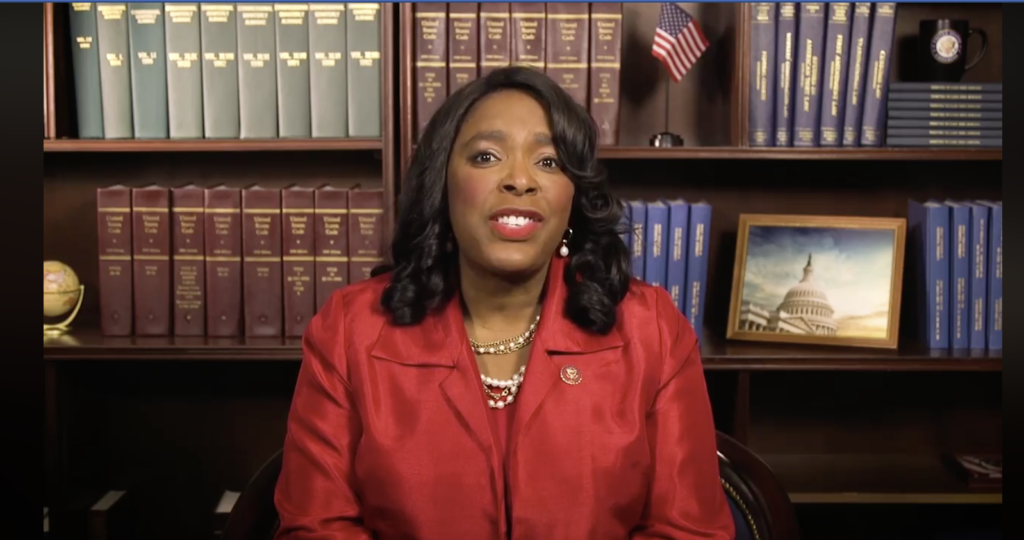
Alabama Rep. Terri Sewell signed a letter, along with 70 other Senators and Representatives, urging President Joe Biden to fund semiconductor manufacturing in the U.S. Arizona Senators Mark Kelly and Kyrsten Sinema, along with Representative Greg Stanton led the bipartisan group of 70 Senators and Representatives in requesting that President Joe Biden fully fund initiatives to expand semiconductor manufacturing on American soil. The Creating Helpful Incentives to Produce Semiconductors (CHIPS) for America Act was enacted as part of the National Defense Authorization Act. There has been a shortage in semiconductor production nationwide, a problem that hurts Alabama businesses as well. Al.com reported in January that semiconductor shortages were hurting manufacturing plants throughout the nation. In January the Mercedes Benz plant in Tuscaloosa released a statement saying, “The Mercedes-Benz Tuscaloosa plant started operations as planned after the end of the Christmas break on 4 January. Despite the ongoing shortage of semiconductors at certain suppliers, production at the Mercedes-Benz Tuscaloosa plant continues.” The letter to Joe Biden states, “The United States cannot wait to provide these resources over the years ahead. The halted production lines for consumer technology, auto manufacturers, truckers, and other critical industries due to a semiconductor shortage further highlights the pressing need to act quickly and fund the enacted bipartisan provisions.” Kelly stated, “Increasing the production of semiconductors on American soil is an economic and national security imperative. Arizona is a leader in the sector, proven by recent investments by Intel and Taiwan Semiconductor Manufacturing Company. Funding the CHIPS Act will create thousands of high-paying jobs, and be critical to our national security to ensure our competitiveness over China and on the global stage.”
Minimum wage hike all but dead in big COVID relief bill
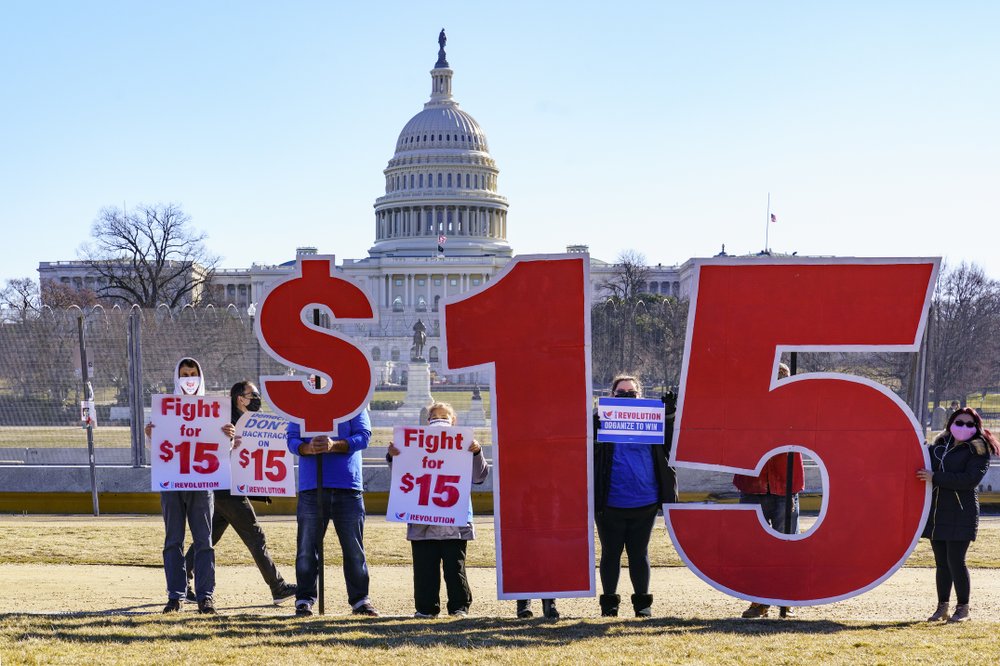
Democrats’ hopes of including a minimum wage increase in their $1.9 trillion COVID-19 relief bill seemed all but dead Monday as the Senate prepared to debate its own version of the House-passed aid package. Four days after the chamber’s parliamentarian said Senate rules forbid inclusion of a straight-out minimum wage increase in the relief measure, Democrats seemed to have exhausted their most realistic options for quickly salvaging the pay hike. In one decision, they abandoned a potential amendment threatening tax increases on big companies that don’t boost workers’ pay to certain levels. “At this moment, we may not have a path but I hope we can find one” for pushing the federal pay floor to $15 an hour, said No. 2 Senate Democratic leader Richard Durbin of Illinois. Senate Democrats hope to unveil their version of the broad relief package and begin debate as early as Wednesday. Congressional leaders want to send President Joe Biden the legislation combating the pandemic and bolstering the economy by March 14, the date emergency jobless benefits that lawmakers approved in December expire. The overall relief bill is Biden’s biggest early legislative priority. It looms as an initial test of his ability to unite Democrats in the Senate — where the party has no votes to spare — and risks lasting damage to his influence should he fail. Republicans are strongly against the legislation and could well oppose it unanimously, as House GOP lawmakers did when that chamber approved the bill early Saturday. The measure would provide $1,400 payments to individuals plus hundreds of billions of dollars for schools and colleges, COVID-19 vaccines and testing, mass transit systems, renters, and small businesses. It also has money for child care, tax breaks for families with children, and assistance for states willing to expand Medicaid coverage for low-income residents. Senate Budget Committee Chairman Bernie Sanders, I-Vt., said he wanted Democrats to ignore the parliamentarian’s ruling blocking the minimum wage increase. He also wants them to vote to eliminate filibusters — procedural delays that would take an unachievable 60 votes for Democrats to prevail. Neither idea seemed to have the support among Democrats or the White House needed to succeed. But Sanders, the Senate’s lead sponsor of the hike to $15, said he’d force a vote on an amendment restoring the minimum wage increase anyway. “This is the soul of the Democratic Party,” he said of the proposal. In an acknowledgment that his effort might fall short, he said, “If we fail in this legislation, I will be back” and offer it in the near future. The Senate is divided 50-50 between the parties with Vice President Kamala Harris able to cast only tie-breaking votes. Democrats are employing a seldom-used procedure for the COVID-19 relief bill that will shield the measure from filibusters. Biden discussed the relief bill Monday in a virtual meeting with nine Senate Democrats, including Joe Manchin of West Virginia, an opponent of the $15 hourly target. A White House statement said the group was “united in the goal of quickly passing a significant package that reflects the scope of the challenges our country is facing.” Democrats, who will need unanimity to pass the legislation, are pushing for several changes in the House measure. Manchin told reporters he wants the bill’s emergency unemployment benefits, set at $400 weekly by the House, to revert to the current $300 figure enacted in December. That is certain to be divisive and draw strong opposition from progressives. He and Sen. Jon Tester, D-Mont., also said they want spending to be better “targeted,” which Manchin said meant “helping the people that need help the most.” Republicans have said the legislation is too costly and spends money needlessly. Sen. Angus King, I-Maine, said he wants the bill’s $350 billion for state and local governments to specify minimum amounts for municipal governments and wants perhaps $50 billion to improve broadband coverage. The parliamentarian ruled Monday that some House-approved provisions, which would provide billions to help some struggling pension plans and to help people who’ve lost jobs afford health insurance, could stay in the bill, according to Senate Finance Committee Chairman Ron Wyden, D-Ore. The House-approved minimum wage language would gradually raise the federal floor to $15 an hour by 2025, more than double the $7.25 in place since 2009. After the parliamentarian said that provision would have to be deleted, Sanders and Wyden said they were working on plans to increase taxes on large corporations that don’t meet certain levels for workers’ pay. But that plan was dropped, Democrats said Monday, with Sanders saying the proposal would have been too easy for employers to evade. It was always questionable whether pressuring companies with tax increases would have won enough Democratic support to survive, and the idea would have affected only a fraction of workers paid the minimum wage. Raising the minimum wage has broad support among Democrats. But while it’s embraced passionately by the party’s progressives, at least two Senate moderates — Manchin and Kyrsten Sinema of Arizona — have voiced opposition to including it in the broader relief measure, wounding its prospects and fostering tensions within the party. Democrats must now decide “how we do minimum wage as part of another piece of legislation or on its own,” said Sen. Richard Blumenthal of Connecticut. While eliminating filibusters or overruling the parliamentarian has strong support among progressives, the ideas lack appeal to moderates. They are wary of erasing procedures that the party has used in the past, and could use again, to protect its priorities when it is in the minority. Among those who’ve long supported retaining the filibuster is Biden, who served nearly four decades in the Senate. “The president’s view on the filibuster is well known. He has not changed that point of view,” White House press secretary Jen Psaki said pointedly Monday. Republished with the permission of the Associate Press.
Vulnerable Democrat Doug Jones will vote to convict Donald Trump
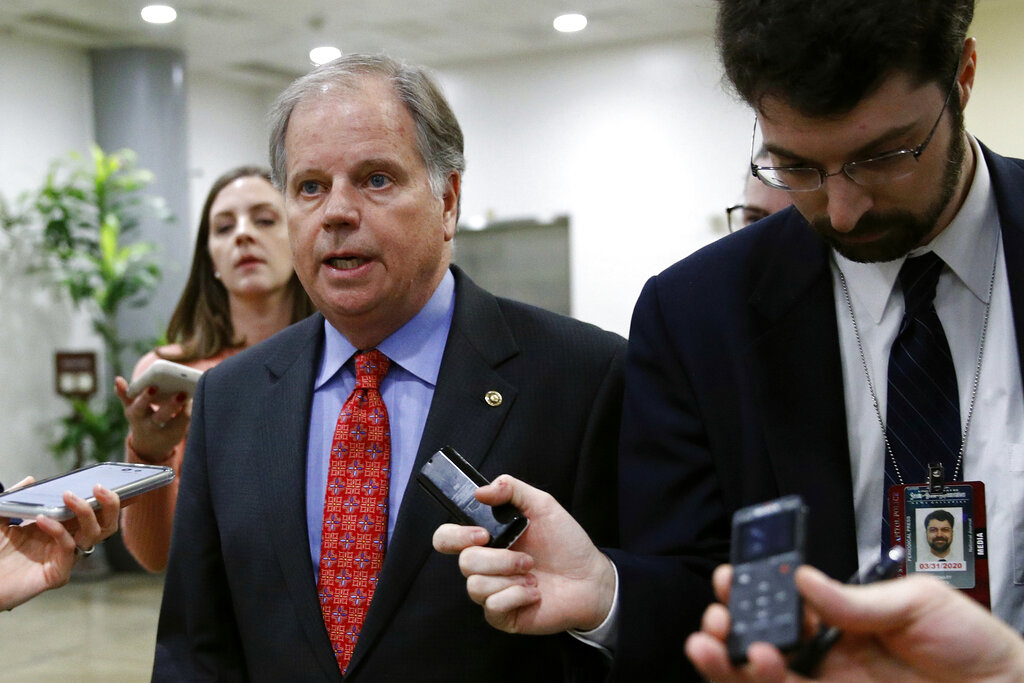
Many people didn’t rule out that the former federal prosecutor might decide to acquit Trump on at least one of the two counts.
3 Senate Dems from red states waver on impeachment votes
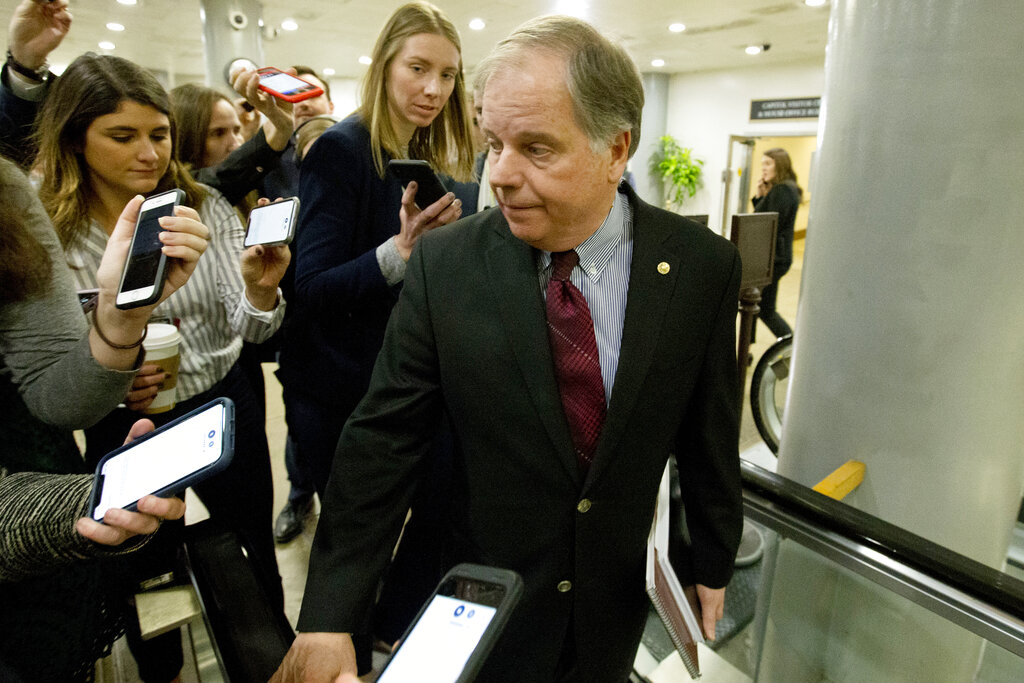
Doug Jones faces the greatest career risk.
State Auditor Jim Zeigler says Sen. Krysten Sinema dressed “inappropriately”
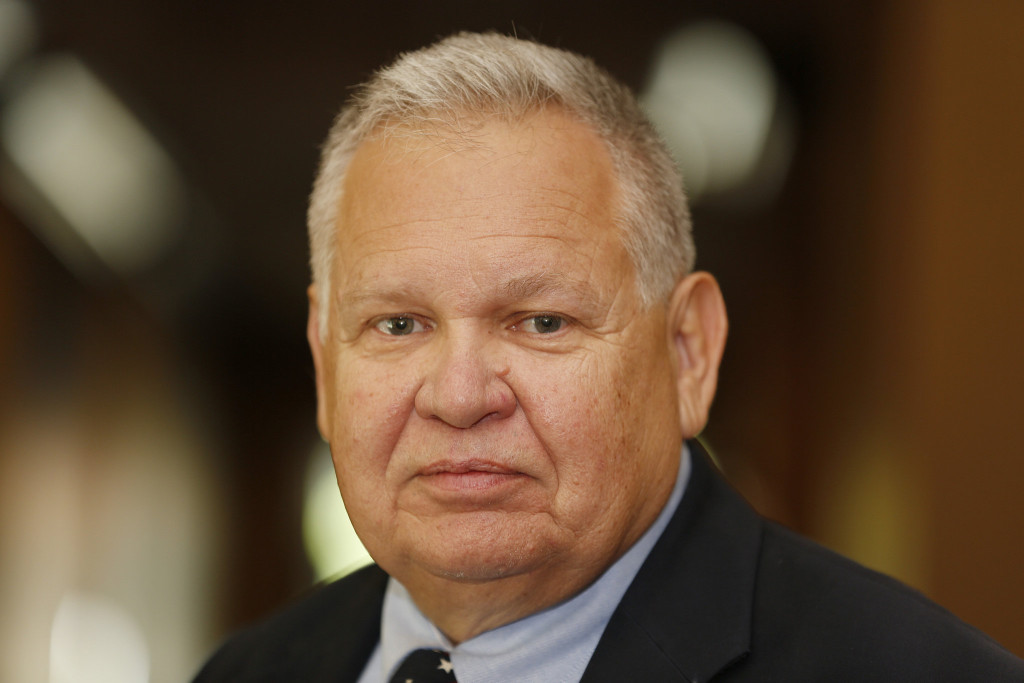
State Auditor Jim Zeigler has come under fire for saying that Democrat freshman Sen. Kyrsten Sinema “took the floor improperly attired.” He has since deleted that comment, but has left the original post, which he also shared to his personal page, AL.com reports. This created a debate in the comments regarding her attire, and whether or not it was appropriate for Zeigler to comment on it. Zeigler also pointed out that Democrat Sen. Doug Jones is visible in one of the photos and, according to AL.com, wrote “He represents these out-of-state senators instead of us, the people of Alabama. Can you see him? I am exploring running against him next year.” He said that the Facebook post was about Jones, not Synema, AL.com reports. “The wording of my post was Doug Jones does not represent the people of Alabama,” Zeigler said. “He represents the out-of- state senators. And I’ll continue to draw that distinction.” A commentator with AZ Central says we need to focus on the woman, not the clothing. “The country has given Congress a bold new look” she writes, “one that includes a record number of women, including Muslims, Native Americans and yes, Arizona’s senior senator who is partial to pink coats, short dresses and killer boots.”
Former Arizona U.S. Sen. Jon Kyl to replace John McCain
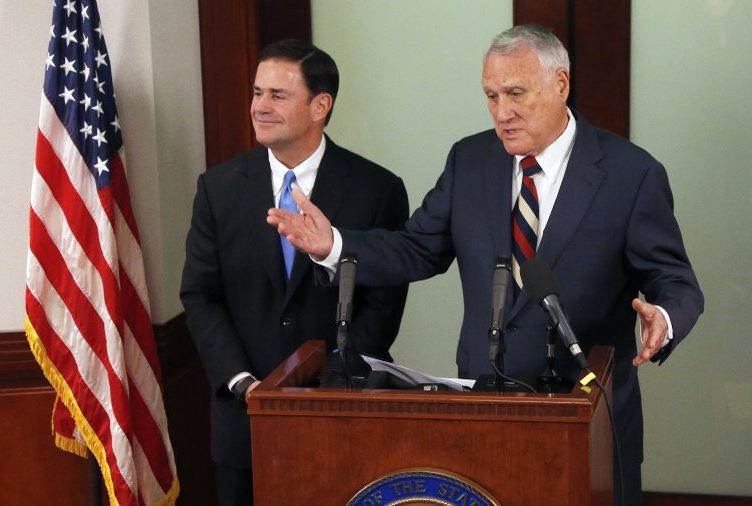
Prolonging the uncertainty over who will fill the late John McCain’s U.S. Senate seat, the governor of Arizona on Tuesday announced the appointment of former Sen. Jon Kyl but said he has only committed to serve until the end of the year. Kyl, a Republican who retired from the Senate in 2012 to spend more time with his family, is currently shepherding Trump’s nomination of Brett Kavanaugh to the U.S. Supreme Court. Kyl’s appointment will make it possible for him to vote for the nomination. But it’s unclear what more Kyl, 76, will do in Washington. He said he agreed to serve briefly out of a “sense of duty” and will not run for the seat in 2020, when Arizona voters will decide who fills the seat through 2022. The seat will then be up again for a full six-year term. Gov. Doug Ducey, also a Republican, said Kyl was “the best possible person, regardless of politics” for the job, and he hopes Kyl serves past the end of the year. If Kyl does leave the Senate after the end of the current congressional term next Jan. 3, Arizona’s governor can appoint another senator for the remaining year. By state law the senator will have to be a member of the same party as the departing one, in this case the GOP. For now, Kyl will pad Republicans’ margin in the narrowly divided Senate. They hold a 51-49 majority but that dwindled to a single vote while McCain stayed in Arizona for much of this year being treated for the brain cancer that killed him on Aug. 25. The GOP is hoping Kyl will be a more reliable partisan vote than McCain, whose opposition to a partial repeal of President Obama’s health care law pitched the party into turmoil last year. Kyl is well-respected in Arizona and has been able to avoid many of the battles with activists that complicated McCain’s career and that of the state’s other senator, Jeff Flake, who is retiring because his feud with Trump made his re-election impossible. Kyl’s entire career in Washington overlapped with McCain’s, and he served with the state’s senior senator for three terms before stepping down. Kyl carved out a profile as a reliable conservative vote and a foreign policy expert. McCain’s widow, Cindy, tweeted: “Jon Kyl is a dear friend of mine and John’s. It’s a great tribute to John that he is prepared to go back into public service to help the state of Arizona.” Doug Cole, a veteran Republican consultant and former McCain aide, said Kyl was a good, safe pick. “I think McCain would be very happy with the pick. Honors his legacy while putting some major horsepower for Arizona in the seat, at least for now,” he said. An attorney, Kyl speaks in a formal, reserved manner that is a sharp contrast to President Trump, and he belongs to an older, less populist vanguard of the GOP. At a news conference where he was introduced as McCain’s replacement, Kyl said in a response to a question that he’s only met Trump once, though he noted he is working for the White House by serving as Kavanaugh’s so-called “sherpa.” With a nod toward McCain, Kyl said the president’s “desire to jump into the middle of or be in the middle of a fight — and by the way that reminds me of somebody — can be detrimental in the end to what he’s trying to achieve.” The unusual timing of Kyl’s appointment could work out for another Arizona Republican who wants to become a U.S. senator — Rep. Martha McSally. She’s currently locked in a tough campaign against Democratic Rep. Kyrsten Sinema for the Senate seat Flake is vacating. Should she lose, McSally — a former Air Force colonel who once worked on Kyl’s staff — could be appointed to the McCain seat if Kyl vacates it in January. Filling McCain’s seat marks a turning point in Arizona political history. The seat has been held by two men who were heralded as giants of the Senate: McCain took the seat once held by Sen. Barry Goldwater after McCain had served in the House of Representatives. The choice of Kyl will also have political consequences for Ducey. He’s up for re-election this November against Democratic challenger David Garcia. For Republican voters who are on the fence about Ducey, a choice they dislike could cause them to withdraw their support for the incumbent or stay home on Election Day. Republished with the permission of the Associated Press.
