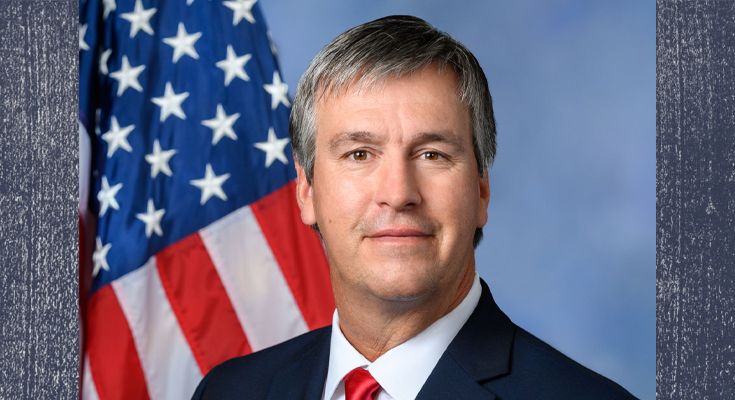
On Wednesday, Congressman Robert Aderholt released a statement following the successful Artemis I launch at Cape Canaveral, Florida, earlier on Wednesday morning.
“I am beyond excited that Artemis I has taken to the sky,” Aderholt said. “This historic moment marks the beginning of a new era of human presence and permanence in space with the United States at the helm. I am sending my sincerest congratulations to the Artemis team, NASA, and everyone involved, especially our incredible workforce here in Alabama, in making this extraordinary feat possible.”
On Twitter, Aderholt wrote, “Congratulations to everyone involved in the successful launch of @NASAArtemis. I particularly want to thank everyone @NASA_Marshall. This historic moment marks the beginning of a new era of human presence and permanence in space.”
Congratulations to everyone involved in the successful launch of @NASAArtemis. I particularly want to thank everyone @NASA_Marshall This historic moment marks the beginning of a new era of human presence and permanence in space. #Artemis https://t.co/trNG8DMLnA
— Robert Aderholt (@Robert_Aderholt) November 16, 2022
Artemis I is the first of several missions by NASA to send astronauts back to the Moon. The uncrewed mission will test the capabilities of the NASA Space Launch System and Lockheed Martin’s Orion capsule in delivering astronauts to lunar orbit.
The Orion spacecraft will travel a total of 1.3 million miles around and past the Moon before its return to Earth on December 11, 2022.
During Artemis I, the Orion spacecraft will journey 40,000 miles beyond the Moon before returning to Earth.
Orion is equipped with cameras to collect valuable engineering data and show new perspectives of the Moon and the journey.
There are 24 cameras on the spacecraft. Eight were on the SLS, and 16 are on Orion. The cameras document the liftoff, ascent, solar array deployment, external rocket inspections, landing and recovery, and capture images of Earth and the Moon.
“Each of Orion’s four solar array wings has a commercial off-the-shelf camera mounted at the tip that has been highly modified for use in space, providing a view of the spacecraft exterior,” said David Melendrez, imagery integration lead for the Orion Program at NASA’s Johnson Space Center in Houston.
The arrays can adjust their position relative to the rest of the spacecraft to optimize the collection of sunlight which is used to power Orion. This also allows the Mission Control Center flight controllers at NASA’s Johnson Space Flight Center to point the cameras at different parts of the spacecraft for inspections and to document the mission.
If the Artemis I mission is successful, NASA hopes to launch a manned mission as early as 2024. NASA has plans for a permanent manned presence on the Moon, perhaps as early as 2028. The return to the Moon after 50 years of absence is being used to develop systems and processes for a manned mission to Mars slated for 2035.
Thousands of Alabamians have worked on the SLS and Artemis missions through both NASA’s Marshall Space Flight Center in Huntsville as well as at NASA’s many contractors.
Aderholt presently serves as the Ranking Member on the Appropriations Subcommittee on Commerce, Justice, and Science that funds NASA through the annual federal budget. Since Republicans gained control of the House in the recent midterm elections, Aderholt is likely to chair that subcommittee or even Appropriations as a whole – since the party that controls the House selects the Chairs of all the Committees.
Aderholt was recently elected to his fourteenth term representing Alabama’s Fourth Congressional District.
To connect with the author of this story, or to comment, email brandonmreporter@gmail.com.
Related
Share via: