Katie Britt questions top bank about economic consequences of the Biden Administration’s Basel III Endgame Proposal
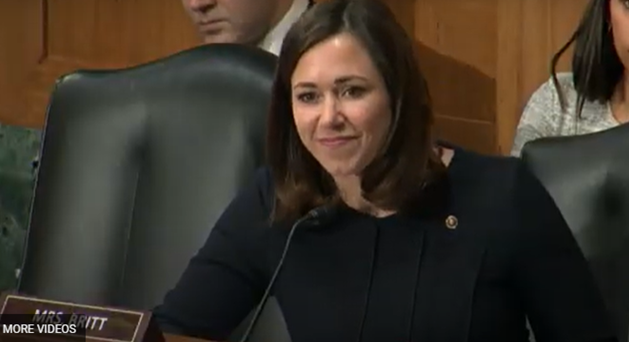
On Wednesday, U.S. Senator Katie Britt (R-Alabama) participated in a Banking, Housing, and Urban Affairs Committee hearing featuring testimony from the CEOs of the eight globally systemic banks (G-SIBs) in the United States. The witnesses were Charles Scharf of Wells Fargo, Brian Moynihan of Bank of America, Jamie Dimon of JPMorgan Chase, Jane Fraser of Citigroup, Ronald Hanley of State Street, Robin Vince of BNY Mellon, David Solomon of Goldman Sachs, and James Gorman of Morgan Stanley. Britt asked Wells Fargo’s Scharf whether the Basel III Endgame proposed rule, recently issued jointly by three federal banking regulators, would affect lending at rural bank branches, especially given that over 42% of residents in Alabama live in rural areas. “Well, Senator, we are going to be commenting to the Federal Reserve,” Scharf said.“We do think there are a series of asset classes, when you look at the increases in capital that are proposed, [that] would affect both the availability of credit and the pricing of credit in the marketplace. And additionally, as we’ve seen in other asset classes when regulation like this has taken hold, you can see substantial migration outside of the regulated banking system.” Britt asked Bank of America’s Moynihan, “Briefly explain this trickle-down effect, and if your banks are squeezed by the requirements of this rule, what does this ultimately mean for maybe small business owners seeking a loan, a first-time home buyer, or a small financial institution in, let’s say Alabama?” Moynihan responded, “Thank you, Senator. As Mr. Scharf said, and we talked about a lot today, if you have the same capital requirements increase by 20 percent to do the exact same activities you did yesterday, you have to get a higher return, and that higher return will be borne by the customer base, or you’ll have to leave the business. And either one of those is not good for the customer base, and it applies across the board.” “In fact, the idea that this doesn’t trickle down through the banking system. Overall, we provide services to a lot of those smaller banks, and those costs of those services will go up to them,” Moynihan added. “And, so, it has much more of an impact than people think.” “Would it be an inaccurate statement for regulators to assume that under this threshold, those under the hundred-billion-dollar asset mark, they have said, you know, they won’t feel the impacts of this?” Britt asked. “So, my question for you is, will those institutions and people and things that I just mentioned under the hundred-billion-dollar [asset] mark, that are quote, “not affected by this,” will they feel the impacts of Basel III? Just if we can ‘yes’ or ‘no’ down the line.” Scharf replied, “Ultimately, yes.” Moynihan answered by nodding his head in affirmation. Dimon answered, “Absolutely. You provide a lot of services.” Fraser replied, “Yes. The trickle-down effect is real.” Hanley said, “Yes. It’s an integrated system.” Vince replied, “Yes, Senator, that’s likely.” Solomon said, “Yes, I agree.” Gorman answered, “Yes.” Britt asked, “And last but not least, if this rule is implemented as written, do we risk putting the United States banking sector at a global competitive disadvantage? Mrs. Fraser, do you mind answering that?” “Yes, we will,” answered Citigroup’s Fraser. “We already have an unlevel playing field with the European banks. The American banks play an incredibly important role globally in the financial system and ultimately affect the competitiveness of American companies. This is important.” The Biden administration wants to raise the reserve capital requirements on large banks. Critics of this move are concerned that that will lead to fewer dollars available economy-wide to borrowers meaning higher interest rates and fewer American families and businesses having access to credit. Vice Chair for Supervision of the Federal Reserve Michael Barr told the committee that he believed the proposed rule would have a “minimal impact on lending.” Britt questions the need for the new proposal and worries about there being a trickle-down effect from this tightened regulation. “Over the last year, we have seen a host of incredibly complex and market-altering rules come out of nearly every financial federal agency,” Britt said. “Interestingly, five of our top financial regulators sat before this very committee last month and unanimously told me that they believed the U.S. banking system to be strong, while at the same time, they argued for proposals that could fundamentally weaken it without providing any adequate answer to the question, ‘Why?’” “At the end of the day, the G-SIBs play a vital role in the U.S. economy, and I don’t want to diminish that,” Britt said. “However, I do want to focus on downstream. So, impacts on, let’s say, Alabama’s smaller financial institutions, small businesses across the country, those in manufacturing and energy sectors, individuals seeking maybe a short-term liquidity, to help pay their bills. I think the list of these potentially impacted goes on and on and on and on. And on this point, your banks have said that by raising capital requirements by nearly 20 percent, the proposal would ultimately limit access to capital across the board and undermine economic growth.” “The rule assumes that banks are significantly undercapitalized for operational risk but yet cites no evidence to support this assumption,” Britt said recently of the proposed rules change. “Not only are these risks already accounted for in stress testing, but the new standardized approach is not tailored to the varying business models of various banks. Katie Britt was elected to the Senate in 2022. To connect with the author of this story or to comment, email brandonmreporter@gmail.com.
Katie Britt says Basel III Endgame proposal ‘undermines proven strength of U.S. banking sector’
On Tuesday, U.S. Senator Katie Britt (R-Alabama) warned about what she believes would be the harmful effects of implementing the Basel III Endgame proposed rule recently issued jointly by the Board of Governors of the Federal Reserve System, the Federal Deposit Insurance Corporation, and the Office of the Comptroller of the Currency. The “Basel III endgame” is a proposal for stricter bank capital requirements aimed at ensuring the stability of big banks. Proponents believe that the proposal would modify large bank capital requirements to better reflect underlying risks and increase the consistency of how banks measure their risks. The changes would implement the final components of the Basel III agreement. The proposal would apply to banks with $100 billion in assets or more and to smaller firms with “significant” trading activities. Sen. Britt made her remarks as a participant in a Senate Banking, Housing, and Urban Affairs Committee hearing that featured testimony from the heads of four federal regulators with respective jurisdictions spanning the financial sector. The witnesses were the Vice Chair for Supervision of the Federal Reserve, Michael Barr; the Chair of the Federal Deposit Insurance Corporation, Martin Gruenberg; the Chair of the National Credit Union Administration, Todd Harper; and the Acting Comptroller of the Office of Controller of the Currency Michael Hsu. All four witnesses testified to the strength of the U.S. banking sector. Sen. Britt stated her view that the proposed rule, together with other rulemaking proposals – she views as reckless, risks severely weakening the financial sector, making it much harder for Main Street to get the capital that it needs due to the proposed punitive bank capital requirements. Britt noted that American banks regularly pass the Federal Reserve’s “stress tests,” proving these institutions are well-capitalized. In her line of questioning, Senator Britt noted the lack of a thorough justification and economic analysis cited in the proposal, as well as the fact that federal financial regulators have not considered the combined impacts of other concurrent proposals, specifically the long-term debt proposal and debit fee caps. Vice Chair Barr stated he would “welcome public comment” on both proposals and would be “happy to include [the analysis] in improving the rule.” “Since your last appearance before this committee in May, banks of all sizes have yet again proven their strength and ability to withstand unexpected volatility,” Britt asked. “In fact, quickly, I would like to just go down the row, and each of you, please answer with yes or no. Do you believe that the U.S. banking system at large is strong? Vice Chair Barr, we’ll start with you.” “Yes, I do,” Barr answered. “Yes, Senator,” Gruenberg replied. ‘Yes,” said Harper. “Yes,” answered HSU. “Great, thank you,” Britt continued. “So, for the record, all of you believe the U.S. banking sector is strong. Yet, over the last several months, we’ve seen a wholesale attempt to fundamentally alter our banking system. Not only do your agencies’ recent proposed rules undermine the proven strength of our banking sector, but they risk making it weaker, and it is Main Street America that will ultimately be punished. I have spoken directly with dozens of banks and credit unions of all sizes. It is clear that your proposed rules are so wide-reaching that they leave no financial institution untouched.” “Even more concerning, it’s apparent that the lack of effort from you as regulators to engage these institutions is startling,” said Britt. “Along with the absence of any stated rationale for making these key decisions, I want to start with the Basel Endgame rule. Let me follow up on a question that Senator Rounds asked. Vice Chair Barr, how long did your fellow board members have to review the proposed rule prior to it being issued?” “They had an extensive period of time,” Barr answered. “I’ll get you the exact number of days, but it was many, many weeks, I believe…well, anyway, I don’t want to guess. I’ll tell you the exact number of days for the record, but it was many weeks to review.” “Many weeks. So many weeks would be longer than two, then?” Britt asked. “Correct,” Barr replied. “OK, so your colleague, Governor (Lisa) Cook, testified in this committee on July 12 that she had not yet seen the Basel III proposal. … [J]ust two weeks later, the proposal was rolled out,” Britt said. “So, does that mean that your colleagues had less than two weeks to actually review the rule, or was she mistaken in that testimony?” “Each governor can decide how much they want to engage in the process,” Barr answered. “But she had been given the opportunity and then chose not to, I guess?” Britt continued. “I can’t speak specifically to what Governor Cook chose to do, but every governor was given the opportunity to meet with staff and to be briefed on the proposal in detail,” Barr responded. “OK, well, the rule assumes that banks are significantly undercapitalized for operational risk but yet cites no evidence to support this assumption,” Britt queried. “Not only are these risks already accounted for in stress testing, but the new standardized approach is not tailored to the varying business models of various banks. Vice Chair Barr, would you say you’ve done a thorough analysis to understand the impacts of the proposed operational risk requirements and what they would have on availability of mortgages on small businesses, small business loans, and retail credit to consumers?” “Thank you, Senator. The analysis goes into detail on these items,” Barr answered. “As I suggested, with respect to credit risk, whether that’s for mortgages or small businesses or consumers, just the combination of the credit risk proposal and operational risk is very, very small in relation to current rules.” “So, obviously, that is a yes, in the way that I view this, the Basel proposal is over a thousand pages with fewer than 20 pages dedicated to actual economic analysis,” Britt said. “Also absent is a study of the combined impacts of other concurrent proposals, like the long-term debt proposal and debit fee caps, despite the
Katie Britt questions regulators about recent high profile bank failures
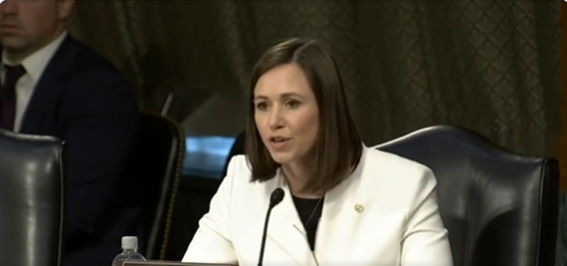
On Tuesday, U.S. Senator Katie Britt questioned federal bank regulators about what went wrong ahead of the failures of California-based Silicon Valley Bank and New York-based Signature Bank. “You need to be held accountable, every one of you,” Sen. Britt told the federal bank regulators. Britt’s comments were made during a Senate Committee on Banking, Housing, and Urban Development hearing. Britt questioned federal financial regulators regarding their roles in the recent failures of Silicon Valley Bank and Signature Bank. Testifying witnesses were Martin Gruenberg, chairman of the Federal Deposit Insurance Corporation; Michael Barr, vice chairman for Supervision of the Federal Reserve System’s Board of Governors; and Nellie Liang, undersecretary for Domestic Finance of the U.S. Department of the Treasury. “I appreciate the opportunity to be able to ask you all a few questions. I want to start by saying I am proud to be from the great state of Alabama where our financial institutions are strong — our regional banks, our community banks, our credit unions,” Britt said during her opening remarks. “The critical role they play from our main streets to our rural roads could not be overstated. So I am proud of the work they do and proud of the strength they continue to exhibit.” “Mr. Barr, I wanna follow up on a question that one of my colleagues brought up,” Britt said. “You keep talking about the Fed focusing on the size of SVB and banks. However, 2155 also requires the Fed to take into consideration riskiness, complexity, financial activities, along with other risk-related factors. Tailored supervision ensures that the Fed focuses on the most risky banks. You’ve said repeatedly that bank mismanagement led to SVB’s failure. The whole point of 2155 was so that you could tailor your regs and your supervision to risk. So why did you not require definitive corrective action based on the flaws that you saw?” “We are looking at the range of tailoring approaches the Federal Reserve took,” FDIC Chairman Barr said. “The decision to set those lines by asset size and other risk factors was made back in 2019. You know, I joined the board in July of 2022 and began looking at that approach. Uh, I expect to continue to review it as part of the SVB review. And I believe we have substantial discretion to alter that framework. “So you’ve talked about your review, which is ongoing. In that review, will you take a look at if you used all of the tools in your toolbox to prevent this? Both before and after. Will that be part of your review?” Britt asked. “Yes, Senator. The, the staff are reviewing the steps that supervisors took and whether they should have taken more aggressive action,” Barr answered. “So, at current rate, though, you can’t speak to whether or not you utilized all of the powers that were given to you?” Britt asked. “Uh, I, I really would like to wait for the formal review for the staff to come evaluate the full supervisory record to make an assessment,” Barr answered. “But we’re, we’re certainly very focused on that question. And if we didn’t do the right steps, we’re gonna say that.” “Well, I find it concerning, though, when you all were asked, each one of you was asked, ‘Would you like to see more powers, more (regulatory) strength in this?’” Britt said. “Every single one of you said ‘yes’ when you don’t actually know if you utilized the tools in your toolbox correctly or if the people that were under your supervision were supervising appropriately. I think that’s what people hate about Washington. We have a crisis, and you come in here without knowing whether or not you did your job. You say you want more. That’s not the way this works. You need to be held accountable, each and every one of you. I’m a big believer you gotta own your own space.” “Mr. Gruenberg, I wanna talk about yours,” Britt said. “So you were not the primary supervisor here. Obviously, that’s the Fed, but you are the non-primary supervisor for SVB, or were, is that correct?” “Yes. We have backup supervision,” said Gruenberg. “You have backup supervision. You had that before Dodd-Frank, correct?” Britt asked. Gruenberg answered, “Yes.” Britt asked: “You had it after Dodd-Frank, correct?” Gruenberg answered, “Yes.” Britt asked, “And 2155 did not change that responsibility that you had?” Gruenberg said, “That’s correct.” Britt said, “Right. So in that role, what did you do prior to the bank’s failure to exercise that power?” “Yeah. In this, in this instance, we were working with the Fed as the institution was experiencing difficulties, but I think it’s fair to say that it was in a supportive role with the primary regulator,” Gruenberg answered. Britt responded, “Okay. But you did raise this to the primary regulator? You did exercise that authority?” Gruenberg stated, “We were working with the primary regulator in regard to the institution.” “It seems that you failed to put the bank in receivership, and the FDIC passed on allowing the Silicon Valley Bank to be purchased,” Britt said. “Is that a correct assessment, or do you feel like that’s been incorrectly identified throughout the news cycles?” ‘Yes. Senator, the bank was placed in receivership on Friday morning,” Gruenfeld said. “And, um, we endeavored to solicit bids over the weekend, as I indicated previously, was that it was a rapid failure. So there was no opportunity prior to failure to prepare for a resolution. We tried to market it. We did two bids. Neither, neither would’ve been, um, less costly than liquidation. So we then proceeded to put in place a process where we were able to bid out these.” A significant question that has haunted congressional investigators is: why didn’t federal regulators act decisively years ago when it was known that SVB was taking excessive risks and was increasingly reliant on a small pool of customers involved in highly speculative ventures. “Six months prior, JP Morgan noticed that there was a problem
Lawmakers tell ex-CEOs ‘you must answer’ for bank failures
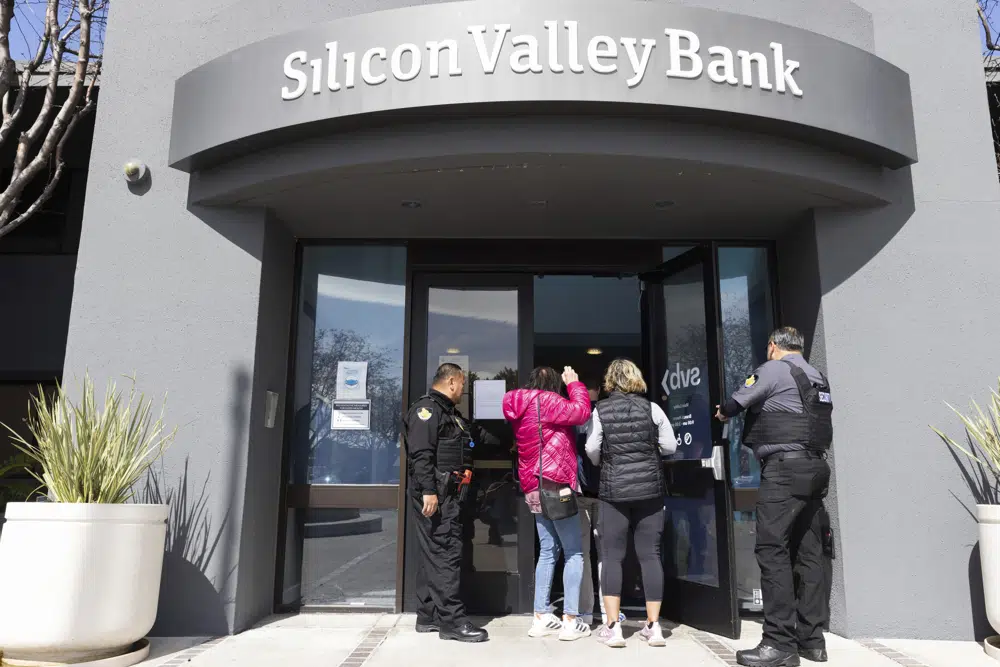
Leaders of the Senate’s banking committee on Thursday warned former chief executive officers at the failed Silicon Valley Bank and Signature Bank that they expect them to testify before the panel, saying in a letter to each: “you must answer for the bank’s downfall.” The committee is examining the events leading up to the closures of the banks, starting with the first congressional hearing on Tuesday. Separate letters were sent Thursday to Gregory Becker, the former head of Silicon Valley Bank, and to Joseph DePaolo, the former head of Signature Bank. Both CEOs had indicated to the committee they would be unable to attend Tuesday’s hearing, according to the letter. But the senators said they believe the CEOs can testify to Congress without disclosing confidential information. Nor would the executives need to hand over bank records and files to provide informative testimony, they said. Attorneys copied in on the letters sent to the CEOs did not immediately reply to requests from The Associated Press for comment. Silicon Valley Bank, based in Santa Clara, California, failed on March 10 after depositors rushed to withdraw money amid fears about the bank’s health. It was the second-largest bank collapse in U.S. history. Regulators convened over the following weekend and announced that New York-based Signature Bank also had failed. They said that all depositors at both banks, including those holding uninsured funds, those exceeding $250,000, would be protected by federal deposit insurance. Sen. Sherrod Brown, the Democratic chairman of the banking panel, and Sen. Tim Scott, the ranking Republican, said the committee needs to understand how the banks managed risk during their rapid growth and what led to them both having a large proportion of uninsured depositors. The senators also asked SVB’s Becker for information on the “payment of bonuses in the hours leading up to the seizure of the bank by regulators.” Lawmakers also are scrutinizing the actions of regulators who supervised the two banks, and that will be the focus of Tuesday’s hearing with testimony from Martin Gruenberg, chairman of the Federal Deposit Insurance Corporation; Michael Barr, a vice chairman at the Federal Reserve’s Board of Governors; and Nellie Liang, undersecretary for domestic finance at the Treasury Department. The Justice Department and the Securities and Exchange Commission have also launched investigations into the Silicon Valley Bank collapse, and President Joe Biden has called on Congress to strengthen rules on regional banks and to impose tougher penalties on executives of failed banks. Republished with the permission of The Associated Press.